Welcome to our blog! All the Lind’s travel blog posts and stories are right here to entertain you and get you excited about life. Are you amazed that we’re still alive out here? There’s more to come.
The Lind’s Travel Adventures Around the World
Start by reading our classic Travelinds travel blog of world adventures. This time largely informed how we’ve chosen to do life together, taking us to some of the most spectacular sights, muddiest jungles, whitest beaches, and intentionally out-of-the-way places (we hate crowds!). Those memories will be with us for a lifetime!
While we’ve taken a little hiatus from the fast and furious travelling, we’re navigating another big adventure – some serious parenting – and there’s never a dull moment. How could there be with three little curious and energetic people we’ve apparently given all of our adventurous genes to? We went back home and sunk our savings into creating a home. Still, while the wandering and flight itinerary takes a break, the soul continues its quest! There are always beautiful spaces and faces to see wherever we happen to touch down.
Now, The Family of Five’s Adventures
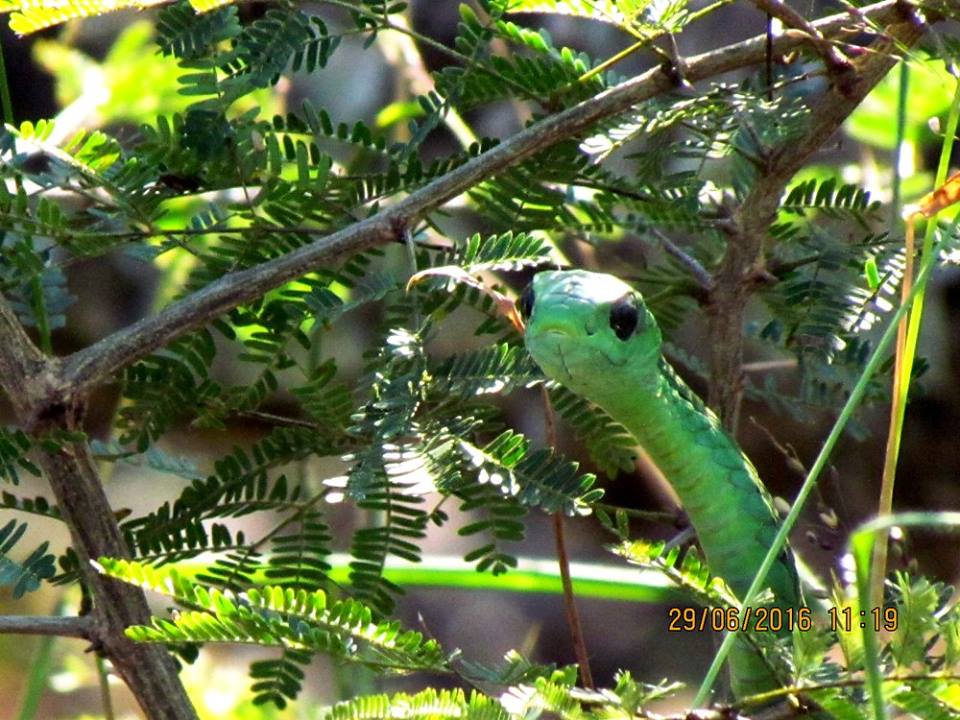
We’ve come through global pandemics, wars, and the U.S. election calendar still kicking. Now, there’s also the newer Oribi Mom posts, which cover more recent family stories in the local paper. After the daring international stuff, we came back to see if we could put down some roots. So far, so good! For the last few years, we’ve made the farm home. We’re raising three little people and taking lots of photos. We’re also keeping a sharp lookout for Black Mambas, Narina Trogons, and Trumpet-mouthed Hunter Snails.
The Linds Are Still Adventuring, So Keep Reading…
If you’d like to see where the next adventure goes for the Travelinds, the Farmlinds, or whatever you’re calling us now, you’re in exactly the right place. Keep reading!
“They’ve been right there in front of us the whole time, waiting for the sun.”
Dark-backed weaver. Photo Derek Keats/Wikipedia
June 5, 2024
Have you ever heard the dark-backed weaver sing? That’s not a book title. They really have the most melodic singing you can hear for miles. It might be Oribi Dad’s favourite bird sound. Maybe because it took us a good long while to identify what bird it was coming out of when we first moved to the farm.
They’re tricky from far, especially in Echo Valley. You think it’s one tune, but when the bird flits closer, it sounds a bit different. It rises and falls, and then ends in this buzzing sort of noise, like a phone vibrating on a table. You also hardly see them in the thick bushes they sing from or if their backs are turned to you. Yet from the front and in the sun, they’re the brightest yellow – rivalling orioles and African emerald cuckoos. Against the dry winter brush, it’s really quite stunning.
Isn’t that so like some people we know? We meet them, masked in their dark brown coats with faces turned away from us. We hear their names but don’t remember. We wonder what others see in them at all. Then, one day, we hear their song and it makes us pay attention. Where is that coming from? We want to know more.
Sometimes, it takes us a while to figure out how this brown-coated interesting figure can produce such a clear and beautiful sound in the first place. Did we hear wrong? No, we think, as we hear that melody ring out a few more times. There’s something there worth discovering.
One day, we might even hear that voice and catch the owner turning to face us, just as the sun hits from over the gorge cliffs to the east. The sparkling yellow seems to light up the whole valley as the song rings loud and captivating from that tiny black beak. What a sight! What a talented package this is. How could we have missed that mesmerising beauty for so long?
It feels like that’s how friends are made sometimes. We see each other, really see each other. And we hear a song we can’t ignore any longer. Then, once we’ve seen and heard it, we suddenly start to see that person’s influence and worth everywhere we look. How could we possibly have missed it before? They’ve been right there in front of us the whole time, waiting for the sun.
“Read wherever you can, even if it’s pouring with rain.”
The privilege of reading in a campsite next to Lake Navaisha, Kenya. Photo By: Heather Lind
November 2, 2023
There’s not much time to read these days. It used to be easy, grabbing a book in the evenings after a day of teaching or reading a quick few pages on the subway as we travelled up to Seoul or Pyeongtaek for various reasons. The ultimate relaxation was lying on a rickety lounger or a colourful towel with salt spray in my face. I’d fliick though an old, yellowed novel that I’d found on a resort’s shelf nearby or swapped with another traveller.
A Winter Escape With Piles of Books
There was one winter holiday where we had a few days off and couldn’t stand to be in -10 degrees for another second more than necessary. So, we hopped onto the cheapest flight we could find and headed south to The Philippines. In that case, it was to an island called Virac. The flights were cheap because it was the rainy season in that area, but who cares.
We took rain jackets, quick-drying shorts, and waterproof hand luggage. It absolutely poured when we arrived, and continued to do so for the whole week we were there. Since we needed rest more than adventure for those few days, we made full use of the hut on stilts we slept in with bamboo floors and a big mozzie net. And then we found the books.
Without much Wi-Fi around, even Oribi Dad got stuck into the whodunnits, corporate thrillers, and spies on offer. Days and days and days of reading, interspersed by meals of freshly caught crayfish… I mean who can really complain about a little bit of torrential rain?
Travelling To Tropical Islands Just To Read Books? Why Not
That happened to be a world-famous surfing beach with a festival of hundreds of people in July. But in January, we saw one other family arrive the entire time we were there.
The family who owned the five huts at our ‘resort’ seemed confused about why we were there. They kept apologising for the big box of books that were still wet from flooding before we arrived. We were glad that we could contribute to their income while getting a holiday out of it ourselves. And they made the most delicious crayfish and fresh fish meals for us every day.
When I pick up a book back at home, that’s the memory it triggers. Well, that, and the many other places I’ve been privileged enough to read books in. May there be many more in this lifetime!
They’re fighting against crazy odds to survive as their natural habitat gets smaller.
Nyala bull. PHOTO WIKIPEDIA
July 15, 2023
It’s the third day in a row I’ve seen them. Three shining hazel-coloured coats with white stripes dazzling in the morning sun. They stand there in the macadamia grove, hoping we won’t see them.
Maybe if they stand dead still, we’ll pass by quickly. But they forget that their flopsy, large ears flick away the bugs all the time. And the shape of them stands out very clearly against the backdrop of natural forest that drops off sharply below them.
Somehow, they find their way up through the cliffs and forest and steep gorge slopes. They follow paths the rest of us might not even recognise as throughways, pushing past thick bush and sharp prickles and over loose rocks to get to where they’re going. They’re brazen about chomping baby mac trees, but how can they pass on such succulent treats? They’re planted neatly in rows and cleared of long grass. It’s like a smorgas board as winter dries up the natural vegetation a little in the valley below.
Longtime Residents of Oribi Gorge and Other Wild Places
Nyalas are, by far, our most beautiful natural antelope here. The bulls have the most impressive curling horns with bright orange legs sticking out beneath the dark, hairy coats.
The males are called bulls because their impressive size competes with eland and kudu and all these much larger animals. But the dainty females are called ewes, not cows. They’re not big enough to classify in the upper category like their male counterparts. At least, that’s what the game rangers have told me on trips up to Hluhluwe.
Lessons From Antelope? I’ll Take Them
Even if that’s a tall tale, I’m entranced to have these beautiful nyalas right here at home. They’re just a stone’s throw away from me, a human female who needs regular reminders that how others classify me is no concern of mine. It shouldn’t be, anyway.
These ewes-not-cows are still incredibly beautiful. They’re good mommies to the baby nyalas we see every season. And they’re fighting against crazy odds to survive as their natural habitat gets smaller and smaller thanks to development, mines, and yes, farming.
So, they can nibble our mac trees (Sssh, don’t tell the farmers!) if it means I can still watch them. Let them shining in the sunshine in fifty years’ time with the oribis, duikers, warthogs, reedbuck, and everything else.
What a gift it is to be able to pass the winters in such rich company.
PHOTO BY PIXABAY
July 4, 2023
There’s a definite shift as autumn fades on the South Coast. The grass starts turning brown, even with these strange storms every now and then that give it a boost of green for a few extra days.
When we look out over the valley to the opposite slope, the brown is obvious between the evergreen pines. But when you look at the canopy of the indigenous forest just below the house, it still looks as green as mid-summer.
Different Seasons, Different Visitors
But the stickiness in the air is gone now. And there are very different sorts of birds around the garden. The scarlet firefinches come out to hop over the short grass and through the thickets.
The toppies pair off and make a racket in the berry trees, competing with the clumsy mousebirds for the fruit. Even the Crowned Hornbills fly up from the bottom of the valley daily now.
The hornbills’ orange beaks glimmer in the sunshine as they noisily flit from tree to tree. They always look like they’re going to fall out of the sky and then pump their wings to lift their bodies again and again. It’s a very awkward flying style, and easy to identify if you can only see a silhouette against the glare. They’ve got quite a melodic sound compared to the screeching Trumpeter Hornbills, too.
So Much Colour and Life in Oribi Gorge in Winter
The Greater Double-collared Sunbirds are also fluttering about chasing off rivals so that they can sample the aloes in peace. The orioles are wonderfully vocal, too. They flash bright yellow with black heads, zipping right over our house as they disappear back to the safety of the forest in the late afternoon.
The kingfisher’s turquoise, the Amethyst Sunbird’s black, and the tinkerbird’s red dot are also daily gems. With all the colours, we rarely notice the brown grass or the dusty roads. What a gift it is to be able to pass the winters in such rich company.
“Summer is coming and it feels greener since the pandemic started making its exit.”
Jogging on beaches in Indonesia was often beautiful but home has less plastic rubbish. PHOTO HEATHER LIND
November 5, 2022
I’ve started running again. Okay, let’s call it what it is: a slow jog. A very slow one after three babies and a long year.
The last time I started jogging was after Baby Number Two. I was bitten by a night adder about a month into my routine and it didn’t go so well after that. But, I’m back again, kicking up dust and looking for bird distractions up the crazy hills.
I’ve tried to catch up to the giant water mongoose that lives by the stream, but it’s too quick. I’ve snuck up to the African Pygmy Kingfisher that lives in the bank, but my cellphone camera is woefully inadequate to get a clear picture. I usually see a bright blur darting out in front of me and know I’ve missed it.
Panting Up the Hills Is Part of Running Again
It’s also a little embarrassing coming into view of one of the occasional workers in the macs. It’s about that moment you realise that you’ve been panting aloud like some old dog all the way up the hill. Did the person just on the side of the ridge wonder why an old gogo was coming up the road in the middle of nowhere?
The crowned hornbills sometimes sit at the tops of the trees and laugh at me while I pant up the steep bits. With an elevation gain of about 150 metres during the jog, the steep bits include the first 2.5km or so. If I can make it past that, I can ease up the heart rate and cruise downhill for most of the way home.
There’s one part of my regular route I’ve named Death Hill. That’s probably slightly dramatic, but it certainly makes you feel like death warmed up when you’re at the bottom of it and want to get to the highest point on the farm. If you can push through, you can turn around and have a full view of the sea in the distance, Gamalakhe next to that, and Oribi Gorge and Paddock the other way.
You can also see some of the Southern Drakensberg on clear days. The view alone is worth a little bit of sweat and embarrassing panting most days.
Jog or Run or Walk, But Get Out and See the World
I’ve jogged many places in the world, including around a tiny Indonesian island where we snorkelled with turtles every day. I’ve jogged in the Mara Triangle in Kenya and wondered about lions hidden in the grass. Now, I’m running on my farm on the South Coast and it’s just as beautiful.
Summer is coming and it feels greener since the pandemic started making its exit. Who knows, maybe we won’t even have to cancel the holidays this year.
“As the spring approaches, I hope you have good changes coming your way too.”
Night sky petunias on the porch. PHOTO: HEATHER LIND
August 25, 2022The weather has been glorious lately. Cool enough to garden a bit after months of a pregnant belly. Warm enough to go on late afternoon strolls with a baby and two boys on bikes kicking up dust. This spring we will finally have a hectare or two of macadamia saplings in the ground to compete with our growing brood. It is an exciting time interspersed with all the adult responsibilities. It’s also different to how things have looked up until now.
The third week in August was like a switch on the farm. The swallows and yellow-billed kites arrived within a day of each other. The wise are not so quick to declare spring in these parts though. The cold sneaks in every September with wind and rain that’s colder than anything we experience through ‘winter’ on the coastal inland farms.
My garden also gets confused. There are already arums, peaches forming, snake lilies pushing up, and flowers on the coffee tree. There are also captivating paint brush-like flowers and showy blooms starting to pop up everywhere. But my trusty beanie is going to stay ready for the next few weeks. I haven’t swapped out cosy slippers for slops yet. Isn’t it strange that we are so hesitant to change over when the signs are obvious? That’s human nature. We resist the unknown even if positive things may await.
At home now things have changed despite us wanting to hold on to the familiar. Every one of our garden pets has become a meal for a caracal, mongoose, or bird of prey in the last few months. Our lovely bunnies and chickens are all gone but we now have a beautiful new son. Our small farm no longer has the ancient flat crown choked by lantana but we have macadamia trees. We are winning the battle against invasive weeds in those spaces.
Things change like the weather and it seems that waiting out the storms is often worth the sunshine. As the spring approaches, I hope you have good changes coming your way too. We just have to roll with it and wait for the summertime.
I’ve also loved flitting about the South Coast birding community on Facebook bird groups.
January 14, 2021
A pretty white-eye photographed by Heather in Oribi Gorge.
I’ve always loved nature, but since our move to Oribi Gorge, my blood is emerald green, just like ‘Hello Georgie’.
I may actually be obsessed with the feathered friends that fill this beautiful country.
An overseas friend asked if I was a twitcher, and after a quick Google search, I solemnly declared myself a true bird lover instead.
I’m not a tick-off-the-list ‘twitcher’ who loses interest after they’ve seen every one of South Africa’s 850 recorded species once (725 resident species).
No, I sit on my porch for morning coffee and daily appreciate the wine-red firefinches, melodious black-headed orioles, opportunistic Black Sparrowhawk (which hunts our free range chickens), and the soaring vultures high above our Umzimkulu cliffs.
If there’s a flash of red and jade with a hint of sunshine yellow, I’m late for work. A Narina Trogon is still a huge celebration, even if I’ve seen them a thousand times before.
I’ve also loved flitting about the South Coast birding community on Facebook.
Hugo Voigts in Paddock is phenomenally dedicated – he once sat for over four hours in camouflage to capture elusive flufftail chicks (and this wasn’t his only comparable effort).
Lia Steen in Shelly Beach has the most magnificent finds right in her garden. She must have a brilliant camera to capture that much detail, too. I’ve learned a lot about birding habits from her fascinating posts.
The luckiest South Coast birder must be Stan Culley, somewhere near Port Edward maybe? ‘Culley’s Dam’ boasts fantastic bird visitors daily, including the cutest baby white-starred robin I’m yet to find in my patch of paradise.
Why birding? I think it’s the chase.
Some days you see a new one that you have never, ever noticed before. You read about it (maybe you’ll get a Roberts bird app for your birthday like I did) and learn the sound. The next few weeks, you realise that it is a screech or a song that you hear constantly. It wasn’t a new bird in your garden at all, just a hidden gem.
Once you see it, you can’t un-see it and then you start to appreciate the immense beauty of this country.
Birdwatching Is Good for the Soul
Next time coronavirus has you down, sit at your window or put your binoculars next to you on the porch.
Take a breath, laugh at the bobbing wagtails and the fluttering sunbirds and open your eyes.
You might see that martial eagle gliding above the clouds or you might notice the white-browed scrub robin around your fallen leaves for the very first time.
A while ago, Travelinds told you about one of our favourite game reserves in Kwazulu-Natal – iMfolozi-Hluhluwe National Park. The few days spent at Nselweni Bush Lodge was a great family holiday and we couldn’t wait to go back again! This time we tried a new hideout – the Hlatikulu Bush Lodge!
Hlatikulu Bush Lodge
This was a good surprise as we had only booked Hlatikulu in a rush to secure accomodation in an already full reserve. However, as soon as we arrived, after navigating the jolting 4×4 route to get to the lodge, we realised that we had made yet another magnificent discovery!
The bush at your door
The camp is beautifully maintained by Siyabonga and New Year, both of whom have been there for ages and visibly love what they do. Right on the riverbend, with no fence, the animals and birds come and go as they please. All around the camp are tweets and chirps, grunts and growls, spoor and feathers and evidence of life.
The deal
The camp can accomodate eight people at most, in four lovely huts (each for two people), all of which boast views of either the river or the bush. The booking includes… (wait for it!)… TWO bush walks with Siyabonga and his gun (2-3hours, one morning, one afternoon) for every night that you stay. New Year will cook any food that you can bring (and he will insist on setting up AND cleaning up everything in the communal lounge and diningroom himself, too). These two wonderful humans keep the huts immaculately clean and look after you while you simply relax and enjoy the wildlife.
Nature up close
The resident bushpig, Georgina, can get a little persistent in the evening, but please, do not feed her even if she follows you down the boardwalk or begs. There are also hippos, crocodiles, lions, elephants, buck and other creatures that roam in and out of the camp at their leisure – look around when you are outside and do remember that you are living in the real African wild now!
We fell asleep each night to lions roaring, hippos grunting, hyenas laughing and melodious nightjars. Early mornings wake up to birds singing and nyalas crunching grass right outside our windows.
A different perspective
The bush walks were also well worth the effort and if you do what Siyabonga tells you, you’ll be in good hands. He’s an experienced game ranger and takes his job, and your safety, seriously. The animals are wild and unpredictable, especially where humans provoke and disrespect the natural order of things. It is our responsibility to preserve and care for nature and a bush walk is a great way to remind yourself of your roots.
Use your rhino card to receive discounts on day fees, accomodation and more. It was worth it for us to buy the card (for a couple) just to cover our day fees during the week here. Ezemvelo KZN wildlife is also a great cause to support!
Linapacan is the small archipelego between Coron Busuanga and Palawan mainland. Coron Busuanga, Culion Island, Linapacan and Iloc Island are part of the Palawan province of the Philippines; and it is a truly stunning area.
Off the main drag, Linapacan is not a common tourist destination, especially for those with limited time to explore the more inaccessible parts of the 54 islands in its domain.
Getting to Linapacan
After much research and deliberation on our journey, we decided to try and take a cargo boat from Coron to Linapacan, and if we couldn’t find one at the harbour (because there aren’t always delivery boats every day), we would take the ferry the next day (buying the 800 peso ticket from the pier in the morning). Luckily for us, a friendly trike driver helped us locate a boat picking up goods. The cargo boat eventually left at noon (giving us a solid three hours to get to know fellow passengers as we all waited) and arrived at the island around 5pm. They charged us 500 pesos each. It was worth it not only for the little bit of money saved (no time saved) but also for the contacts we had made on the boat during the journey.
We hopped on to this cargo boat to get to Linapacan.
On the boat to Linapacan there were six passengers and four crew. One passenger turned out to be quite fluent in English and held the prestigious position of Barangay Counsellor (a local government official of San Miguel, Linapacan), which elevated his status greatly in the eyes of the Filipinos here. His name is Monmon (said “Mawn Moon”) and he convinced us to come to his island instead of going to San Miguel (the main city on Linapacan). He said that his friend “had a cottage” where we could stay (price unknown), that there was good snorkelling on their reef and that he would feed us.
Inapupuan Island
Why not? So, of course we agreed and we got off the boat with him at the tiny Inapupuan Island (15 minutes north of Linapacan by fishing boat). The low expectations of our detour served us well and made it more exciting to discover a whole village that was excited to have tourists in their midst. The ‘cottage’ was actually an open bamboo hut on the beach, with a only a roof, a table and a bench. There was also an outdoor ‘bathroom’ where we could wash (in buckets) and use the long-drop under the stars (with some draughty bamboo walls for privacy). The owner of the hut (a 19-year old smiling girl) cooked a huge portion of fish and rice for us and carefully watched us eat every last drop by solar lamp.
CULTURE TIP: It seems that in this part of the Philippines it was expected that we as guests eat first, while everyone watches us and prompts us to eat as much as we possibly can in one sitting. The elders then ate what we left, and then the others tucked in. It was quite something to get used to people literally staring at every mouthful we took and not being willing to let us eat an appropriate-sized portion but insisting on piling up our plates at every meal; sometimes filling our plates for us despite our pleas that we were full to the brim. [Thank goodness we swam for a few hours each day to keep those calories from sewing our clothes smaller during the night!]
This was our ‘cottage’ on Inapupuan island.
We slept on the table in our trusty duvet cover, fighting off only a few mosquitoes, but enjoying the breeze and the bright stars above. Like the birds, we woke up in true island style to the call of the confused roosters (sometimes all night), the dogs and villagers waking up with the sunrise; and the fishing boats returning from their morning expeditions. This area is known for its squid-fishing industry, which are collected between 5pm and 5am every night on boats with about eight lights shining on the water to attract the luminous-spotted ink-makers large and small.
Dried Squid
Inapupuan is apparently famous for dried mini squid (about a hand’s length) and we saw them laying out the squid at sunrise to dry for two days. After this, it is sold to traders in San Miguel (like BRC hotel), who send it on to the Manila markets about twice a week. A kilogram of mini dried squid sells at about 120 pesos, and the large dried squid at about 300 pesos per kilogram (much more than the measly 37 pesos per kilogram they get for the cashew nuts that come in from a few of the islands).
Inapupuan’s main source of income is from the dried squid that they ship to Manila once a week.
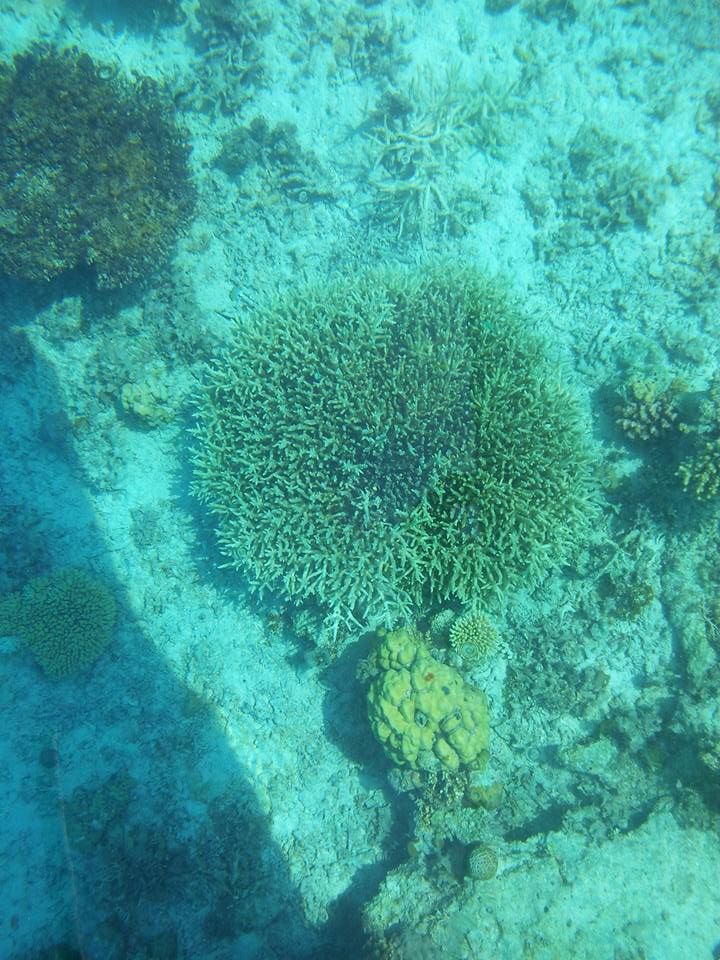
The next morning we jumped in for a snorkel (the reef is only 30 metres offshore) and unfortunately met with an array of sparkling jellyfish, which quickly redirected us back to our beach hut nursing a few little stings (nothing major). A great pity indeed as the reef looked amazing through the clear blue water off the boats. Inapupuan, we will have to come and see your reef again!
Patoyo Island
Patoyo Liao Beach
Monmon’s brother kindly ferried us to the next island on his (tiny) fishing boat, as we had read about staying on Patoyo Island (right opposite San Miguel – about 10 minutes on a boat). He dropped us on the beach with our bags and waved goodbye as he took Monmon back to his job across the bay in San Miguel. We followed our noses to a village (called Osun), asked a couple of people where we could stay and secured a spare bed at what we like to call, The Eagle Inn, with Berta and Lito.
Berta and Lito
The bamboo frame is in their front room and was available for 200 pesos per person per night and we gave them what we thought was fair for the generous meals they provided (fish, squid, rice, water and coffee). Two nights later we moved across to new friends on the neighbouring beach.
HIGHLIGHT: Lito has an eagle (that he seems to have rescued from a fishing net) perched on his tree, which eats two fish a day and takes a bath in the ocean every week. An amazing sight to see Lito (a small Filipino fisherman in baggy basketball shorts) lift the huge bird by its body, well away from its sharp hooked beak, dunk it and splash it a couple of times in the ocean, smooth down its feathers and then carry it back to its perch next to the pigs, chickens, cats and dogs.
Lito’s Eagle on Patoyo Island in the village of Osoon
Days on Patoyo were spent lazing on the beach, snorkelling in the awesome reef just off the shore, observing the local fisherman, sleeping in our hammocks and generally loving life in paradise.
The Gonzales and Castolo Families
The next two nights we spent with the Castolo family. Pastor Gonzales met us on the beach, introduced himself and then asked us to come and stay with his employers (he is the caretaker of the Castolo beach). This was another lovely introduction to the true Filipino hospitality and character. There was an abundance of food, laughter, company and an easy air of peace between friends. Since they were all Christians and Catholics, it was an added bonus to be in the company of brothers and sisters in Christ.
Pastor Gonzales shimmied up the coconut palm to bring us a drink.
Mrs Gonzales was particularly wonderful, the definition of ‘being clothed in strength and dignity’. Her five children reflect her noble work ethic and her boundless energy to serve put us to shame over and over again. We were so blessed to have met both the Gonzales and the Castolos on Patoyo Island.
Jayar and Mialyn’s Wedding
Jayar and Mialyn’s Wedding
The last day on Patoyo we met another family from San Miguel who were frantically making wedding preparations on the Liao beach (Note: You need to pay the caretaker 100 pesos per person to use this beach). Building, scraping, cutting, cleaning, burning, dusting and a whole lot more transformed this already beautiful beach into an exquisite wedding venue in preparation for the weekend. The bride and groom (and most of their family members, separately) invited us to attend their wedding on Saturday and also gave us lunches and a free ride over to San Miguel when we left Patoyo.
DID YOU KNOW? At a local island wedding in this area of the Philippines, the word gets out fairly quickly about the big celebration. The family expects (and complains about) all the uninvited guests whom they know will just sneak in (after dark) and therefore provides a mountain of food to ensure these strangers are also fed. Our wedding hosts slaughtered six pigs and sure enough after the sun had set and the reception party was under way, the boats started rolling in one by one; bringing crowds of strangers who also wanted some share the delicious food and dance!
The groom’s aunty, Maileen – of The Brinze Kylene boat – helped us find a place to stay in San Miguel (at the BRC hotel), offered us food and gave us boatloads of information about island hopping tours and getting to El Nido from here. Wow, we remember now why we just love the Philippines!
San Miguel
This sleepy little island town is the municipal capital of Linapacan and considered a bustling metropolis by the islanders of its ten barangays. We spent time here before our island hopping trip with the Escultors and used it as a base from which to do some island hopping (close to San Miguel) in small fishing boats. San Miguel contains an elementary school, a high school, two small bakeries, a handful of stores, a municipal office (where Monmon works), a basketball court, a few piers, lots of fishing boats, a big catholic church and bamboo, tin and brick houses. There were a couple of motorbikes, push carts and bicycles, but no larger vehicles that we could see.
A typical day in sleepy San MiguelThe Cabiguens own the BRC hotel and store
Island hopping
You can do an island hopping tour, for example, for 2 nights 3 days of camping (they set up, cook and clean up) with snorkelling for about 6000 pesos (total for the boat and experience for two people, or more). Travelinds did an absolutely fantastic 3 night 4 day island hopping tour with Maileen and Benji on the Brinze Kylene. Check out the details in our Brinze Kylene Expedition post.
GO LOCAL: To hire a fisherman and his little boat from San Miguel for one day costs between 1000 – 1500 pesos excluding lunch (no shade, slow and sometimes rickety) – and what an adventure it is! The cash goes to the fisherman, and by extension his family and community, so it is definitely a good cause and directly supports the local economy.
Robin and his dad took us out for a day to see the islands
There were two island hopping tours that we took from San Miguel – one for the day (with a local fisherman above) to some of the smaller islands in the area, and one with the Brinze Kylene for three nights. The Brinze Kylene dropped us off in Sibaltan for our final week on the Palawan mainland.
An amazing end to life on some Philippine islands, our Brinze Kylene expedition took us from San Miguel, Linapacan and ended at Sibaltan on the Palawan mainland. Read about how we came to meet them here.
The Hosts
Our hosts Benji and Maileen were entertaining and hospitable, looking after us throughout our stay in Linapacan, as well as on the island hopping tour. Their service was phenomenal and so much fun. Their crew, Midel and Guerrero, seemed to have limitless energy and kept the boat running smoothly through the whole trip. They cooked for us, put up and took down our tent, found us the most exquisite coral reefs along the way and entertained us each night around an impressively large bonfire.
The Boat
Since we spent most of our time on the boat, it serves that it was rather comfortable and well-equipped for such a simple carrier. Described as a catamaran-style with balancing beams on each side, it had benches, a small cabin, a tarpaulin covering, a ladder to get out of the ocean and a small boxed-in toilet and wash area. Downright luxurious in terms of the local fishing boats!
The Food
Every day in the Philippines is another chance for fish and rice. Different fish, mind you, but fish all the same and rice to fill in the gaps. We loved the fresh seafood and feasted on lapulapu, barracuda, squid, white fish and tuna – all barbecued over a fire and served with a decent portion of sticky white rice. Every now and again we ate the precious commodities called vegetables (cabbage, carrots, tomatoes, peppers and cucumbers) and this was a real treat for the locals and for us as availability is scarce.
The three kilogram barracuda we bought from another fisherman.Lapu Lapu fresh from the ocean.A peacock mantis shrimp that we caught and ate!
And Most Importantly, The Islands
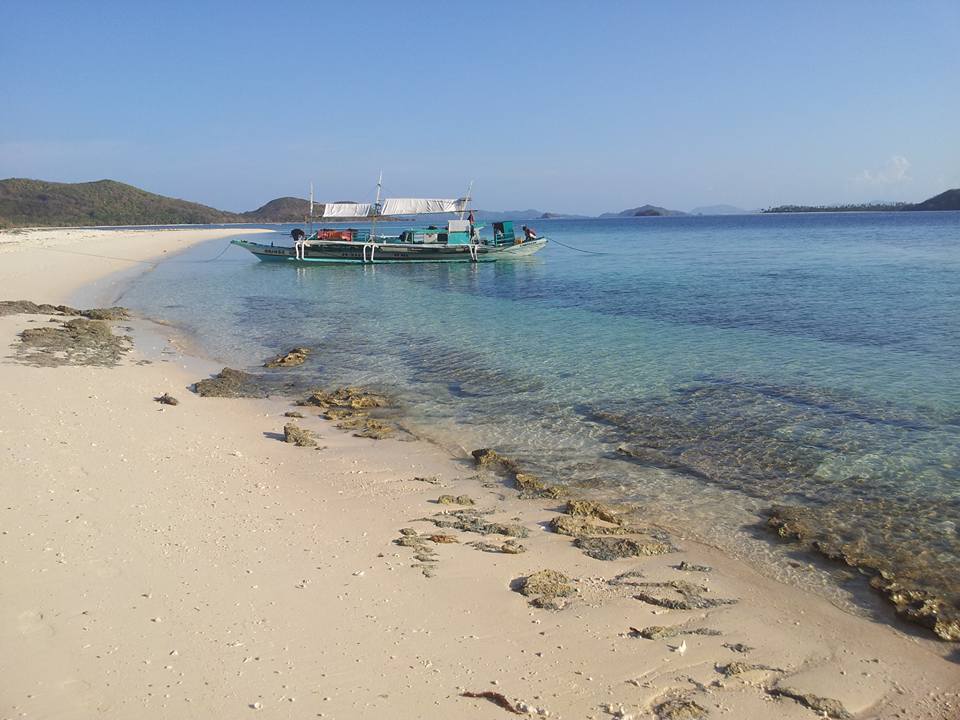
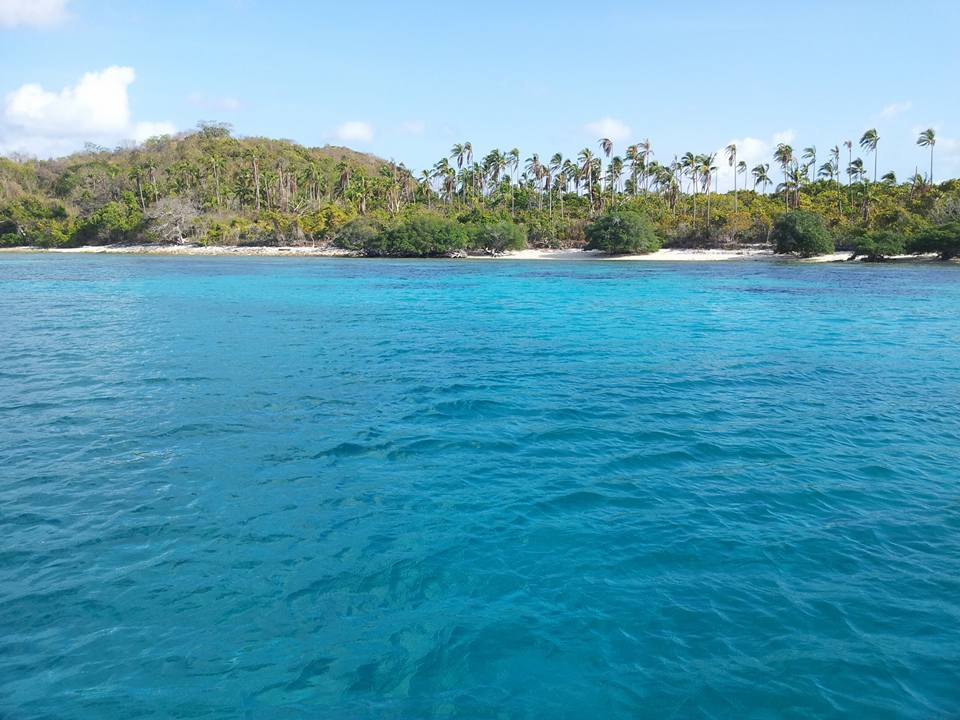
The archipelego of 54 islands is hard to describe because each one is slightly different to the next, sparkly, beautiful, rugged and unspoiled by industrialisation or development. We lost count of exactly how many islands we visited in the end, but managed to go at least 15 islands on during the 4-day trip.
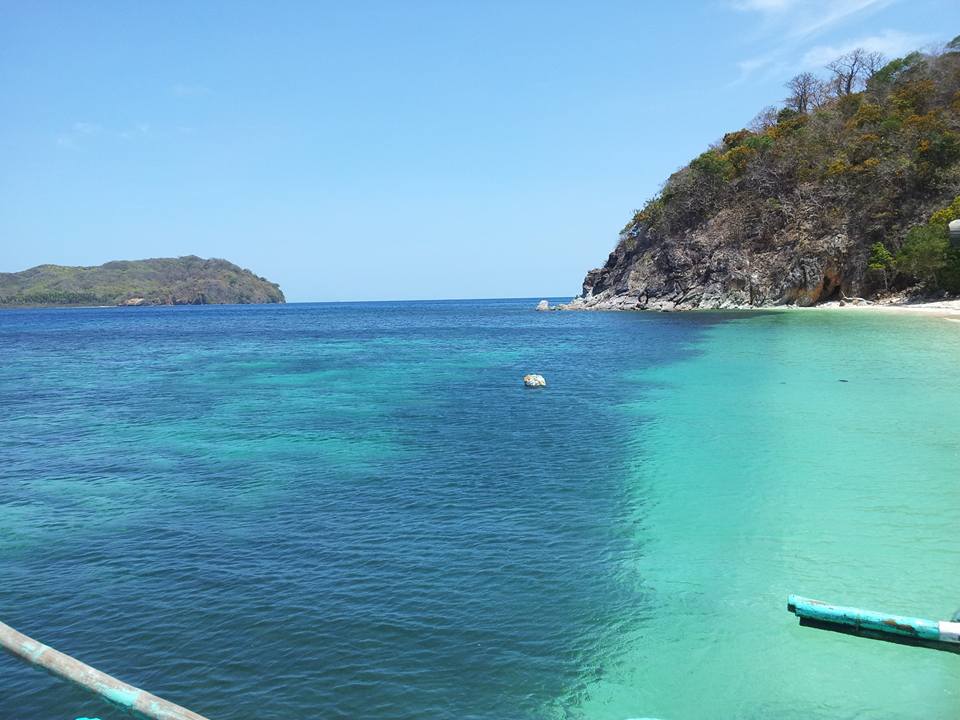
Linapacan is said to have some of “the clearest water in the world” – we believe it! Check it out.
Here was the itinerary:
Day 1: Leaving from San Miguel, to Dimancal (check out Karel’s tent resort here), Bolina, Manligad, Asis and Cagdanao (first island camp spot)
The island across the bay, Balenben, had island huts available for rent at 300 Pesos in a fantastic reef area.
Day 2: Manlihan, Cala-cala (spelt Lacalaca) and Takling (second island camp spot)
Day 3: Calibangbangan and Magransing (third island camp spot – the most beautiful place we have ever seen!)
Day 4: Pical, Mausunon and ending at Sibaltan (mainland Palawan)
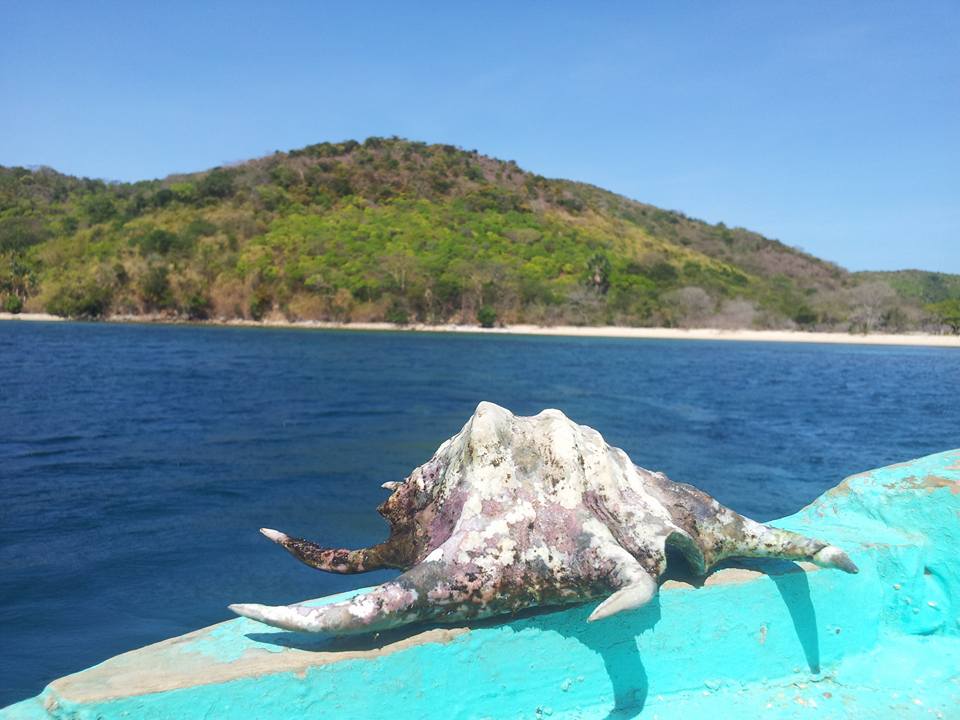
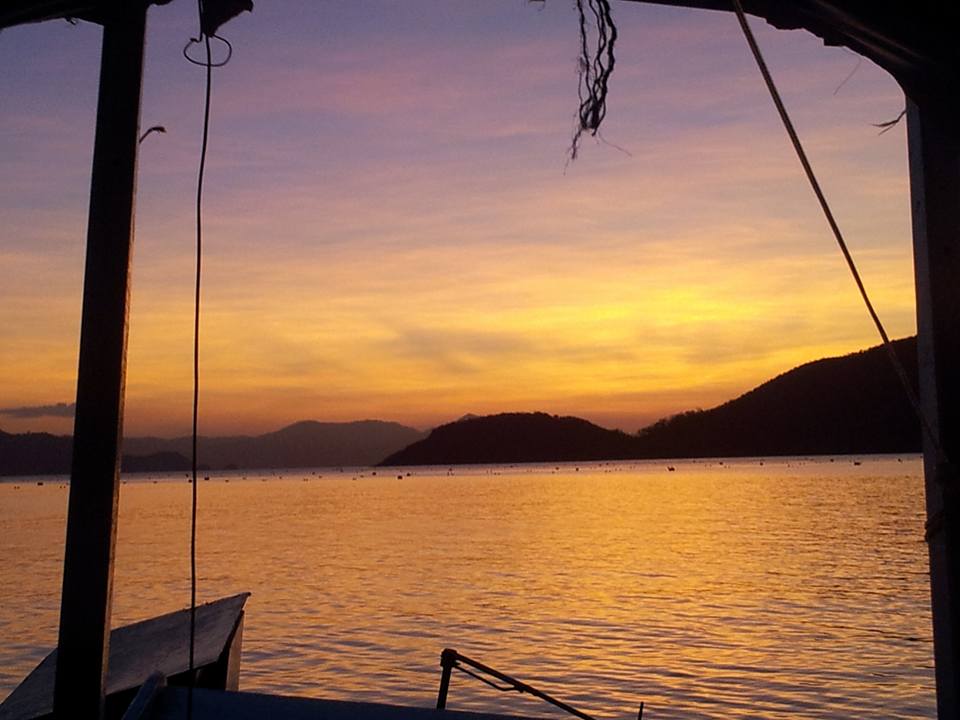
Each had coral reefs right off its shores and were almost guaranteed to be completely deserted. Besides, don’t these pictures (from a humble camera phone) make you want to go there right now? Call Maileen and Benji for an adventure on the Brinze Kylene!
Linapacan is well worth your time – wow! What do you think about Palawan?



 Dark-backed weaver. Photo Derek Keats/Wikipedia
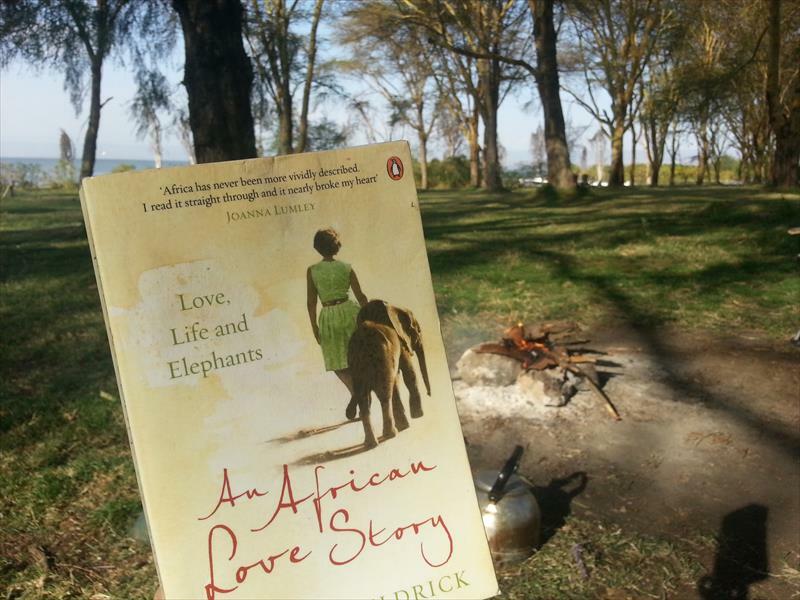 The privilege of reading in a campsite next to Lake Navaisha, Kenya. Photo By: Heather Lind
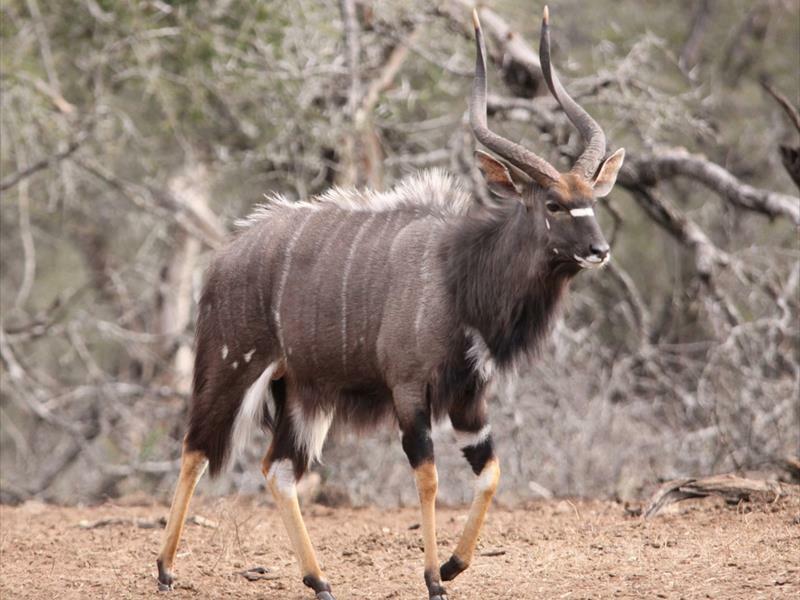 Nyala bull. PHOTO WIKIPEDIA
 PHOTO BY PIXABAY
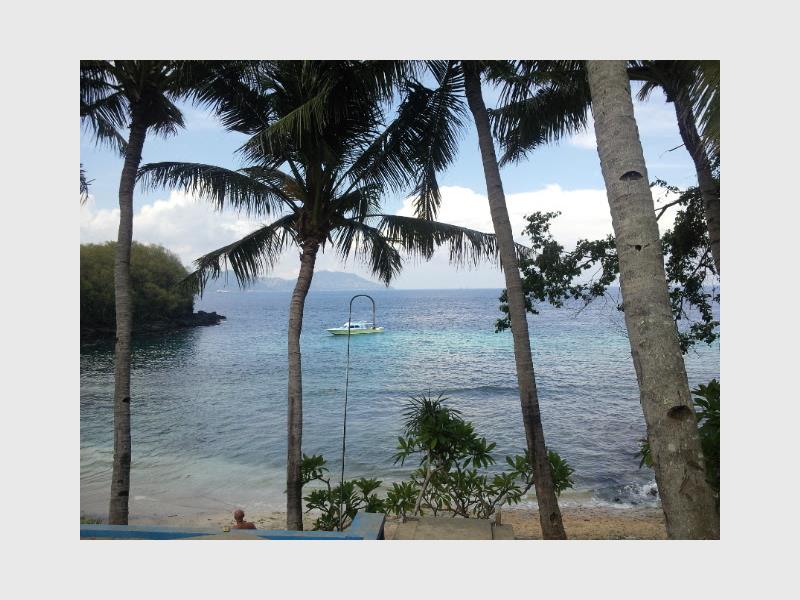 Jogging on beaches in Indonesia was often beautiful but home has less plastic rubbish. PHOTO HEATHER LIND
 Night sky petunias on the porch. PHOTO: HEATHER LIND


 Nature up close