There’s never a dull moment raising a family in Oribi Gorge.
PHOTO BY PIXABAYMay 1, 2025
There’s been a new thing starting. The tiny boys are growing up into little boys and starting toexplore a few aspects of farm life.
Of course, I had some preconceived ideas about it because, when I was a little girl, my daddy took care of a lot of the ‘dirty’ side.
I didn’t like scales and blood on my hands. As an adult, I forgot that part. It felt surprising that this particular pastime involved such a lot of chicken hearts, sticky whiskery practical jokes from my sons, and wading to unhook lines from the reeds. The smell of the clothes afterwards is also quite a sensory challenge.
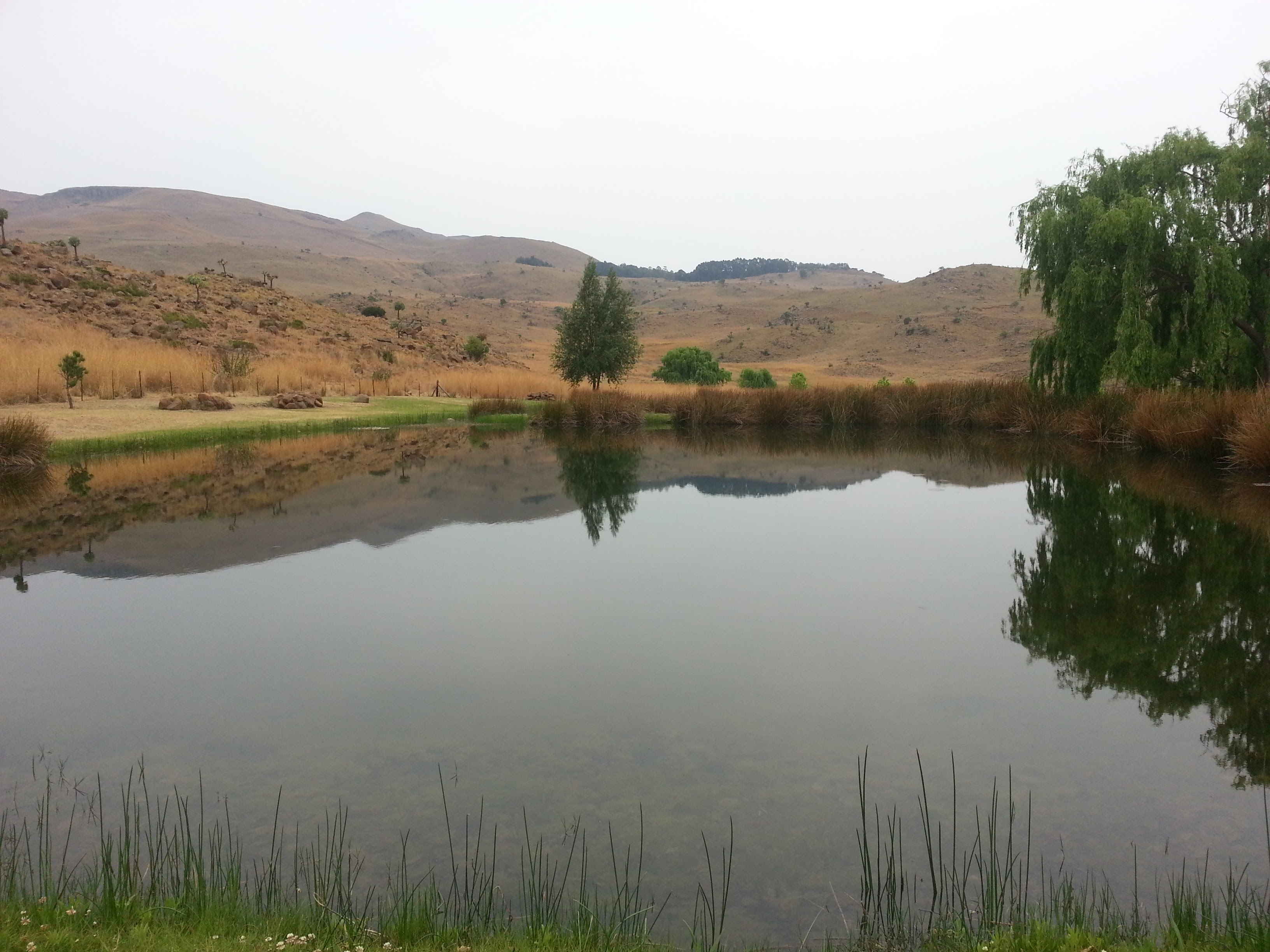
Still, it’s all part of the smiles that fishing brings to our little sons (and their parents). What I did correctly remember about fishing was the time outside in the sunshine, the quiet, and the birds. There’s something beautiful about glassy dams reflecting the clouds.
The Dam With the Fish Eagles
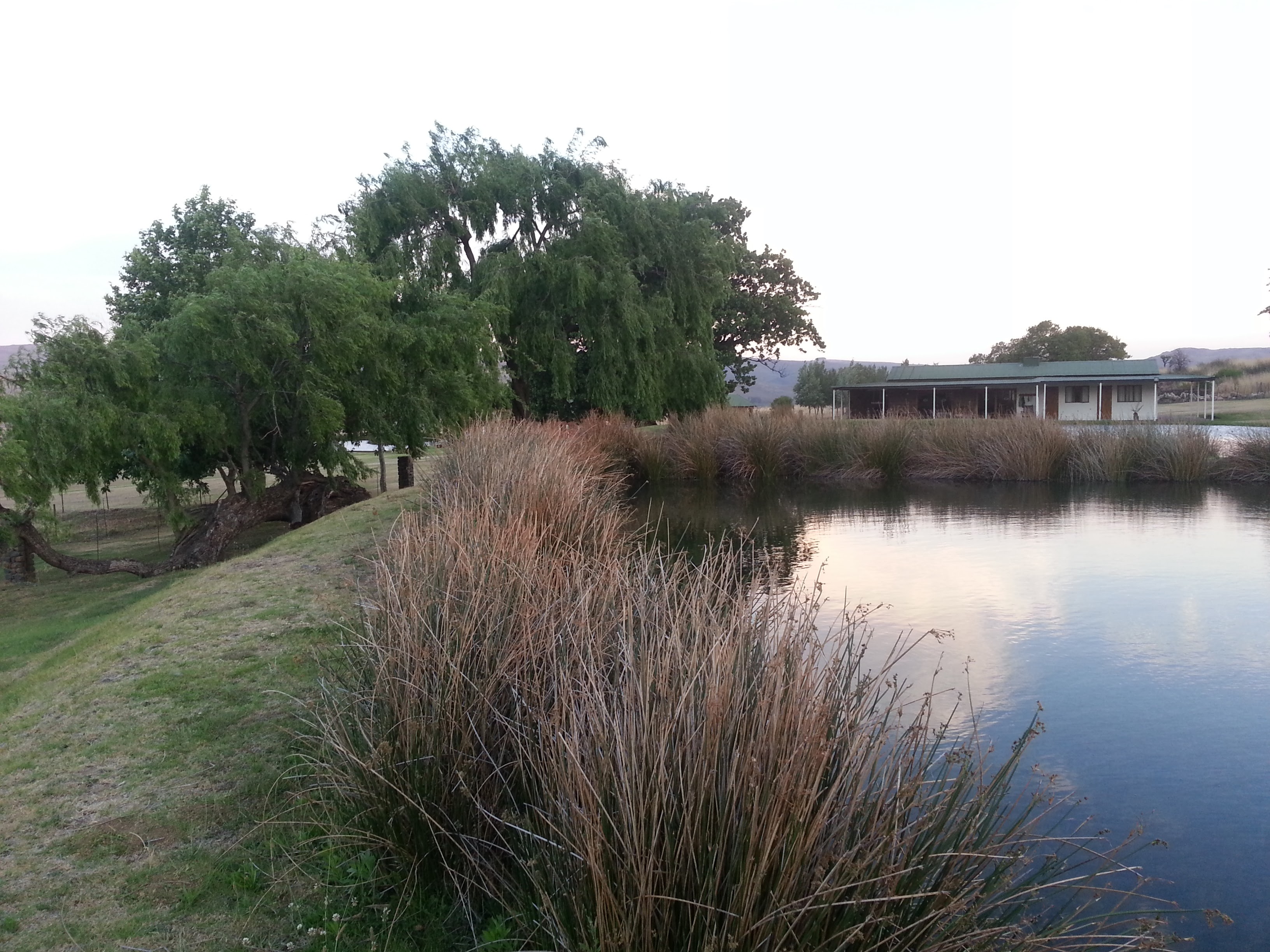
Our neighbours have a spectacular setting just like this, complete with a pair of fish eagles, a shady spot to sit, and wide open views. I’m aware that this is a bit more luxurious than tramping through muddy, cutting reeds and keeping a beady eye out for slithery things. I can also take the baby to play safely by the water’s edge and even jump into the shallow places if he feels brave enough. It might just be one of my favourite spots in the world, actually. Many happy family memories already and more to come. I think families need those special spots.
I know that this particular fishing spot will be forever seared into my sons’ memories. When they’re all grown up and taking the hooks out for their daughters who don’t want to get their hands bloody, they’ll remember these lazy weekend afternoons. They’ll remember their parents buying rolls and hotdogs and spreading out a picnic blanket, swimming, fish eagle cries, and the cool breeze as we wait for the barbel to bite. We even caught a tiny tilapia, which we threw back, as we do with all the others.
It’s a lesson in patience for energetic little boys, too, which is always good. May they always remember and smile. We’ll have to get one of those ‘Gon’ Fishing’ signs soon.
Would you like to come with us to Dullstroom this weekend?
Where? Sure. Is that really a place?
Dullstroom, it turns out, is in fact a small town in Mpumalanga, South Africa – a three hour drive from Johannesburg. As such, the Joburgers head out there regularly to enjoy the open spaces of this backwater retreat in the Mpulmalanga highlands.
The small town attracts sanctuary-seekers from all over the country, trekking to the beautiful rocky hills dotted with dams full of fat rainbow trout. Fly-fishing, coffee, hiking, photography, crafting, artisans, small businesses – Dullstroom packs a lot into one weekend, if that’s your thing.
Our weekend consisted mostly of admiring the gentle rains over the wide open spaces, splashing off the koppies and making ripples in the sky-mirror dams. Enjoying the fresh air and the beauty of nature, unhindered by traffic or crowds, serenaded by the frogs and woken up with the first golden rays of the morning sun at Zuikerboschhoek.
If it is possible to indeed feel completely rested and relaxed after just a weekend, then Dullstroom is the place to make it happen.
Linapacan is the small archipelego between Coron Busuanga and Palawan mainland. Coron Busuanga, Culion Island, Linapacan and Iloc Island are part of the Palawan province of the Philippines; and it is a truly stunning area.
Off the main drag, Linapacan is not a common tourist destination, especially for those with limited time to explore the more inaccessible parts of the 54 islands in its domain.
Getting to Linapacan
After much research and deliberation on our journey, we decided to try and take a cargo boat from Coron to Linapacan, and if we couldn’t find one at the harbour (because there aren’t always delivery boats every day), we would take the ferry the next day (buying the 800 peso ticket from the pier in the morning). Luckily for us, a friendly trike driver helped us locate a boat picking up goods. The cargo boat eventually left at noon (giving us a solid three hours to get to know fellow passengers as we all waited) and arrived at the island around 5pm. They charged us 500 pesos each. It was worth it not only for the little bit of money saved (no time saved) but also for the contacts we had made on the boat during the journey.
We hopped on to this cargo boat to get to Linapacan.
On the boat to Linapacan there were six passengers and four crew. One passenger turned out to be quite fluent in English and held the prestigious position of Barangay Counsellor (a local government official of San Miguel, Linapacan), which elevated his status greatly in the eyes of the Filipinos here. His name is Monmon (said “Mawn Moon”) and he convinced us to come to his island instead of going to San Miguel (the main city on Linapacan). He said that his friend “had a cottage” where we could stay (price unknown), that there was good snorkelling on their reef and that he would feed us.
Inapupuan Island
Why not? So, of course we agreed and we got off the boat with him at the tiny Inapupuan Island (15 minutes north of Linapacan by fishing boat). The low expectations of our detour served us well and made it more exciting to discover a whole village that was excited to have tourists in their midst. The ‘cottage’ was actually an open bamboo hut on the beach, with a only a roof, a table and a bench. There was also an outdoor ‘bathroom’ where we could wash (in buckets) and use the long-drop under the stars (with some draughty bamboo walls for privacy). The owner of the hut (a 19-year old smiling girl) cooked a huge portion of fish and rice for us and carefully watched us eat every last drop by solar lamp.
CULTURE TIP: It seems that in this part of the Philippines it was expected that we as guests eat first, while everyone watches us and prompts us to eat as much as we possibly can in one sitting. The elders then ate what we left, and then the others tucked in. It was quite something to get used to people literally staring at every mouthful we took and not being willing to let us eat an appropriate-sized portion but insisting on piling up our plates at every meal; sometimes filling our plates for us despite our pleas that we were full to the brim. [Thank goodness we swam for a few hours each day to keep those calories from sewing our clothes smaller during the night!]
This was our ‘cottage’ on Inapupuan island.
We slept on the table in our trusty duvet cover, fighting off only a few mosquitoes, but enjoying the breeze and the bright stars above. Like the birds, we woke up in true island style to the call of the confused roosters (sometimes all night), the dogs and villagers waking up with the sunrise; and the fishing boats returning from their morning expeditions. This area is known for its squid-fishing industry, which are collected between 5pm and 5am every night on boats with about eight lights shining on the water to attract the luminous-spotted ink-makers large and small.
Dried Squid
Inapupuan is apparently famous for dried mini squid (about a hand’s length) and we saw them laying out the squid at sunrise to dry for two days. After this, it is sold to traders in San Miguel (like BRC hotel), who send it on to the Manila markets about twice a week. A kilogram of mini dried squid sells at about 120 pesos, and the large dried squid at about 300 pesos per kilogram (much more than the measly 37 pesos per kilogram they get for the cashew nuts that come in from a few of the islands).
Inapupuan’s main source of income is from the dried squid that they ship to Manila once a week.
The next morning we jumped in for a snorkel (the reef is only 30 metres offshore) and unfortunately met with an array of sparkling jellyfish, which quickly redirected us back to our beach hut nursing a few little stings (nothing major). A great pity indeed as the reef looked amazing through the clear blue water off the boats. Inapupuan, we will have to come and see your reef again!
Patoyo Island
Patoyo Liao Beach
Monmon’s brother kindly ferried us to the next island on his (tiny) fishing boat, as we had read about staying on Patoyo Island (right opposite San Miguel – about 10 minutes on a boat). He dropped us on the beach with our bags and waved goodbye as he took Monmon back to his job across the bay in San Miguel. We followed our noses to a village (called Osun), asked a couple of people where we could stay and secured a spare bed at what we like to call, The Eagle Inn, with Berta and Lito.
Berta and Lito
The bamboo frame is in their front room and was available for 200 pesos per person per night and we gave them what we thought was fair for the generous meals they provided (fish, squid, rice, water and coffee). Two nights later we moved across to new friends on the neighbouring beach.
HIGHLIGHT: Lito has an eagle (that he seems to have rescued from a fishing net) perched on his tree, which eats two fish a day and takes a bath in the ocean every week. An amazing sight to see Lito (a small Filipino fisherman in baggy basketball shorts) lift the huge bird by its body, well away from its sharp hooked beak, dunk it and splash it a couple of times in the ocean, smooth down its feathers and then carry it back to its perch next to the pigs, chickens, cats and dogs.
Lito’s Eagle on Patoyo Island in the village of Osoon
Days on Patoyo were spent lazing on the beach, snorkelling in the awesome reef just off the shore, observing the local fisherman, sleeping in our hammocks and generally loving life in paradise.
The Gonzales and Castolo Families
The next two nights we spent with the Castolo family. Pastor Gonzales met us on the beach, introduced himself and then asked us to come and stay with his employers (he is the caretaker of the Castolo beach). This was another lovely introduction to the true Filipino hospitality and character. There was an abundance of food, laughter, company and an easy air of peace between friends. Since they were all Christians and Catholics, it was an added bonus to be in the company of brothers and sisters in Christ.
Pastor Gonzales shimmied up the coconut palm to bring us a drink.
Mrs Gonzales was particularly wonderful, the definition of ‘being clothed in strength and dignity’. Her five children reflect her noble work ethic and her boundless energy to serve put us to shame over and over again. We were so blessed to have met both the Gonzales and the Castolos on Patoyo Island.
Jayar and Mialyn’s Wedding
Jayar and Mialyn’s Wedding
The last day on Patoyo we met another family from San Miguel who were frantically making wedding preparations on the Liao beach (Note: You need to pay the caretaker 100 pesos per person to use this beach). Building, scraping, cutting, cleaning, burning, dusting and a whole lot more transformed this already beautiful beach into an exquisite wedding venue in preparation for the weekend. The bride and groom (and most of their family members, separately) invited us to attend their wedding on Saturday and also gave us lunches and a free ride over to San Miguel when we left Patoyo.
DID YOU KNOW? At a local island wedding in this area of the Philippines, the word gets out fairly quickly about the big celebration. The family expects (and complains about) all the uninvited guests whom they know will just sneak in (after dark) and therefore provides a mountain of food to ensure these strangers are also fed. Our wedding hosts slaughtered six pigs and sure enough after the sun had set and the reception party was under way, the boats started rolling in one by one; bringing crowds of strangers who also wanted some share the delicious food and dance!
The groom’s aunty, Maileen – of The Brinze Kylene boat – helped us find a place to stay in San Miguel (at the BRC hotel), offered us food and gave us boatloads of information about island hopping tours and getting to El Nido from here. Wow, we remember now why we just love the Philippines!
San Miguel
This sleepy little island town is the municipal capital of Linapacan and considered a bustling metropolis by the islanders of its ten barangays. We spent time here before our island hopping trip with the Escultors and used it as a base from which to do some island hopping (close to San Miguel) in small fishing boats. San Miguel contains an elementary school, a high school, two small bakeries, a handful of stores, a municipal office (where Monmon works), a basketball court, a few piers, lots of fishing boats, a big catholic church and bamboo, tin and brick houses. There were a couple of motorbikes, push carts and bicycles, but no larger vehicles that we could see.
A typical day in sleepy San MiguelThe Cabiguens own the BRC hotel and store
Island hopping
You can do an island hopping tour, for example, for 2 nights 3 days of camping (they set up, cook and clean up) with snorkelling for about 6000 pesos (total for the boat and experience for two people, or more). Travelinds did an absolutely fantastic 3 night 4 day island hopping tour with Maileen and Benji on the Brinze Kylene. Check out the details in our Brinze Kylene Expedition post.
GO LOCAL: To hire a fisherman and his little boat from San Miguel for one day costs between 1000 – 1500 pesos excluding lunch (no shade, slow and sometimes rickety) – and what an adventure it is! The cash goes to the fisherman, and by extension his family and community, so it is definitely a good cause and directly supports the local economy.
Robin and his dad took us out for a day to see the islands
There were two island hopping tours that we took from San Miguel – one for the day (with a local fisherman above) to some of the smaller islands in the area, and one with the Brinze Kylene for three nights. The Brinze Kylene dropped us off in Sibaltan for our final week on the Palawan mainland.
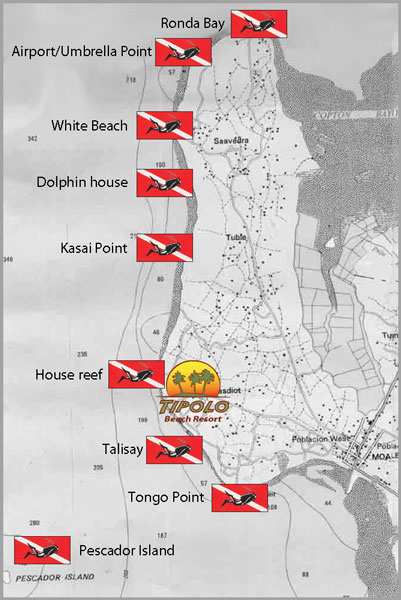
Moalboal is one of the best dive spots in Cebu and arguably in the Philippines itself. H not being a diver, we did a snorkel tour instead and were amazed at the breathtaking underwater world we discovered here.
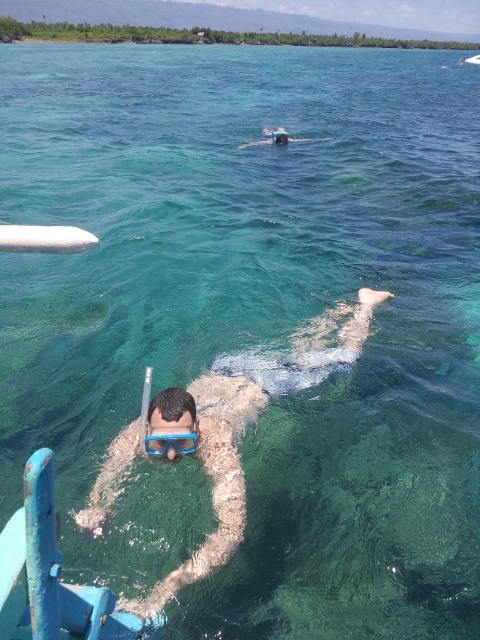
There are reefs that run from beyond White Beach all the way around the Moalboal ‘islet’. We snorkelled as Pescador island, near Talisay and in the fish sanctuary beyond Kasai Point. We saw sea kraits (large ones!), psychedelic schools of purple, orange, blue, yellow and green fish, stone fish, puffer fish, sea needles and also a whole lot of Green Turtles in various sizes, including one that was large enough for our boatman to sleep on!
We did an early snorkel tour 8am – 1pm to try and avoid the sun, wind and rain. It was a fantastic underwater experience with so much vibrant colour and life. The coral in the Talisay reef was stunning and we couldn’t believe how many interesting little sea creatures we saw.
Our boat skipper was very helpful and made sure that we were in an easy position to enjoy the snorkelling without having to fight strong currents. We tried to discourage him from touching the turtles (it seems some tourists enjoy when the turtles are brought to them to touch and take photographs) and eventually he realised that we frowned on him disturbing the creatures and left us to enjoy them in their natural environment.
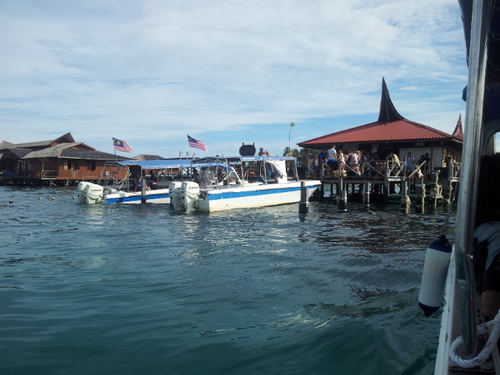
Day trip snorkelling tour to Mabul Island with Scuba Junkie. The most inhabited of all the surrounding islands, Mabul gives off an energetic vibe and it was clear to us that all tourists and locals here were passionate about the ocean and its mysteries, as well as protecting their environmental treasure trove.
We snorkelled in three different spots for the day and ate lunch at the Scuba Junkie cafeteria (buffet style) at the beach resort. There were no swimming beaches on Mabul but there is a small white beach where you can suntan or rest in the shade of a few umbrellas. The resort itself looked very nice – small wooden bungalows and pretty gardens. Swimming is not advised as there as too many sea urchins, but you can snorkel with the dive operators from off the boats, a little further out.
The rest of the island contains other resorts, dive operators, local houses and some home stays – this is another option for staying on Mabul cheaply. It is advised to check out the home-stays in person before deciding and/or paying for your accommodation. We were warned repeatedly that home stays are strictly “very basic” accommodation (bamboo huts/shared bathrooms/sleeping on floor) etc.
Best sightings for the day:
Hawksbill turtle, Blue spotted ray, a school of very large Trumpet fish, a group of Puffers, very large Green turtles (at least 20 of them for the day) and so much more!
Snorkelling spots:
We snorkelled along the drop off and also in the artificial coral garden. Lobster Wall and Panglima Reef were wonderful, so many turtles and many other interesting fish. Artificial Reef was completely boring and the visibility was poor.
Transport tips:
If you are staying on Mabul, but not diving/snorkelling through Scuba Junkie, you can still use their boat as a shuttle between Semporna and Mabul. It was only about MYR 50 and they do regular trips. You can take your luggage with you on the boat to Mabul (and back again).
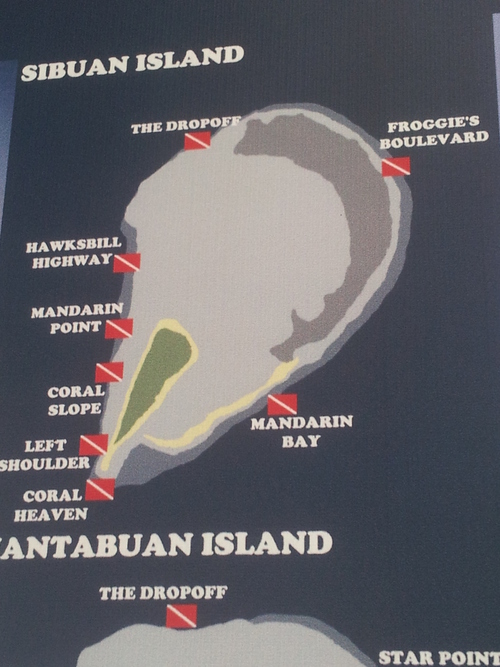
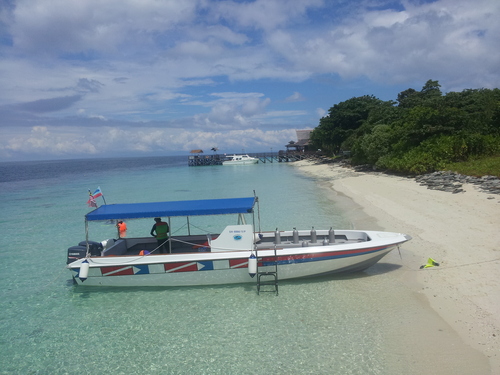
Nicknamed “Sunburn island”, Sibuan is like something out of a dreamy beach romance. White sandy beach, cobalt clear water, reefs right off the island and a couple of palm trees dotted here and there. The military base building is the only sign of life here and life seems to creep past at a suitably slow island pace.
The snorkelling here was fantastic, colourful coral, turtles, all kinds of colourful fish and other interesting sea creatures. It is close enough to swim back to the beach if you get tired and the visibility was good that day.
Favourite memory:
Due to the military presence of these islands (mostly for environmental protection and immigration law enforcement) it is common to see a couple of soldiers, with big guns, lying around on hammocks or patrolling the islands checking for illegal activity. One of the Swedish tourists was in his skimpy speedo (only) and demanded a photo shoot with the soldier and his large weapon, to which the soldier of course, happily complied. They were having a whale of a time doing a photo shoot of “the soldier and the speedo” – hilarious to watch!
Weird experience:
We were on our third snorkelling spot of the day around Sibuan when we heard two loud bangs in a row. It was enough to get us to lift our heads out of the water suddenly and look around expectantly. Apparently, this area has a problem with fisherman using dynamite for fishing purposes and unfortunately, these explosions occur pretty regularly. This particular one was apparently about two kilometres from us, but unbelievably loud for being that distance away. There is a system to report explosions (time,date, location) in the area so that officals can investigate and hopefully catch the offending parties.
TIP:
Take suncream with you. It sure is hot, with little to no shady spots on the island. As a result, we spent most of our downtime at Sibuan in the shade of the speedboat.
If you ask anyone in Sabah which dive operator they would recommend in the town of Semporna, Scuba Junkie is usually the first name on the tip of their tongues. Semporna is the gateway to the underwater beauty of Borneo and its beautiful islands – among them the world-famous Sipidan island, said to be one of the world’s top diving sites!
Although there are a wide range of other dive operators in Semporna, we only had a few days here and did not want to waste precious hours looking at other options. We went straight to Scuba Junkie when we arrived in Semporna and set up our next few days of snorkelling tours.
Upon arrival, we hadn’t done much research about which islands we wanted to see, but Kay at Scuba Junkie patiently took us through the options, cost and details of the trips so that we could decide on the best course of action.
We ended up choosing to do three day trips – to Mataking, Sibuan and then Mabul. Not being divers, we obviously couldn’t get in to Sipidan itself because this is a prime diving spot (only) and generally requires special permits, applied for ahead of your trip. The other islands, however, are more than enough to provide breath-taking underwater scenes and a vibrant mix of colours in the reefs that are teeming with beautiful and odd ocean creatures.
The full day snorkelling trip cost MYR120 (as at February 2014) and included tea, lunch, transport, environmental fee, wetsuit, snorkel, fins and your dive master. Snorkellers go on the boat with the divers and snorkel in the same spots as the dive group.
After three days of AMAZING snorkelling, turtles, rays, acute sunburn, happy memories and so much more, we definitely recommend Scuba Junkie if you only have a couple of days in Semporna. Our favourite island trip was to Mataking (a ‘northern’ island) as this was the most beautiful underwater scene of the three. Mabul Island was also wonderful for seeing many large turtles, including the rare hawkbills!


 PHOTO BY PIXABAY