Linapacan is the small archipelego between Coron Busuanga and Palawan mainland. Coron Busuanga, Culion Island, Linapacan and Iloc Island are part of the Palawan province of the Philippines; and it is a truly stunning area.
Off the main drag, Linapacan is not a common tourist destination, especially for those with limited time to explore the more inaccessible parts of the 54 islands in its domain.
Getting to Linapacan
After much research and deliberation on our journey, we decided to try and take a cargo boat from Coron to Linapacan, and if we couldn’t find one at the harbour (because there aren’t always delivery boats every day), we would take the ferry the next day (buying the 800 peso ticket from the pier in the morning). Luckily for us, a friendly trike driver helped us locate a boat picking up goods. The cargo boat eventually left at noon (giving us a solid three hours to get to know fellow passengers as we all waited) and arrived at the island around 5pm. They charged us 500 pesos each. It was worth it not only for the little bit of money saved (no time saved) but also for the contacts we had made on the boat during the journey.
We hopped on to this cargo boat to get to Linapacan.
On the boat to Linapacan there were six passengers and four crew. One passenger turned out to be quite fluent in English and held the prestigious position of Barangay Counsellor (a local government official of San Miguel, Linapacan), which elevated his status greatly in the eyes of the Filipinos here. His name is Monmon (said “Mawn Moon”) and he convinced us to come to his island instead of going to San Miguel (the main city on Linapacan). He said that his friend “had a cottage” where we could stay (price unknown), that there was good snorkelling on their reef and that he would feed us.
Inapupuan Island
Why not? So, of course we agreed and we got off the boat with him at the tiny Inapupuan Island (15 minutes north of Linapacan by fishing boat). The low expectations of our detour served us well and made it more exciting to discover a whole village that was excited to have tourists in their midst. The ‘cottage’ was actually an open bamboo hut on the beach, with a only a roof, a table and a bench. There was also an outdoor ‘bathroom’ where we could wash (in buckets) and use the long-drop under the stars (with some draughty bamboo walls for privacy). The owner of the hut (a 19-year old smiling girl) cooked a huge portion of fish and rice for us and carefully watched us eat every last drop by solar lamp.
CULTURE TIP: It seems that in this part of the Philippines it was expected that we as guests eat first, while everyone watches us and prompts us to eat as much as we possibly can in one sitting. The elders then ate what we left, and then the others tucked in. It was quite something to get used to people literally staring at every mouthful we took and not being willing to let us eat an appropriate-sized portion but insisting on piling up our plates at every meal; sometimes filling our plates for us despite our pleas that we were full to the brim. [Thank goodness we swam for a few hours each day to keep those calories from sewing our clothes smaller during the night!]
This was our ‘cottage’ on Inapupuan island.
We slept on the table in our trusty duvet cover, fighting off only a few mosquitoes, but enjoying the breeze and the bright stars above. Like the birds, we woke up in true island style to the call of the confused roosters (sometimes all night), the dogs and villagers waking up with the sunrise; and the fishing boats returning from their morning expeditions. This area is known for its squid-fishing industry, which are collected between 5pm and 5am every night on boats with about eight lights shining on the water to attract the luminous-spotted ink-makers large and small.
Dried Squid
Inapupuan is apparently famous for dried mini squid (about a hand’s length) and we saw them laying out the squid at sunrise to dry for two days. After this, it is sold to traders in San Miguel (like BRC hotel), who send it on to the Manila markets about twice a week. A kilogram of mini dried squid sells at about 120 pesos, and the large dried squid at about 300 pesos per kilogram (much more than the measly 37 pesos per kilogram they get for the cashew nuts that come in from a few of the islands).
Inapupuan’s main source of income is from the dried squid that they ship to Manila once a week.
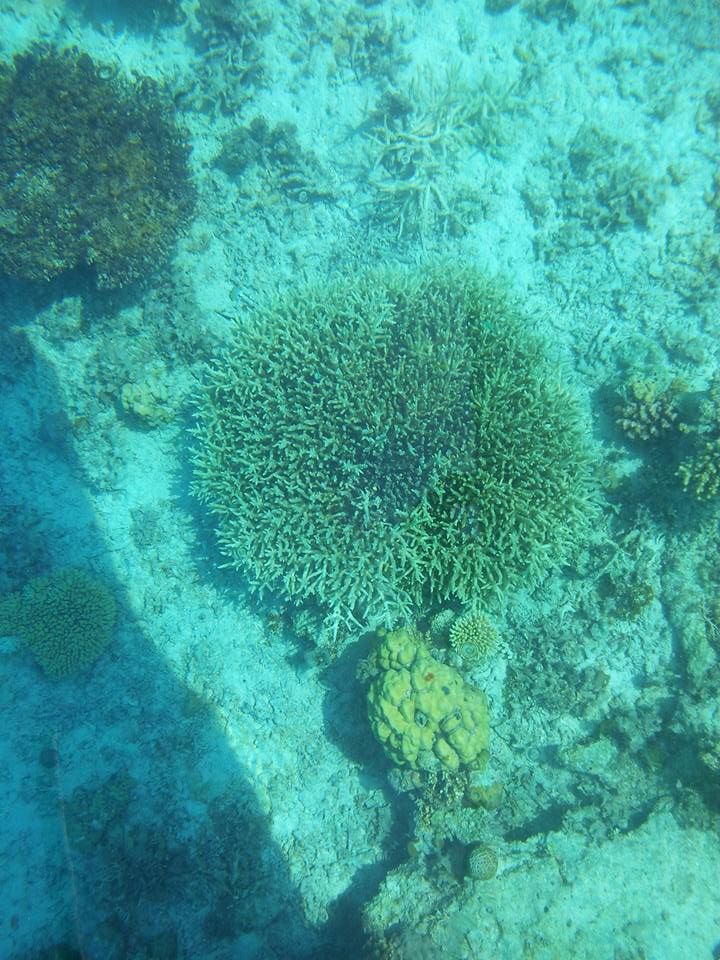
The next morning we jumped in for a snorkel (the reef is only 30 metres offshore) and unfortunately met with an array of sparkling jellyfish, which quickly redirected us back to our beach hut nursing a few little stings (nothing major). A great pity indeed as the reef looked amazing through the clear blue water off the boats. Inapupuan, we will have to come and see your reef again!
Patoyo Island
Patoyo Liao Beach
Monmon’s brother kindly ferried us to the next island on his (tiny) fishing boat, as we had read about staying on Patoyo Island (right opposite San Miguel – about 10 minutes on a boat). He dropped us on the beach with our bags and waved goodbye as he took Monmon back to his job across the bay in San Miguel. We followed our noses to a village (called Osun), asked a couple of people where we could stay and secured a spare bed at what we like to call, The Eagle Inn, with Berta and Lito.
Berta and Lito
The bamboo frame is in their front room and was available for 200 pesos per person per night and we gave them what we thought was fair for the generous meals they provided (fish, squid, rice, water and coffee). Two nights later we moved across to new friends on the neighbouring beach.
HIGHLIGHT: Lito has an eagle (that he seems to have rescued from a fishing net) perched on his tree, which eats two fish a day and takes a bath in the ocean every week. An amazing sight to see Lito (a small Filipino fisherman in baggy basketball shorts) lift the huge bird by its body, well away from its sharp hooked beak, dunk it and splash it a couple of times in the ocean, smooth down its feathers and then carry it back to its perch next to the pigs, chickens, cats and dogs.
Lito’s Eagle on Patoyo Island in the village of Osoon
Days on Patoyo were spent lazing on the beach, snorkelling in the awesome reef just off the shore, observing the local fisherman, sleeping in our hammocks and generally loving life in paradise.
The Gonzales and Castolo Families
The next two nights we spent with the Castolo family. Pastor Gonzales met us on the beach, introduced himself and then asked us to come and stay with his employers (he is the caretaker of the Castolo beach). This was another lovely introduction to the true Filipino hospitality and character. There was an abundance of food, laughter, company and an easy air of peace between friends. Since they were all Christians and Catholics, it was an added bonus to be in the company of brothers and sisters in Christ.
Pastor Gonzales shimmied up the coconut palm to bring us a drink.
Mrs Gonzales was particularly wonderful, the definition of ‘being clothed in strength and dignity’. Her five children reflect her noble work ethic and her boundless energy to serve put us to shame over and over again. We were so blessed to have met both the Gonzales and the Castolos on Patoyo Island.
Jayar and Mialyn’s Wedding
Jayar and Mialyn’s Wedding
The last day on Patoyo we met another family from San Miguel who were frantically making wedding preparations on the Liao beach (Note: You need to pay the caretaker 100 pesos per person to use this beach). Building, scraping, cutting, cleaning, burning, dusting and a whole lot more transformed this already beautiful beach into an exquisite wedding venue in preparation for the weekend. The bride and groom (and most of their family members, separately) invited us to attend their wedding on Saturday and also gave us lunches and a free ride over to San Miguel when we left Patoyo.
DID YOU KNOW? At a local island wedding in this area of the Philippines, the word gets out fairly quickly about the big celebration. The family expects (and complains about) all the uninvited guests whom they know will just sneak in (after dark) and therefore provides a mountain of food to ensure these strangers are also fed. Our wedding hosts slaughtered six pigs and sure enough after the sun had set and the reception party was under way, the boats started rolling in one by one; bringing crowds of strangers who also wanted some share the delicious food and dance!
The groom’s aunty, Maileen – of The Brinze Kylene boat – helped us find a place to stay in San Miguel (at the BRC hotel), offered us food and gave us boatloads of information about island hopping tours and getting to El Nido from here. Wow, we remember now why we just love the Philippines!
San Miguel
This sleepy little island town is the municipal capital of Linapacan and considered a bustling metropolis by the islanders of its ten barangays. We spent time here before our island hopping trip with the Escultors and used it as a base from which to do some island hopping (close to San Miguel) in small fishing boats. San Miguel contains an elementary school, a high school, two small bakeries, a handful of stores, a municipal office (where Monmon works), a basketball court, a few piers, lots of fishing boats, a big catholic church and bamboo, tin and brick houses. There were a couple of motorbikes, push carts and bicycles, but no larger vehicles that we could see.
A typical day in sleepy San MiguelThe Cabiguens own the BRC hotel and store
Island hopping
You can do an island hopping tour, for example, for 2 nights 3 days of camping (they set up, cook and clean up) with snorkelling for about 6000 pesos (total for the boat and experience for two people, or more). Travelinds did an absolutely fantastic 3 night 4 day island hopping tour with Maileen and Benji on the Brinze Kylene. Check out the details in our Brinze Kylene Expedition post.
GO LOCAL: To hire a fisherman and his little boat from San Miguel for one day costs between 1000 – 1500 pesos excluding lunch (no shade, slow and sometimes rickety) – and what an adventure it is! The cash goes to the fisherman, and by extension his family and community, so it is definitely a good cause and directly supports the local economy.
Robin and his dad took us out for a day to see the islands
There were two island hopping tours that we took from San Miguel – one for the day (with a local fisherman above) to some of the smaller islands in the area, and one with the Brinze Kylene for three nights. The Brinze Kylene dropped us off in Sibaltan for our final week on the Palawan mainland.
An amazing end to life on some Philippine islands, our Brinze Kylene expedition took us from San Miguel, Linapacan and ended at Sibaltan on the Palawan mainland. Read about how we came to meet them here.
The Hosts
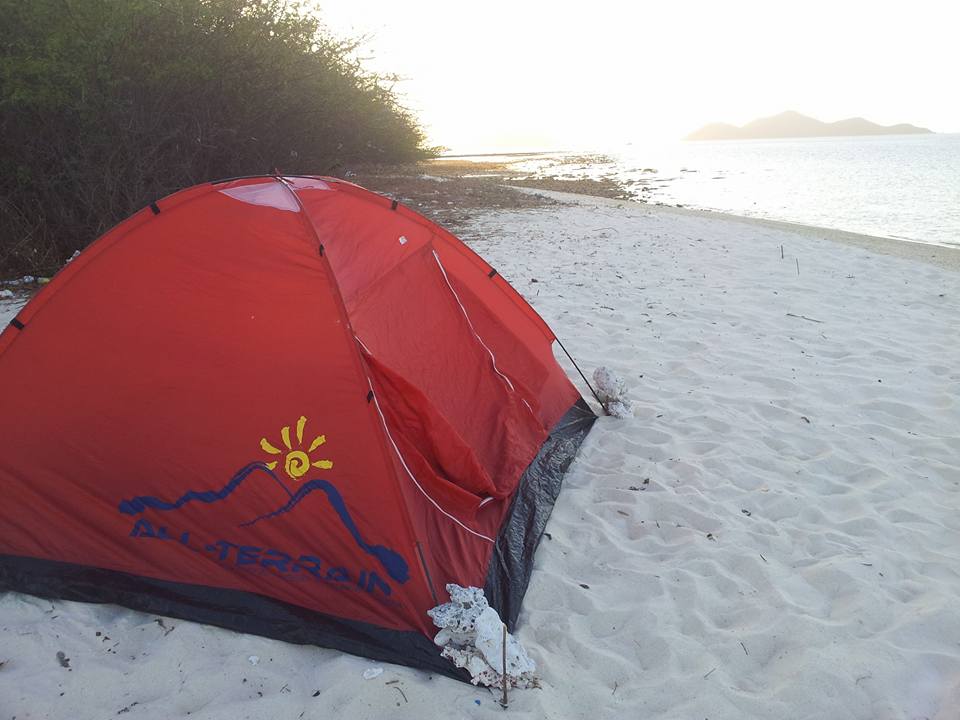
Our hosts Benji and Maileen were entertaining and hospitable, looking after us throughout our stay in Linapacan, as well as on the island hopping tour. Their service was phenomenal and so much fun. Their crew, Midel and Guerrero, seemed to have limitless energy and kept the boat running smoothly through the whole trip. They cooked for us, put up and took down our tent, found us the most exquisite coral reefs along the way and entertained us each night around an impressively large bonfire.
The Boat
Since we spent most of our time on the boat, it serves that it was rather comfortable and well-equipped for such a simple carrier. Described as a catamaran-style with balancing beams on each side, it had benches, a small cabin, a tarpaulin covering, a ladder to get out of the ocean and a small boxed-in toilet and wash area. Downright luxurious in terms of the local fishing boats!
The Food
Every day in the Philippines is another chance for fish and rice. Different fish, mind you, but fish all the same and rice to fill in the gaps. We loved the fresh seafood and feasted on lapulapu, barracuda, squid, white fish and tuna – all barbecued over a fire and served with a decent portion of sticky white rice. Every now and again we ate the precious commodities called vegetables (cabbage, carrots, tomatoes, peppers and cucumbers) and this was a real treat for the locals and for us as availability is scarce.
The three kilogram barracuda we bought from another fisherman.Lapu Lapu fresh from the ocean.A peacock mantis shrimp that we caught and ate!
And Most Importantly, The Islands
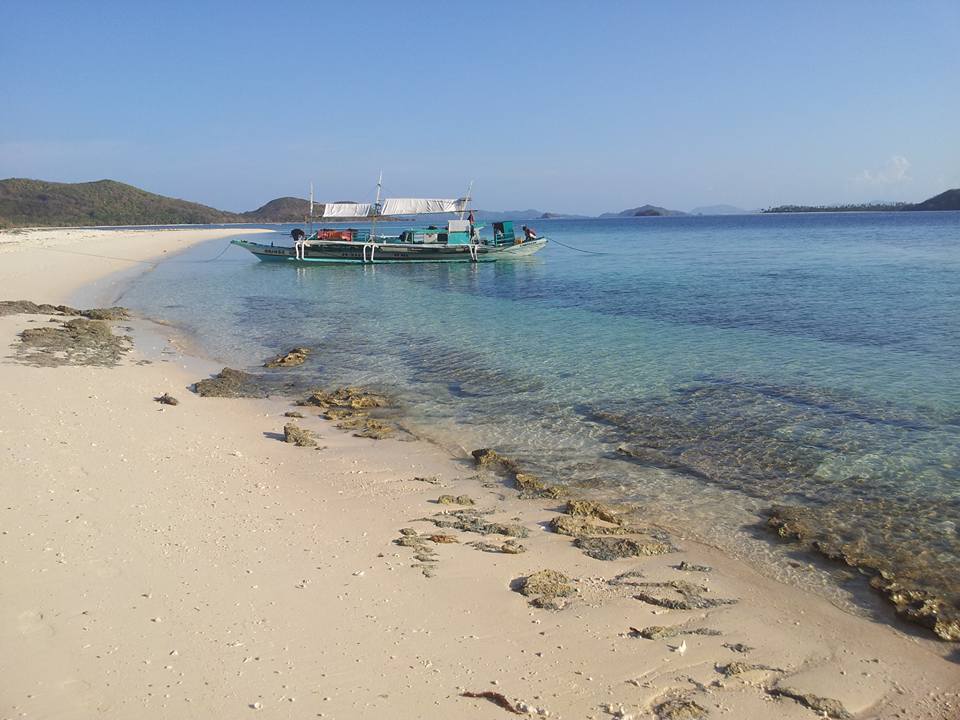
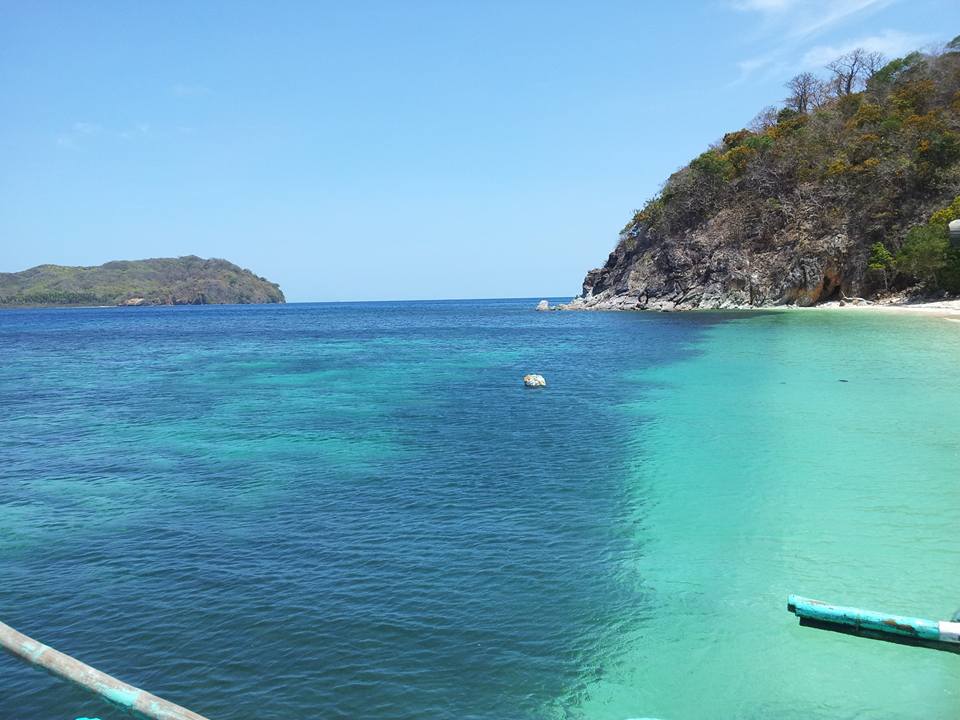
The archipelego of 54 islands is hard to describe because each one is slightly different to the next, sparkly, beautiful, rugged and unspoiled by industrialisation or development. We lost count of exactly how many islands we visited in the end, but managed to go at least 15 islands on during the 4-day trip.
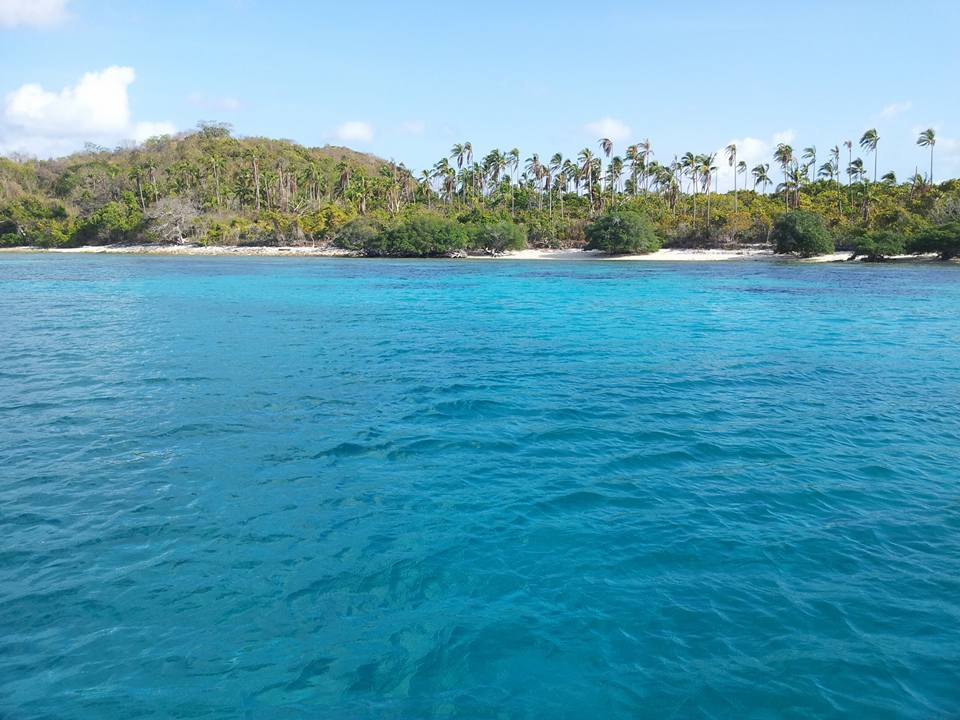
Linapacan is said to have some of “the clearest water in the world” – we believe it! Check it out.
Here was the itinerary:
Day 1: Leaving from San Miguel, to Dimancal (check out Karel’s tent resort here), Bolina, Manligad, Asis and Cagdanao (first island camp spot)
The island across the bay, Balenben, had island huts available for rent at 300 Pesos in a fantastic reef area.
Day 2: Manlihan, Cala-cala (spelt Lacalaca) and Takling (second island camp spot)
Day 3: Calibangbangan and Magransing (third island camp spot – the most beautiful place we have ever seen!)
Day 4: Pical, Mausunon and ending at Sibaltan (mainland Palawan)
Each had coral reefs right off its shores and were almost guaranteed to be completely deserted. Besides, don’t these pictures (from a humble camera phone) make you want to go there right now? Call Maileen and Benji for an adventure on the Brinze Kylene!
Linapacan is well worth your time – wow! What do you think about Palawan?
Travelinds spent a sunny March week in the beautiful city of Cape Town, South Africa.
Coming to the Mother City from up north as a child, one definitely does not appreciate the spectacular beauty of the Western Cape peninsula in all its fullness.
This was a visit to family rather than tourism, however, we still managed to see a good deal of the sights on offer.
The enormous group of German tourists that followed us out of the airport was a reminder of just how desirable Cape Town is as a tourist destination for international travellers. It wasn’t difficult to see why this is once we started looking around the city.
Muizenberg
Muizenberg was the home base, with its quaint beach village vibe, mixed with a little surf, turf and creativity.
The small colourful houses that line the streets of the village are interspersed with cafes and galleries and decorated with the individual flair of the ecclectic residents.
The iconic wooden changing rooms along the beach create a multicoloured background for fun family holidays; for South Africans and tourists alike.
The black shark spotting flag beckons swimmers and surfers into the False Bay waves, while the wary-eyed shark spotters sit high up on the side of the mountain watching the bay for shadows and fins that would change the flag status.
A late afternoon walk along the promenade towards St.James proved a wet choice as the high tide crashed over the rocks and soaked us through (a few times). The experienced railway maintenance team sat up on their elevated perch and laughed at us, again and again. So, technically, we dipped more than our toes in the waters of False Bay.
Simon’s Town and Boulders Beach
Since we were staying in the southern suburbs, we took an afternoon to go and explore the area around Simon’s Town (which is between Muizenberg and Cape Point).
Fish Hoek, Kalk Bay and St. James are a few places on the way worth a look, and maybe a beach or tidal pool swim.
The little fishing village of Simon’s Town is another perfect postcard destination – and the fish and chips were as amazing as promised by the guide books.
We grabbed the orders to go and headed out to find Boulder’s Beach a few kilometres down the road.
Lunch with the penguins seemed like a unique way to spend a day in Africa – even as a South African I forget that penguins are indeed one of the fascniating creatures on our wildlife list.
As soon as we caught a glimpse of the penguins waddling through the dense coastal shrubbery, we knew that this would be one for the memory bank. The black-and-white suited African Penguin colony lives comfortably at Boulder’s Bay (which, incidentally, has enormous boulders that shelter the bay and create great nesting and resting sites).
It is a national park that you can enter if you want to swim, however, there is a wooden walkway (where you can go for free) if you just want to view the penguins from above.
This walkway also has a few nesting sites where you can see eggs, and penguins lazing in the shade of the bushes alongside dassies and birds.
Please be a responsible visitor and do not feed or disturb these cute little penguins (who do bite by the way!).
Chapman’s Peak and Constantia
Another fun day was spent on a road trip from Muizenberg, over the mountain past Noordhoek, up Chapman’s Peak drive, down to Hout Bay, around to Constantia and out to Rondebosch.
We saw panoramic views like no other – Noordhoek beach from Chapman’s drive is breathtaking! Truly!
Where else in the world can you see beautiful mountains, sapphire oceans, white beaches, vineyards, plantations, fynbos and forests all in one place?
Chapman’s Peak is a scenic but nerve-wracking drive along the sheer cliffs, especially as the huge tour busses wind their way around the tight corners on both sides, bringing the cars on the opposite side to a hasty pause.
Hout Bay
As you descend into Hout Bay from Chapman’s Drive, remember to look out on the left for the green Hout Bay leopard statue that looks out across the bay.
Hout Bay boasts a beautiful sandy beach and an interesting harbour, with delicious seafood and exciting cruises to Seal Island and around the bay.
Our Seal Island cruise was an hour of gentle waves (despite the wind), an entertaining seal colony and views of Chapman’s Peak from the bottom of the cliffs and across the blue bay.
The Hout Bay harbour has fishing boats, yachts, awesome seafood cafes and of course, sleek hungry seals!
Remember to try a gatsby from one of the cafes.
This classic local favourite comes in delicious varieties such as steak, egg, ham, chips or fish and chips (you might want to share or take a lunch box).
Saturdays are also a great day to visit Hout Bay as this is where the market opens for local creatives to showcase their wares. Sinnful ice-cream store across the road from the market might just keep you there longer than planned, too!
Kirstenbosch
On our last day, we extended an invitation to family and friends to join us at the famous Kirstenbosch gardens for a Sunday afternoon picnic.
At the base of Table Mountain, the gardens beckon with colourful fynbos, ancient cycads and majestic towering trees.
The Egyptian geese and the franklins spend leisurely days foraging for insects, drinking from the water fountain puddles and sleeping in the sunny grassbanks that lead up to the mountain (again, please don’t feed them).
That Sunday evening was one of the renowned summer concerts and the happy crowds started streaming in as the sun started to set.
The Imperial Fortress is full of dragons, depicting power.
Hue, the epicenter of ancient Vietnam and previous capital city. Home to the Imperial Fortress, Royal residences, pagodas, tombs, the Perfume River and so much history of war and destruction.
Unfortunately we didn’t have enough time to go and see the ‘garden houses’ and I’m sure this would have been a great place to see Hue’s historical beauty preserved by patriotic, caring citizens.
Hue was definitely one of the most interesting places that we visited in Vietnam. The local cuisine is truly unique and delicious too; I would definitely consider the food as one of the main attractions in this city!
Bicycle Culture
Hue was well worth a trip, especially if you like historical and cultural aspects of travelling.
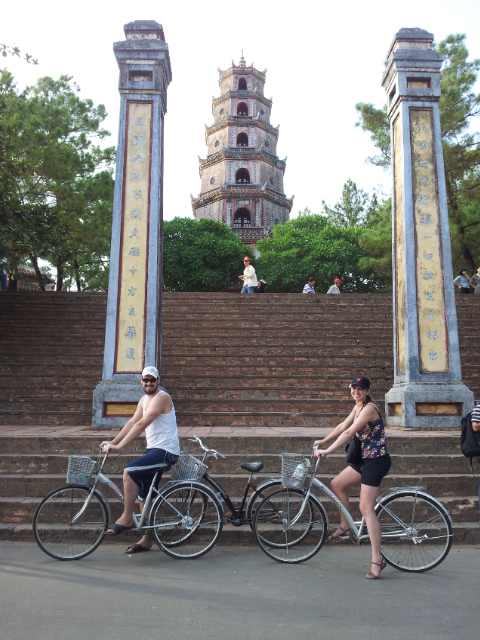
It is small enough to cycle around (we hired bicycles from our hotel for $2 per day) and there are so many little places to explore, including some local entrepreneurs at street stalls, quaint shops and interesting restaurants.
We stayed at The Canary Hotel($18, big clean rooms, air-con, nice view higher up, lovely breakfast on the 7th floor overlooking the city).
The staff were really helpful here with planning activities and the rest of our trip to Hoi An.
There is a bus that comes right past the Canary hotel for $5 pp to take you to Hoi An (we made a day trip out of it rather for $12 pp and went on a private van through Lang Co, Hai Van pass, Marble Mountain Danang, to Hoi An).
The night market was fascinating. These handpainted pictures were one of the things we bought (for about $1)!The night market was fascinating. These handpainted pictures were one of the things we bought (for about $1)!
TIP #1: Ask your hotel about the night market (between the bridges) as this was a highlight for us (it was a Friday night, local market not aimed at tourists, great buys and interesting things to see and do).
TIP #2: The traffic is still a little crazy in parts but you get in to the swing of things and people seemed generally patient with tourists on bicycles and motorbikes. The Thien Mu Pagoda was 3 km out along the Perfume River road and it turned out to be an awesome cycle from the Imperial City to the Pagoda and back to our hotel (about 10 kilometers total). Plus, Hue is relatively flat so cycling on creaking bicycles without gears is not too difficult.
TIP #3: When we visited the Imperial Fortress, we didn’t realise that we couldn’t cycle around inside the paid area (about 105,000 VND per person to enter the purple “forbidden” city), so be prepared for a lot of walking, in the hot sun! Take water, sunscreen and comfortable walking shoes here to make the most of the experience. The Purple city ticket also provides access to the museum just around the corner from the exit. There are places to park your bicycles close by, which the hotel can indicate on the map (only a small fee for a whole day’s parking).
As an English teacher in South Korea, my South African brain has had to deal with major culture shock the last two years; some things more mind-blowing than others:
1. Confused borrowed etiquette. Coffee is generally served in tea cups and tea served in coffee mugs.
2. All meals must be eaten in exactly 15 minutes or less. And no talking. Also, cut your food with scissors.
3. Slurping noodles is considered rude by “traditional etiquette standards”, but is widely practiced and grating “shlurp” sounds should always be expected. Same goes for chewing with your mouth open.
4. A popped “personal space bubble” – especially on public transport where you are surrounded by countless other bodies, touching arms or shoulders is really no biggie. Oh, and don’t expect an apology if someone bumps into you.
5. Konglish e.g. SF (sci-fi movie), eye-shopping (window shopping), arbeit (part time job), apart (apartment), heart-a-beat-a (nerves/fear), fry (fried egg), fat size (clothing sizes for larger-than-Korean people)… and the list goes on.
6. Feet. DO NOT expose your toes to your students or colleagues, EVER! Wear socks, even those semi-transparent nylon socks. Unless you don’t mind the looks and whispers.
7. Elevators. DO NOT speak while inside an elevator. Just don’t. Stare only at the wall, the mirror, the floor or the ceiling. No eye-contact is allowed.
8. Driving. Drive faster than the speed limit at all times, but break hard before every speed camera (the GPS already knows the location of all the speed cameras). Also, hoot while the traffic light is still red to make sure the cars in front of you are ready to screech out of the starting position when the light turns green. Or just ignore red lights altogether and just drive around the pole to avoid the cameras.
9. Ajummas (old women). If you are an old woman, you may walk wherever you please, including in the middle of the road. You may also push anyone out of the way, skip queues, bump violently into any people who don’t move out of your way and always stare openly at foreigners (with your mouth wide open for better effect).
And these are only the tip of the iceberg… I haven’t even mentioned the Darth-Vader-style sun visors, the very mini skirts, the perms (from toddlers to pop stars), the rice fascination, the obsession with all things “pamous” (famous) and the skin-whitening suncream. Come for a visit, I’m sure you’ll soon discover a whole lot more South Korean charm.
This is why I both love and hate living in a small town in South Korea:
I have more chance of being hit by flying clay from a passing tractor than being hit by a car.
Summer brings with it a green blanket of natural goodness, as well as the lingering smell of manure and mud.
Our apartment is so small, I can clean it quite effectively by extending the broom outwards and spinning around once or twice in only three different spots.
As a foreigner, I am subjected to at least three good, long, blatant, shameless, piercing stares from “friendly” locals every day. Can you say celebrity!
Birds, snakes, wild strawberries, pheasants, centipedes and ducks make my walks to and from school all the more exciting. Likewise for unplanned, unavoidable bum-sliding on the icy roads and pavements during Winter.
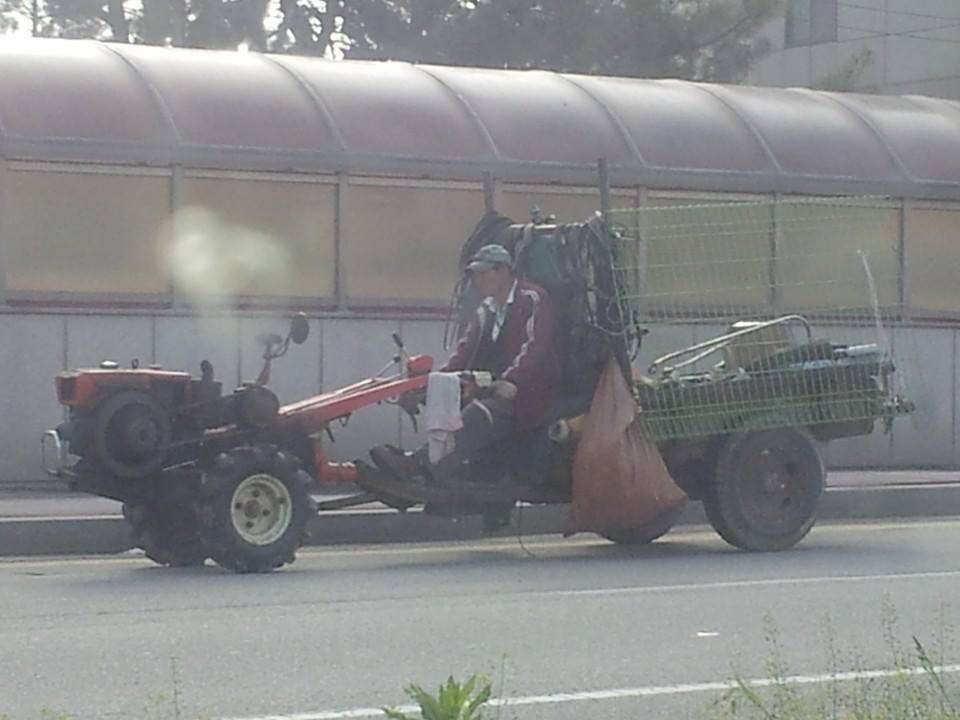
4-wheelers (quad bikes), electronic wheelchairs and baby tractors with trailers are all quite acceptable forms of transport on even the busiest roads in town.
Walking from one end of town to the other never takes more than twenty minutes and there are sure to be at least 100 students greeting us along the way, as between us, we teach at the only elementary, middle and high school in the town.
The ancient old lady collecting trash provides endless entertainment for passing pedestrians (and endless frustration for hurried motorists) as she pushes her cardboard collection trailor around town, in the middle of the road, oblivious to the traffic jams and horns blaring all around her.
No matter which secret alleyway I choose to take (for exploration purposes), all ways eventually lead to the main street in town.
The mandu (Korean dumpling) shop owner greets me with a friendly smile and courteous bow every single day. Even when I don’t buy mandu from her for a couple of weeks.
Aaaaah, Korean life.
P.S. Did I mention that I have only been asked if I’m “Russian” (code for ‘lady of the night’) four times in three months. No, no I’m not Russian. Not available, sorry. This is awkward. I’m leaving now…
As informed by the brochures on Kota Kinabalu, we headed over to the Gaya street Sunday Market relatively early on Sunday morning. We had heard plenty of positive things about this bustling street market and wanted to check it out. With it being the weekend of Chinese New Year, there was also a lot of excitement around the area with loads of lantern decorations and dancing dragons gliding through the streets.
True to form, the market did not disappoint with its vast array of goods for sale and the whole of Gaya street was blocked off with several rows of stalls. Some of the things we spotted were: clothing, puppies, plants, juice, gadgets, curios, pots, lasers, baskets, fish, fresh produce, fake jewellry, nailpolish, handbags, turtles, musical instruments, canvas artworks and coconut carvings.
Not being too fond of close contact with hundreds of people, we only lasted about an hour and then headed back to find some brunch. The only purchases for the day were a mango juice and matching caps with ‘Sabah Borneo Malaysia’ embroidered on the front.
Getting there:
Coming from Centre Point side, you cross the main intersection at Centre Point heading away from the ocean. You then head towards the city hall park area (you’ll see a KFC on your right at some point and a bus terminal on your left) and keep walking until you see the colourful Gaya street market decorations. There is a big hotel and a bird statue just before the entrance to Gaya street. It is the street where a lot of the lower-end backpackers are located. The traffic and amount of people should also guide you to the right area.
There’s more information about the Gaya Street market here.
The Kota Kinabalu State Museum complex is a most interesting place to visit if you want to learn more about the intriguing culture and history of Sabah. We spent an entire day here and still didn’t get to see all that the complex has on offer.
The first stop was the Main Museum building and this kept us busy for a very long time! Natural history, Sabah special ‘Then and Now’ display and the ‘Our culture’ sections were the most interesting and it took a lot of time to work through all that valuable information. We also watched a video (about an hour) in the natural history section titled ‘Borneo’ (1937) – an old black and white movie travelogue shot by famous explorers Martin and Osa Johnson.
We found some local Malaysian lunch at the small cafe called Zureen’s cafe (located just outside the heritage village, in the parking lot). This included our favourite ‘Char Keow Teoy’(fried flat noodles with chicken or prawns), ‘Mee Goreng’ (fried yellow noodles) and Horlicks/Nestum (milky sweet drink, served hot or with ice cubes). I think the total lunch came to only MYR 12 for both of us.
After lunch, we finished up at the main building and then headed to the Heritage Village. Here you can see all the different kinds of houses/huts/structures/transport/machinery/equipment used by the different tribes that can be found in Sabah. It was a very interesting experience to see the vast differences in lifestyles, building designs and practical day-to-day instruments employed in these different tribes. There was everything from a Chinese farm house to a Rungus longhouse. The Murut longhouse was my favourite, with its huge porcelain jars, wooden rhinoceros hornbills hanging from the ceiling and a trampoline-like floor that is used for entertaining guests.
There were not enough hours in our day to see everything so unfortunately we had to leave before we had seen the science museum, islamic museum and the ethnobotanical garden. Read more about the Sabah Museum here.
This vibrant city is the largest city in the eastern Malaysian province of Sabah, on Borneo. As in most other parts of Malaysia, Kota Kinabalu is home to a wide variety of cultural groups, including some special people groups specific to Borneo, like the Rungus. This province includes 33 indigenous groups speaking 50 different languages and up to 80 different ethnic dialects. Talk about an administrative nightmare for local government!
The province of Sabah has a wide range of attractions that make it a very alluring spot for tourists from all over the world. Beaches, islands, reefs, mountains, parks, nature reserves, museums, temples, mosques, markets, hot springs and rainforests – and Kota Kinabalu is the doorway to it all!
Named for its proximity to Mount Kinabalu, the city of Kota Kinabalu lies on the north-western coast of Sabah and boasts the largest port and population in Sabah. Kinabalu means ‘Chinese/China’ (kina), ‘Widow’ (balu), which perhaps explains why the mountain itself is held in such awe by the local inhabitants. It soars above the rest of the landscape, often swathed in a thick layer of white clouds and stands a lofty 4,101 metres above sea level.
With so much to see and not enough time to see it in, Sabah offers tourists a jam-packed holiday filled with endless activities and interesting places. You will need to take some time out to help it all sink in!
Read more about the following attractions in Kota Kinabalu (NOTE: these are just a few of them that we managed to see):
Port Elizabeth is the fifth largest city in South Africa and is situated on the east coast. A main city in the Eastern Cape Province, it has a large harbour, beautiful beaches, a developed infrastructure and a good local university.
Tourist must-sees:
This area is a great draw-card for tourists with everything from white sandy beaches to a mixed bag of friendly locals, to the sprawling National Addo Elephant Park only 40 minutes out of the city.
Some top recommendations from me include:
King’s beach and the Boardwalk shopping complex
Schoenmakerskop – village and seaside experience
Bluewater Bay area – beach days, picnic and children’s activities
Sunday’s River – ferry, estuary and holiday resorts.
National Addo Elephant Reserve – with “Big 5” and easy driving. It includes whale and dolphin sightings on the coastal reserve side.
Van Staden’s Wild Flower reserve – hiking, picnicking, bird-watching
My favourite place:
This is, by far, Sardinia Bay – a magnificent white beach with impressive sand dunes, rough coastline and endless rock pools to explore further down the beach. Great for any time of the day, early morning runs, picnics, beach days or romantic evening strolls.
Day Trips:
From Port Elizabeth, a day trip to the following destinations is a breeze: Port Alfred, Addo Elephant Park, St Francis Bay, Bathurst, Grahamstown, Kenton-on-Sea and Plettenberg Bay.
Don’t forget to do the absolutely beautiful drive along the coastline to the north of East London. Grab a picnic lunch and beach gear and explore the coastline to find the hidden treasures of Glen Gariff, Haga-Haga and Morgan’s Bay too!
Fun facts:
Nicknames: The Friendly City, The Windy City, Algoa Bay, P.E., The Bay,
Title: Port Elizabeth was not named after Queen Elizabeth as often assumed, but after the late wife of its founder, Sir Richard Donkin.
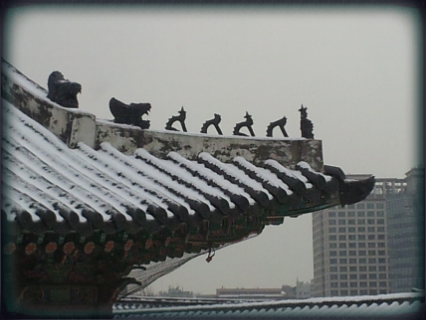
On visiting the Gyeongbok Palace (Gyeongbokgung) in Seoul, I happened to notice some mysterious figurines on the corners of the roof, especially for the larger buildings. Intrigued, I investigated a little further and found that these are traditional Korean figures called Japsang (잡상).
The figures depict the grandeur of the building (more Japsang means the building is of higher importance), as well as the shamanistic beliefs that these figurines work to ward off evil spirits. This notion was apparently derived from the characters of a traditional Chinese story called “Journey To The West”, which follows the adventures of Monk Xanzang, a Bhuddist monk who went to India in search of sacred writings.
There are about ten guardians, which are placed in a specific order on the sloping roof and always arranged in odd numbers.
Some of the most important characters are:
Monk Xanzang, the main character
Sonojeong, The Monkey King
Jeopalgye, the Pig Monster
Saojeong, the Half-Water Demon
Iguryong, Double-mouthed Dragon.
Mahwasang, Horse
Cheonsangap, Pangolin
Another example of just how much the Korean culture has been influenced by the Chinese nation, even though most are loathe to admit it.








 Travelinds spent a sunny March week in the beautiful city of Cape Town, South Africa.
 Since we were staying in the southern suburbs, we took an afternoon to go and explore the area around Simon’s Town (which is between Muizenberg and Cape Point).
 As you descend into Hout Bay from Chapman’s Drive, remember to look out on the left for the green Hout Bay leopard statue that looks out across the bay.
 Our Seal Island cruise was an hour of gentle waves (despite the wind), an entertaining seal colony and views of Chapman’s Peak from the bottom of the cliffs and across the blue bay.