Travelinds has experienced a range of different beach trips and the following are items that we really cannot go without aside from swimsuits and suncream (*cue drum roll…*):
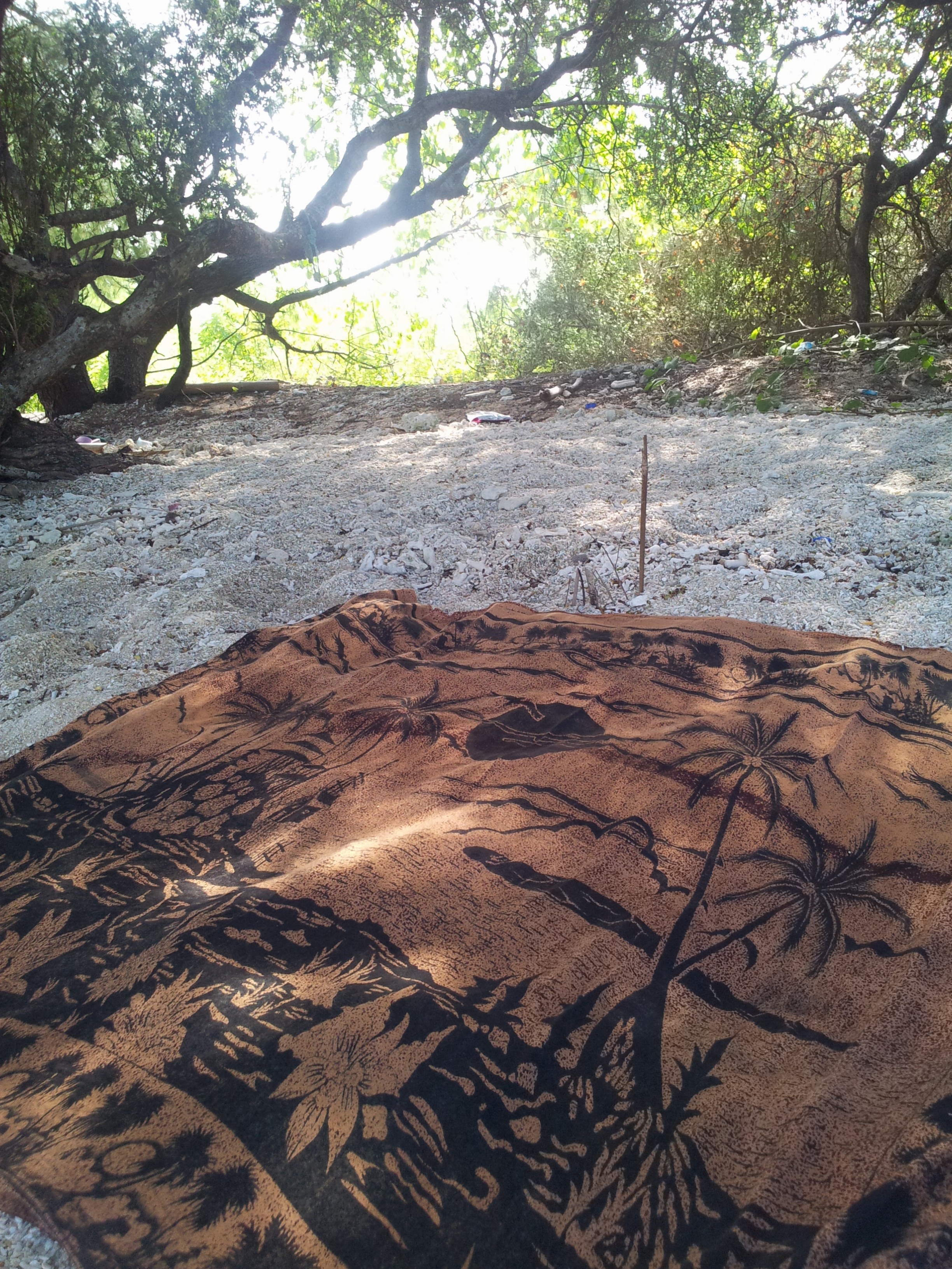
1. Sarong
It’s versatile, light-weight and easy to pack into a small space. Sarongs are good as a towel, a sun cover, a beach blanket, clothing and a cover against mosquitoes in the evenings.
2 Hat
Hats are an obvious item, but also one that saves a face from a world of pain and long-term sun damage. Hats can generally be easily replaced if forgotten or lost, except on isolated tropical islands like we visited in the Philippines. Hats protect your face against the sun and rain (and cover a bad hair day, too!).
3. Sunglasses
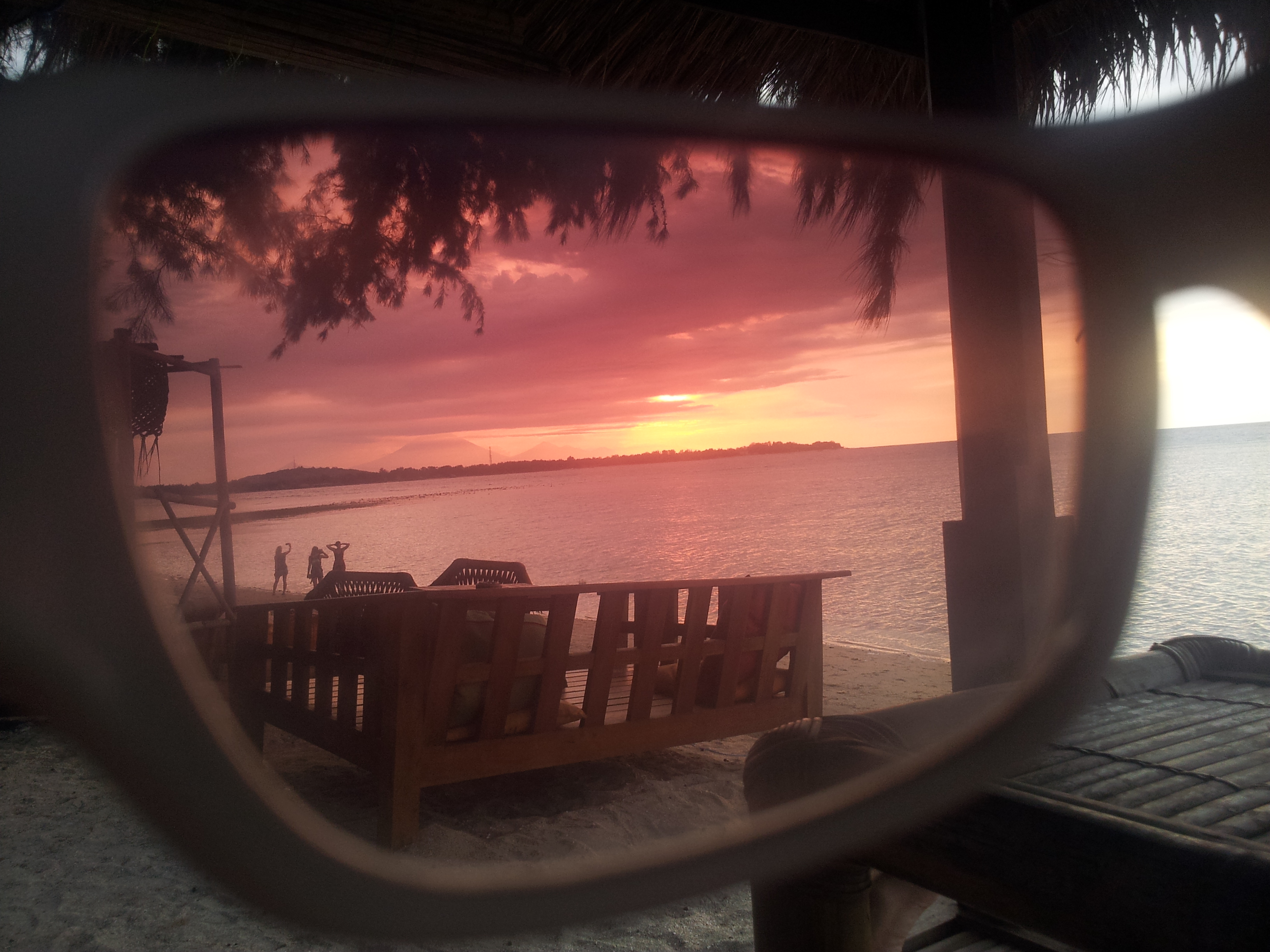
Light-coloured eyes will thank you for some extra protection from the harsh glare of the sun. They are also quite stylish, if you’re into that sort of thing, and, without sunglasses, you wouldn’t be able to take an amazing sunset photo like this one in Gili Air…
4. Rash vest
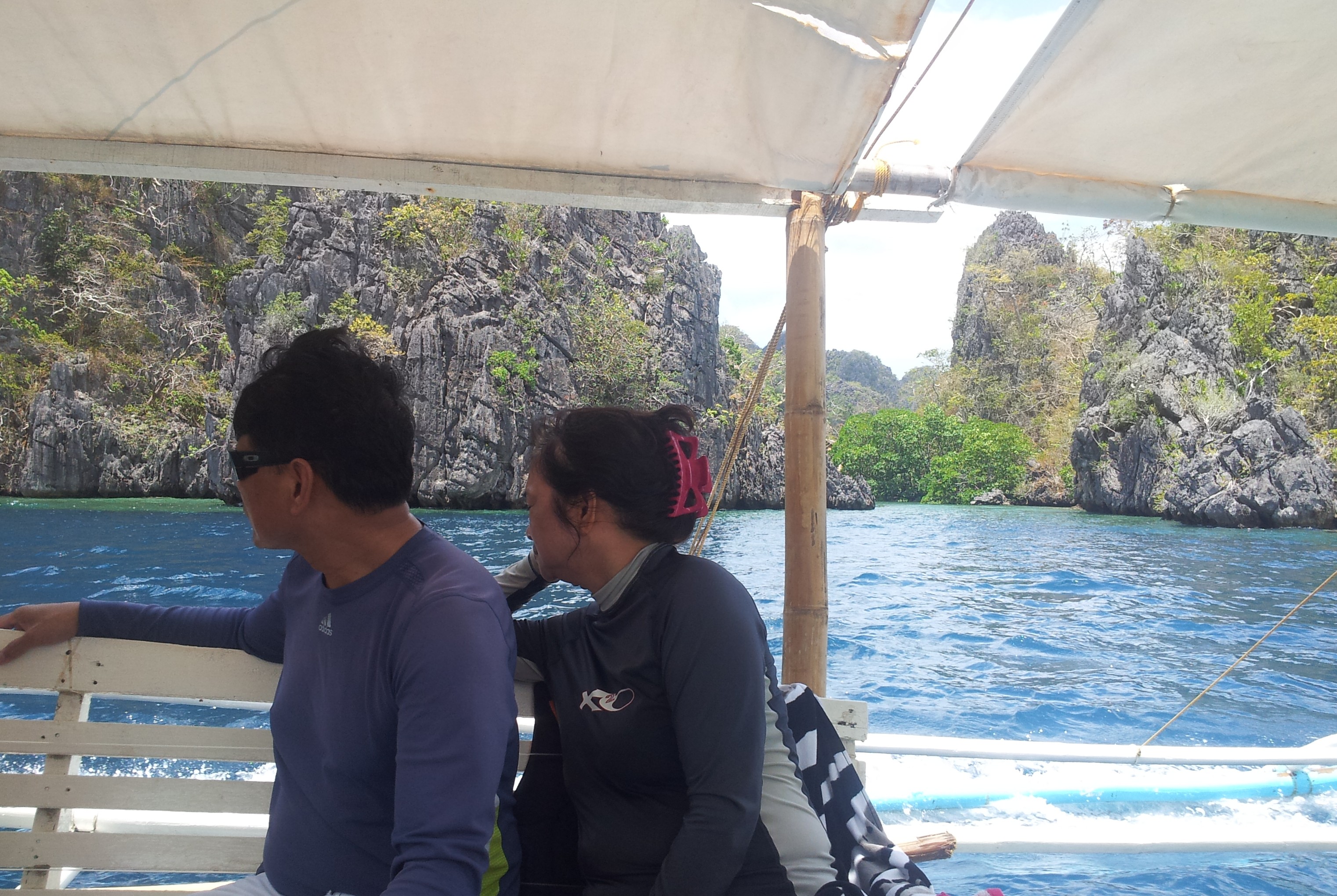
This is one of the best investments we’ve made for any water activities – good sun protection, as well as an extra guard against stinging water creatures and plants.
5. Hammock
You can sit down, lie down, swing, sleep, read and daydream. It keeps your feet clean, your books out of the sand and a breeze through your hair. You can string it up in the shade, anywhere, anytime. Also, your swimsuit can dry on both sides. What’s not to love?
6. Snorkel and Mask
Having our own snorkel and mask with us has been a great idea. It allows a lot more freedom to explore the underwater surroundings at each beach without having to rent it (or miss out completely). It is also helpful to have some goggles (like the kind you’d use in a pool) as a backup for long swims.
7. Dry Bag
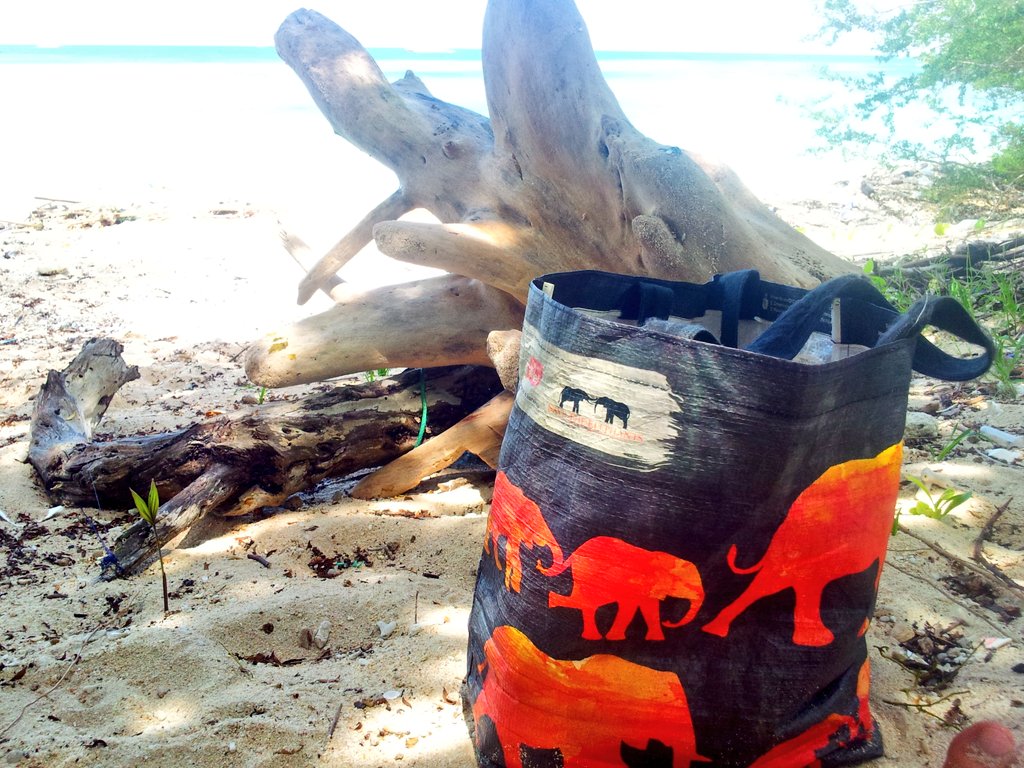
Whether for a boat tour, a water transfer, a ski trip or a dive, the dry bag is usually a good idea to avoid general spray and the odd freak wave soak. Cameras, cellphones, wallets and books will thank you later.
8. Refill water
The amount of plastic in our precious oceans is shocking and disgusting, and we can make a difference every single day. Take your muggy along rather than buying plastic bottles along the way. Being environmentally responsible tourists is a daily choice and one of these decisions is to use water refill stations (or decant from large recyclable refills for the duration of your trip) rather than buying more plastic waste. Incidentally, it will also save you money. For example, on Gili Meno (Indonesia), the price of a 1.5-litre plastic water bottle was 5,000 IRP and the price of a 19-litre (5 gallon) refill water tank was 22,000 IRP (excluding a deposit). That’s a 65% saving on the price per litre if you ditch the 1.5-litre bottles and choose the 19-litre refill instead (about 4 days worth for the two of us).
9. E-reader
This little device has truly changed the way that I read both at home and abroad. Travelling with it is easy and this means I read more wherever I am, at any time of the day or night. Books are still amazing, but an e-reader allows me to carry around my whole library, use it at night in places without electricity and read more than one book at a time without taking up more precious space in my small backpack. The world needs to read more – do your part!
10. Camera
Obviously, a camera is an essential item to capture the beauty of all your travel destinations, like this sunset at the Tip of Borneo. You can share it with others, and refresh your memories as the years go by. Together with a dry bag or sand-friendly cover, keep some extra batteries and a universal adapter so you can recharge it easily.
Armed with Travelinds Top 10: Beach Travel Items you are ready for any beach in the world – and there are some breathtaking beaches out there, no matter where on God’s beautiful green earth you go! Check you on the flip side.
What are you favourite beach travel items? Travelinds would love if you left us a comment below!
If you liked this post, check out Travelinds’ post
Linapacan is the small archipelego between Coron Busuanga and Palawan mainland. Coron Busuanga, Culion Island, Linapacan and Iloc Island are part of the Palawan province of the Philippines; and it is a truly stunning area.
Off the main drag, Linapacan is not a common tourist destination, especially for those with limited time to explore the more inaccessible parts of the 54 islands in its domain.
Getting to Linapacan
After much research and deliberation on our journey, we decided to try and take a cargo boat from Coron to Linapacan, and if we couldn’t find one at the harbour (because there aren’t always delivery boats every day), we would take the ferry the next day (buying the 800 peso ticket from the pier in the morning). Luckily for us, a friendly trike driver helped us locate a boat picking up goods. The cargo boat eventually left at noon (giving us a solid three hours to get to know fellow passengers as we all waited) and arrived at the island around 5pm. They charged us 500 pesos each. It was worth it not only for the little bit of money saved (no time saved) but also for the contacts we had made on the boat during the journey.
We hopped on to this cargo boat to get to Linapacan.
On the boat to Linapacan there were six passengers and four crew. One passenger turned out to be quite fluent in English and held the prestigious position of Barangay Counsellor (a local government official of San Miguel, Linapacan), which elevated his status greatly in the eyes of the Filipinos here. His name is Monmon (said “Mawn Moon”) and he convinced us to come to his island instead of going to San Miguel (the main city on Linapacan). He said that his friend “had a cottage” where we could stay (price unknown), that there was good snorkelling on their reef and that he would feed us.
Inapupuan Island
Why not? So, of course we agreed and we got off the boat with him at the tiny Inapupuan Island (15 minutes north of Linapacan by fishing boat). The low expectations of our detour served us well and made it more exciting to discover a whole village that was excited to have tourists in their midst. The ‘cottage’ was actually an open bamboo hut on the beach, with a only a roof, a table and a bench. There was also an outdoor ‘bathroom’ where we could wash (in buckets) and use the long-drop under the stars (with some draughty bamboo walls for privacy). The owner of the hut (a 19-year old smiling girl) cooked a huge portion of fish and rice for us and carefully watched us eat every last drop by solar lamp.
CULTURE TIP: It seems that in this part of the Philippines it was expected that we as guests eat first, while everyone watches us and prompts us to eat as much as we possibly can in one sitting. The elders then ate what we left, and then the others tucked in. It was quite something to get used to people literally staring at every mouthful we took and not being willing to let us eat an appropriate-sized portion but insisting on piling up our plates at every meal; sometimes filling our plates for us despite our pleas that we were full to the brim. [Thank goodness we swam for a few hours each day to keep those calories from sewing our clothes smaller during the night!]
This was our ‘cottage’ on Inapupuan island.
We slept on the table in our trusty duvet cover, fighting off only a few mosquitoes, but enjoying the breeze and the bright stars above. Like the birds, we woke up in true island style to the call of the confused roosters (sometimes all night), the dogs and villagers waking up with the sunrise; and the fishing boats returning from their morning expeditions. This area is known for its squid-fishing industry, which are collected between 5pm and 5am every night on boats with about eight lights shining on the water to attract the luminous-spotted ink-makers large and small.
Dried Squid
Inapupuan is apparently famous for dried mini squid (about a hand’s length) and we saw them laying out the squid at sunrise to dry for two days. After this, it is sold to traders in San Miguel (like BRC hotel), who send it on to the Manila markets about twice a week. A kilogram of mini dried squid sells at about 120 pesos, and the large dried squid at about 300 pesos per kilogram (much more than the measly 37 pesos per kilogram they get for the cashew nuts that come in from a few of the islands).
Inapupuan’s main source of income is from the dried squid that they ship to Manila once a week.
The next morning we jumped in for a snorkel (the reef is only 30 metres offshore) and unfortunately met with an array of sparkling jellyfish, which quickly redirected us back to our beach hut nursing a few little stings (nothing major). A great pity indeed as the reef looked amazing through the clear blue water off the boats. Inapupuan, we will have to come and see your reef again!
Patoyo Island
Patoyo Liao Beach
Monmon’s brother kindly ferried us to the next island on his (tiny) fishing boat, as we had read about staying on Patoyo Island (right opposite San Miguel – about 10 minutes on a boat). He dropped us on the beach with our bags and waved goodbye as he took Monmon back to his job across the bay in San Miguel. We followed our noses to a village (called Osun), asked a couple of people where we could stay and secured a spare bed at what we like to call, The Eagle Inn, with Berta and Lito.
Berta and Lito
The bamboo frame is in their front room and was available for 200 pesos per person per night and we gave them what we thought was fair for the generous meals they provided (fish, squid, rice, water and coffee). Two nights later we moved across to new friends on the neighbouring beach.
HIGHLIGHT: Lito has an eagle (that he seems to have rescued from a fishing net) perched on his tree, which eats two fish a day and takes a bath in the ocean every week. An amazing sight to see Lito (a small Filipino fisherman in baggy basketball shorts) lift the huge bird by its body, well away from its sharp hooked beak, dunk it and splash it a couple of times in the ocean, smooth down its feathers and then carry it back to its perch next to the pigs, chickens, cats and dogs.
Lito’s Eagle on Patoyo Island in the village of Osoon
Days on Patoyo were spent lazing on the beach, snorkelling in the awesome reef just off the shore, observing the local fisherman, sleeping in our hammocks and generally loving life in paradise.
The Gonzales and Castolo Families
The next two nights we spent with the Castolo family. Pastor Gonzales met us on the beach, introduced himself and then asked us to come and stay with his employers (he is the caretaker of the Castolo beach). This was another lovely introduction to the true Filipino hospitality and character. There was an abundance of food, laughter, company and an easy air of peace between friends. Since they were all Christians and Catholics, it was an added bonus to be in the company of brothers and sisters in Christ.
Pastor Gonzales shimmied up the coconut palm to bring us a drink.
Mrs Gonzales was particularly wonderful, the definition of ‘being clothed in strength and dignity’. Her five children reflect her noble work ethic and her boundless energy to serve put us to shame over and over again. We were so blessed to have met both the Gonzales and the Castolos on Patoyo Island.
Jayar and Mialyn’s Wedding
Jayar and Mialyn’s Wedding
The last day on Patoyo we met another family from San Miguel who were frantically making wedding preparations on the Liao beach (Note: You need to pay the caretaker 100 pesos per person to use this beach). Building, scraping, cutting, cleaning, burning, dusting and a whole lot more transformed this already beautiful beach into an exquisite wedding venue in preparation for the weekend. The bride and groom (and most of their family members, separately) invited us to attend their wedding on Saturday and also gave us lunches and a free ride over to San Miguel when we left Patoyo.
DID YOU KNOW? At a local island wedding in this area of the Philippines, the word gets out fairly quickly about the big celebration. The family expects (and complains about) all the uninvited guests whom they know will just sneak in (after dark) and therefore provides a mountain of food to ensure these strangers are also fed. Our wedding hosts slaughtered six pigs and sure enough after the sun had set and the reception party was under way, the boats started rolling in one by one; bringing crowds of strangers who also wanted some share the delicious food and dance!
The groom’s aunty, Maileen – of The Brinze Kylene boat – helped us find a place to stay in San Miguel (at the BRC hotel), offered us food and gave us boatloads of information about island hopping tours and getting to El Nido from here. Wow, we remember now why we just love the Philippines!
San Miguel
This sleepy little island town is the municipal capital of Linapacan and considered a bustling metropolis by the islanders of its ten barangays. We spent time here before our island hopping trip with the Escultors and used it as a base from which to do some island hopping (close to San Miguel) in small fishing boats. San Miguel contains an elementary school, a high school, two small bakeries, a handful of stores, a municipal office (where Monmon works), a basketball court, a few piers, lots of fishing boats, a big catholic church and bamboo, tin and brick houses. There were a couple of motorbikes, push carts and bicycles, but no larger vehicles that we could see.
A typical day in sleepy San MiguelThe Cabiguens own the BRC hotel and store
Island hopping
You can do an island hopping tour, for example, for 2 nights 3 days of camping (they set up, cook and clean up) with snorkelling for about 6000 pesos (total for the boat and experience for two people, or more). Travelinds did an absolutely fantastic 3 night 4 day island hopping tour with Maileen and Benji on the Brinze Kylene. Check out the details in our Brinze Kylene Expedition post.
GO LOCAL: To hire a fisherman and his little boat from San Miguel for one day costs between 1000 – 1500 pesos excluding lunch (no shade, slow and sometimes rickety) – and what an adventure it is! The cash goes to the fisherman, and by extension his family and community, so it is definitely a good cause and directly supports the local economy.
Robin and his dad took us out for a day to see the islands
There were two island hopping tours that we took from San Miguel – one for the day (with a local fisherman above) to some of the smaller islands in the area, and one with the Brinze Kylene for three nights. The Brinze Kylene dropped us off in Sibaltan for our final week on the Palawan mainland.
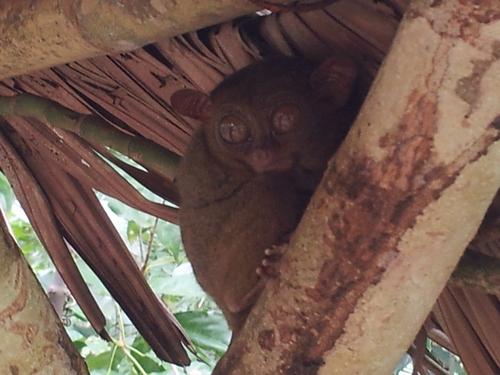
Big round eyes, sticky little toes, ruffled brown fur and strange pointy ears was my first glimpse of the tarsier, a tiny creature that I have been dying to see since starting our travels in South East Asia. Nocturnal by nature, the tarsiers are sleepy during the day and these mostly insectivorous primates spend the daylight hours fast asleep. At night, it is a completely different story with jumping, shrieking and feasting on whatever they can find.
The Philippine Tarsiers, like their cousins the Western Tarsiers, are the cutest, tiniest, weirdest-looking animals ever! Tarsiers are only found in South East Asia and are critically endangered.
Bohol island in the Philippines is home to some of the only Philippine tarsiers left in the world and there are conservation efforts happening on the island to increase the dwindling numbers of this lovely little creature. Many of those animals kept at the conservation centres have been rescued from illegal trade and can never survive again in the wild. Others have been successfully bred through carefully guarded breeding programmes and then successfully released into their natural habitat.
Travelinds was forced to visit the Carmen Tarsier Sanctuary (in Loboc) instead of the Corella sanctuary which I’d read so much about, because the road had been severely damaged by the October 2013 earthquake and made it impossible to get to Corella from where we were staying in Panglao, Alona Beach. It was great to finally meet these amazing little monkeys, but I felt guilty once again that captivity is no place for wild creatures. Even though I so badly wanted to see one of these animals, I would still have preferred to see one at a far distance knowing it was free and wild!