Tag Archives: wildlife

Oribi Mom: Crazy Amount of Growth

The author said it’s crazy how quickly things change from season to season when you think about it.

April 14, 2025

That’s crazy! I was looking at a picture of when we first moved to this little farm. There was a long drive to the little house, absolutely filled with invasive lantana and triffid weed, not to mention the bugweed, wattles, and various kinds of burrs.

The ‘garden’ wasn’t much different and only had a handful of baby trees in it. No shade. Plenty of snakes, birds, and wildlife, though.

Weeds Galore!

I don’t know the right names for all the burrs, except for black jack. There are flat, half-moon shaped ones we call sweethearts. Then, there are very sticky green balls that are almost impossible to get off you whole; it takes some time.

There are things like devil thorns, which is why our children have always worn gumboots in the garden since they could walk. I might have also had snakes and scorpions in the back of my mind when sending them out onto the rough lawn in boots. I also think gumboots on tiny toddlers are the cutest.

Of course, now they’re way too farm boy-ish and hardy to wear gumboots while they play, run, climb, and dig outside. At least I saved their baby feet a bit from all the scratchy, prickly things we have growing here.

Growth Is Always Happening

The pictures from 2017 seem like a whole other world when I look out over my garden now. There’s still a long, long way to go, to be sure, but the progress is undeniable. There are now actual trees growing, still small, but getting there. There are some flower beds and paths. There are shrubs, hedges, grape vines, and flowers.

When it feels like I’m just not winning against the sweethearts and blackjacks, despite constant weeding, all I need to do is to look back at a photo from a few years ago and see how stark it was before. There’s always growth happening. There’s always progress to see.

It’s crazy how quickly things change from season to season when you think about it – including the growing boys who are fast outgrowing their shoes and their sand pit. Maybe I’ll make that sand pit into another flower bed soon. There’s no rush.

Published here.

Oribi Mom: Falcon Power From the Wild, Wild, Wild Boys

It’s always a good thing to learn about our country’s wildlife.


February 21, 2025

The third small boy in our house has now hit the stage of tall stories, potty training, and screaming not to be restrained in the car seat.

He’s also got the advantage of superpowers much earlier than his older siblings who didn’t get to watch such advanced programming – nothing much beyond Peppa Pig, Bing, and Winnie the Pooh.

Now, It’s Wild Kratts, a highly educational wildlife programme that also happens to have baddies trying to steal or eat rare animals that need saving.

The Kratt brothers use their power suits with various animal powers to do that saving. By the end of the episode, you know all about the species, so I’ve shrugged off the superpower stuff mostly.

The Wild, Wild, Wild Linds

As a result, the littlest person in our family is now hitting his chest (the button on the power suit). He shouts, ‘Falcon power,’ and zooms from one end of the house to the other. And back again. Sometimes, it’s cheetah power, grasshopper power, salamander power, or any other of the number of species the Kratt brothers showcase on their show.

He’s learning about quite a wide variety of animals, I guess. I don’t know many other two-year-olds who can talk about falcons and actually know what they are and what they do. I could be wrong on that.

Anyway, if you hear me calling the boys, ‘Wild, wild, wild Linds’ you’ll know why. They’re basically Kratts.

I wonder if there will come a day when my sons are roaming the earth doing conservation work with rare species and developing their own power suits. It seems like that would be a great way to spend a life.

Meet the Kratt brothers and their wildlife show.

Published here.

Oribi Mom: Doing Life One Tree at a Time

“Mist-blanketed rivers with crocodiles have tales to tell, I’m sure.” – Heather Lind.

October 16, 2024

More than a decade ago, we planted a tree in the rainforest. It was one of those last-minute decisions you make when you’re leaving a beautiful place and wonder how you can leave some sort of mark on it.

We’ve always been free souls who preferred to leave footprints and take only memories. I guess it was a sort of ‘ethical traveller’ decision. It’s the same reason we never rode an elephant or went on those boat tours to see the propeller-etched whale sharks they feed to keep nearby for tourists.

We don’t buy curios most of the time unless the mementoes on sale are directly helping a local person earn a living. In this case, planting the tree was the best of both worlds. We were supporting a local business and, at the same time, contributing to reforesting the badly depleted jungle.

That tree also contributes to the oxygen you and I are breathing at this very moment, 11 years down the line. Yes, we understand that this little side business of the place we stayed at was to make money.

Isn’t it okay to feed your family off the money tourists are willing to pay for a tree-planting exercise? You’re making a living and helping the jungle ecosystem. We even got a ‘plaque’ – a little wooden thing painted with ‘Linds’ on it. They stuck it in the thick mud next to our sapling. I guarantee that plaque is not there today. It was the kind you might recycle later for another tourist by painting over it. That’s okay. The tree, though? I often think about it.

I’ve planted many, many trees since then, particularly on our farm in Oribi Gorge. Hundreds of trees. But I still wonder what that tree looks like now. Is it towering over the little wooden huts with the rickety boardwalk? That boardwalk was really the only way to walk from your hut to the place they served food.

The ground was basically just thick mud up to the knee. Thousands of leeches were also just waiting for you to squelch over there so that they could feast.

I’d still go back to see that tree, but we’re older and wiser now, aren’t we? Imagine what else we would notice ten years on. Mist-blanketed rivers with crocodiles have tales to tell, I’m sure.

Oribi Mom: Well-watered Gardens Don’t Wither

“The boys are growing faster than the trees, but nothing is ever stagnant in this life.”

September 26, 2024

It’s been a bit of a dry season for us these last few months. While dry, almost hot weather is excellent for my outdoor exercise routine, it’s less desirable for my little macadamia trees, garden, and precious scarp forest.

The birds have been coming daily to ask for more water in the bird bath. The weavers, toppies, and drongos like to splash around in it, chasing any intruders away from their bath time. They cause quite a ruckus sometimes.

The bees have also been manic at the hottest part of the day. For a few weeks, I’ve had to close up the windows at noon to avoid a whole lot of desperate bees buzzing into the lounge or office.

A Not-So-Dry Adventure With Oribi Dad

The boys went down the trail with their cousins (and Dad) to see the waterfall last week. It’s still trickling, but you can now sit under the roots and in the cave behind the waterfall. You don’t even see those when the water levels are higher.

On the way, my seven-year-old had his first brush with a “wag ‘n bietjie” bush. The thorns caught him on the back, and he couldn’t escape until the adults carefully unhooked each barb, trying not to tear his jersey to shreds in the process. They’re nasty thorns when they take over these spaces.

Luckily, that huge storm we had a while back cleared a lot of debris and the annoying weeds from the streambed for us. The wind also relieved us of three smaller garden trees and some huge branches off the bigger ones. We didn’t lose macadamias, but some of that cane up the road is still lying on its side a few months later.

One waterfall jaunt at lunchtime involved skirting around hundreds of bees gathered at a rock pool. I wasn’t on that walk, but I got the lowdown from wide-eyed children who seemed to have grasped the potential danger of disturbing the drinking bees.

All of our children have been stung by bees, wasps, and hornets in their early years, and so far, it’s been okay. I was still glad to hear that they made a wide pass around the stinging honey producers, wisely heeding their father’s warning to leave the thirsty hive alone.

It’s Almost Time For Spring in Oribi Gorge Again

Once-a-week watering is all I could justify for my baby trees in this dry period. They seem to have come through the winter. Hopefully, spring shows up with lots of rain to take over.

The boys are growing faster than the trees, but nothing is ever stagnant in this life.

We only have to do what each day demands, whether that’s closing windows at lunchtime to save disoriented bees from getting trapped or learning how to identify and avoid thorny situations.

Published here.

Oribi Mom: Nice Neighbourhood for Nature’s Best

“Hopefully, I’ll still be running when my boys are big enough to join me in our beautiful part of the world here in Oribi Gorge.”

PHOTO BY PIXABAY 

October 11, 2023

I finally got back to managing a 10-kilometre jog the other day. My last one was about four years ago. That’s two babies ago, depending on how you look at it.

It’s amazing being able to run in my home neighbourhood with almost nothing but farmland, birds, and wildlife.
The occasional tractor and friendly farm worker pops up, too. But mostly, it’s just me and the sky, dotted with cane fire ash and gliding vultures.

The clouds sometimes blow way over my head faster than I’m jogging, which isn’t very fast. I even saw flying guineafowls this time after a taxi scared them out of the grass. Like the hadeda, they like to scratch around by the water catchments on the side of the road. I love their distinctive sounds and comical waddling.

Lots To See in This Wild Kind of Neighborhood

On a previous run, I’d seen about six hadeda ibises fly down from a pole and chase away a water mongoose. It ran off into the cane before I could get closer. They’re really huge, at least a metre long.

My quiet runs on the tar are quite different to the crunchy farm roads I usually use. You can actually feel the vehicles coming before you see them. There are vibrations, then a kind of whining sound, and then a whoosh as it zooms past.

The UGU bus is the scariest vehicle to have coming up behind you. It’s very loud. Though, the huge cane trucks can be, too. I always hope for the best as I try to jump to the side, praying that me stepping into the long grass isn’t going to be me stepping onto a puff adder. You never know, even in winter.

Jogging Alone? That’s Perfect for Now

My baby son is not at all interested in spending time with me out there in his pram. I’ve tried a few times. All I got as a thank you for the adventure was a screaming child.

At least running alone means not having to push the big pram up the steep parts. Maybe, when he’s big, he will run with me and try to catch the water mongoose and laugh at the doves giving the jackal buzzard the beady eye.

I’ll show him the monkeys stealing cane and the pairs of stone chats guarding their perches every few metres. Hopefully, I’ll still be running when my boys are big enough to join me in our beautiful part of the world here in Oribi Gorge.

Published here.

Oribi Mom: Mammal Watching Dreams That Could Come True

“When we came home to South Africa, it was like a warm hug, filled with hadeda and trumpeter hornbill cries, screeching francolins and twittering prinias.”

Did you know that mammal watching is now a thing in the world? Not the safari kind we’re so privileged to have as part of growing up in South Africa, but the cousin of bird watching with lists and databases and counts and tours.

I love birds, but I’m not technically a twitcher that’s accumulating species on my life list. I haven’t seen even 1,000 of the 11,000 bird species that we have on the globe. Maybe one day.

But, this mammal watching thing is another exciting discovery for me. There are around 6,000 mammal species on earth. Lots of them are hundreds of different rodents and bats, but many of the big ones are more well-known.

South African Birds and Game Reserves Are Truly Something  Special

I’ve always loved our trips to game reserves. It’s the one thing I sorely missed when we lived in South Korea for a few years.

Aside from the magpies that supposedly eat children’s teeth (apparently, the Tooth Mouse doesn’t know where Korea is), there wasn’t much going on in the way of wildlife in South Korea. Very few birds. One dead snake. A lot fewer insects than I’m used to seeing at home, too. It felt a little sterile at times, and not in a good way.

When we came home to South Africa, it was like a warm hug, filled with hadeda and trumpeter hornbill cries, screeching francolins, twittering prinias, and the boo-boo-boop of the beautiful bou bous that like to wake up my babies in the late afternoon.

I missed our butterflies and our funny-looking grasshoppers. I missed the duikers that graze on the pavements in the cities, and the knobly warthogs that zip around with their tails up through the farms. There’s so much life here.

All We Need To Do Is Start Looking Around

Investigating the mammal watching thing has also made it even more exciting to realise how many animals are right here. South Africa has a ubiquitous striped weasel. It’s everywhere but nobody sees them much because they’re shy. Just imagine what we could find in our slice of the gorge here with some heat sensors and very large camera zooms!

Aside from more large and venomous creatures than we might care to admit, there may just be hundreds of mammals all around us, hiding in plain sight. I’ll try to open my eyes a little more while I’m running or out with the dogs at the waterfall. I’ll listen for the rustling and look up when the puff backs chirp their alarm calls. That’s how they told us about a boomslang the other day.

I could see 6 000 species of mammals and 11 000 species of birds in my lifetime. How amazing! All I need is free time, a boatload of money for travel and equipment, and a bit of luck. But maybe I’ll start with a subscription to National Geographic or something. And some more walks down into the gorge forests below my house.

Published here.

Oribi Mom: Up Close and Personal With Nature

“How wonderful that we get to see these creatures right here at home, sharing this space with us.”


September 18, 2023

How close have you stood to a buck? Could you see the roughness of its coat shimmering in the sun as it twitched its nose at you? Could you see the concern in its bright black eyes at your proximity? I’m always surprised at how big some of them are.

The other day, I was running through the macadamias. I was on a little detour from my usual route, just on a whim. Why not? The sun was out.

A Surprise Encounter Could Have Gone Either Way

A few kilometres further, I was following the fire break’s very uneven path. It made it hard to run fast, but at least the cliffs and river made for gorgeous views. I was trying to find my way back to the main farm road to head home. I knew the general direction but it’s not easy to see over hills and around big trees for grass tracks.

Going up one steep, I had my head down. Admittedly, I was puffing and panting a bit at that point. So, I didn’t see the huge reedbuck in the bracken right next to me. It must have been lying down. And suddenly, about two metres from me, it jumped up and charged, thankfully in the other direction.

As its hooves thundered, all I could think of was how grateful I was that it wasn’t a bushbuck. Those charge at you – ask one of our neighbours who landed up in hospital!

The Antelope’s Size Up Close Is Breathtaking

I remember being in the Drakensberg as a child and suddenly finding myself at very close range to a few eland grazing by a little stream. The beasts were absolutely gigantic. I was standing near enough to see their ears flicking the flies away and the ticks on their rumps.

As an adult, I’d be standing quite a bit further away I think. Those horns and heavy bodies aren’t worth a selfie. But they’re so beautiful. I see them down the road here every now and again, but always at a distance on this game reserve’s hills.

How wonderful that we get to see these creatures right here at home, sharing this space with us. I think it might be a good idea to stick to the main roads on most other days, though. ‘Trampled’ isn’t something I hoped to have on my tombstone.

Published here.

Oribi Mom: Back To Paradise and Still Captivated

“If you ever go there, be sure to leave time for a long walk.”

August 3, 2023

It’s been three years of this COVID stuff, with two sons arriving amid the chaos. With all that’s happened, we’ve also had to postpone a holiday we’d planned for July 2020.

Instead of COVID lasting a few weeks, it was still around the next year, so we didn’t go in 2021 either. Then, Boy Number Three made an entry in 2022. And now, here we are, with a one-year-old, his two brothers, and finally a three-year-old booking we have been able to actually use.

A Special Place for Our Growing Family

The place is a very special one for us as a family. It’s where we met 22 years ago as starry-eyed teenagers. It’s also where he proposed to me six years after that, when I was finally old enough to get married. So when we go, there’s always some history to it.

But it’s truly a gem of a beach destination on the North Coast. It’s the type that is beautiful just the way it is. It doesn’t need amenities to cover up litter or dirty sand or cloudy water. It has pristine soft white dunes, crystal clear water, and kilometres of space with not a soul in sight. Perfect.

Beautiful Beach Hours Above and Under the Water

The snorkellers in our little group saw rays, crayfish, lionfish, and all sorts of other interesting things in the water. The beachgoers admired the performing whales constantly passing by. And I found five turtle nests, marked by the dried eggs fanning out from the exit point on the dune. Super exciting.

In twenty years, not much has changed there except the popping up of a very exclusive lodge right below the campsite. The camp has also erected three little cabins with canvas walls, giving us the option to have our own kitchen and shower. It’s glamping compared to the outright campsites, but just as immersive in nature.

I like the cabins with small children, but we let the bigger boys camp for two nights just to have the memories. The kids also hopped around from campsite to campsite, visiting their cousins and friends who came with us for laughs, toasted marshmallows, and lots of sand castles. They even found some of the endemic bird species in the area, saw giraffes right on the main road, and watched the sunsets over Lake Sibaya. They heard the bushbabies and elusive Green Malkohas too.

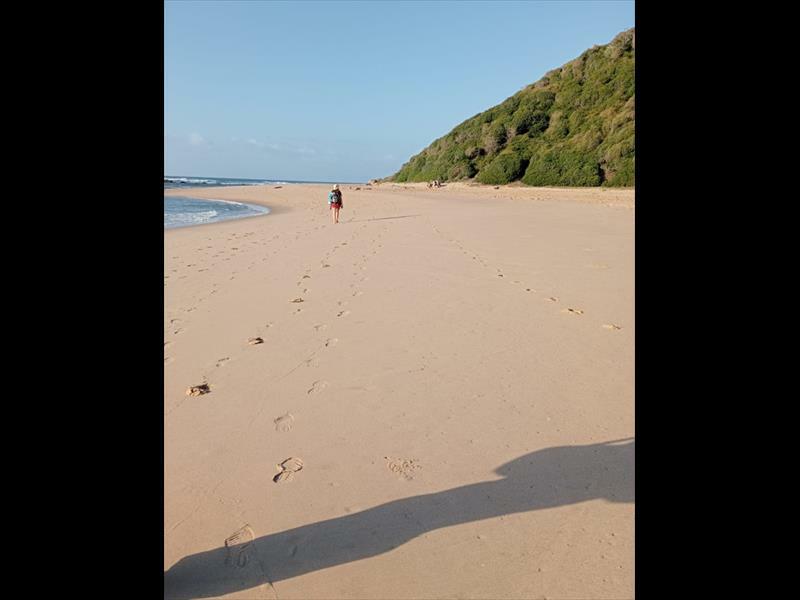
Hopefully, they’ll always remember it as the best beach ever. That’s how we think of it. If you ever go there, be sure to leave time for a long walk. You might just find one if the giant cowries my love used to propose to me all those years ago. Best ringholder ever.

Published here.

Two Days in Nairobi

September 2016

We had two days in Nairobi and wanted a fairly relaxed schedule.  This is what we did:

The Sheldrick Elephants

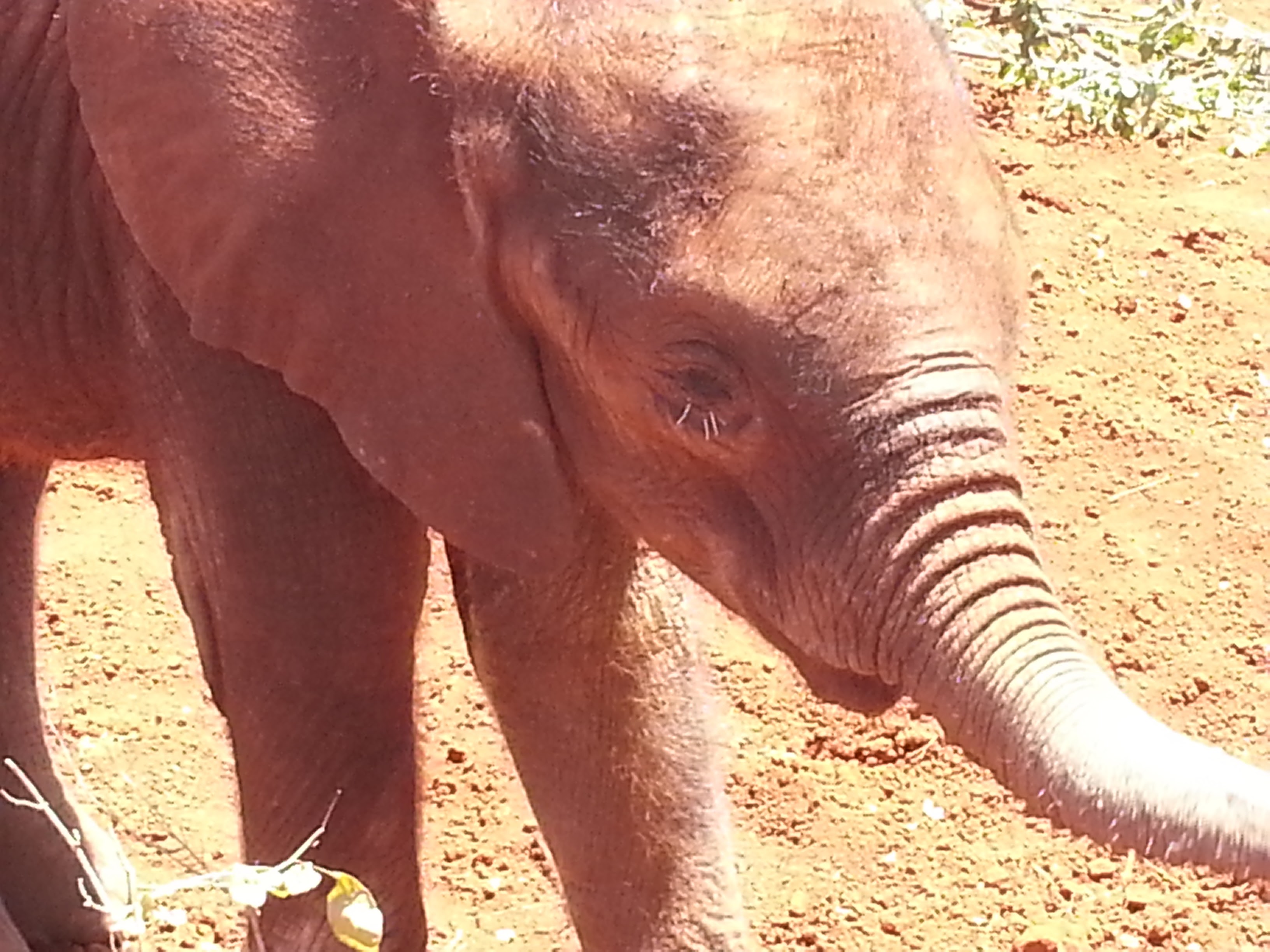
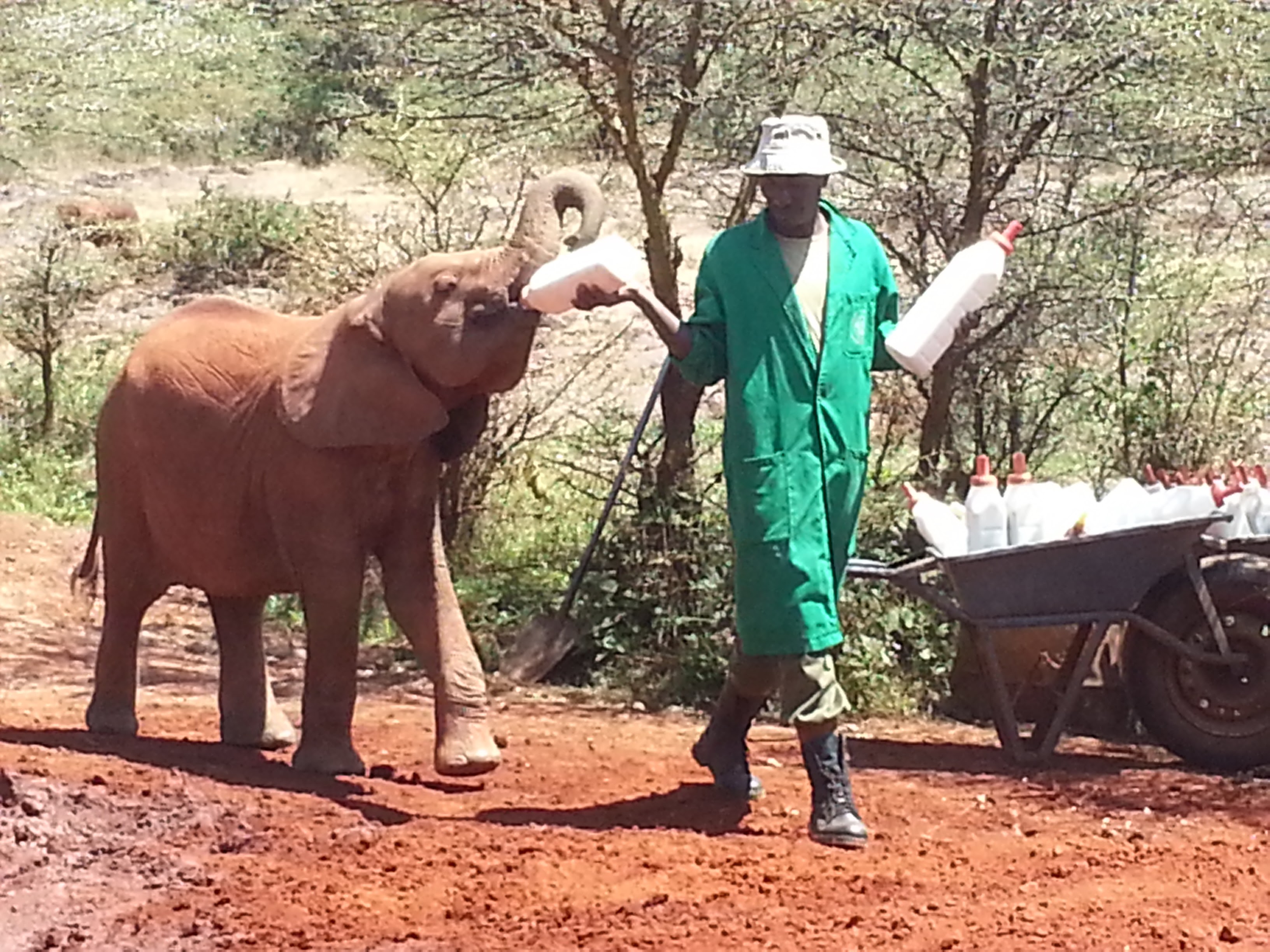
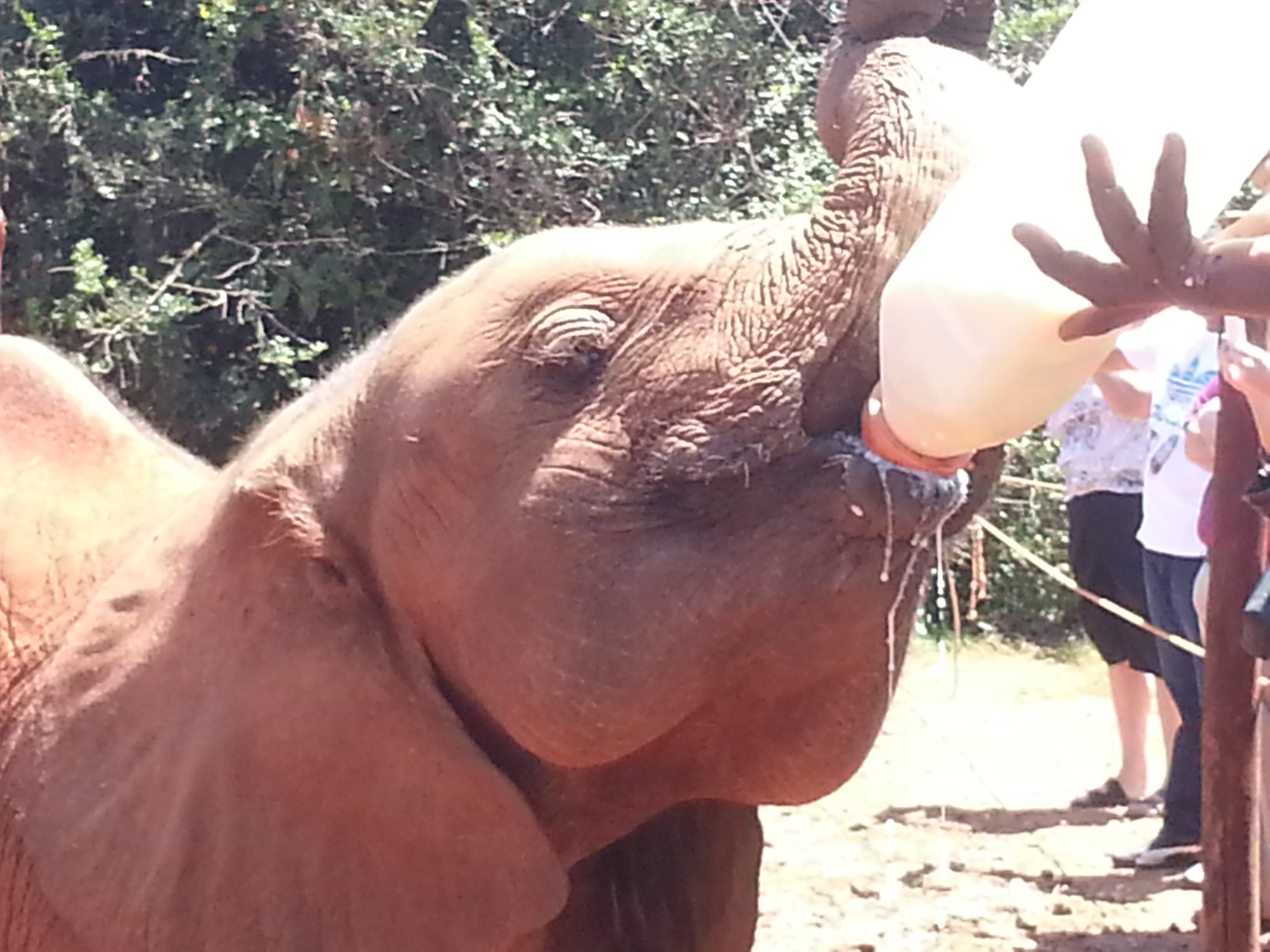
The David Sheldrick Wildlife Trust had us captivated from the first moment. The 11 o’clock feeding was surprisingly endearing, not commercial or money-grabbing, but educational and fascinating. It was wonderful to see the babies and their caretakers interacting. The love that goes into raising these orphans is amazing to behold.

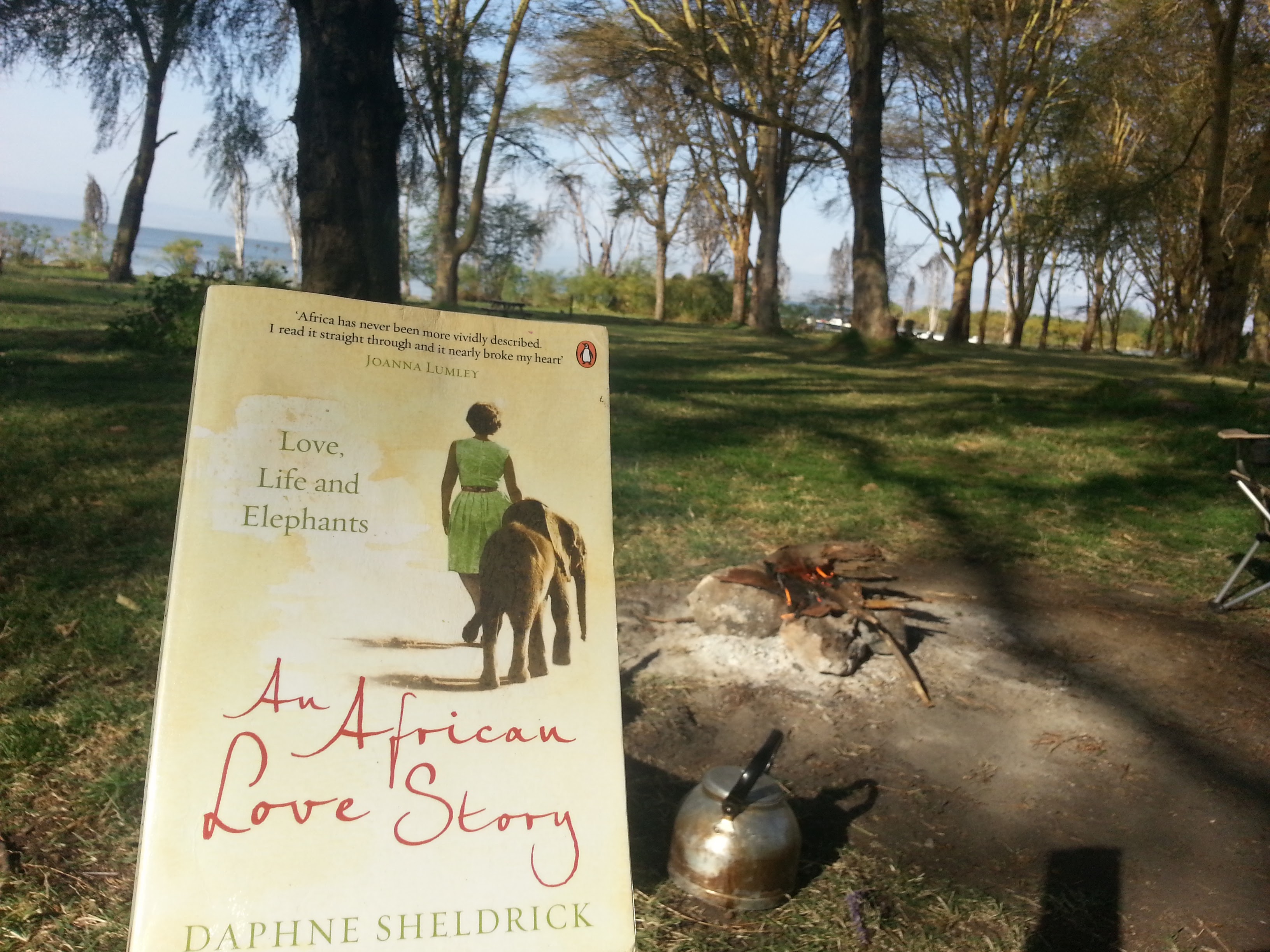
This is a great initiative and needs loads of support to keep on going. I would recommend reading Dame Daphne Sheldrick’s memoirs (An African Love Story) for a deeper history on how this work came to be and the struggle to protect the Kenyan elephants.

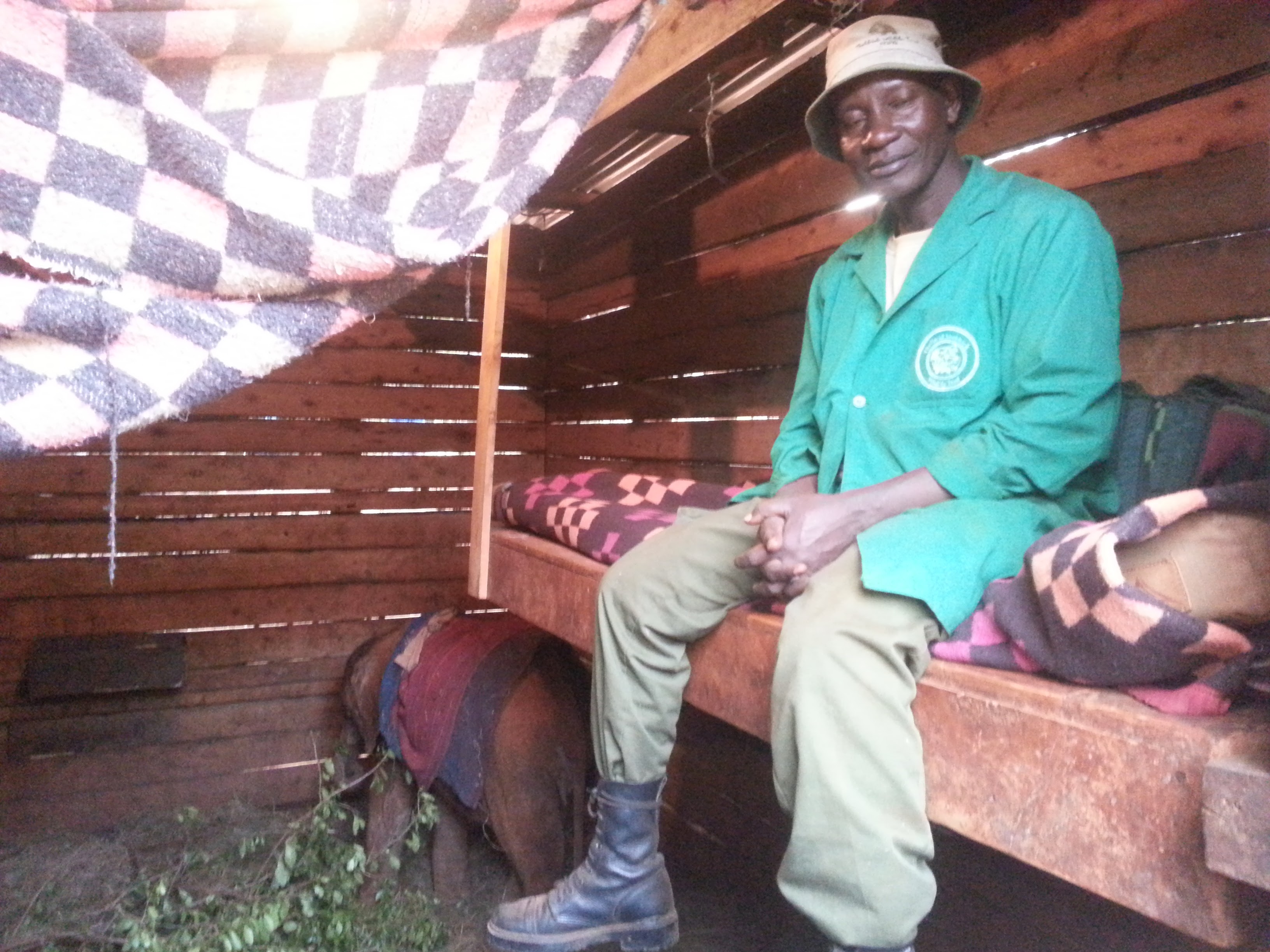
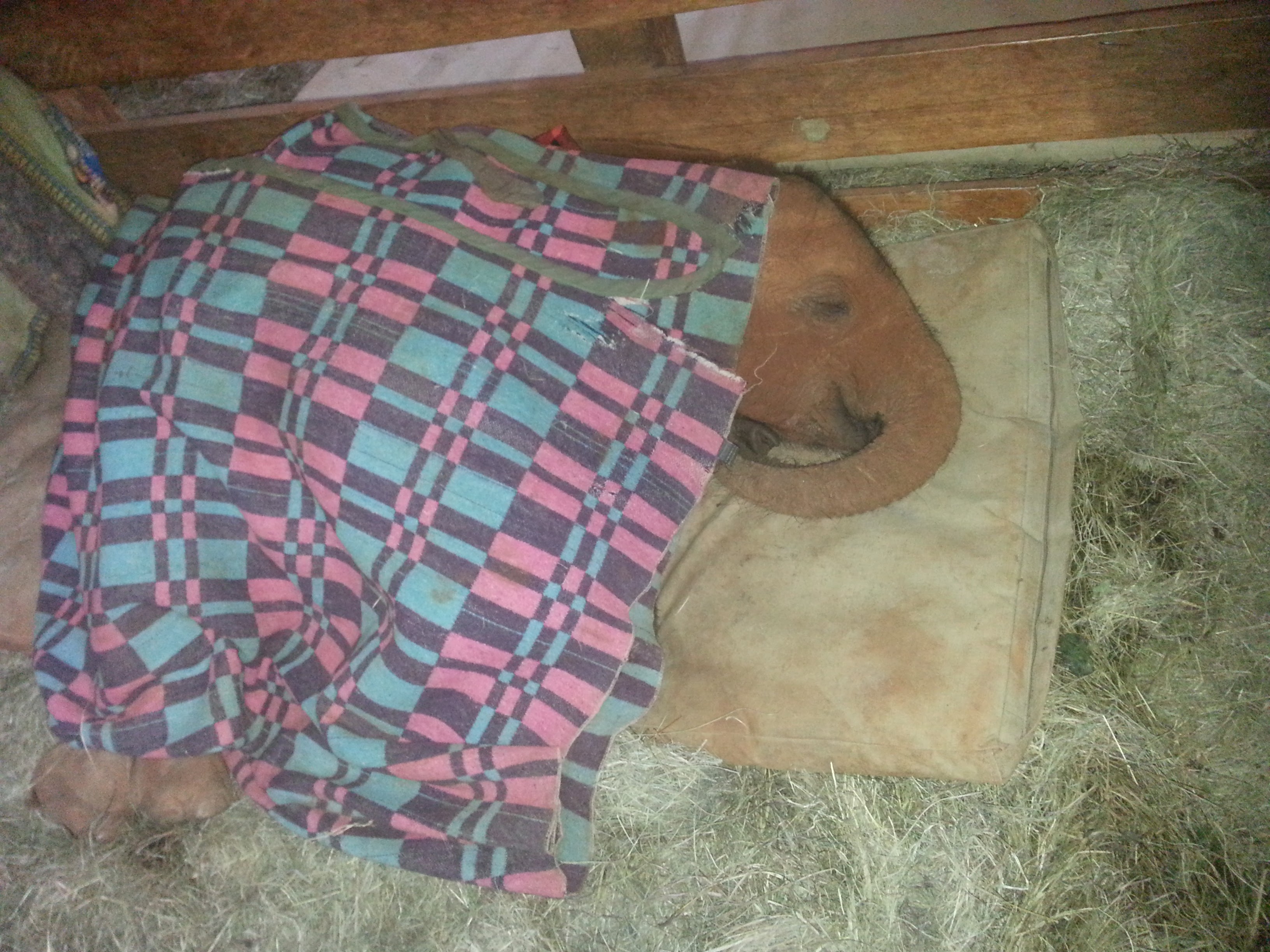
The highlight of our trip was to go back (by appointment) and meet our little adoptee, Ambo (a ten-month old elephant rescued from Amboseli), put him to bed and meet his caretakers. Ambo is just one of many orphans at the Trust and we were happy to know that we have contributed something to his 24 litres of daily milk for the next three years, as well as the countless other costs of running an establishment of this nature.

20160908_110524 20160908_110552 20160908_114823

Keepers like Meshack, who has been here almost 30 years, love their jobs and their orphans.

Thank you to the David Sheldrick Wildlife Trust team for all you do for these gentle giants, for Kenya, for Africa and for our children’s future with elephants and rhinos.

Giraffe Kisses

20160908_131044

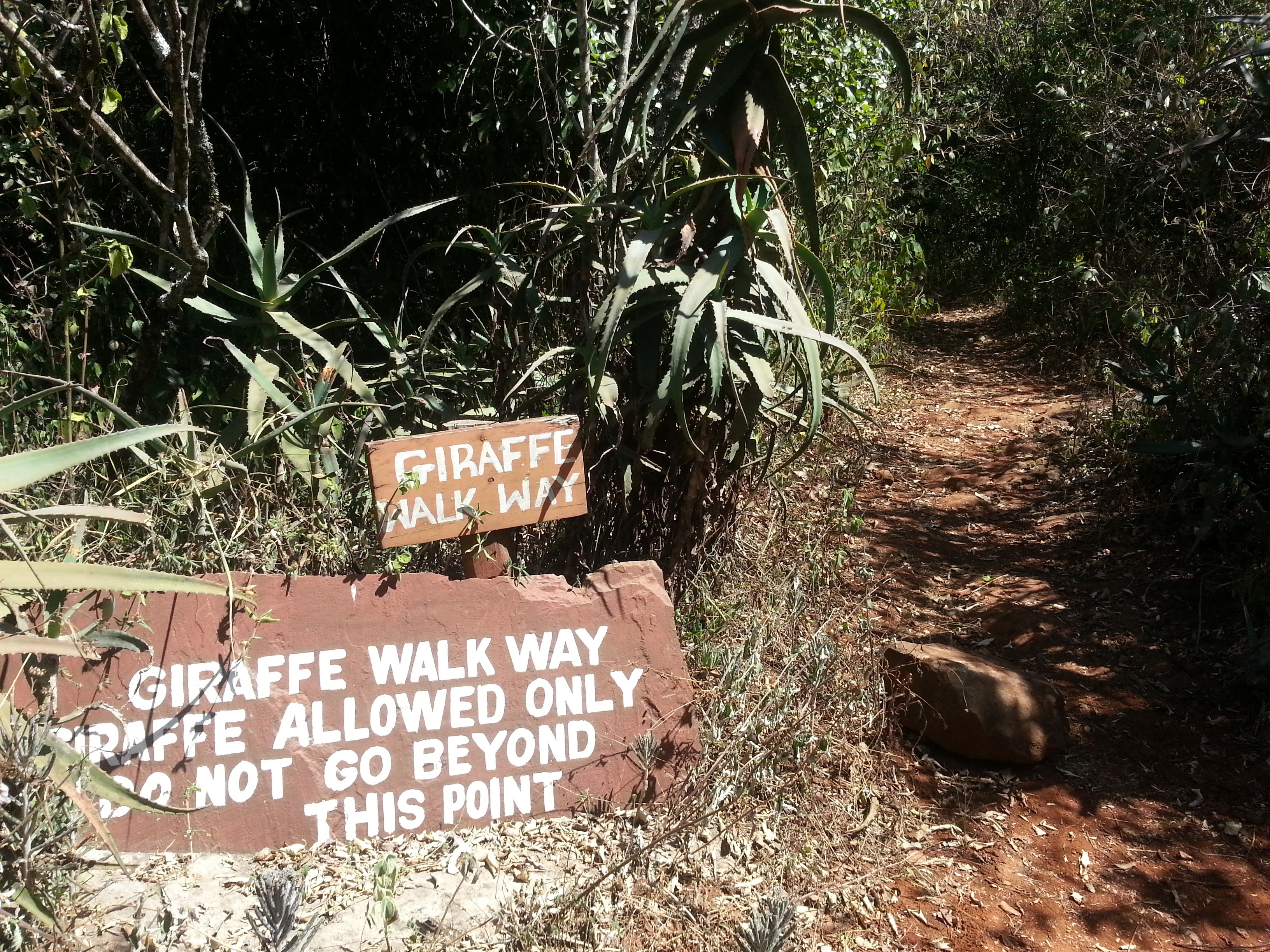
Having watched the Giraffe Tea movie as a child (with the little girl who feeds baby giraffes), I had always wanted to meet these majestic creatures up close and see the famous Giraffe Manor Hotel. Taking a few hours, we headed over to the Giraffe Centre in Karen, Nairobi – The African Fund for Endangered Wildlife.

Cost: As at September 2016, it cost 1000 KSH per non-resident for feeding, viewing and trails for the day.

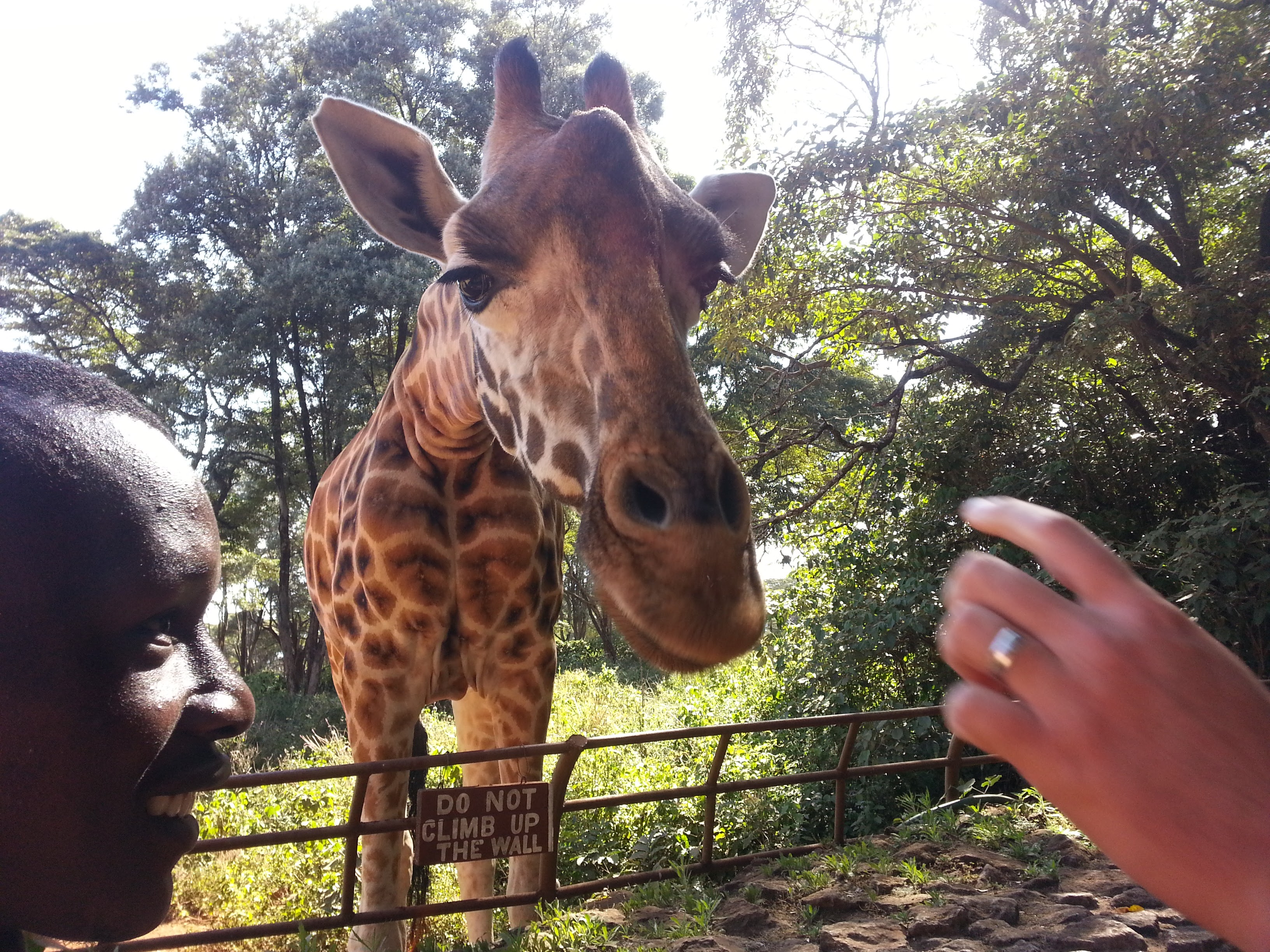
There were nine giraffe altogether, including two small babies that were too cute for words, and a pregnant mama who was grumpy (and HUNGRY) stealing all the other giraffe’s vantage point for pellets.  There are also warthogs and birds to see from the platform if the giraffe allow you a view around their enormous heads.  Like a horse, it has a long nose, almost the length of your entire upper body, so the Afrikaans word ‘kameelperd’ (camel horse) seemed strangely appropriate up close.

20160908_152843 20160908_125653Kissing the giraffe seemed unthinkable, but we were assured by giggling giraffe centre educators of the ‘antiseptic properties’ of their saliva and the kisses were indeed great fun to photograph (because only one half of Travelinds was brave enough to do it after watching a few people get plastered). A 45cm tongue is rather adept at twirling the pellet right out between your thumb and forefinger and the head butts signal a demand for more!

20160908_143051It was a hugely entertaining, and most of all educational visit, where we learnt about the subspecies of giraffe in Africa and how to identify them.  Before this, we were not even aware that we had seen different types of giraffe (Masaai with splotches, Rothschild with white legs and  the Southern Giraffe which we have in South Africa).

Nairobi National Park

This was a fun day out, twelve hours of driving around, picnicking, watching animals and enjoying nature. We arrived at sunrise, paid the exorbitant non-resident fees, and within the first minute of our drive through the gate saw a huge male lion walking in the road, roaring his head off and looking right into our car window. Wow!

We also saw more than a hundred ostriches over the day, all the antelope, black and white rhino, a couple of hundred Maribou storks, 10 secretary birds, a family of crowned cranes, Malachite Kingfisher and a bounty of other small creatures and birds.

Lowlights: Trash covered Kingfisher Picnic Site after the public holiday long weekend party and a brazen Sykes monkey stole our banana (out of the car!) at the one picnic area while we were stretching our legs (this might have been a highlight though).

These are the Kenya Wildlife Services park fees.

20160913_124811 20160913_113142 20160913_075527

At the end of the day, we visited the David Sheldrick Wildlife Trust to meet our adopted elephant and put him to bed. We had to drive out of the Banda Gate (get a special letter to exit) and then go down to the elephant orphanage through the secure area.

Goodnight, Ambo!
Goodnight, Ambo!

20160908_131100 20160908_112059

A wonderful end to a magical Kenyan trip!


Lake Naivasha

September 2016

Lake Naivasha

At the end of our Kenyan adventures, we had a few days left for an unscheduled trip.  After looking at our options, we decided on Lake Naivasha.  This stunning body of water is one of many fresh-water lakes in the Great Rift Valley, bordered by volcanoes and geothermal vents.  There are campsites and resorts along much of the southern shore, as well as flower farms and conservancies.

20160909_130456A Sweet Camping Spot

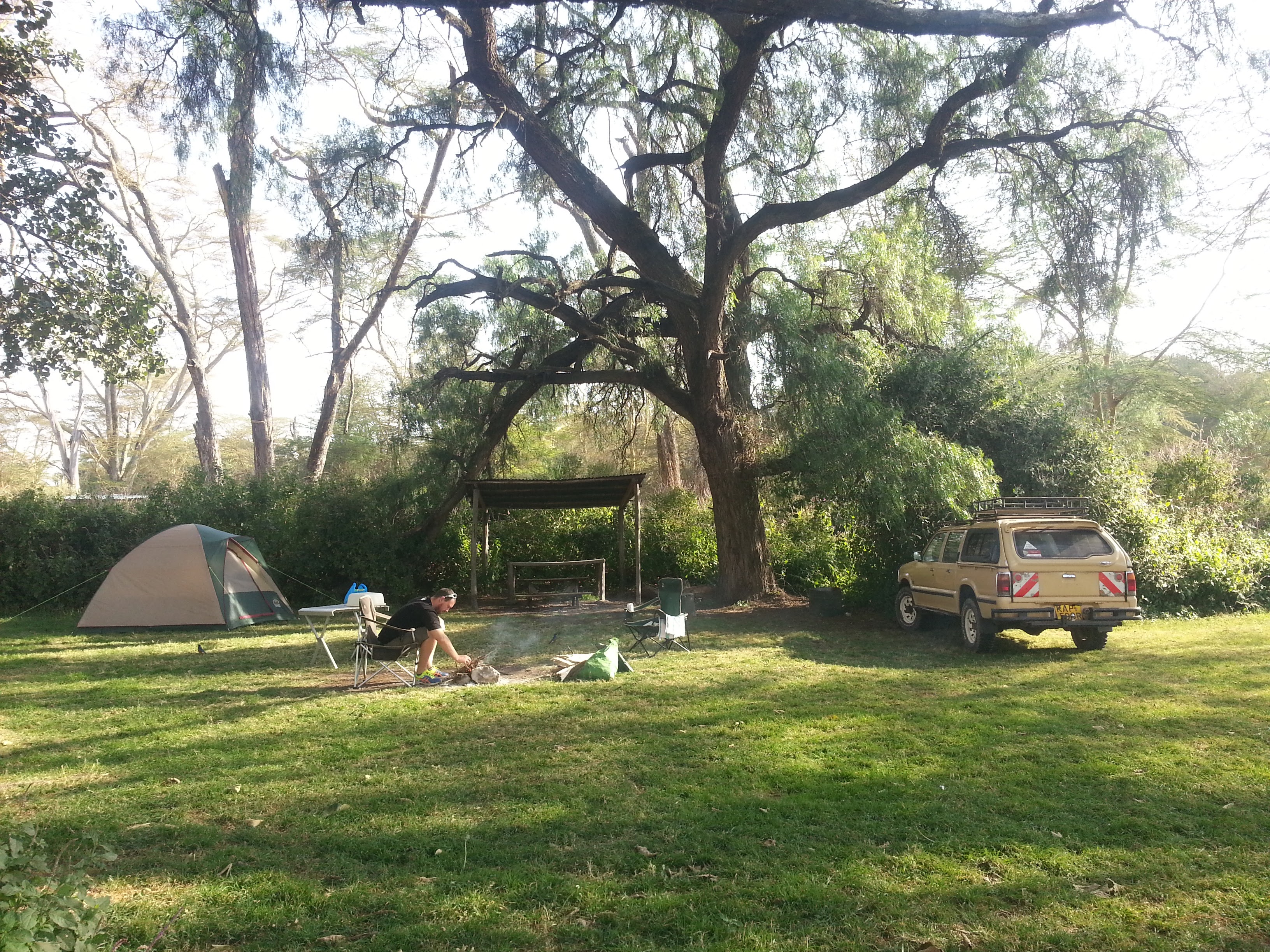
Thanks to some recommendations from the locals, we headed off in a borrowed 4×4 to pitch our tent at Camp Carnelley’s (beside Fisherman’s).  Set right alongside the beautiful Lake Naivasha, two hours from Nairobi, under the cool shade of giant fever and fig trees, Camp Carnelley’s is a sanctuary – a place to breathe.   We awoke to the sound of twittering of birds and the African Fish Eagles competing for the loudest cries.The Colobus monkeys visited every day at the tip-top of the fig tree that shaded our campsite.  High up in the trees, flocks of birds congregated in a cacophony of chirps and melodies, feasting on the fruit and leaving “presents” on any unsuspecting victims within their trajectory.

The serenity of the days melted into the amplified frog symphonies of the nights, accompanied by the bass of hippo grunts and the cricket serenades.   The hot water showers were open to the sparkling night sky, reminding us gently that we were still under African skies in the wilds of Kenya.20160909_163625

In season, you can see the famous pink flamingo migration (both here and at Nakuru and Bogoria) as they gather at the shore edges and scoop the water with their comical bills.  We’ll have to come back one day!

New Friends

The beauty of travel is all the interesting people you meet along the journey. Travelinds met two sets of new friends on this trip.  The first was a family who had recently moved to Nairobi and spoke German, French and English. They shared their lunch with us, spent the day chatting and having fun; and then we barbecued a delicious fish that we bought from a local fisherman.  The other couple is from the U.K., currently living in Uganda and road-tripping through Kenya! You can catch Alex and Katie at https://tougandablog.wordpress.com/ and https://lifethroughmylens.net/

“A journey is best measured in friends, rather than miles.”

– Tim Cahill

Masaai Mara: An African Dream

August 2016

Waking dream!

Stirring from a night of solid sleep to the sounds of a thousand different birds, I focused lazily on the rays of orange sunshine streaming through the tent and wondering on which alien planet I had landed.  I remembered the crazy rush to book a last minute flight with an hour to get to the far-off King Shaka airport, paying our entrance fees online on the way to the airport, the flight from cold South Africa to rainy Ethiopia to sleeping Kenya in the dead of night, the two hours of sleep before the alarm jolted us from our beds and the mad rush to pack nine of us into two cars, heading out of Nairobi at a prompt 6.30 a.m. sunrise.

With delight I recalled that we had made it through the six-hour journey, the Great Rift Valley opening up below us with its geothermal steam vents and slow trucks between Uganda and Mombasa, the wheat fields and pockets of livestock mixed with random antelope as we climbed out of the valley of volcanic rocks and trundled on through the dusty bushveld – its acacia trees and euphorbias astoundingly huge and beautiful – and the shocking corrugations on the pothole-infested dirt roads that claimed our entire exhaust fixture on the way home (it survived its trip back to Nairobi tied to the roof racks, but normal conversation pitch during the journey was next to impossible and we roared on home lost in thought and memory of the captivating experience).

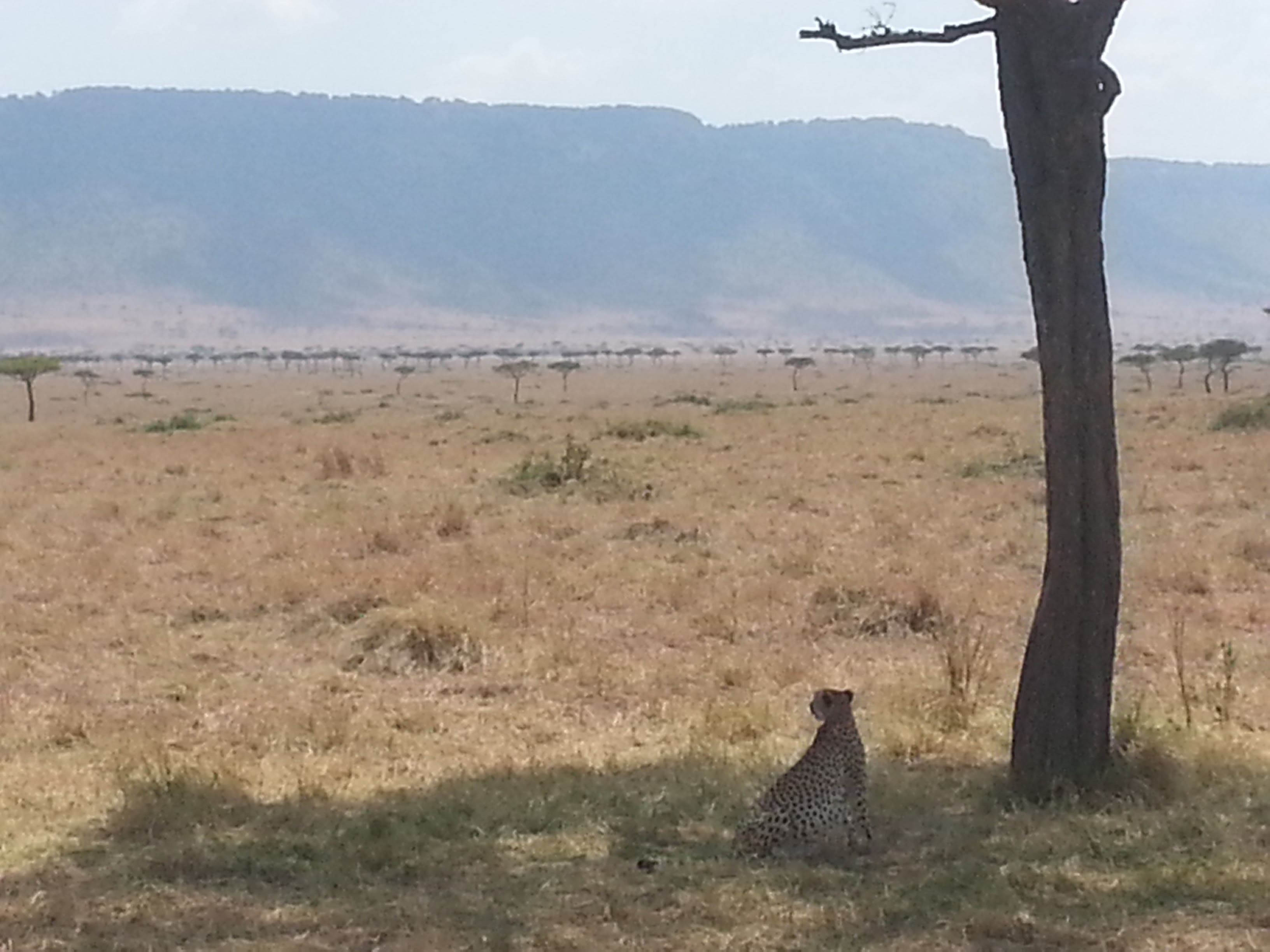
I was finally here, somewhere I had dreamed of since childhood, unbelievably happy in an unfenced campsite along the Mara River, in a little tent, in the world-famous Mara Triangle, part of the Masaai Mara National Reserve – and hundreds of thousands of animals were here with us, too.
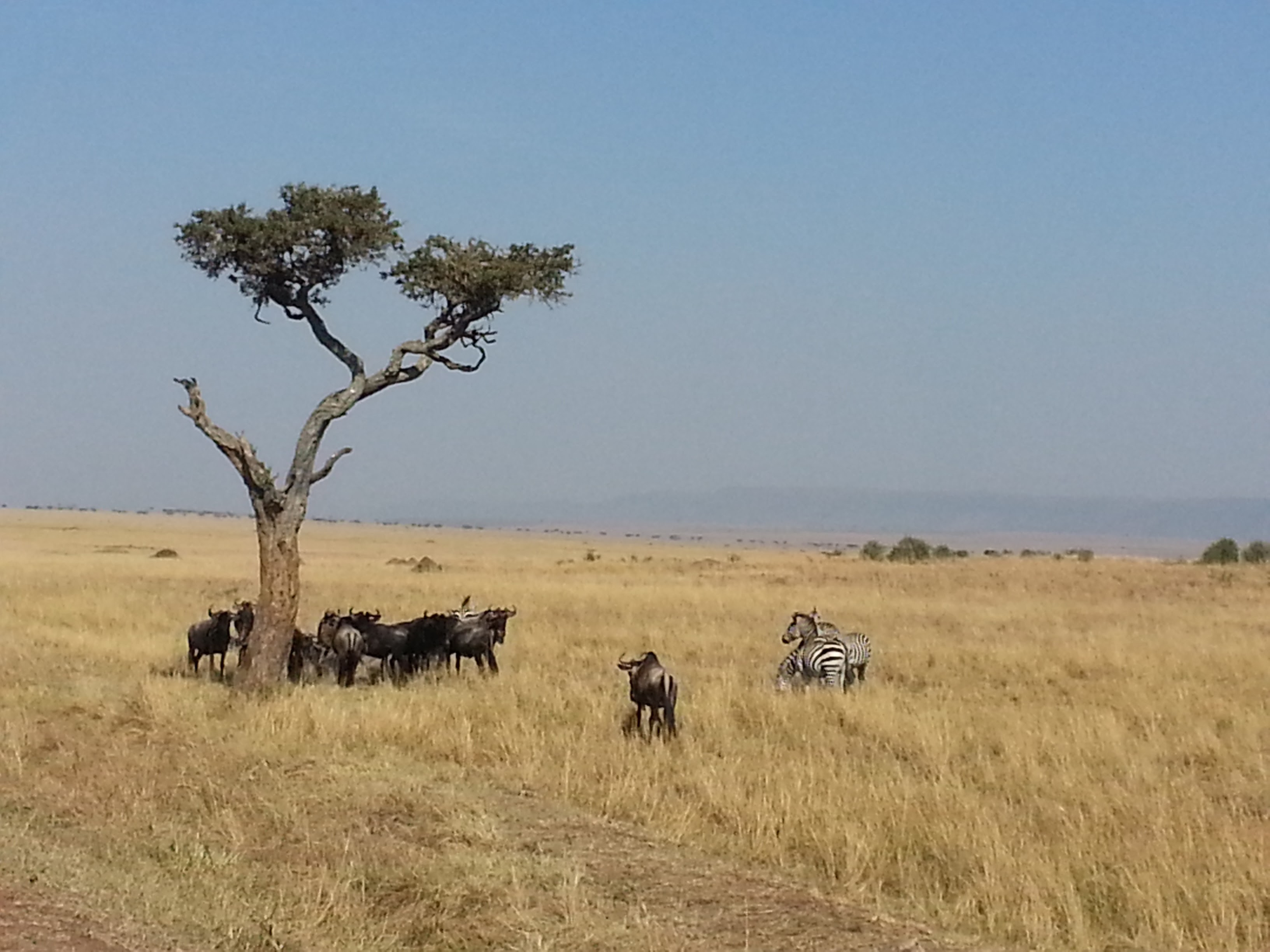
20160821_09251420160821_114220

The Great Migration

The herds arrived in the Mara Triangle the day before we did and it really is something you need to see with your own eyes to believe it. Beautiful and fascinating!

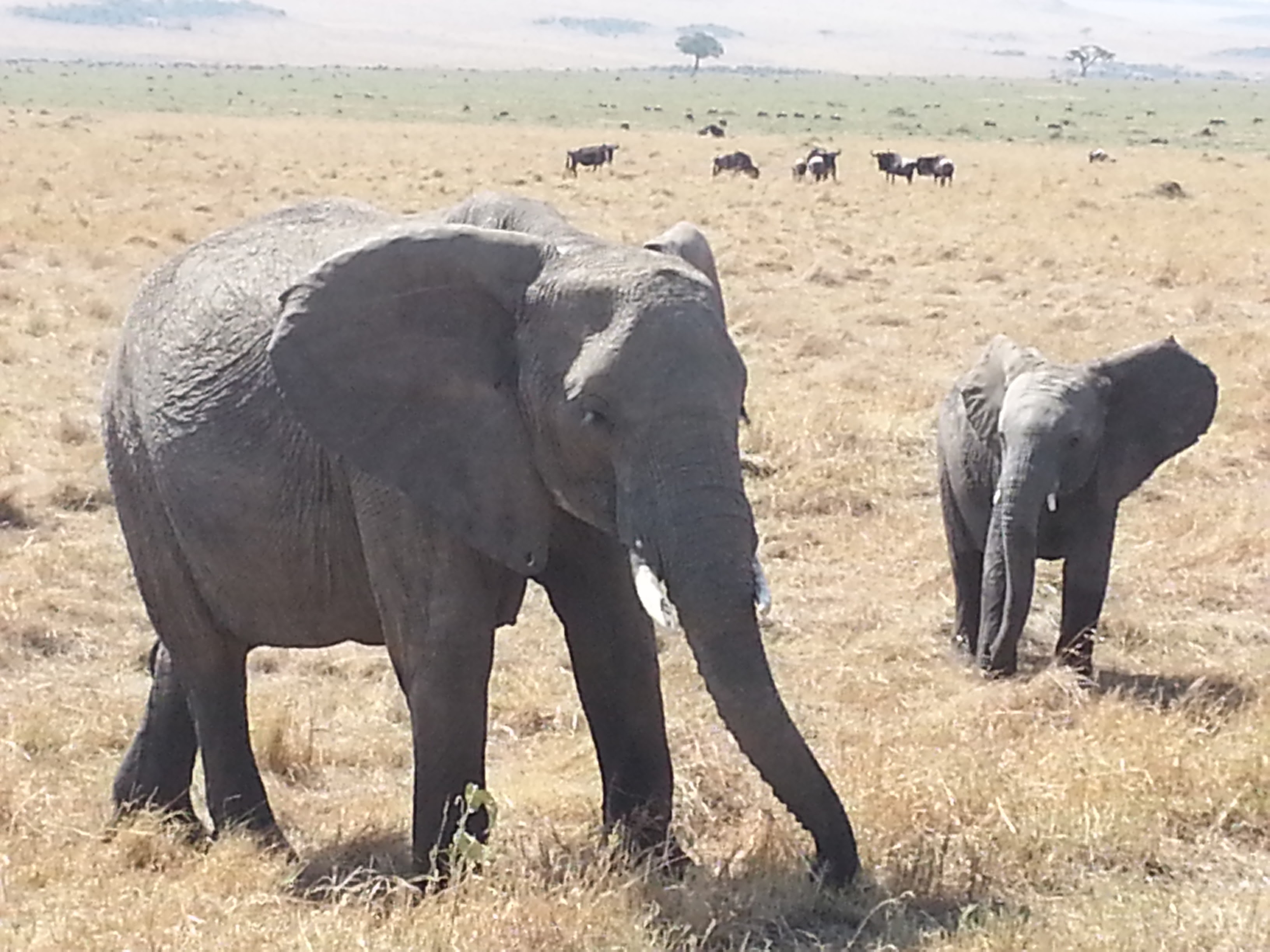
“Follow-the-leader” took on a new meaning as we watched the blue wildebeest lines stretching all along the base of the majestic Oloololo Escarpment, winding their way towards the Mara River to see if the oat grass really is greener (redder?) on the other side.  Apparently following the rain, the wildebeest spend their whole lives moving, an epic circular journey that starts down in the Serengeti of Tanzania and ends on the vast plains of the Masaai Mara in Kenya, where it starts all over again.

The wildebeest are joined by zebra and tommies (Thompson’s Gazelle) and solemnly face the predators at every step of the journey – an inevitable game of roulette as each night brings certain death, and each dawn a sense of victory at having beaten the odds.  Carcasses litter the savanna with evidence of the nocturnal carnage and the rotund lions we saw were too stuffed to bother with anything, eating only the choicest rumps and leaving the rest of it for the scavenger feast.  Even the scavengers turn up their noses at the drowned carcasses that fill the rapids of the Mara River after the senseless ‘crossings’, already filled to capacity from the pickings of abundant meat left from the kills.
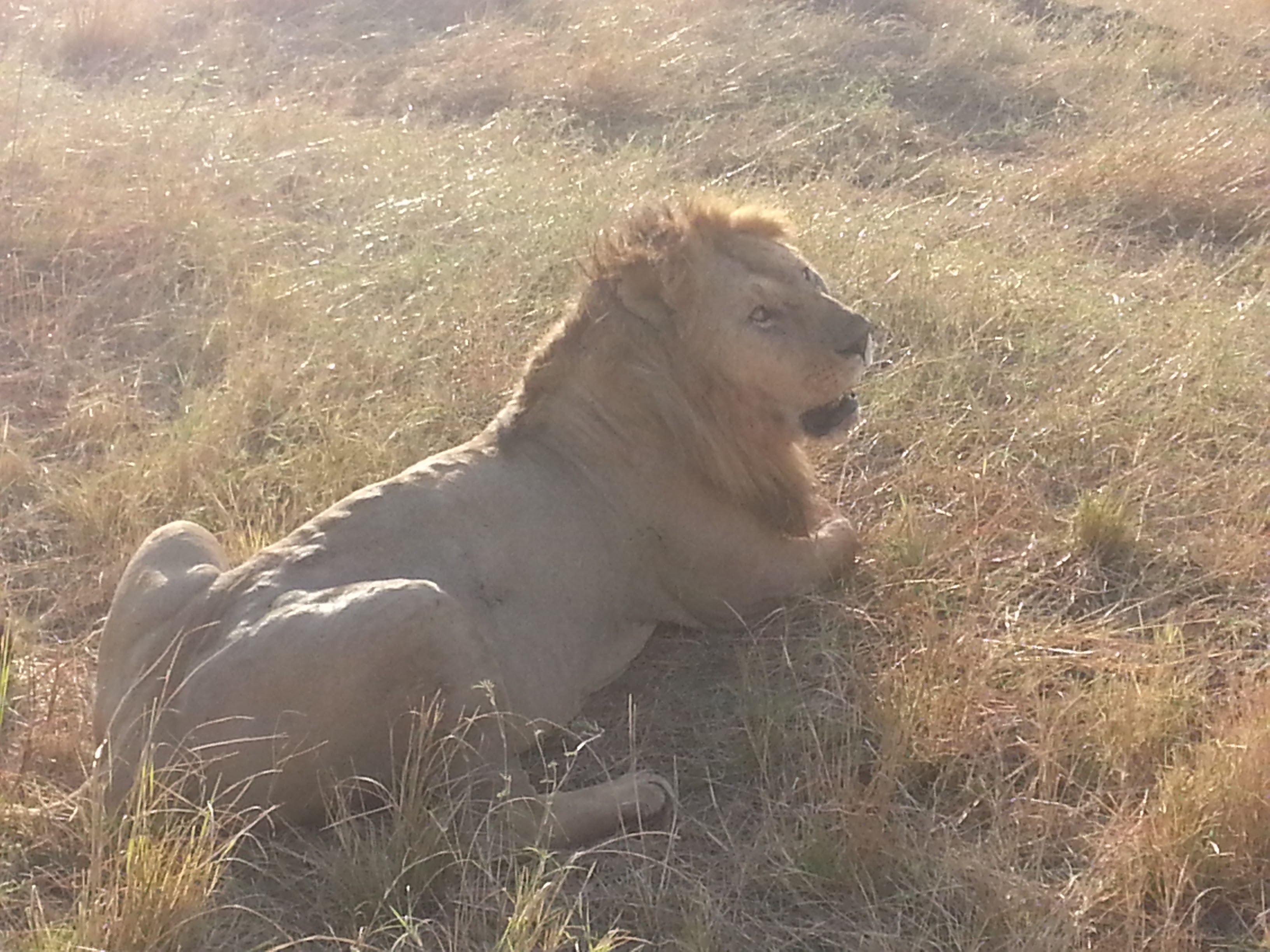
20160822_074726

The animals converge on the river to drink, egging each other on to be the first to brave the threat of crunching jaws of the enormous Nile crocodiles.  Twice we watched as a wildebeest fell in, swam wildly to the nearest bank and was assisted by the curious hippos with a nudge towards the relative safety of dry land.20160821_123203

Wild and Free

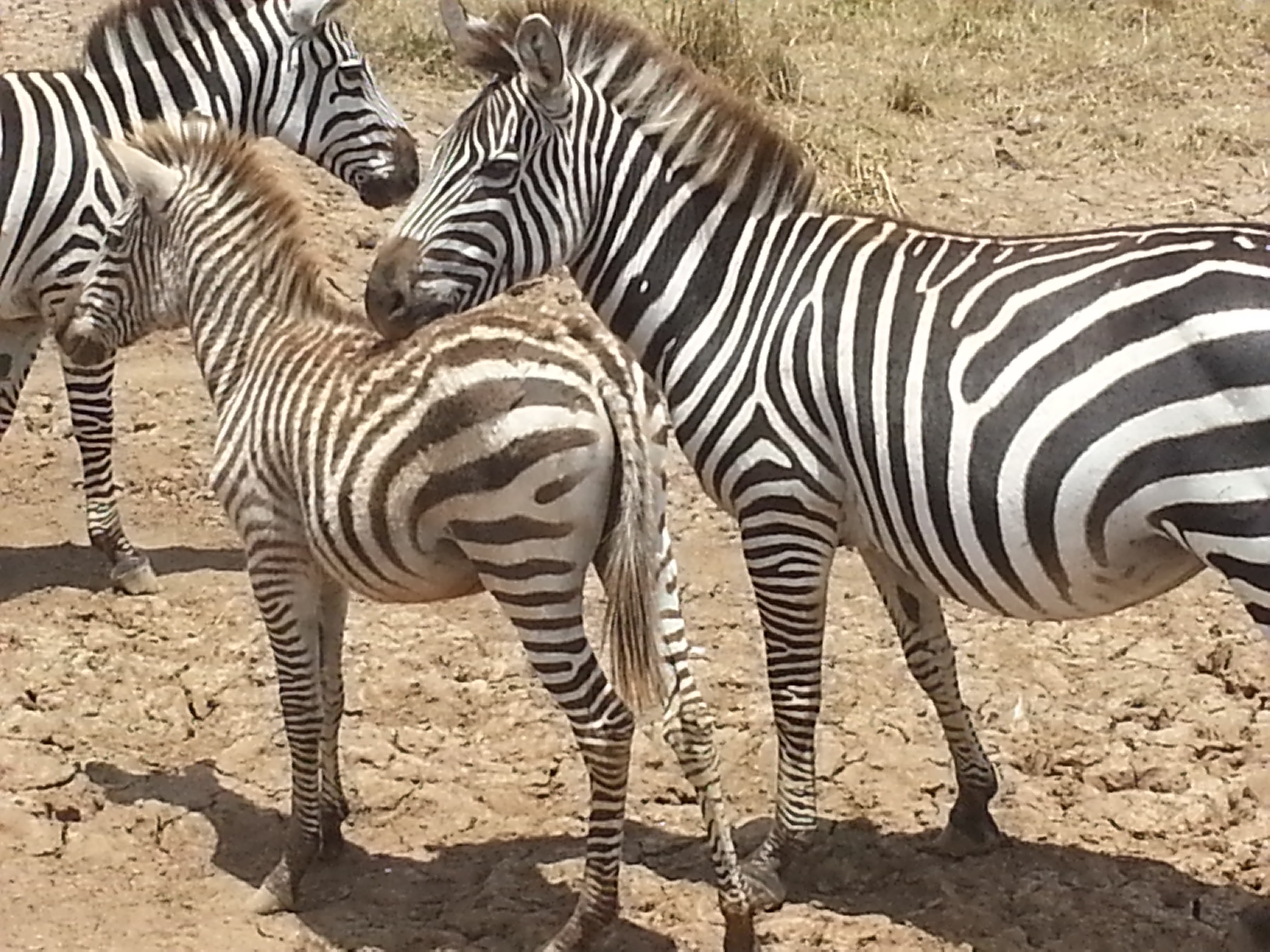
The zebras with their exquisite black and white (a much cleaner contrast than the brown-smudged South African zebras) gather together to graze, some rolling in the dust, some playing catch; and even a naughty zebra male that suffered a thumping hoof kick (a ‘snotklap’ for you South African readers) from an irate female who had had enough (followed by whoops and giggles from the inhabitants of our vehicle as we cheered her on).

We camped at the private campsite, Dirisha, alongside the Mara River. Leopard, hippo, buffalo and elephant came into our campsite each night (the tent walls seemed thinner then) and the birdlife was amazing, too (including a rare Bar-tailed Trogan right outside our tent).  It was a proper bush experience with no ‘facilities’ to speak of, emphasising the fact that we were in the real African bush, humbled by our defenselessness and respectful of the ruthless ferocity in the daily life of wild creatures.20160821_174448
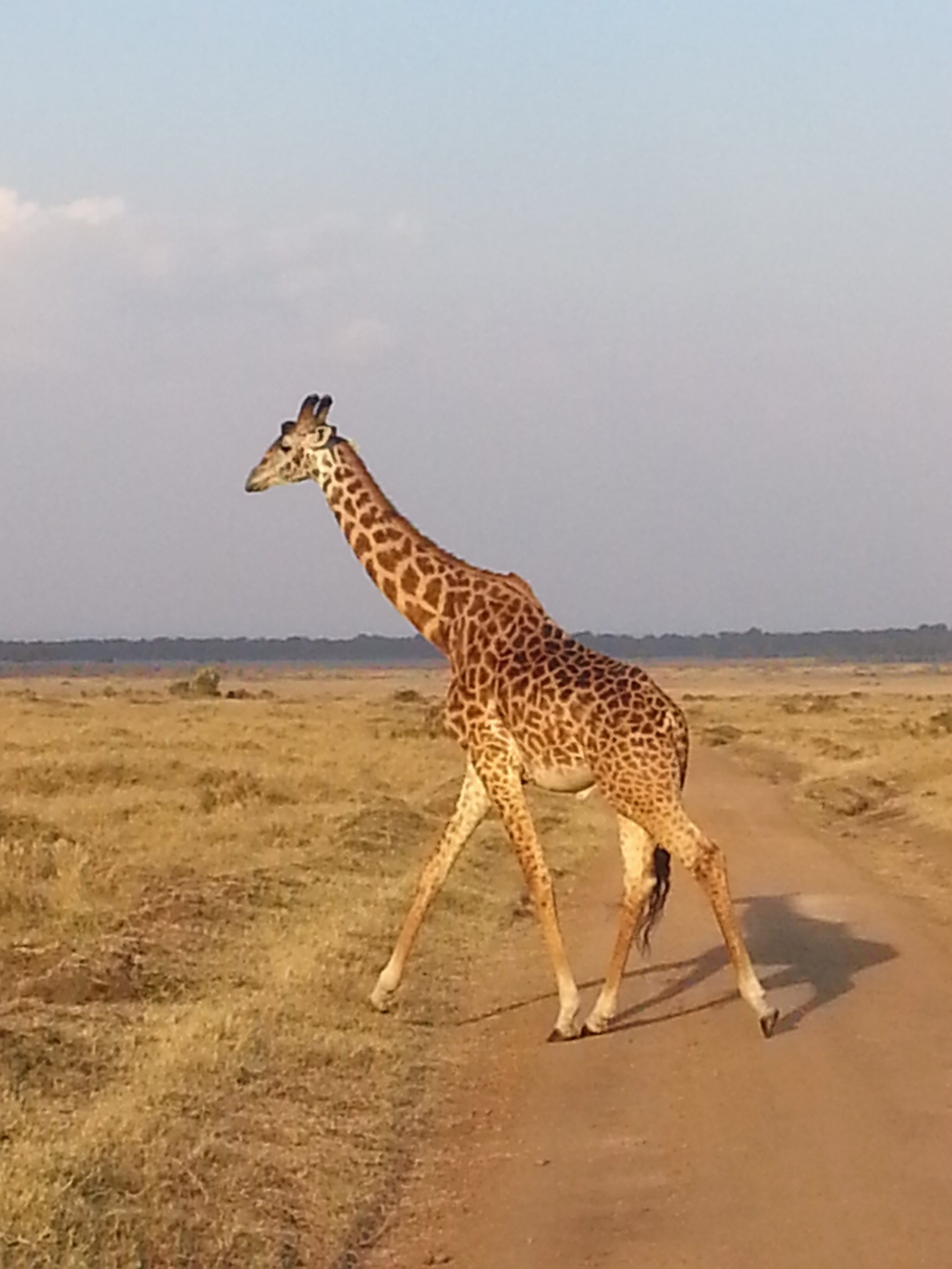
The week’s sightings also included herds as far as the eye could see (estimated between 750,000 and a million wildebeest alone), fat cats and scavengers feasting on carcasses lying everywhere, river crossings galore and even three black rhino fending off a pack of brazen hyenas.  One hyena also tried to catch a comical Ground Hornbill, who casually walked away knowing its fearsome beak was enough to deter its attacker.

Little Governor’s

Most evenings we headed to Little Governor’s for sun-downers and water refills (campers cannot afford to be shy about essential needs like drinking water, even if the lodge was as posh as could be). Looking out over a small water catchment, the luxury tents are set in the cool of the forest and can see all the surrounding beauty from their beds. More than once, we were delayed in returning to our campsite by the 7 p.m. curfew because of the elephants that roam about the lodge within hand reach of the restaurant patrons, who are swiftly ushered away to the other side by the staff and have to wait patiently until the giants have moved off.20160822_17442620160821_102002

Once in a lifetime

At the tip of the Mara Triangle map, Little Governor’s is one of many lodges that does hot air balloon rides across the Mara – a spectacular sight as the multicoloured behemoths transport mesmerised passengers silently across the plains, often just  a few metres above the herds on the ground below.  A future bucket list item for sure!20160822_065327
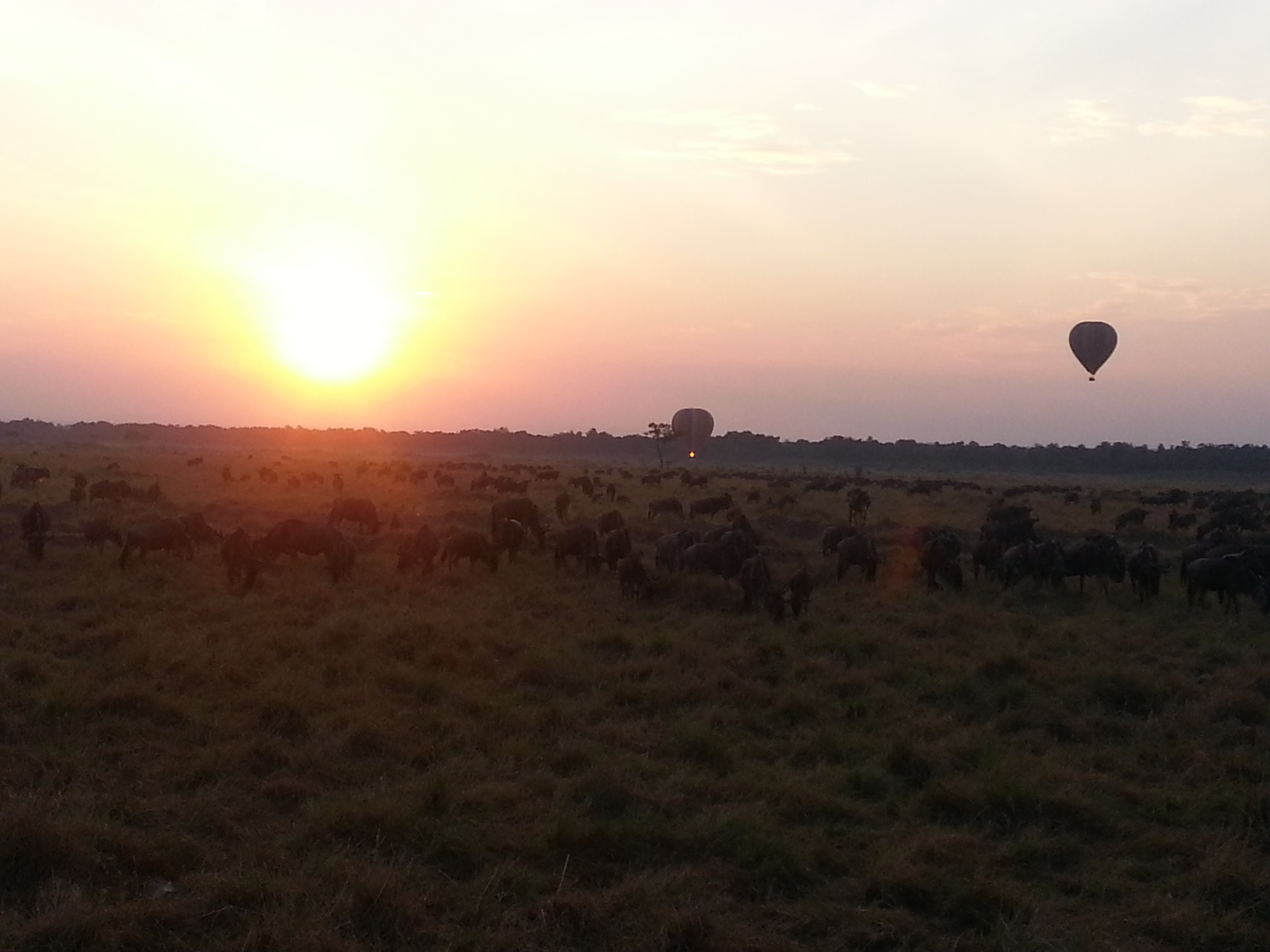
Honestly, this was one of the best weeks of our lives.  To be able to have seen this phenomenon firsthand was an awesome privilege and an unforgettable experience – even for Travelinds who have grown up in the beautiful wild places of South Africa, travelled in tiny boats through the jungles of Borneo and swam with ocean giants.

20160821_184628Masaai Mara – just wow!