An amazing end to life on some Philippine islands, our Brinze Kylene expedition took us from San Miguel, Linapacan and ended at Sibaltan on the Palawan mainland. Read about how we came to meet them here.
The Hosts
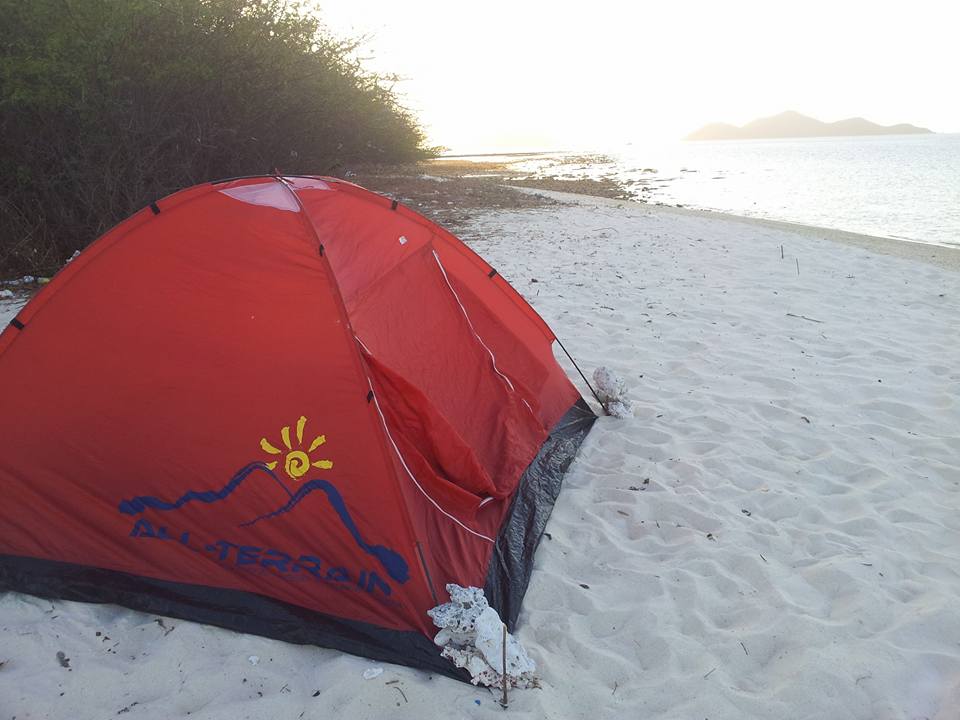
Our hosts Benji and Maileen were entertaining and hospitable, looking after us throughout our stay in Linapacan, as well as on the island hopping tour. Their service was phenomenal and so much fun. Their crew, Midel and Guerrero, seemed to have limitless energy and kept the boat running smoothly through the whole trip. They cooked for us, put up and took down our tent, found us the most exquisite coral reefs along the way and entertained us each night around an impressively large bonfire.
The Boat
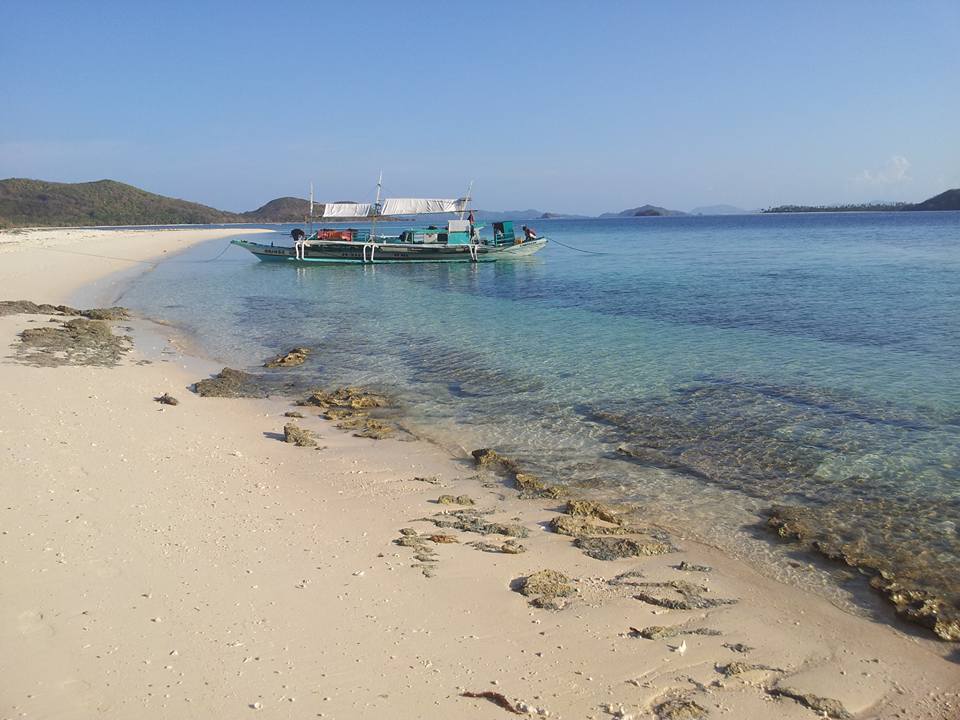
Since we spent most of our time on the boat, it serves that it was rather comfortable and well-equipped for such a simple carrier. Described as a catamaran-style with balancing beams on each side, it had benches, a small cabin, a tarpaulin covering, a ladder to get out of the ocean and a small boxed-in toilet and wash area. Downright luxurious in terms of the local fishing boats!
The Food
Every day in the Philippines is another chance for fish and rice. Different fish, mind you, but fish all the same and rice to fill in the gaps. We loved the fresh seafood and feasted on lapulapu, barracuda, squid, white fish and tuna – all barbecued over a fire and served with a decent portion of sticky white rice. Every now and again we ate the precious commodities called vegetables (cabbage, carrots, tomatoes, peppers and cucumbers) and this was a real treat for the locals and for us as availability is scarce.
The three kilogram barracuda we bought from another fisherman.Lapu Lapu fresh from the ocean.A peacock mantis shrimp that we caught and ate!
And Most Importantly, The Islands
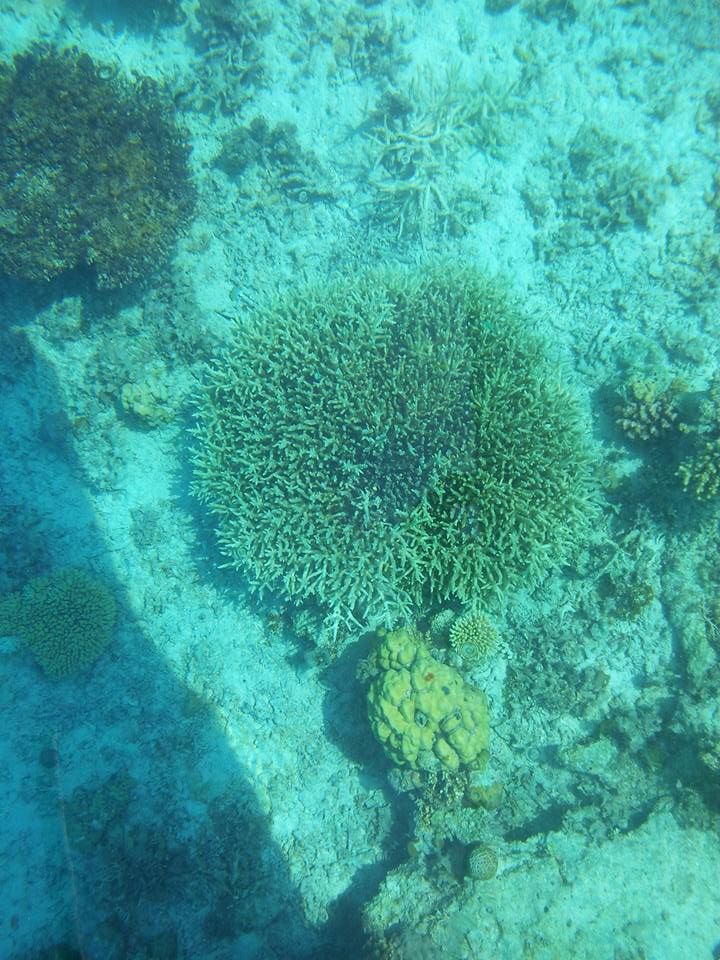
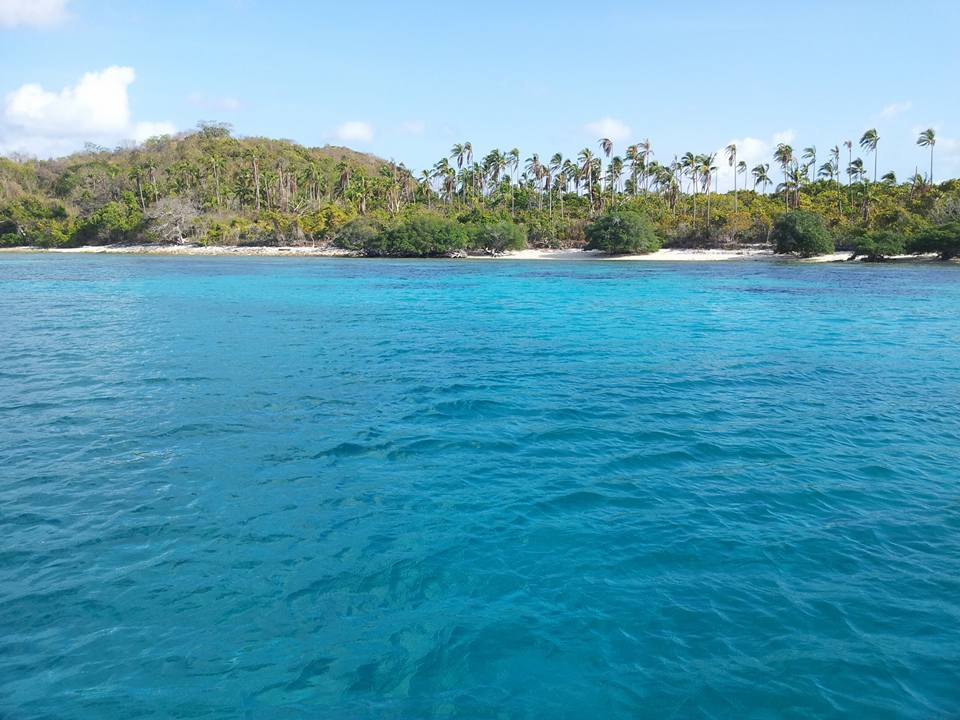
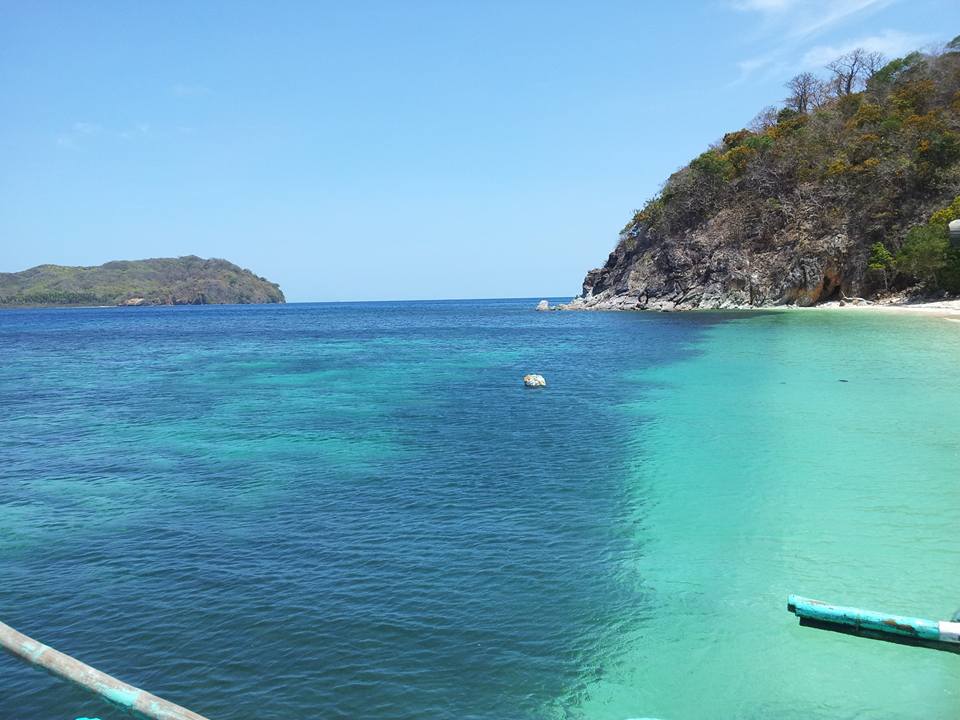
The archipelego of 54 islands is hard to describe because each one is slightly different to the next, sparkly, beautiful, rugged and unspoiled by industrialisation or development. We lost count of exactly how many islands we visited in the end, but managed to go at least 15 islands on during the 4-day trip.
Linapacan is said to have some of “the clearest water in the world” – we believe it! Check it out.
Here was the itinerary:
Day 1: Leaving from San Miguel, to Dimancal (check out Karel’s tent resort here), Bolina, Manligad, Asis and Cagdanao (first island camp spot)
The island across the bay, Balenben, had island huts available for rent at 300 Pesos in a fantastic reef area.
Day 2: Manlihan, Cala-cala (spelt Lacalaca) and Takling (second island camp spot)
Day 3: Calibangbangan and Magransing (third island camp spot – the most beautiful place we have ever seen!)
Day 4: Pical, Mausunon and ending at Sibaltan (mainland Palawan)
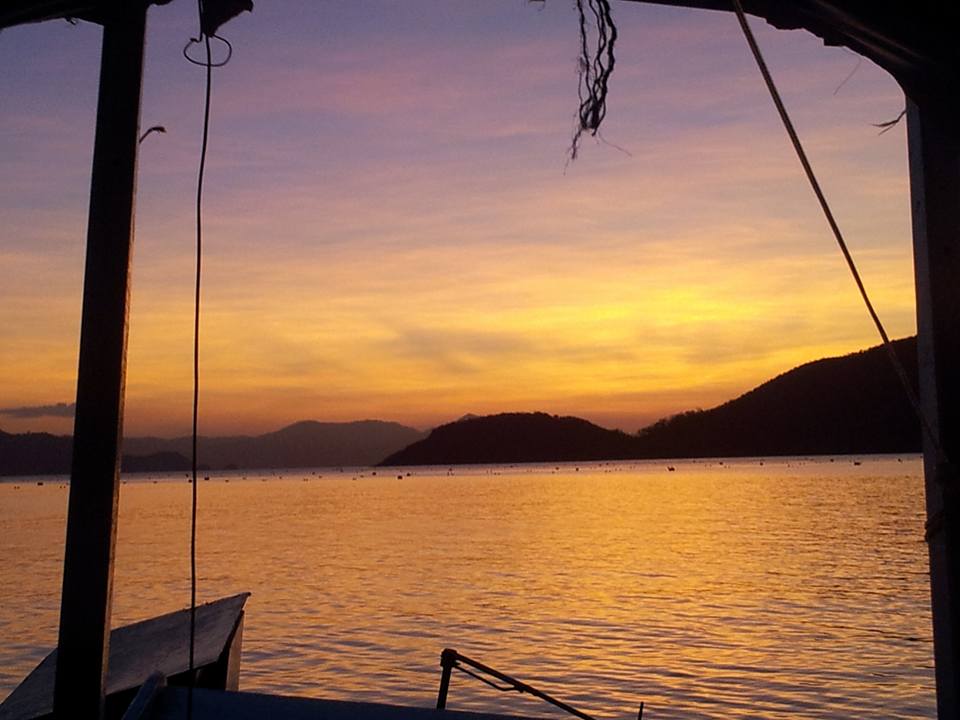
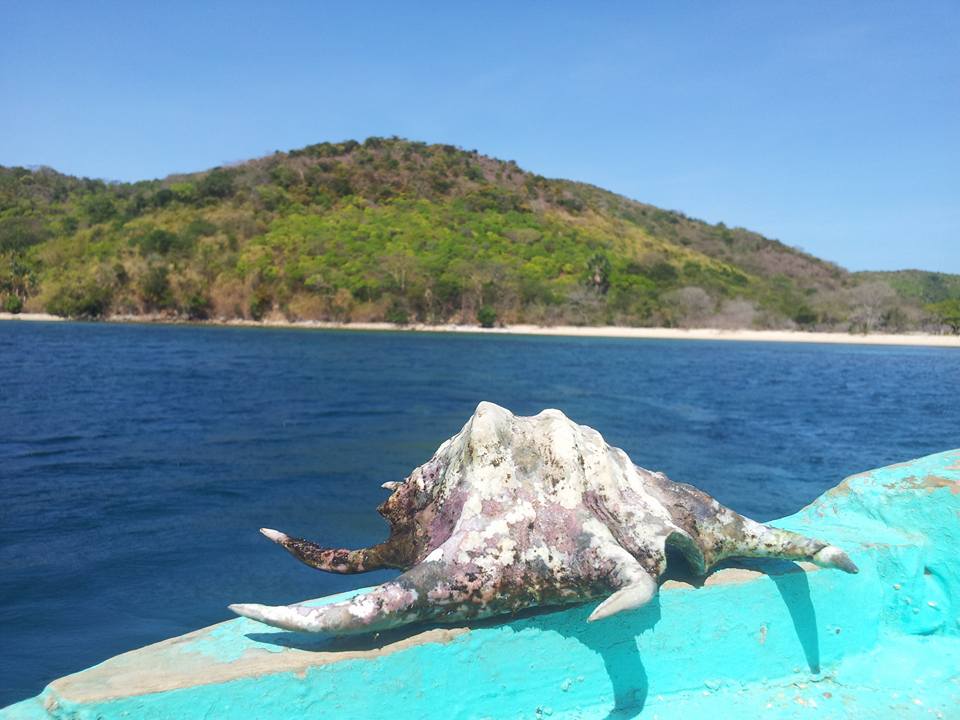
Each had coral reefs right off its shores and were almost guaranteed to be completely deserted. Besides, don’t these pictures (from a humble camera phone) make you want to go there right now? Call Maileen and Benji for an adventure on the Brinze Kylene!
Linapacan is well worth your time – wow! What do you think about Palawan?
South East Asia has given us so many fantastic experiences and an abundance of special memories that we will always cherish. The travelling is not always easy, but it is always worth it; especially when the rewards are life-changing realisations about the world in which we live. Here are our first 10 tips for travelling in South East Asia (Part One):
Prepare for rain all year round. Always take a small fold-up poncho wherever you go,
Prepare for sun, even when it’s cloudy. Wear sunscreen all the time, even on cloudy, rainy or cool days.
Hydrate. Stick with bottled water or refill your bottles at a local filter machine (usually coin-operated). Hydration also helps to keep you healthy and energetic during your vacation; this is especially important on long-haul flights.
Everybody loves American money. Take some US dollars with you for emergencies.
Put on your poker face. NEVER take the first price. BARGAIN EVERYTHING to at least half, or even a third of the starting price (except for restaurants).
Yes doesn’t mean yes. Don’t assume that you have been understood if people say ‘yes’ – check the details and insist on written agreements for financial transactions (unless you don’t care).
Understand the cultural differences between east and west. Don’t get upset if things don’t turn out exactly as you requested, due to some miscommunication. Asian culture often dictates that problems (like missing ingredients from the menu, or the room cannot be cleaned because nobody is on duty) are to be avoided or denied, but never confronted . The end result often being that things just aren’t done or delivered as ‘agreed’ (you WILL have an omelette, because there are only eggs in and there is no bread today in the kitchen; and the room will not be cleaned today) and the tourist is left confused, angry or irritated. Let it go. There are more important things in life.
Remember – you are the foreigner. Watch where you put your feet in the ocean (or better, just don’t put them down), there are urchins and jellyfish and other things in the sand (I usually wear a rash vest if I’m going to be swimming a while).
Learn from previous experience. Use the TripAdvisor app (with WiFi) to check for reputable restaurants, hotels and attractions in the area. Contribute honest reviews to TripAdvisor when you’re done. More reviews = more information = better decisions for future travellers too! NOTE: On the rare occasion, the reviews don’t do a place justice but, for the most part, the overall consensus of 98+ reviewers for a particular setting can’t be that far off the mark. It’s still only a guideline.
Fly AirAsia– a low-cost Malaysian airline that has some great deals on flights all over South East Asia. Use the app for easy reference. For most budget airlines, do remember to pay for the checked luggage when you complete your booking online (not when you arrive at the airport, as this works out to be way more expensive). Cebu Pacific has also been a great airline for us around the Philippines.
Only having a short visit to Ho Chi Minh at the end of our trip, we chose to do a full day tour to the Mekong Delta (My Tho to Ben Tre) on our last day in Vietnam. The tour bus was scheduled to pick us up around 8am and we were back at our hotel in Pham Ngu by 5.30pm. The tour company turned out to be TNK travel, the company we had seen advertised a lot, but we didn’t know this until we got on the bus as we had booked through our hotel. It was a good surprise though.
The day consisted of lots of bus travel and boat rides, as you would expect visiting the complex system of rivers and tributaries in the Mekong Delta. The guide, Yen, regaled us with tales of world-renowned rice production, Vietnamese culture, life on the rivers and general facts about Vietnam and its history. He was quite a character and enjoyed some witty banter with the mostly young, backpacking-type crowd on the tour bus, us included (about 25 people in all).
Paddling through the mangroves along the Mekong Delta at Ben Tre.
The itinerary for the day consisted of:
Bus trip from Ho Chi Minh city to My Tho, with one rest stop where you can sleep in hammocks, buy fruitshakes or sip on Vietnamese coffee.
Vinh Trang Temple – a Buddhist Temple complex where there were huge Buddha statues, a beautiful pagoda and temple gardens.
Boat trip to one of the four islets in the middle of the river, for lunch (islets are named Unicorn, Turtle, Phoenix and Dragon).
Boat trip over to the Ben Tre to see a handmade coconut candy factory, drink honey tea and have photos with a rather large (and heavy) Burmese python draped on your neck! Read more about Ben Tre’s famous coconut candy industry. and google Ben Tre coconut candy for some great images.
Mini boat trip through the mangroves with four people on a wooden paddle boat, powered by the oar of a hard-working lady and experienced while wearing the classic conical Vietnamese hats.
A short walk to a place where the local musicians perform on ancient Vietnamese instruments and sing of life in Vietnam (don’t expect them to look happy about it either). The tropical fruit snack was delicious.
Walk back to the bus and sleep the rest of the way back to Ho Chi Minh city. On the way, there is a long bridge and a good view (with family fish farms built under the floating houses on the river).
Yen, our tour guide did a great job of entertaining our group.
All in all, not a bad day (especially for only about R 100.00 / $ 10.00).
The highlight for me was certainly the coconut candy stop – watching how the workers cook, mould, cut and package the toffee was the most interesting process. Unfortunately, I don’t have a picture of the product because, despite purchasing six packages, most did not even make it back home (too delicious!). It is a soft toffee, wrapped in edible rice paper before being put in a wrapper; with slightly different flavours available like coffee, chocolate, pandan and peanut. Vietnamese Food really is delicious.
Cruising around Halong Bay has been a long time dream, especially since it features on the list of UNESCO Natural World Heritage sites (as well as a good couple of enormous billboards around Vietnam, claiming it to be in the new top 7 natural wonders of the world).
THE EMERALD BAY
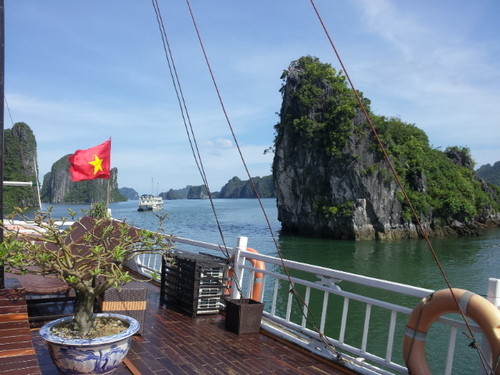
The 1,600+ islands and islets (or ‘around 2,000’ as our guide continually emphasised) makes for an idyllic paradise of smooth green water pierced by the white, orange and black patterns of thousands of limestone cliffs. Dark green vegetation covers the rocky outcrops that, on a sunny day, seem to reach up to the blue sky to touch its wispy white clouds. The overcast days are sombre but beautiful, as the clouds cover the sun to bring out the emerald shimmer in the bay and occasional rain bursts provide welcome respite from the tropical heat.
SO MUCH TO DO, SO LITTLE TIME
‘Surprising cave’ certainly was very surprising (and beautiful).
The tour took us to only a small part of Halong Bay, but it was truly spectacular. The black and white patterned faces of the limestone cliffs look down on the junk boats that meander through the islets, like guardians of some long lost world. Lying on sun loungers and looking out at the bay was a favourite afternoon pastime, as well as a good excuse for a pre-dinner nap after busy days of fun activities and interesting sight-seeing.
The list of favourite memories from this trip includes:
Visiting the ’Surprising Cave’, like going down in to the Mines of Moria, a balrog surely hidden in its depths.
A morning spent kayaking through some of the islets, through caves, hidden bays and rocky outcrops; with us South Africans showing the other tourists how kayak polo with a floating Frisbee can keep you fully entertained even in the remotest parts of Ha long Bay.
Sun-tanning on the deck enjoying a cold beer and good company.
Being rocked to sleep by the gentle motion of the junk boat in the designated ‘sleeping bay’ while the aircon drowns out unwanted noise from the outside world.
Being woken up for breakfast by Tony with his signature ‘cocka-doodle-doo’ Vietnamese style and ‘Goo Moooorliiiing’ outside our door.
A morning spent kayaking through the bay, under caves and into hidden coves.
BOOKING THE TOUR
We booked a tour through our hotel in Hanoi (after speaking to a couple more agents just to be sure) and happily ended up on a private cruise (there were 11 friends in our group) with ‘Elizabeth Cruises’, on one of the smaller junks ‘Hai Au’, with a guide named Tony Nguyen. There were 7 rooms on the junk, all with en suite bathrooms. We stayed 3 days, 2 nights (both nights on the boat) and were more than satisfied with our tour itinerary.
It cost us around $190 and included aircon rooms (evenings only), three meals a day, tour guide, kayaks, entrance to Surprising cave and the Pearl Farm, warm (‘hot’) showers, sundeck with sun loungers and the return van transfer (16-seater, aircon) between Hanoi and Halong Bay.
TIP: Make sure you are clear about the ‘own food/own drinks’ rules for your tour. Our hotel agent told us it was fine to take our own drinks (water, juice, beer, wine) but when we arrived (with the drinks) the tour company protested and there was a lot of unnecessary animosity at the beginning of our tour. This was resolved quickly, but it would have been great if we had not had to deal with this in the first place.
PEARLY WHITE
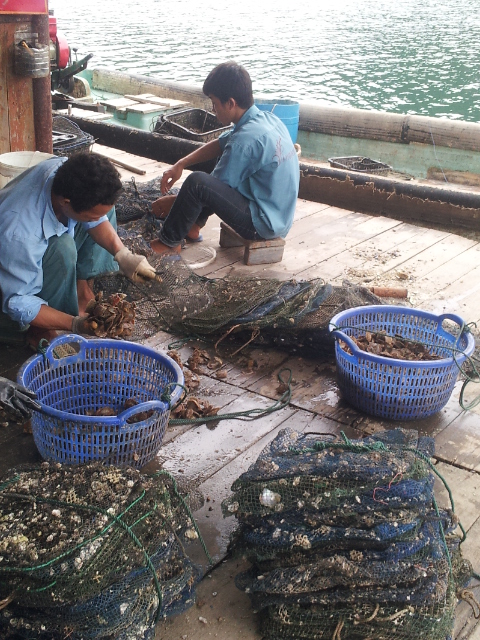
Collecting oysters that will have mother-of-pearl inserted to start the growth process.
One more thing to mention was the Halong Bay Pearl Farm. It was so interesting seeing the different kinds of oysters used to create a plethora of pearls in all colours and sizes. There were oysters hanging from strings in the water and the assistants showed us how they ‘implant’ the mother-of-pearl grain in to the oysters to start the process. There were pearls that took between 1 and 8 years to fully mature and when you realise the monetary worth of the end product, it was easy to see how much care needs to be taken at getting this process right. The price of the highest valued pearl for sale at this farm hurt my eyes (brain?); it may as well have been worth a million rand.
TIP: Husbands and boyfriends, visit this place with your better half and a credit card. It will be the most romantic gift you give her from Vietnam. There are some beautiful pieces on sale here.
FOR THE MORE ADVENTUROUS
Talking to a couple of people along the way, we discovered that it is possible to go to Halong Bay on your own if you have a motorbike (and nerves of steel!) or even by catching a van or bus to Hai Phong. From there you can take a ferry across to Cat Ba island (there are resorts and a beautiful beach on the one side of the island). Or you can hire a boat to take you around the bay. We were warned that if we attempted this, however, there are real dangers of encountering illegal boat operators, scams and other less than savoury experiences. We wouldn’t have had enough time to attempt this trip on our own, but it would be an adventure well off the beaten tourist track though!
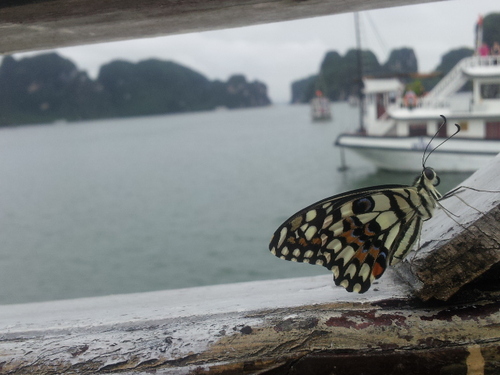
A friend hitched a ride on our boat in Halong Bay.
With a week to spare, we decided to head up to Sa Pa for a few days and brave the dreaded ‘rainy season’ of the North, in hopes of a glimpse of that beautiful mountain, multi-coloured tiered rice paddies and the various and colourful mountain ethnic groups.
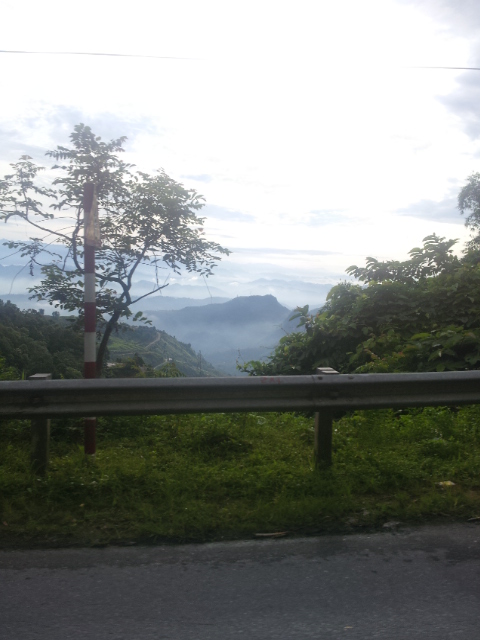
The train from Hanoi (overnight) arrived in Lao Cai at about 5a.m. (extremely close to the Chinese border). We then settled on catching a shared taxi (a 16-seater van) and made the one hour trip through the winding mountain pass up to Sa Pa. The two local children in the back, along with their mother, were throwing up in bags the whole way, which was a great incentive for us to keep our eyes on the beautiful mountains outside (and close our ears!). The driver didn’t seem too phased and we were later told that local people are well-known for their tendency to motion sickness (a myth perhaps, but hey, we experienced it first-hand).
Mong street seller in traditional clothing of the mountain people.
The town of Sa Pa was quite different from what we had expected, but it was a lively little place with so much to offer those who make the effort to wander off the beaten track.
There is a rapidly-developing tourism industry here, a result of local entrepreneurship since the country opened up to outsiders about 15 years ago.
There are trekking stores everywhere (clothing, backpacks, hiking boots etc), places to hire motorbikes, an abundance of western-style restaurants (like Italian, French, American and Vietnamese-Western fusion), bakeries, pharmacies, spas, a wide range of accommodation (high-end to backpackers to homestays), tour companies and tour agents, street vendors and small enterprises, local markets and of course, lots of tourists too.
Even in the rain, life in Sa Pa continues and tourists who go there for only one or two days seemed to brave the rain, trek and explore to make the most of the visit that everyone has to do by train or bus. There are no planes in the mountains.
We motorbiked down from rainy Sa Pa and into the exquisite Muong Hoa Valley below.
There are lots of things to see within short distances from the town, especially if you are into motorbikes, hiking and exploring. We thoroughly enjoyed the Muong Hoa Valley (straight down the road from our hotel) and had a couple of afternoons walking around the town itself too – shopping, monuments, museums, the lake, the street food and the many restaurants.
The natural beauty here is amazing and the ethnic groups that live in the surrounding mountains add the colour. The rain is no deterrent to enjoying this peaceful mountain paradise.
One place absolutely worth seeing is the Muong Hoa Valley – we did this on motorbikes as R couldn’t hike – it is SO beautiful! I recommend looking at the Sapa O’Chau tour company for trekking (and their restaurant for delicious trout and chips), as Peter was great. He is knowledgeable about the area, honest and compassionate; and any money spent here all goes to the cause to further education and sustainable income for the local community.
Sapa Essenceand Sapa Momentwere our two favourite restaurants, just down the road from Four Seasons Hotel and on the way down the Muong Hoa Valley Road.
Hotel recommendation
We stayed at the ’Four Seasons Hotel’ (formerly ‘White Lotus’) and enjoyed the relaxed atmosphere and comfortable rooms. Only $16 – $20 per night (slightly less if you book online) and the rooms were clean with a view of the mountain. Breakfast was not bad – choice of eggs, bacon, bread, salad, coffee, orange juice and a few other local choices.
TIP
The street sellers (Mong women) are very persistent and always around. Get your game face on and just tell them you’re not interested. Try not to talk to them if you are not planning to buy anything. The city has signs up saying ‘do not buy from street sellers’, as they want to encourage support of small businesses and the mong girls to stay in school.
Favourite souvenir
Besides the lovely North Face backpack I picked up for $12.00, one of the most intriguing things I took away from this trip was being educated about the fact that “Hmong” is not the correct term for the mountain tribes in this area. This is the Vietnamese term imposed on the mountain people and is almost derogatory. The people refer to themselves simply as “mong” (and there are a few different branches within this term like Tao, Dzao etc.) – fascinating! Also, “flower H’mong” is just a made up tourist label as this title is not acknowledged by the local community.
Next up…
From Sa Pa, we went east to Halong Bay and then on to Hue.
From the moment we landed in Hanoi, we knew that it was something special. Crazy, but special. And granted, not as crazy as Ho Chi Minh City for the most part. The atmosphere here seems to be one of relaxed oblivion with a side of hodgepodge cultural pride, a heaped dose of traffic chaos and of course, the ancient remnants of a thriving city that has survived many years of hurt but has managed to retain its unique flair.
Modern development springs up beside poverty and neglect and there is always an entrepreneurial focus to daily life for the general population – everything is for sale and everything is negotiable with the right attitude.
For example, our first introduction to a walk through the Old Quarter, was a very enterprising man who basically tripped my husband while we were taking a slow walk and then proceeded to squirt super-glue on his toe (“apparently” aiming for his shoe). He then demanded a dollar for ‘fixing’ the said shoe (even though it wasn’t broken), despite the fact that we had in no way asked for this service to be administered. He followed us a long way down the street until he finally gave up trying to force us to pay him (we are a little stubborn about this sort of thing having had a lot of experience travelling in Asia and Africa).
Sunday night in Hanoi, at the square alongside Hoan Kiem Lake.
Entrepreneurial spirit is one thing and is gladly rewarded, but scams are just downright infuriating for usually careful travellers.
Other than that, Hanoi treated us very well indeed. It was fascinating to experience the extremes of modern development alongside the preservation of ancient customs and architecture.
The grand opulence of the Vincom Mega Mall (Royal City) seems strangely out of place among the rundown apartment buildings and multicoloured street sellers that wind their way between the cheeky motorbikes, crawling all over the streets and lined up on the sidewalks.
What to expect in Hanoi
…crazy traffic, motorbikes everywhere, amazing massages, persistent vendors, hundreds of restaurants, shops for anything you could ever possibly want, whole streets dedicated to particular products (silk, fans etc), resourceful entrepreneurs, beautiful architecture, interesting art, eclectic charm.
Favourite memory
Mangosteens are a real treat when travelling in South East Asia and we located a small Vietnamese lady, complete with conical woven hat, who was selling mangosteens and other fruit off her heavily loaded bicycle (somewhere on the edge of the Old Quarter). She weighed my purchase with an ancient, rusted scale (the kind that looks like it belongs in one of Vietnam’s museums) and placed the cash into her handwoven purse. The mangosteens were delicious, but this memory will last long after the fruit has disappeared.
Vietnam has been one of the top spots on our travel list, but we had not yet ventured into this beautiful country due to the required visa administration. This time, however, we braved the “administration” and found that we had actually made a mountain out of a mole hill; the procedure was simple.
So, to encourage you other travellers not to resist the call of Vietnamese beef Pho and endless sandy beaches, here is the procedure for the VOA (Visa on Arrival) for 30 days single-entry to Vietnam via airport, as experienced at August 2014 (in Hanoi):
Before you leave (gave it two weeks just to be safe, took 48 hours):
Apply for the Visa Letter through an online agent There are so many and it was daunting not knowing who was ‘reputable’, but from what we have read, it is safe to go with almost any online agent as they all do the same thing.
Receive the letter (via email), print and retain for arrival in Vietnam. We printed two copies each, in colour just to be safe, but found we didn’t need it in the end. We also received the visa application forms via email and printed these out too (saved us a bit of time, but there were forms easily available at the desk on arrival too).
When you arrive in Vietnam (airport):
Proceed to the ’Visa on Arrival’ desk (there should be a long line of foreigners waiting there to show you the way). Do not stand in the long line of foreigners. Proceed to the ‘front’ of the desk on the other side (which looks like you may be heading out of the airport).
Hand in your passport, photos and completed form.
Wait in the long line (or rather ‘crowd’) on the ‘back’ of the desk.
Collection.When your passport has been processed (at random), your name will be called by an automated voice (and face and passport will probably appear on a tiny tv screen). Pick up your passport at the desk and pay the $45 (USA) fee. They did not have change, so be prepared (as we were) to give an exact amount to save yourself the trouble of changing money with other tourists.
Proceed to the immigration desk and continue with the standard procedure.
NOTES:
There are other visas available (airport, land crossing) for single or multiple entry, 30 or 90 days etc Check which one you need and ensure that you apply for the right one when you contact the agent as different rules apply.
Double check that the details given to the agent are the same as appear on the visa letter. We made a typo and picked it up quickly enough to ask the agent to change it.
The online agent we used was Vietnam Visa Service. Service fee was $14 payable on application. Our visa letter was sent to us within 48 hours.
Your name may appear with a whole lot of other names in the letter (the agents often process the visa requests in bulk). This is normal.
Using this process, you do not have to send your passport in to the agent or embassy.
**Please note: This post is written from the perspective of South African passport holders and may not apply to other nationalities.**
Our trip started in Hanoi and took us all the way down to Ho Chi Minh City – stopping at a couple of beautiful places on the way.
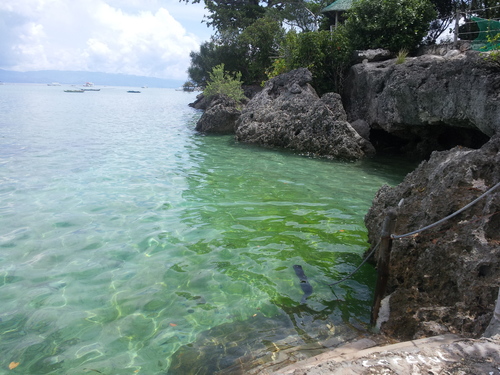
The ‘private swimming pool’ – step right out into the ocean.
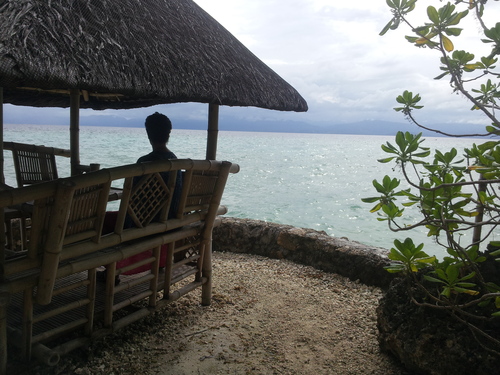
Sea Turtle House, or STH as it is affectionately known by its owners Stefan and Nenita, is a charming beach lodge right on the edge of White Beach, Moalboal. It is surrounded by tropical vegetation and gives panoramic views of the Tanon Strait between Negros and Cebu in central Philippines. The rustic atmosphere coupled with a fresh sea breeze makes for an ideal beach getaway and we had a wonderful week of complete relaxation.
Named for the Green Sea Turtles that frequent the coastline (we literally saw sea turtles popping up for air every day the water was flat enough), Sea Turtle House has to be our new favourite holiday destination; it’s reasonably priced, offers great home-cooked meals from Arlene, a beautiful location and a stunning reef to snorkel only 100m off shore. Check out more information at the Sea Turtle House Dive Adventure website. It is also only a short walk from the long, white, sandy beach.
Looking out over Moalboal reef.
What to expect:
Hammocks, bamboo cabanas, sun loungers, air-conditioned rooms, tropical garden, stunning coral reef that runs from white beach all the way out past Panagsama towards the acclaimed Pescador Island, a great dive spot, home-cooked meals, scrumptious bacon breakfasts and lots of sunshine. Also, massages, snorkel tours and tuk-tuk trips in to Panagsama (for other restaurants) or Moalboal for groceries, are available on request.
Getting here:
Situated on the west coast of Cebu, it is less than a 3 hour taxi ride from the Mactan-Cebu International Airport. We flew directly into Cebu (Cebu Pacific/Air Asia X are the best low cost airlines for this) and then jumped straight in to a (white) taxi in front of the ‘Departures’. It cost us 2,500 pesos (US$ 58) for a three hour taxi ride – well worth it for two to four passengers! STH can also arrange an airport transfer for you for around the same price.
Tips:
1.If you go in the rainy season (June to November), even though a little rain can be expected all year round, then it is much quieter but be prepared for some rainy days of reading a book on your bamboo porch. or under the cabana. We even had a typhoon pass by us during our stay here (July 2014), but the following day we had glorious sunshine and got thoroughly sunburnt on our (absolutely awesome) snorkel tour.
2. There are some basic rooms and others with kitchenettes. We upgraded when we arrived and it was great being able to prepare little snacks, tea or light meals for ourselves using our groceries from Moalboal town and the fruit market.
3. We requested massages, manicures and pedicures in our rooms on some of the rainy days and were sent an angel, named DaDa, who appeared to relieve all the stress and anxiety from our weary bodies. She was amazing, truly! And her rates were more than reasonable too – for an hour long full-body massage and also a great mani-pedi. She is a mother of four and a beauty school student so I’m sure your small financial contributions will be greatly appreciated in her life, especially for what you get out of the deal (a fantastic massage and the gift of giving back).
Read more…
About Panagsama (the neighbouring tourist area with hotels, restaurants and dive centers) here.
The trip that we discovered mangosteens — the most delicious fruit ever!
January 2013
After receiving news of an extended holiday period for our winter vacation, Travelinds headed to Malaysia for our Christmas and New Year’s break for 14 days. This was only two weeks after we’d returned from our crazy busy South African wedding trip and a week after we’d had to move apartments unexpectedly (within 24 hours). We were ready to relax and unwind.
First stop: Penang
First impression of Penang:Diverse community, skyscrapers juxtaposed with bamboo houses, centered around food, laid back, and puts “African time” to shame.
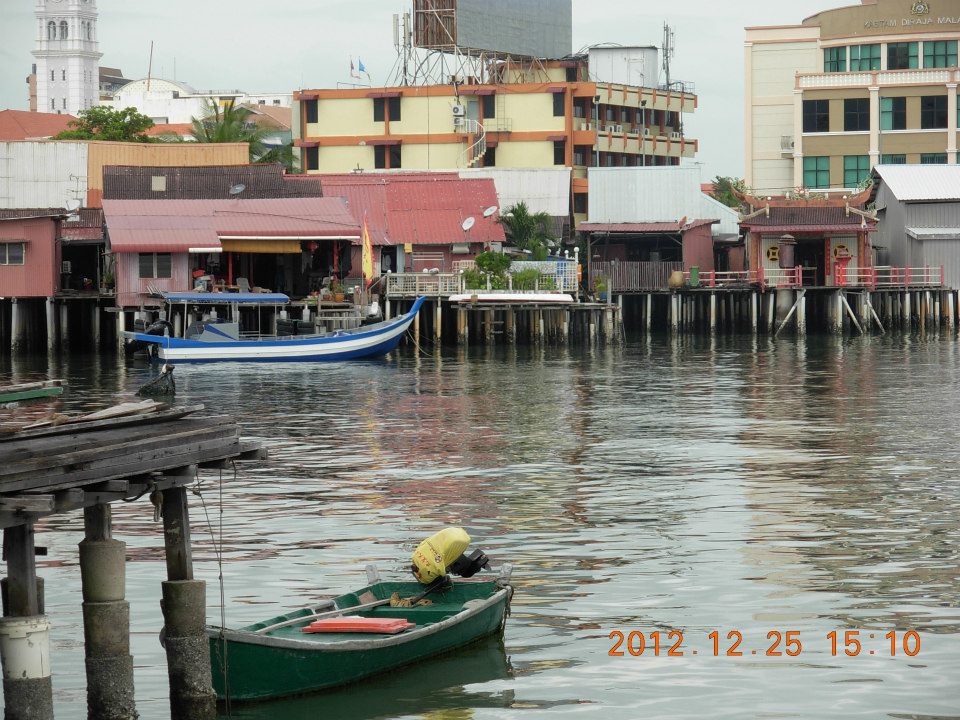
Chew Jetty, Penang
Penang is one of the most popular islands off the coast of Malaysia. It is known for its delicious (and cheap) local food, a rich cultural heritage and great holiday atmosphere for tourists. It has many places to explore, including several UNESCO World Heritage Sites. We visited a few of these, such as Chew Jetty (a Chinese fishing village with houses in narrow alleys built over the sea) and Fort Cornwallis, built by the ‘founder’ of the Penang British colony Captain Francis Light.
The country has a rich history and Malaysians are made up of several people groups, the majority of which are those of Malay, Indian and Chinese descent. This dynamic makes for a rich food culture, not to mChew Jetty, Penangention the very friendly, helpful people in general.
There was such a mixture of religions in Penang that it was hard to say which is the majority without looking at some statistics. There is a fascinating mixture of Muslim, Buddhist, Hindu (Tamil) and Christian places of worship (sometimes right next to each other!). There are little pockets of communities (China town, Indian Town etc.,) where you can see the traditional way of life still continues, even through this modern backdrop of Malaysian development.
Travelinds’ Highlights of Penang
The food!! Amazing Malay and Indian food, especially the “street” food. Noodles, rotis, soups, curries etc., and we ate to our heart’s delight!
The variety!! The beaches were fairly average compared to South Africa. Still, there were so many interesting markets (where bargaining is the favourite pastime), tourist sites (Georgetown and other areas, too) and other things to keep you busy that you can forget about a little bit of litter on the beaches.
The markets!! Our favourite pastime in the evenings was the Batu Ferringhi night market. You can bargain for cheap goods until you drop. Anything from clothing, cologne and curios to massages or food stuffs. And boy are the prices different from each stall to the next!
Memory Maker in Penang, Malaysia
The doctor fish eating our feet
We found a fish spa in one of the massage parlours. We paid the equivalent of around ZAR6.00 for 30 minutes for these tiny fish to nibble at our feet.
It’s great fun. It kind of feels like pins and needles at the time but your feet feel fantastic the next day. The doctor fish especially loved H’s dry heels over R’s softies!
R also loved his long ocean swim out to the small island nearby, despite jellyfish stings along the way. He got to catch his own big shellfish right off the rocks.
Travelling Companions for the Travelinds
In Penang, we met a couple from Shanghai, a couple from Canada and even one man (while we had our fish spa) from Sudan. Also, there were a whole lot of others who we could talk to easily and for extended periods by being our usual friendly selves.
Next stop: Langkawi
Pentai Tengah bay
First impression of Langkawi: Beach atmosphere, small tourist-centered island, simple living for locals, and beautiful natural sights, including animals and bird life far richer than in Penang.
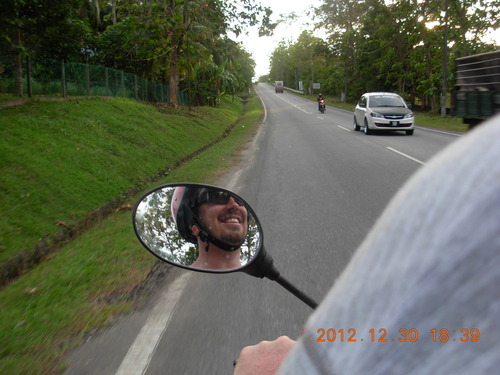
Langkawi is known for its beaches, easy accessibility to and from the southern Thai islands in the Andaman sea and eagles. We managed to do a scooter tour (H’s first time on any sort of motorbike!) in one day. This trip covered just about the whole island of Langkawi (for only about R90).
The long white beaches are absolutely beautiful, with soft sand and an abundance of interesting crabs. There is a great variety of restaurants to cater to the great variety of tourists (Russian, Italian, German, Spanish, American, British, Australian, Polish, Arabic, Chinese… the list goes one).
Travelinds’ Highlights of Langkawi
The nature. Birds, monitor lizards, crabs, monkeys, eagles, trumpeter hornbills, and a large variety of other things could be seen almost on a daily basis. We really enjoyed watching the tiny sand bubbler crabs making extra tiny sand balls all the way around their holes. So interesting! There were thousands of them along the beach that you wouldn’t even notice if you didn’t look closely.
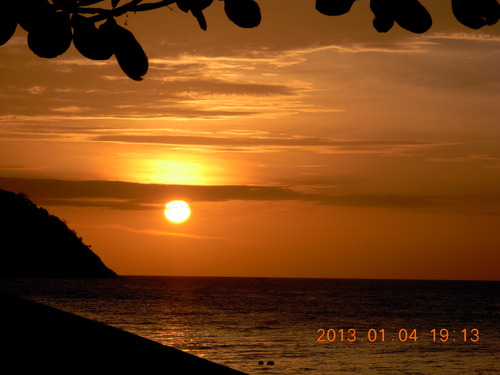
The beaches. All the beaches were beautiful here; busy, but still enjoyable. The ocean was much cleaner than in Penang.
The hotels. We really were privileged to stay at Holiday Villas Resort for our first four nights in Langkawi. This was SUCH an amazing resort to be at – reasonably priced rooms (for a resort). It was an awesome location and the facilities included a beautiful pool, jacuzzi, semi-private beach and sports facilities!
Memory Maker in Langkawi, Malaysia
Scooter time
A day on the scooter together exploring the whole island was bliss. We saw almost all that it has to offer and remains one of our fondest memories.
With soft rain every now and again, the trip also made for a very romantic day together. We saw lots more of island life and of nature this way and could stop where we wanted to explore more.
Travelling Companions
In Langkawi, we met so many people. “Uncle” was one who started his own restaurant or food stall (great local cuisine!). He used to work in a 5-star resort but quit because he wanted to play paintball, his other passion. We enjoyed many chats with Uncle and his crew as we ate at their food stall most nights.
Another interesting couple were some British journalists based permanently in Kazakstan. We chatted to them for most of New Year’s Eve because they were our neighbours at the motel. We also met up again with the Canadians whom we had met in Penang. It was so lovely getting to know them a little more.
Last stop: Koh Lipe, Thailand
Koh Lipe
Our last two nights on this vacation, we decided to take a speedboat over to Koh Lipe. In Thai, this is literally “Island Lipe” so they all start with “Koh.”
Thailand is another country but only an hour away from Langkawi to the north. Thankfully, R was keeping an eye on the weather forecasts. We chose two sunny days to spend in Koh Lipe when we did the trip there. However, it was pouring with rain on our trip over to Thailand.
The speedboat was not closed off, hence we were all soaking wet! It calmed for the evening, and the next two days were absolutely beautiful weather. That surely made up for the first afternoon’s downpours and very wet luggage.
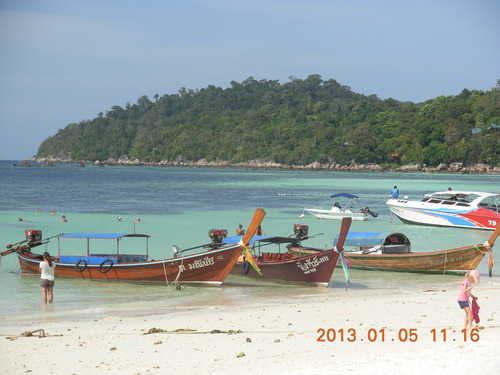
Koh Lipe is also absolutely beautiful! It is a tiny island (walking distance to go all the way around it) and referred to as “The Maldives of Thailand”. It is known, as is the rest of Thailand, for its beautiful beaches, turquoise-coloured clear water, great snorkelling and diving and cheap but quality massages! We stayed in a small bamboo bungalow (with fans). There were mozzi nets over the bed and a little Asian-style bathroom. The sign on the door said, “Beware of leaving shoes outside on the deck as the dogs love to steal them and bury them!!” Actually, this happened to the German couple staying in the bungalow next door!
Travelinds’ Highlights of Koh Lipe
We only had one full day, so we decided to do a snorkelling trip. It was very reasonably priced and included equipment and lunch for a full day trip. Great decision!
We saw so many beautiful fish and sea creatures in the snorkelling spots and got to see a few little Thai islands along the way. The lunch spot (a deserted white beach) had amazing snorkelling right off the beach. We even saw a scary looking black spider sneaking past us on the beach to go back to the forest.
Travelling Companions
Again, we met up with the Canadians. They had taken our advice and ferried up to Thailand from Langkawi, stopping in at Koh Lipe for a couple of days first. We had a meal or two with them and sunset drinks. We also taught them a few South Africanisms, like “Mozzi”, “Lekker”, “Slops” and “Mielies.”
It was great to make some new friends who are doing what we still dream of doing one day. They have backpacked through Nepal, India and Sri Lanka so far. Now, they’re heading through Malaysia, Thailand, Laos, Cambodia, Vietnam and then Australia.
We also had a lovely chat on the “fast” boat back to Langkawi to Swedish, German and Australian couples, which we enjoyed!
Another Funny Travelinds’ Memory From Koh Lipe, Thailand
On the last evening at about 11pm, we went for a couples massage (one-hour full body). This was something we’d both looked forward to when visiting Thailand! It was amazing, as promised by all the tour guides.
Unexpectedly, the massage was also entertaining. We were bent, prodded, squeezed and stretched —like pretzels — by our tiny masseurs. At one stage, R even had the Thai lady jumping on him with her full body weight. As you can imagine, this was hilarious (and painful for him). It also did the trick to ease the sore muscles!
Final Reflections: Travelinds in Malaysia and Thailand
Tip: Ignore anything that says ‘rapid’, ‘speed’ or ‘fast’ in Malaysia and Thailand – there is nothing rapid about the local transport (or food service). The “rapid” bus that “takes 45 minutes” took us about three hours, and the speed boat of “only 55 minutes” took us 2.5 hours.
Reflecting on this trip reminded us once again, how amazing God’s provision for us has been. He promises to provide for His people. He continues to shower us with most undeserved blessings despite our sinful shortcomings and constant lack of gratitude. We are so very grateful that we have had this opportunity to enjoy a wonderful two-week summer holiday in the middle of the Korean winter with little fuss and a whole lot of fun together!















 1.If you go in the rainy season (June to November), even though a little rain can be expected all year round, then it is much quieter but be prepared for some rainy days of reading a book on your bamboo porch. or under the cabana. We even had a typhoon pass by us during our stay here (July 2014), but the following day we had glorious sunshine and got thoroughly sunburnt on our (absolutely awesome) snorkel tour.