Tag Archives: nature

Oribi Mom: Still Lots To Look At During the Winter in Oribi Gorge

“Each season brings something to appreciate in Oribi Gorge.”

A bat flew out of a bush today, right by my head. I thought it was a bird because it was about the size of a firefinch, but it had those distinctive zigzag wings and was flying around in circles for a while. It reminded me that it was nearly time to go inside. I’d been hacking the garden.

There’s this insane vine that just decided to grow on top of my rambling rose and then, because I left it for so long, it just basically took over every single thing it could grow over, including the long grass.

Well, I’m no longer pregnant and my baby is giving me more free minutes in the afternoon, so I’ve hacked it. But it’s even grown pods, so I’ll have to hack its progeny next year, too. I shouldn’t have left it so long.

Winter in Oribi Gorge Is Still So Beautiful

Winter is a beautiful time here, with aloes in full flower and lots of clearing on the go. We chop hedges and clear out half-dead weeds. It is not so scary in winter because the snakes are much less active.

I still look closely into every pile of leaves or bush I put my hand into, though. Puffies won’t move until I’m right next to them. Large mambas curl up tight. And boomslang females look just like the leafless branches you’re cutting back or pulling off the tree.

I was spraying one of the dirty windows the other day when I happened to look up a little higher to see a very large spider dangling just above my face. Some sort of orb spider, I think. Very pretty. And terrifying when it’s almost as big as your face and within a ruler’s length from your nose.

Thankfully, it was scrambling up toward the roof on its silky thread at that point. I don’t mind orb spiders eating the insects trying to get in my window. It’s much safer than the hundreds of brown button spiders you have to watch for on pot plants, the lemon tree, and under wooden tables and chairs.

Warm Winters Are a Bonus on the South Coast, Aren’t They?

Winter thins these things out to make room. But I’m still glad I’m living in one of the warmest places in South Africa. The cold is not for me.

The bats are also confused it seems. This one came out at 16:30 because the sun had dropped below our hills already. At least that means the eagle owls are sometimes on our garage roof by about 18:30 these days.

Each season brings something to appreciate in Oribi Gorge.

Published here.

Oribi Mom: Not so secret visitors feasting in the macadamias

They’re fighting against crazy odds to survive as their natural habitat gets smaller.

July 15, 2023

It’s the third day in a row I’ve seen them. Three shining hazel-coloured coats with white stripes dazzling in the morning sun. They stand there in the macadamia grove, hoping we won’t see them.

Maybe if they stand dead still, we’ll pass by quickly. But they forget that their flopsy, large ears flick away the bugs all the time. And the shape of them stands out very clearly against the backdrop of natural forest that drops off sharply below them.

Somehow, they find their way up through the cliffs and forest and steep gorge slopes. They follow paths the rest of us might not even recognise as throughways, pushing past thick bush and sharp prickles and over loose rocks to get to where they’re going. They’re brazen about chomping baby mac trees, but how can they pass on such succulent treats? They’re planted neatly in rows and cleared of long grass. It’s like a smorgas board as winter dries up the natural vegetation a little in the valley below.

Longtime Residents of Oribi Gorge and Other Wild Places

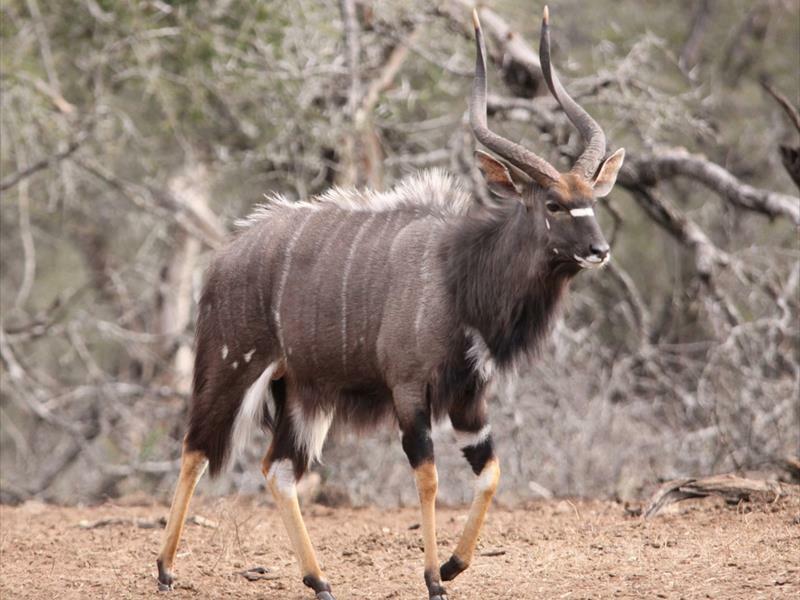
Nyalas are, by far, our most beautiful natural antelope here. The bulls have the most impressive curling horns with bright orange legs sticking out beneath the dark, hairy coats.

The males are called bulls because their impressive size competes with eland and kudu and all these much larger animals. But the dainty females are called ewes, not cows. They’re not big enough to classify in the upper category like their male counterparts. At least, that’s what the game rangers have told me on trips up to Hluhluwe.

Lessons From Antelope? I’ll Take Them

Even if that’s a tall tale, I’m entranced to have these beautiful nyalas right here at home. They’re just a stone’s throw away from me, a human female who needs regular reminders that how others classify me is no concern of mine. It shouldn’t be, anyway.

These ewes-not-cows are still incredibly beautiful. They’re good mommies to the baby nyalas we see every season. And they’re fighting against crazy odds to survive as their natural habitat gets smaller and smaller thanks to development, mines, and yes, farming.

So, they can nibble our mac trees (Sssh, don’t tell the farmers!) if it means I can still watch them. Let them shining in the sunshine in fifty years’ time with the oribis, duikers, warthogs, reedbuck, and everything else.

Published here.

Oribi Mom: Hearing the Roar of the Waterfall

Apparently there is some special limestone-evolved skink here that researchers are trying to pin down.

It’s quite a struggle leaving home in the dark. Winter school runs require some otherworldly resolve to crawl out from under the covers. You must will yourself to get the small children dressed, fed, and half-decent for the day.

It’s also ridiculous how much colder we are in Oribi Gorge and Paddock than in town. Oribi Dad often leaves home in the dark with a fleece top and beanie and returns an hour later with a T-shirt and sunglasses. Why bother?

This weather is confusing, too. One minute it’s so dry we’re irrigating the baby macadamia trees and the next there’s giant thunderstorms ripping through our echoing gorge. They strike Eskom poles to leave the whole place off the grid, and not in that idealistic sort of way.

The Waterfall Roars After a Good Storm in Oribi Gorge

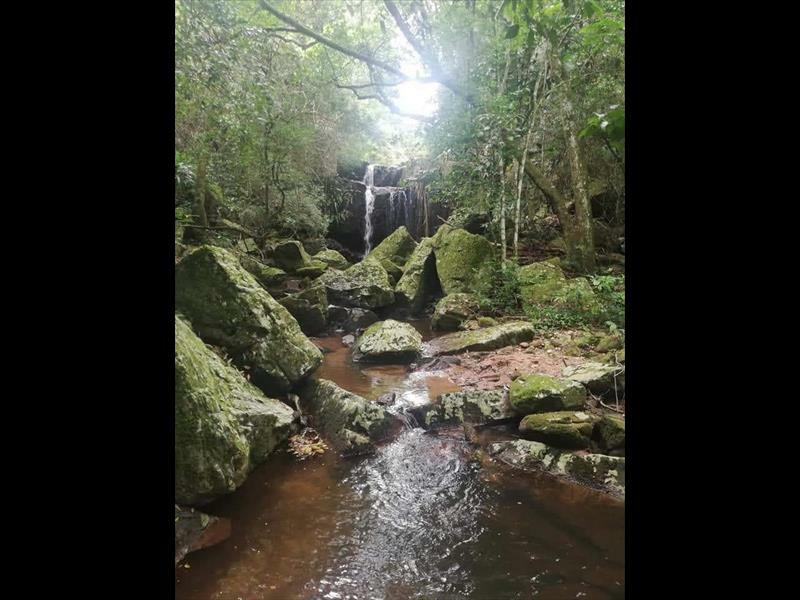
The waterfall below our house really pounds after that rain as the water drains from all the surrounding slopes and gathers in the streambed. It roars, much louder than the cane trucks. It’s louder than the UGU bus putting its accelerator flat on the floor to try and get up our winding gorge road without stalling. The waterfall is even louder than the tractors sometimes, and those whizz right past the house.

You can get to the bottom of the waterfall with some careful balancing and boulder-hopping off the rough trail. And once you do, it’s hard to describe the transformation. The cane, macadamias, and tea tree are far above you. The sounds stop, except for the birds. The bright sunlight doesn’t even make it down there into the moss-covered rocks and twisty skyscraper trees.

Down Into a Magical World Out of Sound and Time

I imagine that’s how Middle Earth’s elven forests must have been in the mind of its maker. It’s like you’ve stepped into a world of fantasy. But you still have to look out for the area’s rather impressive selection of dangerous creatures.

Even grumpy bushbuck aren’t the safest, though seeing them gracefully walking down the narrow bush trails is still spectacular. Apparently there is some special limestone-evolved skink here that researchers are trying to pin down. I’m yet to find it. But there’s still time.

Maybe the dark, cold winter mornings aren’t the most enjoyable part of family life on the farm. But the beauty and diversity of this place makes up for it in a big way. And the aloes, now those are always a great reason to look forward to June on the South Coast, aren’t they?

Published here.

Oribi Mom: Welcome to the Farm

“It was a wonderful weekend.”

PHOTO BY PIXABAYJune 19, 2023 

So, there’s this welcome sign on our cottage front door, a relic of some previous tenants that have long since moved on to other adventures. It’s pretty, and kind of green. A nice touch for a little one-room space that’s seen quite a few people come and go.

Time For Some Visitors on the Farm Again

There were a few less while we were in the middle of the pandemic, but the other day we opened up the cottage to visiting family members for two nights. We managed to get it looking quite fresh. We even removed the giant black scorpion that had made its home in one of the corners.

It took around a week of mad cleaning, scraping, scooping, spraying, and wiping. Endless layers of dust seem to accumulate so quickly from cane fires, dusty roads, and the cement factory down the valley.

Nice Visitors Are Always Welcome

At some point, we noticed a hornet or two staring at us from a wall or a window. A baby brown house snake appeared and then disappeared, hopefully to the garden. Thankfully we didn’t find mold or bigger slithering residents. And the windows opened up the whole place to a nice breeze and the beautiful smell of the basil outside in full bloom.

It was a wonderful weekend. We celebrated. We chatted. We hid from the massive rainstorm that brought about 45mm to the farm in less than two hours. Some of us whispered prayers of thanks under our breath that the storm only managed to find two drips from the ceiling. Nothing came crashing down.

And then, we waved goodbye armed with lots of photographs, including one of a tiny little tilapia that an ecstatic three-year-old fisherman hooked.

Some Not So Nice Visitors Aren’t As Welcome

Cleaning up just took a few minutes. And, we closed up the cottage again so that the next guests might have slightly less dust to contend with.

For good measure, I sprayed the old ant nests we’d vacuumed up from all the inside walls. Then, I sprayed the welcome sign as an afterthought, just in case the ants had started eating through the wooden door under there… and, I had to run fast!

As I sprayed, about thirty hornets angrily emerged to show me what they thought of my cleanup efforts. They didn’t get me. Thankfully, they hadn’t got my guests, either.

Still, the irony of that warm welcome wasn’t lost on me. Next time, we’ll at least warn our unsuspecting visitors!

Published here.

Oribi Mom: Buzzing Into the Newer New Normal

“The summer is almost over and all these creatures will be gone for another season.”

It’s March again. And the ants, hornets, and wasps are in a tizz. I think if I sat in my favourite porch chair long enough, these army ants would probably carry me off into their city beneath the steps.

I’m not sure about how much research has gone into an ant’s sense of smell, but it must be incredible. One dropped piece of litchi skin under the kids table is enough to alert the whole lot of them to the feast. They march across the porch, hundreds of big black ants with reddish heads. They nip, too.

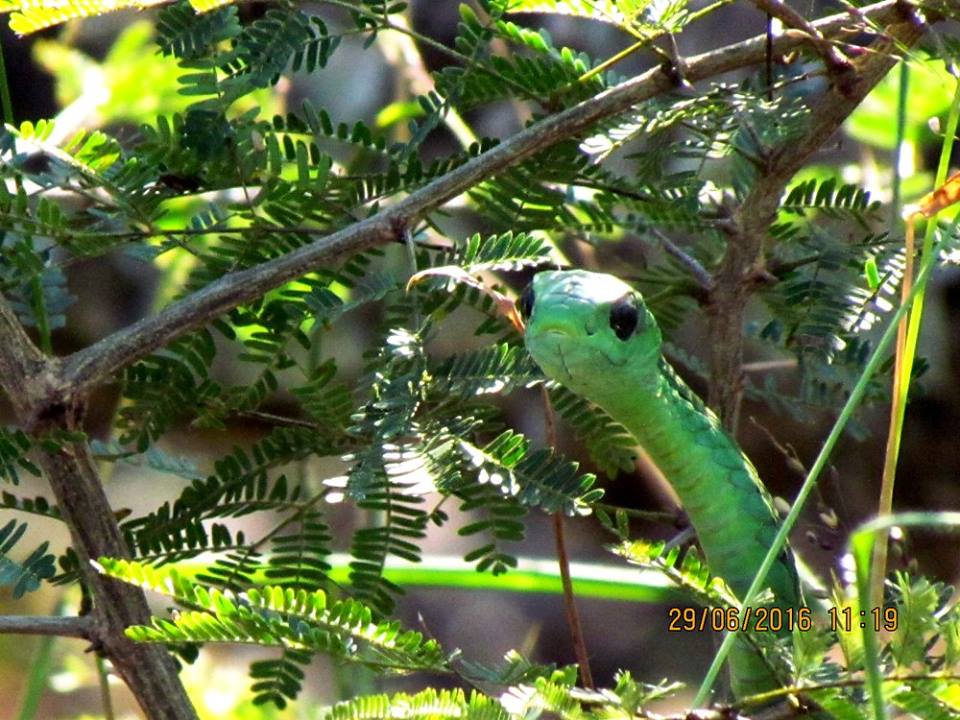
Maybe that’s why the geckos don’t pay any attention to them as they search every inch of the concrete. Or, maybe the geckos are too busy keeping out of the way of the huge female Western Natal green snake that comes to my front door on most hot afternoons. They love eating skinks, but thankfully, they’re not interested in toes.

It’s a Dog-Eat-Dog Sort of World But Snakes Don’t Eat Hornets

I do wish the snakes would eat the hornets, though. Those little brown ones with yellow stripes are so cheeky. Oribi Dad has had a couple of occasions where he’s been walking innocently past something and received several stings on the head for his troubles. And boy, does it burn.

The wasps are a little less of a problem, but they get right up in your face whenever they feel like it. You can be quietly typing away one minute and furiously swatting away at a buzzing enemy the next.

The high-pitched sound they make while they’re making their mud nests is the most annoying thing to hear. It signals that the housekeeper (me) is going to have to locate the sound, uncover the nest’s hiding place, and knock it down before it gets too big.

The black and yellow wasps love the curtain creases. The huge purple or black ones love the highest places on the lounge wall. And the mud doesn’t just fall off either. It needs scrubbing, scraping, and a lot of patience to erase all traces. If you let them get too far ahead, you also get the pleasure of knocking down a nest filled with poor paralyzed spiders – one in each compartment for a wasp baby to eat!

Well, it won’t be hot forever. The summer is almost over. All these creatures will be gone for another season. For us, the year is just getting going. There’s so much to look forward to now that the calendar is out of its COVID hibernation.

Published here.

Oribi Mom: How To Get Rid of an Uninvited Guest

“January has been busier than expected but also an exciting time of growth for our family.”

It’s still a mystery how these things happen, but life in Oribi Gorge is certainly keeping me on my toes. Last year would grind to a halt after almost a whole December of sick children and not much beach weather. But January was beckoning with new beginnings in so many areas.

Grade R. School runs. No plan to return maternity outfits. An action plan forming for feeding the bottomless pits who share my home. And I don’t mean the infuriating troop that strips my fruit trees and vines before we even get a taste.

The second week of school was going well. One of us even managed to make the parents’ meeting in the evening so that we could hear all the things we still had to organise for our eldest’s education. Big school is a lot of work for parents.

I’d left the stationery labelling to the very last minute with all the viral invaders vying for my children’s respiratory systems. I didn’t realise that sticking on over two hundred labels and covering books would be such a tedious exercise. Granted, I only had time to do it at around 9pm when I was already exhausted, but it took almost a week to finish. And that was without the plastic. (Did you know that self-sticking plastic covers are not very good at self-sticking?)

So, January has been busier than expected but also an exciting time of growth for our family. Other families seem to have grown too, including the Western Natal green snakes that live by the far porch. However, I didn’t expect to see one of their brood on my kitchen counter.

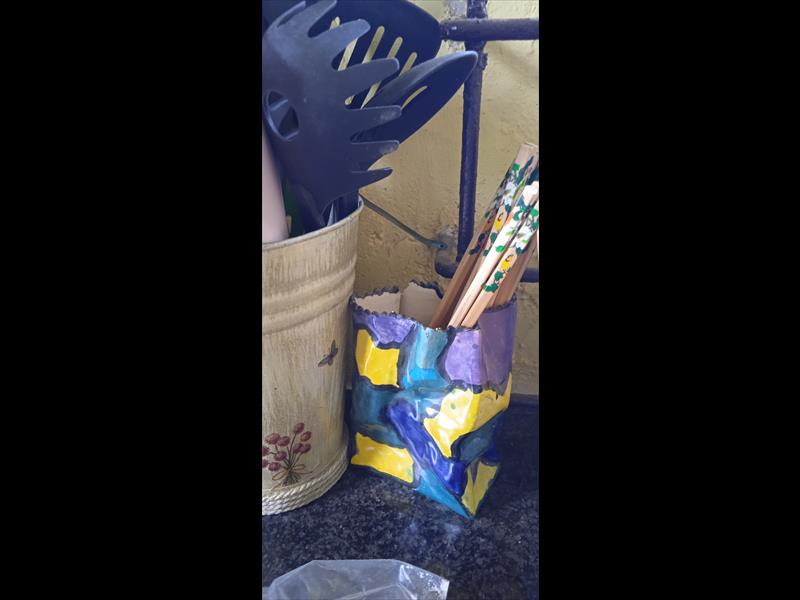
It was hiding behind the utensil bucket, right by the bread I was reaching for. At 20cm, swishing it quickly into a jug was enough for a very undramatic capture and release. The uninvited guest only needed a few prods but, like the crab, I have no idea how it even got up there. I guess one of this year’s tasks will be to investigate in case it isn’t such a harmless visitor next time.

Published here.

Oribi Mom: Spring Has Arrived in Oribi Gorge

“As the spring approaches, I hope you have good changes coming your way too.”


August 25, 2022The weather has been glorious lately. Cool enough to garden a bit after months of a pregnant belly. Warm enough to go on late afternoon strolls with a baby and two boys on bikes kicking up dust. This spring we will finally have a hectare or two of macadamia saplings in the ground to compete with our growing brood. It is an exciting time interspersed with all the adult responsibilities. It’s also different to how things have looked up until now.

The third week in August was like a switch on the farm. The swallows and yellow-billed kites arrived within a day of each other. The wise are not so quick to declare spring in these parts though. The cold sneaks in every September with wind and rain that’s colder than anything we experience through ‘winter’ on the coastal inland farms.

My garden also gets confused. There are already arums, peaches forming, snake lilies pushing up, and flowers on the coffee tree. There are also captivating paint brush-like flowers and showy blooms starting to pop up everywhere. But my trusty beanie is going to stay ready for the next few weeks. I haven’t swapped out cosy slippers for slops yet. Isn’t it strange that we are so hesitant to change over when the signs are obvious? That’s human nature. We resist the unknown even if positive things may await.

At home now things have changed despite us wanting to hold on to the familiar. Every one of our garden pets has become a meal for a caracal, mongoose, or bird of prey in the last few months. Our lovely bunnies and chickens are all gone but we now have a beautiful new son. Our small farm no longer has the ancient flat crown choked by lantana but we have macadamia trees. We are winning the battle against invasive weeds in those spaces.

Things change like the weather and it seems that waiting out the storms is often worth the sunshine. As the spring approaches, I hope you have good changes coming your way too. We just have to roll with it and wait for the summertime.

Published here.

Oribi Mom: Why Did God Create Birds? SO Many Reasons

“There’s always something to see.”

July 19, 2022
Drongos really are amazing birds. I recently learned that these savvy vocalists are masters of imitation. Their strategy is to ingratiate themselves to the other bird species they like to shadow so that they can steal their food or hunt them while they aren’t looking. They can copy bird calls by the hundreds, and they aren’t the only species that do it. White eyes are exceptionally talented in this discipline.

Distraction 101: Cuckoo vs. Weaver

This spring, I watched a pair of Diedricks cuckoos harassing a flock of weavers. The weavers were trying to build their nests, carefully feeding grass through knots and creating the most intricate shapes. Did you know that you can tell the type of weaver by the shape of its nest?

As the weavers tried to sort out their hierarchy for mating and laying, the sun shimmered off the emerald and white cuckoos with red eyes as they played a game. The one cuckoo called relentlessly and dive-bombed and flitted in and out of the nest area to draw the weavers’ attention. It had them really worked up. The other one waited.

At the opportune moment, it would enter a nest unseen, lay a sneaky egg, and then fly out quickly before the mother returned. Mother weavers raise baby cuckoos, and it is a ridiculous sight. The giant baby cuckoo demands endless food from a mother that is smaller and not at all similar in colour or shape. The cuckoo’s eggs even change colour according to which species they choose to trick into raising their young. It’s truly fascinating.

Want Inspiration? Just Watch the Birds

There is so much to learn from watching nature. Unlike the cuckoo parents who are lazy (or efficient?), the tiny mannikins work tirelessly in a community. They build together and sit on eggs in one big nest. They forage together in twittering bunches that fly here and there, ever vigilant of cunning drongos. My grandmother used to call them frets, and that seems apt as the mannikins jump at their own shadows.

If you want inspiration, a birding day in places like Oribi Gorge is a great choice. But, you may only have to walk a few steps out of your front door to see something awe-inspiring. Haven’t you noticed the extraordinary focus with which swallows build their mud nests in your eaves? Don’t you see the phenomenal agility and stealth of the African harrier hawk? It raids nests in the middle of town, with spindly yellow legs and light grey feathers a sparrow’s nightmare.

Look around. There’s always something to see.

Published here.

Oribi Mom: More of a Garden and Fewer Snakes

“As I did, I saw the slender scaled body with its classic rhombic kaleidoscope.”

It’s been over 18 months since I was bitten by a night adder in our garden. My baby was strapped to my chest, asleep, as I admired the snake lily just pushing up its first glossy leaves from a bare patch of soil. My toddler was standing next to me, chatting away about something that Bob the Builder had done.

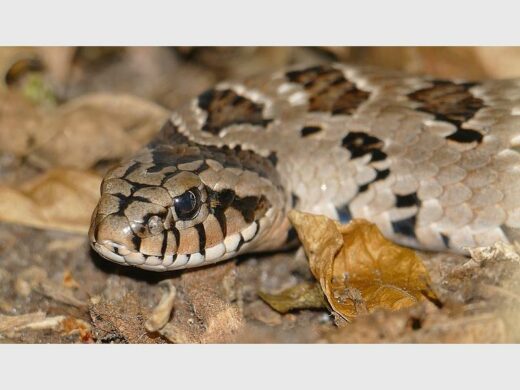
I moved my foot and felt a sharp prick that was sore enough to make me jump. I lifted my foot to peer round the side of my baby in the carrier. As I did, I saw the slender scaled body with its classic rhombic kaleidoscope. An indignant adder slithered into the nearby groundcover as it puffed up and down to show its disapproval at being stepped on.

I couldn’t believe it.

But the hole just above my ankle proved that takkies are useless against snakes, even smallish ones.

One Year On and No More Bites

Rhombic night adder, also known as causus rhombeatus. Photo for illustration purposes only. (Wikipedia)


So much has changed, but I still stood in front of this year’s blooms in wonder. As I looked at the bloom in that very spot a year later, I could hear my now one-year-old and his brother playing happily somewhere in the same garden.

The snake lily had sprung its first ever flower, the magnificent paint brush that comes up a few weeks before any leaves start to appear. It was exquisite. The tree it was underneath was finally tall enough for me to stand under. Our home was now a three-room farmhouse instead of the one-room cottage it had been just the year before.

In a way it feels like I’ve run a marathon in that time of transition.

Keep Going – Just One Day at a Time

A slow race to escape a coronavirus. A sprint to ration food as insane riots shut down all safe access to town. A slog uphill through load shedding and another year of cancelled birthday parties. It’s been like holding up an elephant while interval training through a growing sense of isolation.

If there was ever a doubt that digital connections aren’t enough, the pandemic has been living proof. We need face-to-face school, church, and friends. We need someone to call when pain sinks its teeth into our vulnerable moments. It is almost time now to move on.

Who do you call on? Neighbours? Family? God?

There will always be night adders in the garden, but we don’t have to let them take us by surprise. Oh, and we can choose to wear gum boots the next time.

Published here.

Masaai Mara: An African Dream

August 2016

Waking dream!

Stirring from a night of solid sleep to the sounds of a thousand different birds, I focused lazily on the rays of orange sunshine streaming through the tent and wondering on which alien planet I had landed.  I remembered the crazy rush to book a last minute flight with an hour to get to the far-off King Shaka airport, paying our entrance fees online on the way to the airport, the flight from cold South Africa to rainy Ethiopia to sleeping Kenya in the dead of night, the two hours of sleep before the alarm jolted us from our beds and the mad rush to pack nine of us into two cars, heading out of Nairobi at a prompt 6.30 a.m. sunrise.

With delight I recalled that we had made it through the six-hour journey, the Great Rift Valley opening up below us with its geothermal steam vents and slow trucks between Uganda and Mombasa, the wheat fields and pockets of livestock mixed with random antelope as we climbed out of the valley of volcanic rocks and trundled on through the dusty bushveld – its acacia trees and euphorbias astoundingly huge and beautiful – and the shocking corrugations on the pothole-infested dirt roads that claimed our entire exhaust fixture on the way home (it survived its trip back to Nairobi tied to the roof racks, but normal conversation pitch during the journey was next to impossible and we roared on home lost in thought and memory of the captivating experience).

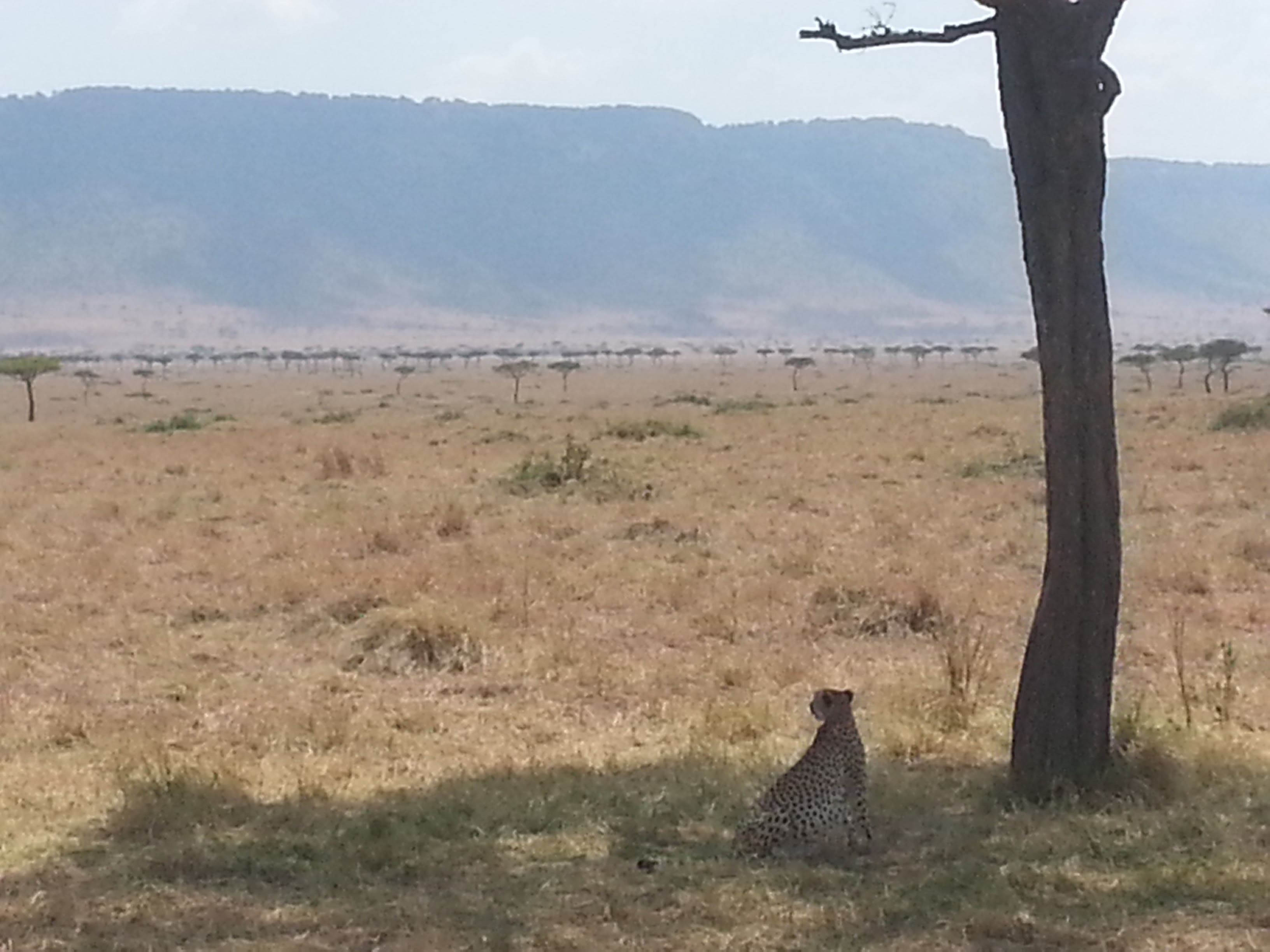
I was finally here, somewhere I had dreamed of since childhood, unbelievably happy in an unfenced campsite along the Mara River, in a little tent, in the world-famous Mara Triangle, part of the Masaai Mara National Reserve – and hundreds of thousands of animals were here with us, too.
20160821_09251420160821_114220

The Great Migration

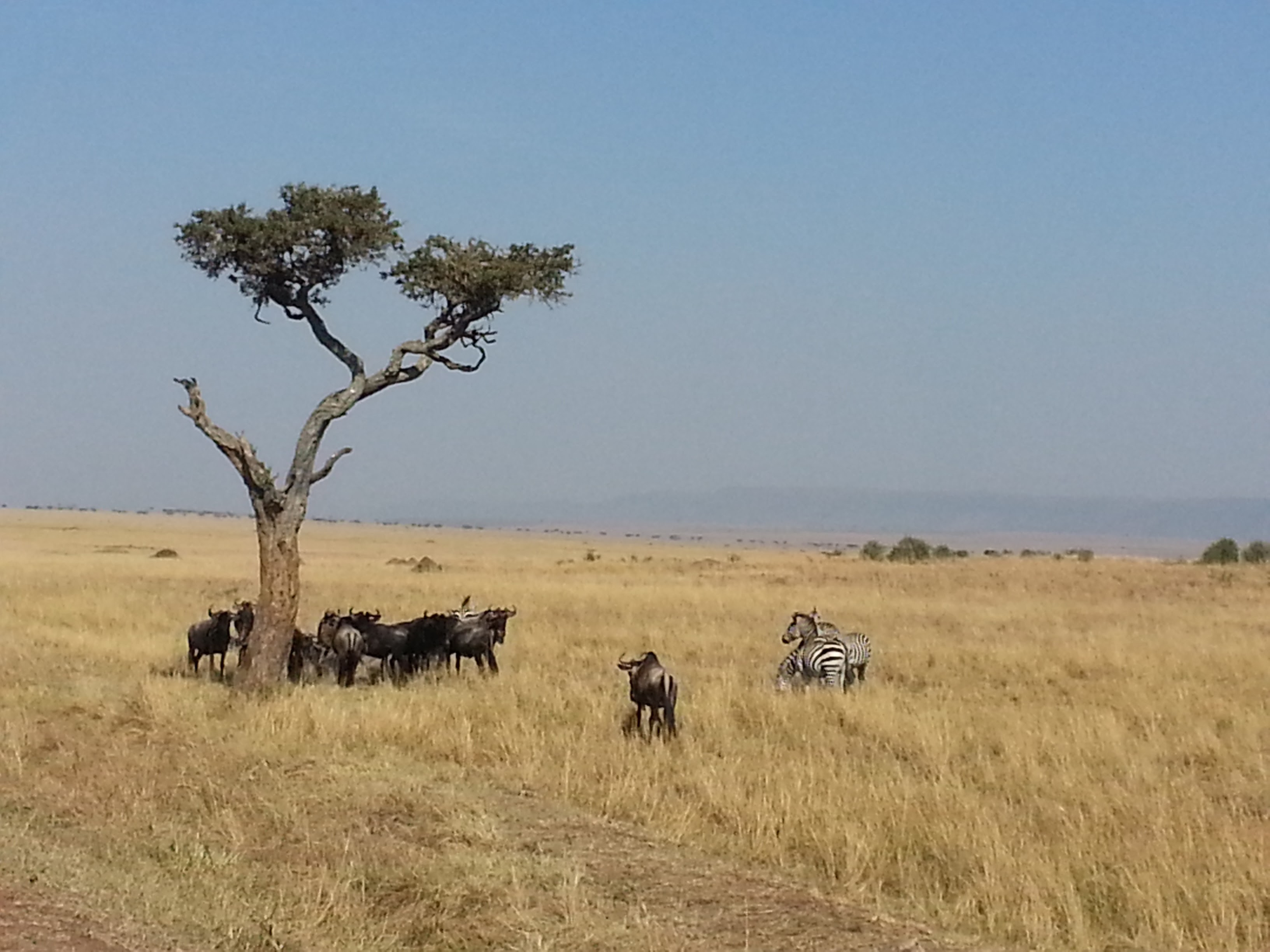
The herds arrived in the Mara Triangle the day before we did and it really is something you need to see with your own eyes to believe it. Beautiful and fascinating!

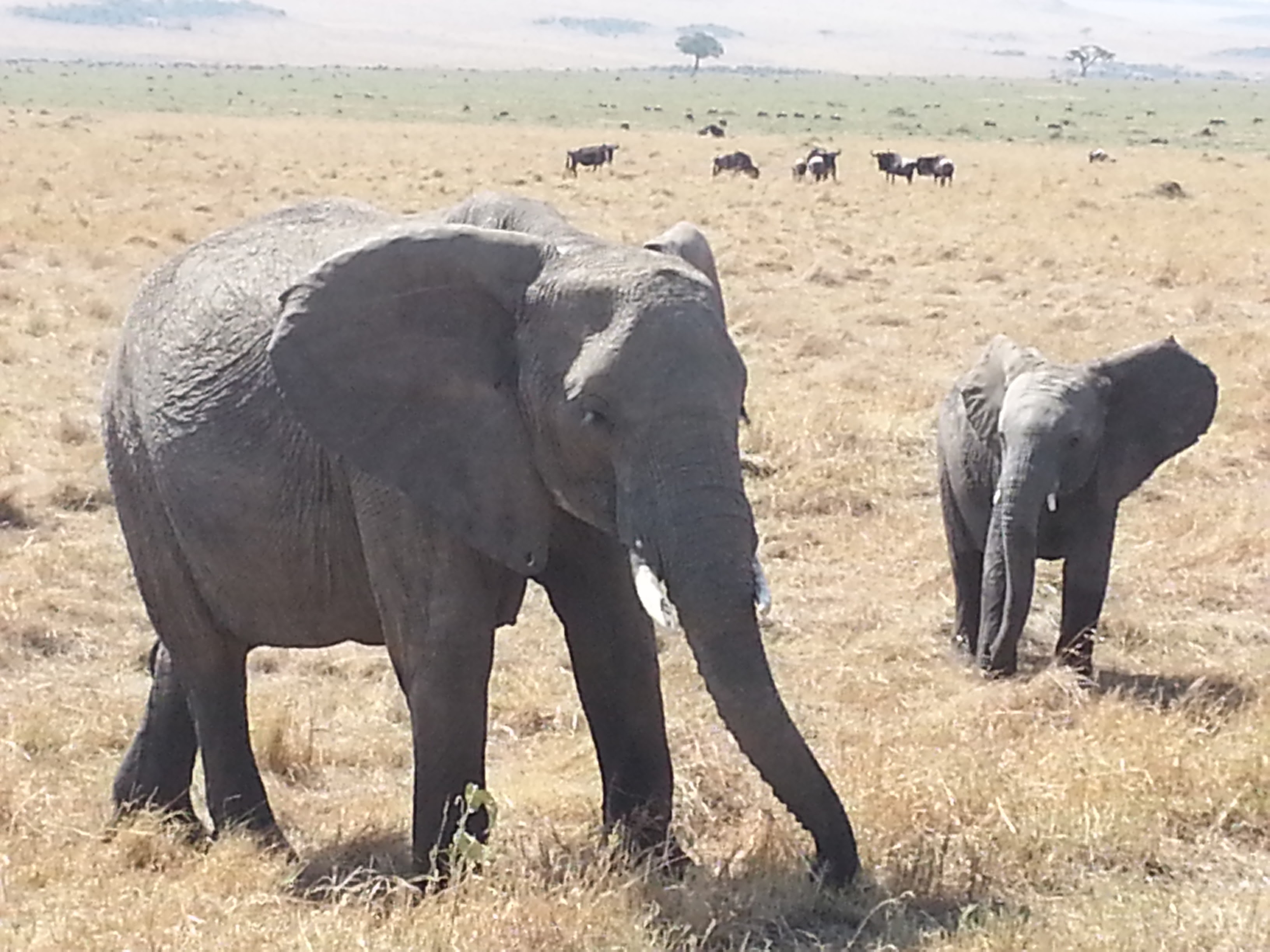
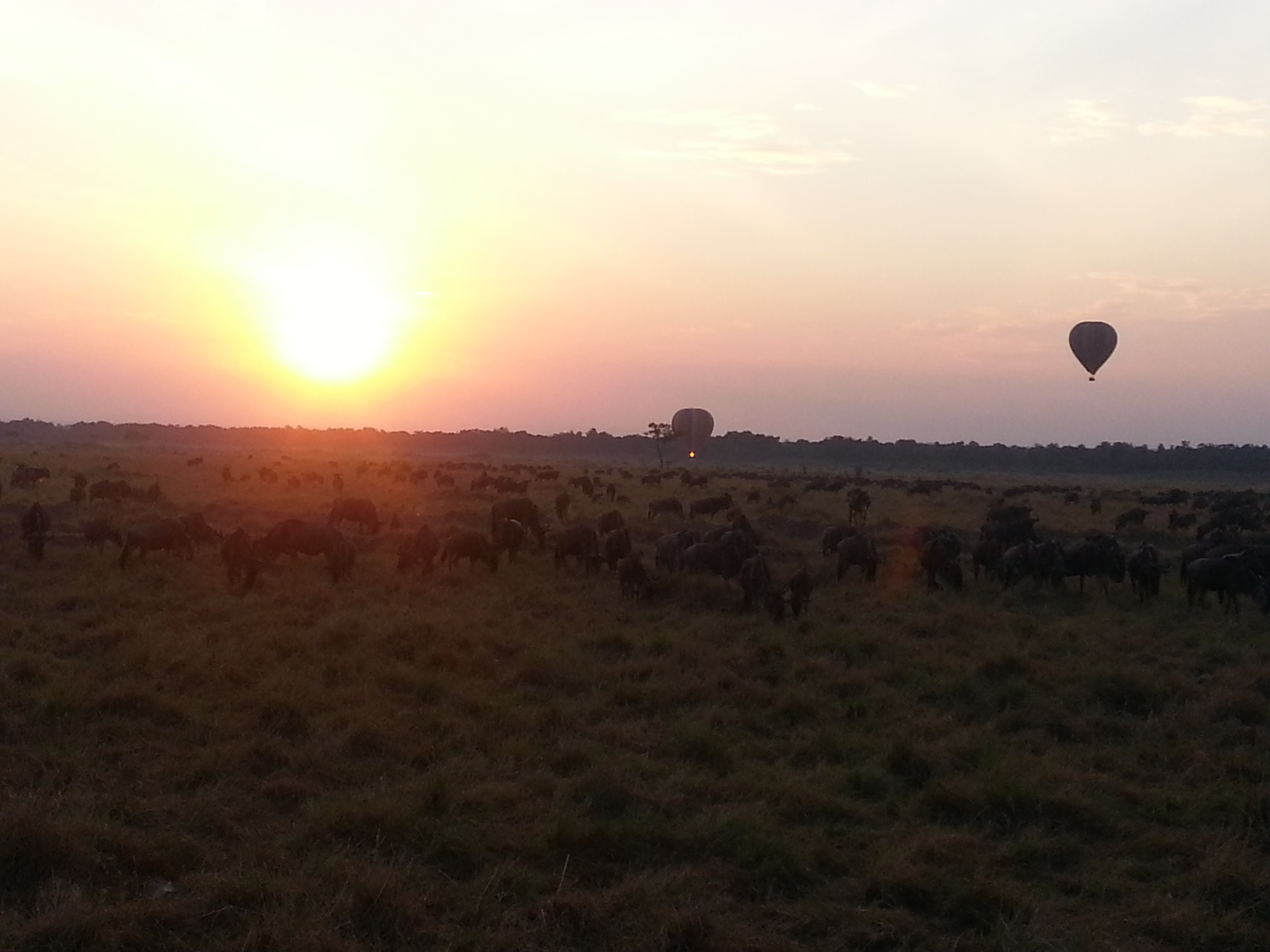
“Follow-the-leader” took on a new meaning as we watched the blue wildebeest lines stretching all along the base of the majestic Oloololo Escarpment, winding their way towards the Mara River to see if the oat grass really is greener (redder?) on the other side.  Apparently following the rain, the wildebeest spend their whole lives moving, an epic circular journey that starts down in the Serengeti of Tanzania and ends on the vast plains of the Masaai Mara in Kenya, where it starts all over again.

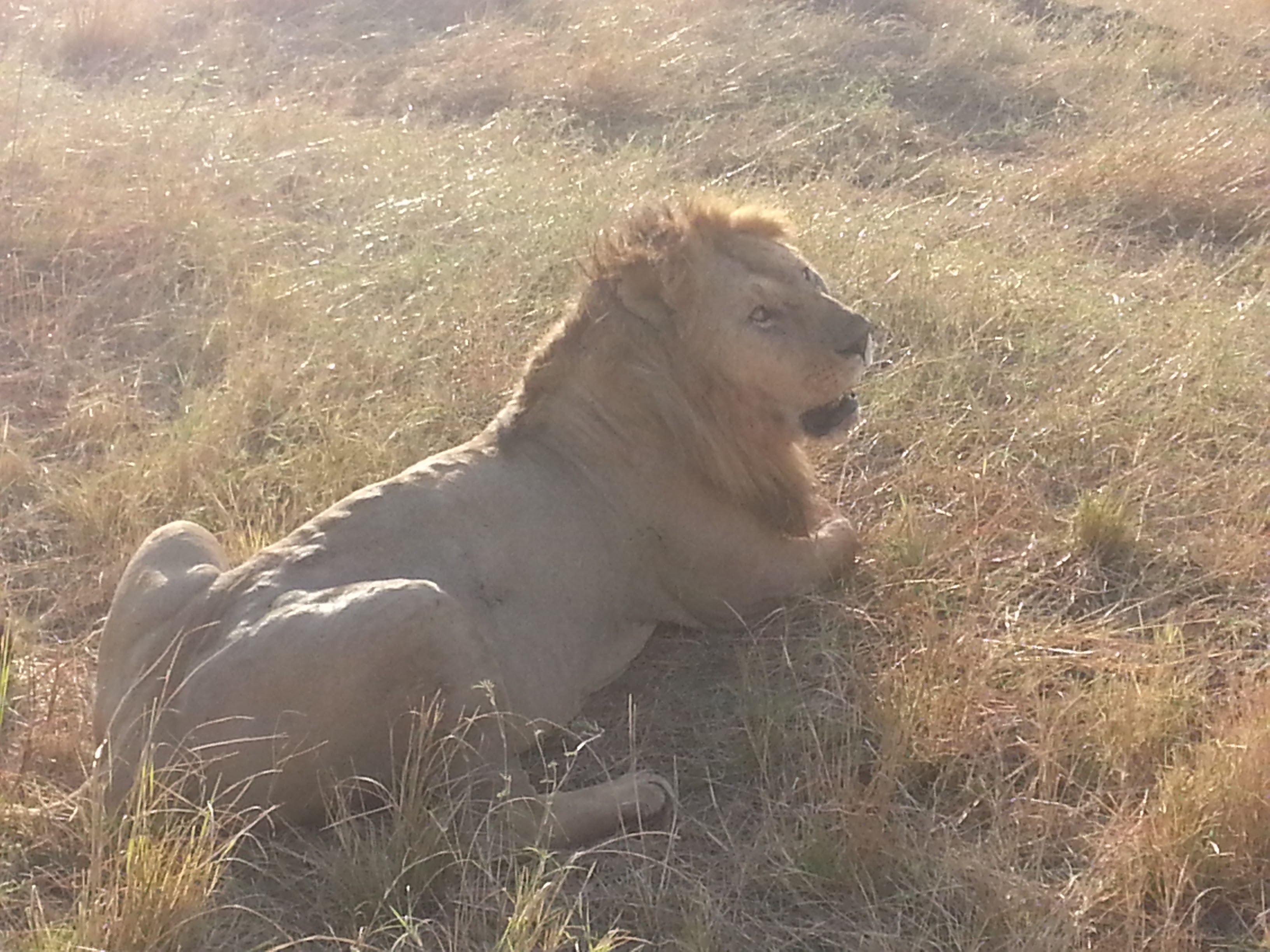
The wildebeest are joined by zebra and tommies (Thompson’s Gazelle) and solemnly face the predators at every step of the journey – an inevitable game of roulette as each night brings certain death, and each dawn a sense of victory at having beaten the odds.  Carcasses litter the savanna with evidence of the nocturnal carnage and the rotund lions we saw were too stuffed to bother with anything, eating only the choicest rumps and leaving the rest of it for the scavenger feast.  Even the scavengers turn up their noses at the drowned carcasses that fill the rapids of the Mara River after the senseless ‘crossings’, already filled to capacity from the pickings of abundant meat left from the kills.
20160822_074726

The animals converge on the river to drink, egging each other on to be the first to brave the threat of crunching jaws of the enormous Nile crocodiles.  Twice we watched as a wildebeest fell in, swam wildly to the nearest bank and was assisted by the curious hippos with a nudge towards the relative safety of dry land.20160821_123203

Wild and Free

The zebras with their exquisite black and white (a much cleaner contrast than the brown-smudged South African zebras) gather together to graze, some rolling in the dust, some playing catch; and even a naughty zebra male that suffered a thumping hoof kick (a ‘snotklap’ for you South African readers) from an irate female who had had enough (followed by whoops and giggles from the inhabitants of our vehicle as we cheered her on).

We camped at the private campsite, Dirisha, alongside the Mara River. Leopard, hippo, buffalo and elephant came into our campsite each night (the tent walls seemed thinner then) and the birdlife was amazing, too (including a rare Bar-tailed Trogan right outside our tent).  It was a proper bush experience with no ‘facilities’ to speak of, emphasising the fact that we were in the real African bush, humbled by our defenselessness and respectful of the ruthless ferocity in the daily life of wild creatures.20160821_174448
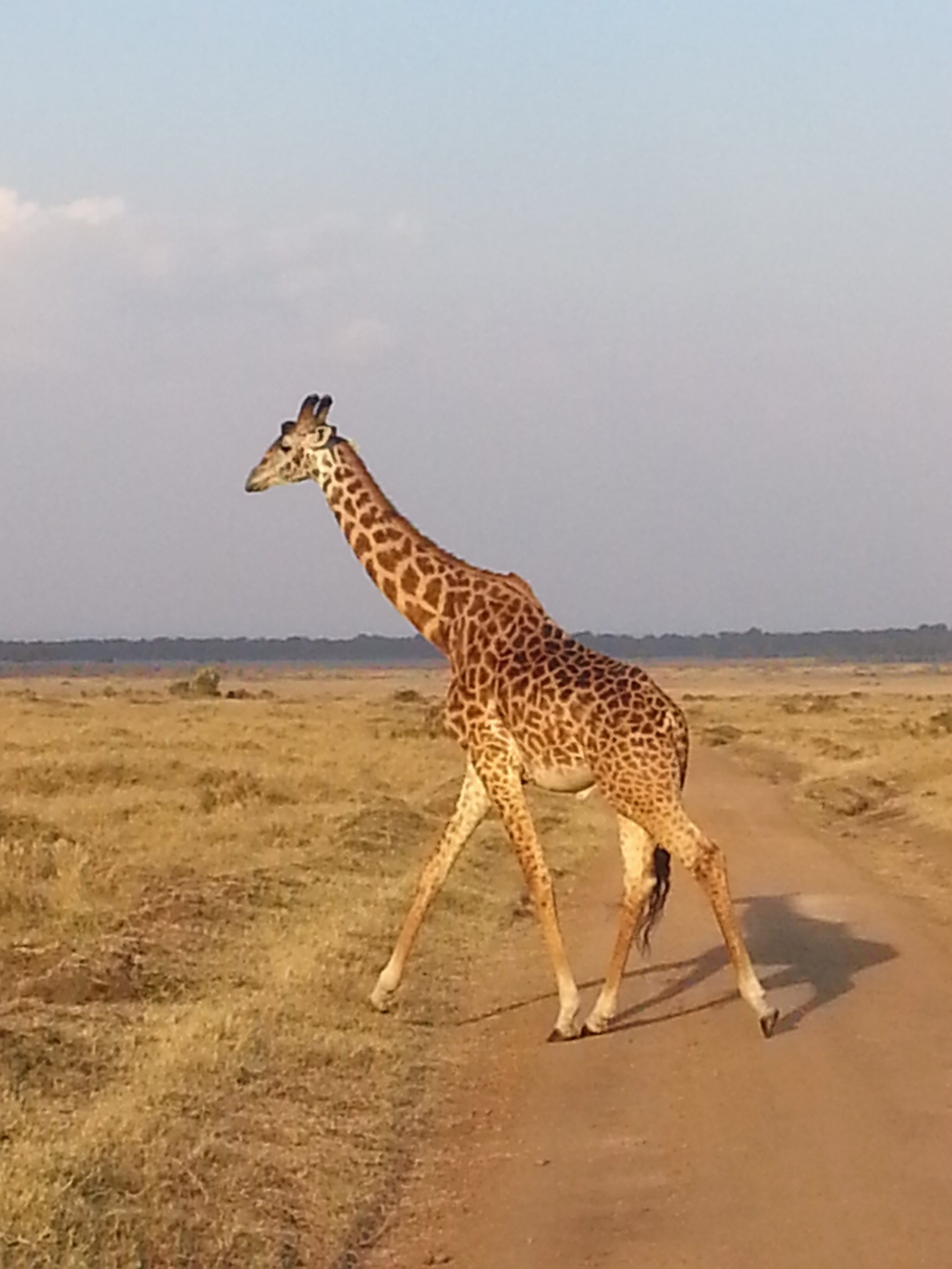
The week’s sightings also included herds as far as the eye could see (estimated between 750,000 and a million wildebeest alone), fat cats and scavengers feasting on carcasses lying everywhere, river crossings galore and even three black rhino fending off a pack of brazen hyenas.  One hyena also tried to catch a comical Ground Hornbill, who casually walked away knowing its fearsome beak was enough to deter its attacker.

Little Governor’s

Most evenings we headed to Little Governor’s for sun-downers and water refills (campers cannot afford to be shy about essential needs like drinking water, even if the lodge was as posh as could be). Looking out over a small water catchment, the luxury tents are set in the cool of the forest and can see all the surrounding beauty from their beds. More than once, we were delayed in returning to our campsite by the 7 p.m. curfew because of the elephants that roam about the lodge within hand reach of the restaurant patrons, who are swiftly ushered away to the other side by the staff and have to wait patiently until the giants have moved off.20160822_17442620160821_102002

Once in a lifetime

At the tip of the Mara Triangle map, Little Governor’s is one of many lodges that does hot air balloon rides across the Mara – a spectacular sight as the multicoloured behemoths transport mesmerised passengers silently across the plains, often just  a few metres above the herds on the ground below.  A future bucket list item for sure!20160822_065327
Honestly, this was one of the best weeks of our lives.  To be able to have seen this phenomenon firsthand was an awesome privilege and an unforgettable experience – even for Travelinds who have grown up in the beautiful wild places of South Africa, travelled in tiny boats through the jungles of Borneo and swam with ocean giants.

20160821_184628Masaai Mara – just wow!


Hlatikulu Bush Lodge, iMfolozi-Hluhluwe

JULY 2016

Photo Credits:  Wendy Buchanan (thanks, mom!)

A while ago, Travelinds told you about one of our favourite game reserves in Kwazulu-Natal – iMfolozi-Hluhluwe National Park.  The few days spent at Nselweni Bush Lodge was a great family holiday and we couldn’t wait to go back again!  This time we tried a new hideout – the Hlatikulu Bush Lodge!

13769451_10157119262840291_8995990913587496907_n

Hlatikulu Bush Lodge

This was a good surprise as we had only booked Hlatikulu in a rush to secure accomodation in an already full reserve.  However, as soon as we arrived, after navigating the jolting 4×4 route to get to the lodge, we realised that we had made yet another magnificent discovery!
The bush at your door
The camp is beautifully maintained by Siyabonga and New Year, both of whom have been there for ages and visibly love what they do. Right on the riverbend, with no fence, the animals and birds come and go as they please.  All around the camp are tweets and chirps, grunts and growls, spoor and feathers and evidence of life.
The deal

The camp can accomodate eight people at most, in four lovely huts (each for two people), all of which boast views of either the river or the bush.  The booking includes… (wait for it!)… TWO bush walks with Siyabonga and his gun (2-3hours, one morning, one afternoon) for every night that you stay.  New Year will cook any food that you can bring (and he will insist on setting up AND cleaning up everything in the communal lounge and diningroom himself, too). These two wonderful humans keep the huts immaculately clean and look after you while you simply relax and enjoy the wildlife.

13697057_10157119315235291_4857569789511689644_nNature up close

The resident bushpig, Georgina, can get a little persistent in the evening, but please, do not feed her even if she follows you down the boardwalk or begs.  There are also hippos, crocodiles, lions, elephants, buck and other creatures that roam in and out of the camp at their leisure – look around when you are outside and do remember that you are living in the real African wild now!

We fell asleep each night to lions roaring, hippos grunting, hyenas laughing and melodious nightjars. Early mornings wake up to birds singing and nyalas crunching grass right outside our windows.
A different perspective

The bush walks were also well worth the effort and if you do what Siyabonga tells you, you’ll be in good hands. He’s an experienced game ranger and takes his job, and your safety, seriously.  The animals are wild and unpredictable, especially where humans provoke and disrespect the natural order of things.  It is our responsibility to preserve and care for nature and a bush walk is a great way to remind yourself of your roots.13699980_10157123764390291_2516487894411405346_n

Hlatikulu, we’ll be back!

Read more reviews here.13690805_10157119327665291_1327660552813445550_n

Rhino Card

Use your rhino card to receive discounts on day fees, accomodation and more.  It was worth it for us to buy the card (for a couple) just to cover our day fees during the week here.  Ezemvelo KZN wildlife is also a great cause to support!