Linapacan is the small archipelego between Coron Busuanga and Palawan mainland. Coron Busuanga, Culion Island, Linapacan and Iloc Island are part of the Palawan province of the Philippines; and it is a truly stunning area.
Off the main drag, Linapacan is not a common tourist destination, especially for those with limited time to explore the more inaccessible parts of the 54 islands in its domain.
Getting to Linapacan
After much research and deliberation on our journey, we decided to try and take a cargo boat from Coron to Linapacan, and if we couldn’t find one at the harbour (because there aren’t always delivery boats every day), we would take the ferry the next day (buying the 800 peso ticket from the pier in the morning). Luckily for us, a friendly trike driver helped us locate a boat picking up goods. The cargo boat eventually left at noon (giving us a solid three hours to get to know fellow passengers as we all waited) and arrived at the island around 5pm. They charged us 500 pesos each. It was worth it not only for the little bit of money saved (no time saved) but also for the contacts we had made on the boat during the journey.
We hopped on to this cargo boat to get to Linapacan.
On the boat to Linapacan there were six passengers and four crew. One passenger turned out to be quite fluent in English and held the prestigious position of Barangay Counsellor (a local government official of San Miguel, Linapacan), which elevated his status greatly in the eyes of the Filipinos here. His name is Monmon (said “Mawn Moon”) and he convinced us to come to his island instead of going to San Miguel (the main city on Linapacan). He said that his friend “had a cottage” where we could stay (price unknown), that there was good snorkelling on their reef and that he would feed us.
Inapupuan Island
Why not? So, of course we agreed and we got off the boat with him at the tiny Inapupuan Island (15 minutes north of Linapacan by fishing boat). The low expectations of our detour served us well and made it more exciting to discover a whole village that was excited to have tourists in their midst. The ‘cottage’ was actually an open bamboo hut on the beach, with a only a roof, a table and a bench. There was also an outdoor ‘bathroom’ where we could wash (in buckets) and use the long-drop under the stars (with some draughty bamboo walls for privacy). The owner of the hut (a 19-year old smiling girl) cooked a huge portion of fish and rice for us and carefully watched us eat every last drop by solar lamp.
CULTURE TIP: It seems that in this part of the Philippines it was expected that we as guests eat first, while everyone watches us and prompts us to eat as much as we possibly can in one sitting. The elders then ate what we left, and then the others tucked in. It was quite something to get used to people literally staring at every mouthful we took and not being willing to let us eat an appropriate-sized portion but insisting on piling up our plates at every meal; sometimes filling our plates for us despite our pleas that we were full to the brim. [Thank goodness we swam for a few hours each day to keep those calories from sewing our clothes smaller during the night!]
This was our ‘cottage’ on Inapupuan island.
We slept on the table in our trusty duvet cover, fighting off only a few mosquitoes, but enjoying the breeze and the bright stars above. Like the birds, we woke up in true island style to the call of the confused roosters (sometimes all night), the dogs and villagers waking up with the sunrise; and the fishing boats returning from their morning expeditions. This area is known for its squid-fishing industry, which are collected between 5pm and 5am every night on boats with about eight lights shining on the water to attract the luminous-spotted ink-makers large and small.
Dried Squid
Inapupuan is apparently famous for dried mini squid (about a hand’s length) and we saw them laying out the squid at sunrise to dry for two days. After this, it is sold to traders in San Miguel (like BRC hotel), who send it on to the Manila markets about twice a week. A kilogram of mini dried squid sells at about 120 pesos, and the large dried squid at about 300 pesos per kilogram (much more than the measly 37 pesos per kilogram they get for the cashew nuts that come in from a few of the islands).
Inapupuan’s main source of income is from the dried squid that they ship to Manila once a week.
The next morning we jumped in for a snorkel (the reef is only 30 metres offshore) and unfortunately met with an array of sparkling jellyfish, which quickly redirected us back to our beach hut nursing a few little stings (nothing major). A great pity indeed as the reef looked amazing through the clear blue water off the boats. Inapupuan, we will have to come and see your reef again!
Patoyo Island
Patoyo Liao Beach
Monmon’s brother kindly ferried us to the next island on his (tiny) fishing boat, as we had read about staying on Patoyo Island (right opposite San Miguel – about 10 minutes on a boat). He dropped us on the beach with our bags and waved goodbye as he took Monmon back to his job across the bay in San Miguel. We followed our noses to a village (called Osun), asked a couple of people where we could stay and secured a spare bed at what we like to call, The Eagle Inn, with Berta and Lito.
Berta and Lito
The bamboo frame is in their front room and was available for 200 pesos per person per night and we gave them what we thought was fair for the generous meals they provided (fish, squid, rice, water and coffee). Two nights later we moved across to new friends on the neighbouring beach.
HIGHLIGHT: Lito has an eagle (that he seems to have rescued from a fishing net) perched on his tree, which eats two fish a day and takes a bath in the ocean every week. An amazing sight to see Lito (a small Filipino fisherman in baggy basketball shorts) lift the huge bird by its body, well away from its sharp hooked beak, dunk it and splash it a couple of times in the ocean, smooth down its feathers and then carry it back to its perch next to the pigs, chickens, cats and dogs.
Lito’s Eagle on Patoyo Island in the village of Osoon
Days on Patoyo were spent lazing on the beach, snorkelling in the awesome reef just off the shore, observing the local fisherman, sleeping in our hammocks and generally loving life in paradise.
The Gonzales and Castolo Families
The next two nights we spent with the Castolo family. Pastor Gonzales met us on the beach, introduced himself and then asked us to come and stay with his employers (he is the caretaker of the Castolo beach). This was another lovely introduction to the true Filipino hospitality and character. There was an abundance of food, laughter, company and an easy air of peace between friends. Since they were all Christians and Catholics, it was an added bonus to be in the company of brothers and sisters in Christ.
Pastor Gonzales shimmied up the coconut palm to bring us a drink.
Mrs Gonzales was particularly wonderful, the definition of ‘being clothed in strength and dignity’. Her five children reflect her noble work ethic and her boundless energy to serve put us to shame over and over again. We were so blessed to have met both the Gonzales and the Castolos on Patoyo Island.
Jayar and Mialyn’s Wedding
Jayar and Mialyn’s Wedding
The last day on Patoyo we met another family from San Miguel who were frantically making wedding preparations on the Liao beach (Note: You need to pay the caretaker 100 pesos per person to use this beach). Building, scraping, cutting, cleaning, burning, dusting and a whole lot more transformed this already beautiful beach into an exquisite wedding venue in preparation for the weekend. The bride and groom (and most of their family members, separately) invited us to attend their wedding on Saturday and also gave us lunches and a free ride over to San Miguel when we left Patoyo.
DID YOU KNOW? At a local island wedding in this area of the Philippines, the word gets out fairly quickly about the big celebration. The family expects (and complains about) all the uninvited guests whom they know will just sneak in (after dark) and therefore provides a mountain of food to ensure these strangers are also fed. Our wedding hosts slaughtered six pigs and sure enough after the sun had set and the reception party was under way, the boats started rolling in one by one; bringing crowds of strangers who also wanted some share the delicious food and dance!
The groom’s aunty, Maileen – of The Brinze Kylene boat – helped us find a place to stay in San Miguel (at the BRC hotel), offered us food and gave us boatloads of information about island hopping tours and getting to El Nido from here. Wow, we remember now why we just love the Philippines!
San Miguel
This sleepy little island town is the municipal capital of Linapacan and considered a bustling metropolis by the islanders of its ten barangays. We spent time here before our island hopping trip with the Escultors and used it as a base from which to do some island hopping (close to San Miguel) in small fishing boats. San Miguel contains an elementary school, a high school, two small bakeries, a handful of stores, a municipal office (where Monmon works), a basketball court, a few piers, lots of fishing boats, a big catholic church and bamboo, tin and brick houses. There were a couple of motorbikes, push carts and bicycles, but no larger vehicles that we could see.
A typical day in sleepy San MiguelThe Cabiguens own the BRC hotel and store
Island hopping
You can do an island hopping tour, for example, for 2 nights 3 days of camping (they set up, cook and clean up) with snorkelling for about 6000 pesos (total for the boat and experience for two people, or more). Travelinds did an absolutely fantastic 3 night 4 day island hopping tour with Maileen and Benji on the Brinze Kylene. Check out the details in our Brinze Kylene Expedition post.
GO LOCAL: To hire a fisherman and his little boat from San Miguel for one day costs between 1000 – 1500 pesos excluding lunch (no shade, slow and sometimes rickety) – and what an adventure it is! The cash goes to the fisherman, and by extension his family and community, so it is definitely a good cause and directly supports the local economy.
Robin and his dad took us out for a day to see the islands
There were two island hopping tours that we took from San Miguel – one for the day (with a local fisherman above) to some of the smaller islands in the area, and one with the Brinze Kylene for three nights. The Brinze Kylene dropped us off in Sibaltan for our final week on the Palawan mainland.
An amazing end to life on some Philippine islands, our Brinze Kylene expedition took us from San Miguel, Linapacan and ended at Sibaltan on the Palawan mainland. Read about how we came to meet them here.
The Hosts
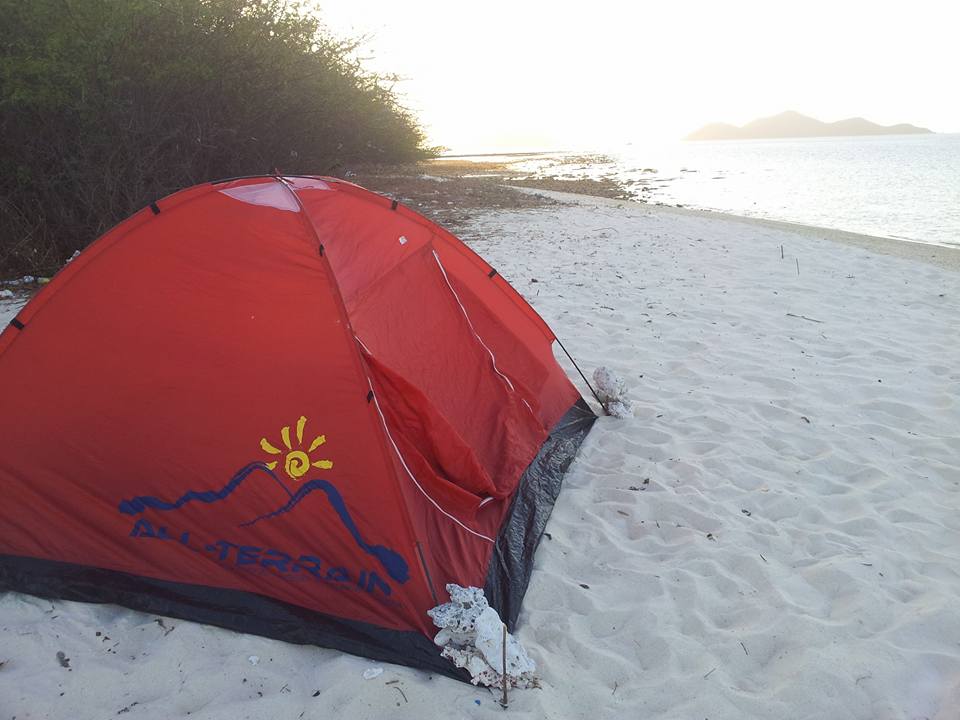
Our hosts Benji and Maileen were entertaining and hospitable, looking after us throughout our stay in Linapacan, as well as on the island hopping tour. Their service was phenomenal and so much fun. Their crew, Midel and Guerrero, seemed to have limitless energy and kept the boat running smoothly through the whole trip. They cooked for us, put up and took down our tent, found us the most exquisite coral reefs along the way and entertained us each night around an impressively large bonfire.
The Boat
Since we spent most of our time on the boat, it serves that it was rather comfortable and well-equipped for such a simple carrier. Described as a catamaran-style with balancing beams on each side, it had benches, a small cabin, a tarpaulin covering, a ladder to get out of the ocean and a small boxed-in toilet and wash area. Downright luxurious in terms of the local fishing boats!
The Food
Every day in the Philippines is another chance for fish and rice. Different fish, mind you, but fish all the same and rice to fill in the gaps. We loved the fresh seafood and feasted on lapulapu, barracuda, squid, white fish and tuna – all barbecued over a fire and served with a decent portion of sticky white rice. Every now and again we ate the precious commodities called vegetables (cabbage, carrots, tomatoes, peppers and cucumbers) and this was a real treat for the locals and for us as availability is scarce.
The three kilogram barracuda we bought from another fisherman.Lapu Lapu fresh from the ocean.A peacock mantis shrimp that we caught and ate!
And Most Importantly, The Islands
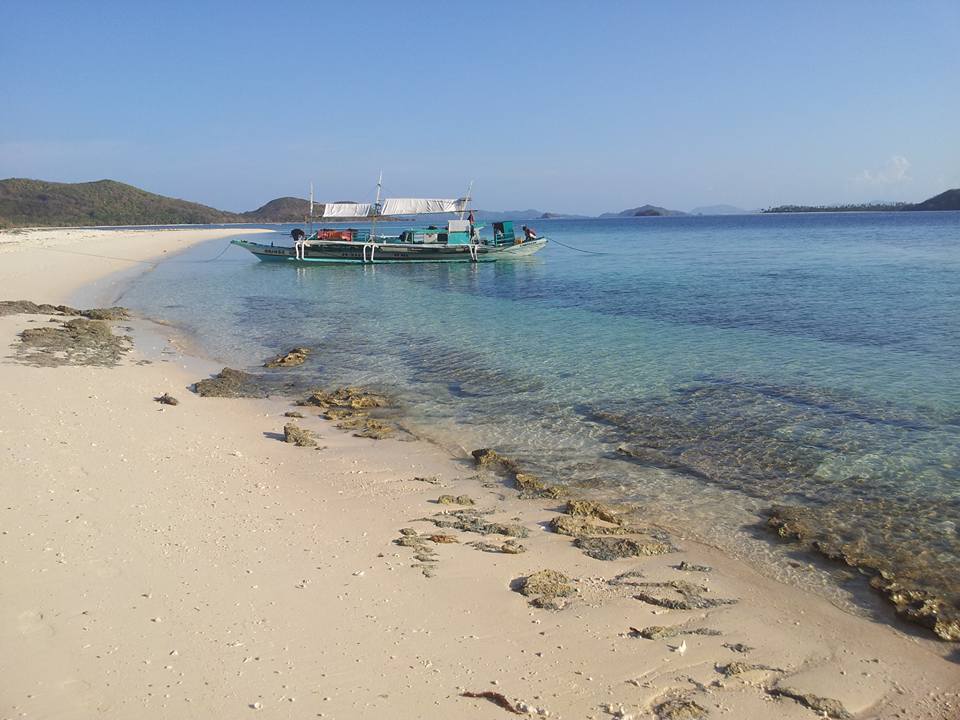
The archipelego of 54 islands is hard to describe because each one is slightly different to the next, sparkly, beautiful, rugged and unspoiled by industrialisation or development. We lost count of exactly how many islands we visited in the end, but managed to go at least 15 islands on during the 4-day trip.
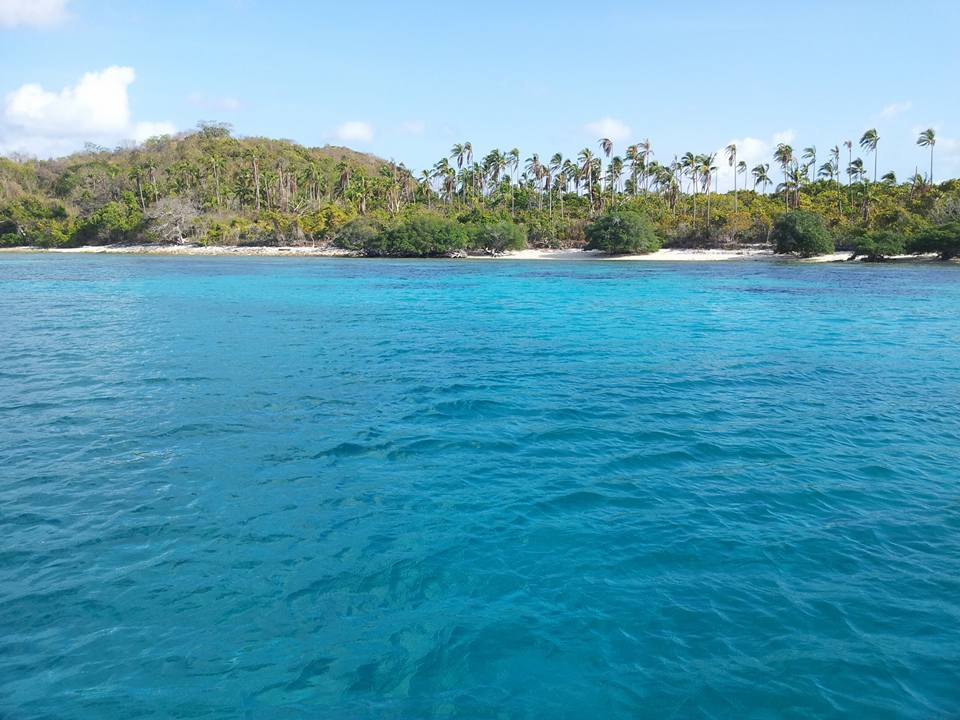
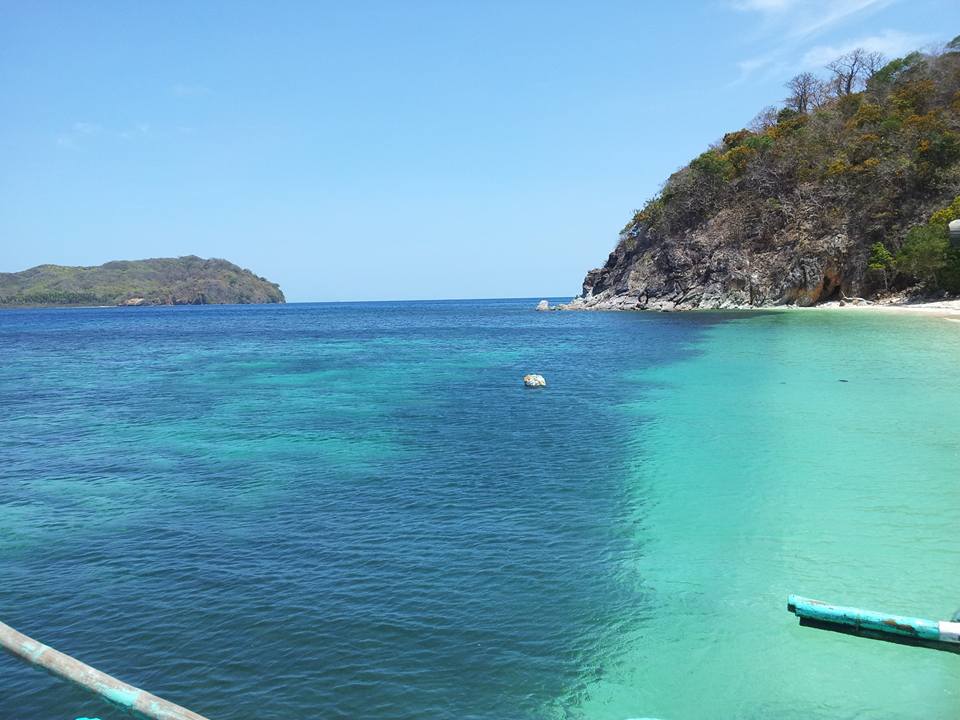
Linapacan is said to have some of “the clearest water in the world” – we believe it! Check it out.
Here was the itinerary:
Day 1: Leaving from San Miguel, to Dimancal (check out Karel’s tent resort here), Bolina, Manligad, Asis and Cagdanao (first island camp spot)
The island across the bay, Balenben, had island huts available for rent at 300 Pesos in a fantastic reef area.
Day 2: Manlihan, Cala-cala (spelt Lacalaca) and Takling (second island camp spot)
Day 3: Calibangbangan and Magransing (third island camp spot – the most beautiful place we have ever seen!)
Day 4: Pical, Mausunon and ending at Sibaltan (mainland Palawan)
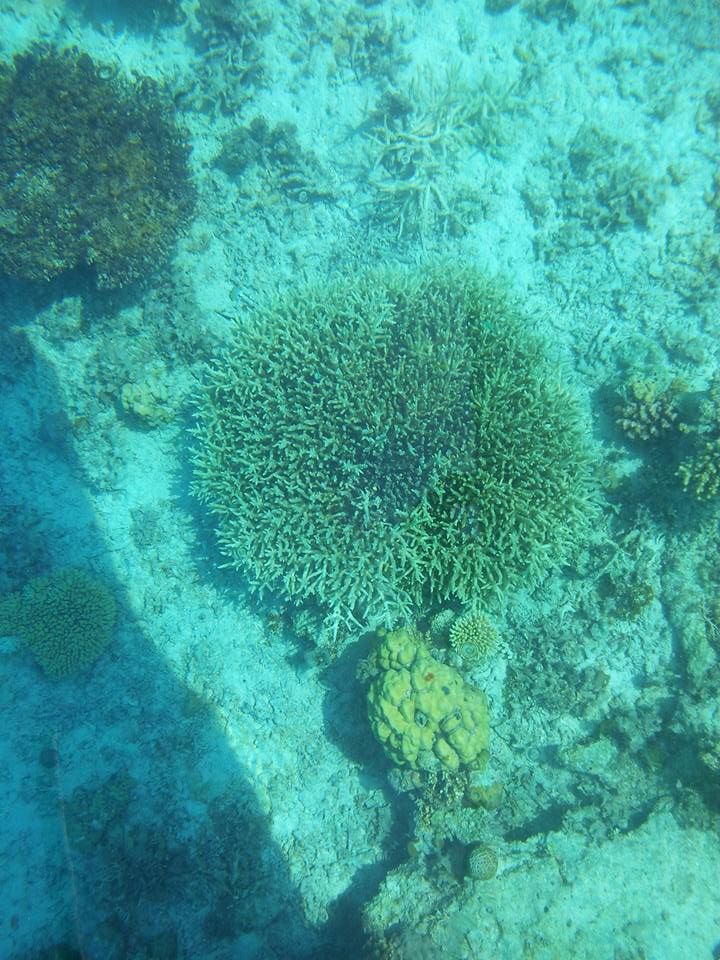
Each had coral reefs right off its shores and were almost guaranteed to be completely deserted. Besides, don’t these pictures (from a humble camera phone) make you want to go there right now? Call Maileen and Benji for an adventure on the Brinze Kylene!
Linapacan is well worth your time – wow! What do you think about Palawan?
“…a series of swims, naps, novels, games, walks, talks and snorkels with turtles…”
We could end it there, but hopefully some elaboration will convince you that Gili Meno is really worth the effort.
The Gili Islands
When people talk about ‘The Gilis’ they are generally referring to the three tiny Gili islands off Lombok’s northwestern shores (between Bali and Lombok). Gili Trawangan, Gili Meno and Gili Air have become a tourist hub for those searching for a slightly different experience than what mainstream Bali has to offer.
Gili Trawangan (furtherest from Lombok) is the main destination for those party-seeking young backpackers looking to get lost in the endless sounds of deep bass reverberating off the gentle waves. Being the gentle travellers that we are, looking to enjoy natural beauty and soak up God’s amazing creation, Gili Trawangan was the only one of these three that we did not spend time exploring.
Two night on Gili Air, a mini-version of Trawangan (closest to Lombok), was definitely still relaxing and the snorkelling was lovely off the north shore. The Matahari Bungalows did not have a sea view, but were still beautifully finished and well worth 300,000 IRP (including breakfast). Turtles, eels, a ray and a living cowrie were just some of the spots snorkelling off the northern beach (near the Gili Air Wall).
Please note: The management photo on TripAdvisor does not reflect the Matahari bungalows (it shows the beachfront Gili Air Hotel pool with umbrellas which is on the northeastern side of the island).
There are also countless other Gili islands all around Lombok, some inhabited by local Sasak tribes and others not. We did not have enough time to explore these other Gilis or find ways to get there, but it certainly would be off the beaten track from regular tourists.
Meno is awesome
Gili Meno is the middle island, the quietest and the smallest of the three Gili islands. It is difficult to describe how much we loved Gili Meno – so much so that we decided to spend a full ten days here right off the bat. Tranquil island life surrounded by natural beauty and the most stunning coral reef almost right around the island, easily within reach from the beach on every side.
Focussed on preserving its natural assets, Gili Meno boasts a shallow lake (a mangrove conservation area teeming with birds, monitor lizards, Fiddler crabs and golden orb spiders), a turtle sanctuary, a tiny port and a handful of laid back locals and their horse carts. The few lodges, resorts, bungalows and homestays dotted around the island are far enough from each other to give some privacy, but close enough to take a quick walk to find meals. The beach is at most a 10-minute walk away, in any direction.
As on the other islands, and mainland Lombok, the mosque leads prayers five times a day (if there’s electricity); and most times on Gili Meno it’s the island’s children that take turns at the microphone to practice their chants. The islanders are friendly, hospitable, hard-working and always ready for a chat about life in Indonesia. Enterprising and proud of their island, the people are invested in protecting the environment and using tourism in a responsible way (always great to see). It was also interesting to hear mention of an aquaponics documentary that was filmed at the Gili fish farm (somewhere out in the ocean) that the locals go to about once a month on rotation.
Life on Gili Meno is also slightly cheaper for tourists than the other two islands. We were spending about 175,000 IRP per day (for two of us) including accomodation (with breakfast), one other meal and activities (which were free, because we snorkelled right off the beach).
Adem Ayem Homestay
We had an awesome stay at Adem Ayem Homestay (the neighbouring plot to Nura Homestay) in the middle of the island. For only 150,000 IRP a night (low season) there is a wonderful air-conditioned room with en-suite bathroom, free WiFi and porch (and this includes a delicious breakfast from Mama Nura, too).
Nura Homestay is right next to the Mosque, so you’re up at sunrise, however, being a quiet island, we were in bed early too so our days in the sunshine were longer and fuller to enjoy.
Restaurants and Resorts
Gili Meno has quite a large range of restaurants for such a small place and we ate like kings. Indonesian fare is common but there are also a few other types of cuisines on offer. For both cost and authenticity, we stayed with Indonesian dishes and enjoyed curries, nasi goreng, mie ayam and other tasty food – read about Indonesian cuisine here. Our favourite restaurants for the week were Pojok No.5 Star, Two Brother’s, Warung Gratis and Warung Be Family, none of which are on TripAdvisor (these are mostly in the middle of the island as the beach restaurants cost slightly more). On average, we paid about 25,000 IRP per meal per person.
Secret Spot
Each day we went out to explore the island and find a perfect spot for the day. Armed with some of the Travelinds Top 10: Beach Travel Items we found a few fantastic places to plonk down and delve into our books, naps and snorkelling hours each day. Life on the island was a series of swims, naps, novels, games, walks, talks and snorkels with turtles – as it should be. Fantastic!
The one spot is a bit of a secret, but we’ll happily share it so you too can enjoy the peace and quiet of Gili Meno under a shady spot, at the perfect entry point for the stunning coral reef, where we saw turtles every single day! Head along the beach towards the Mahamaya Boutique Resort from Diana Cafe.
Just before Mahamaya, you’ll see a huge bush on the beach with a shady spot inside it. Tucked away from the sun and the tide line here, it is possible to spend hours and hours reading, sleeping, relaxing and swimming – and hang up your snorkels and sarongs on one of the tree branches when you’re done.
You’re welcome!
Secret Spot view of Gili Trawangan. This reef (30 metres out) is where we swam with turtles everyday.
Getting to the Gili Islands
The Gili Islands are relatively easy to reach from Bali or Lombok, but you will need to set aside some extra time if you are not taking the fast boats. The options are:
Fly to Bali. Take a shuttle with fast boat (a shuttle to Padang Bai and then a fast boat) to the Gili Island of your choice. Book this at any travel agent or online. We paid around 300,000 IRP for this service from Gili Air to the Bali airport.
Fly to Bali. Take a public ferry from Padang Bai (to Lombok – about 5 hours). Take a van/bus to Bangsal Harbour (2 hours). Take a ferry to Gili Islands (half an hour).
Fly to Lombok (from Bali – we paid 150,000 IRP with Lion Air). Take taxi/bus to Bangsal Harbour. Take a ferry to Gili Islands.
We used Option 3 since we spent a few days on Lombok before heading to the Gili Islands.
Have you been to the Gili Islands? What was your favourite thing about the islands?
One of our favourite pastimes – and one of the things we miss the most about South Africa – is game viewing. Not in a zoo, of course, but in a reserve. The natural habitat of the animals is somewhere you are not guaranteed to see anything at all; but it’s all about the search! Nothing compares with driving around all day scanning the bushveld, trees, slopes and ravines for animals and then catching a glimpse of the flicking white tail-end of a leopard, or the majestic mane of a ferocious (or lazy) male lion in the shade of a bush. Reversing away from an approaching elephant or speeding to get away from a protective rhino mother is all the adrenaline you need!
So, this week was spent basking in God’s awesome creation at iMfolozi-Hluhluwe Game Reserve. What a fantastic place to see interesting, dangerous, funny, wild, crazy, big, tiny, rare and fascinating African wildlife in their natural habitat. Four hours from home, this game reserve is a perfect getaway for long weekends.
Accomodation
We stayed at Nselweni Bush Camp which is down the road from Mpila, where we were supposed to be staying. Thanks to a misunderstanding and a booking problem, the management kindly allowed us to move over to Nselweni – a beautiful bush camp right on the bend of the river. We woke up with the birds and fell asleep with the night sounds of lions, frogs, hyenas and cicadas. It was perfect for a romantic getaway in a private “half tent/half cabin”that looks on to the bush. Conveniently, it was at a central iMfolozi location, about 20 minutes to Mpila.
Nselweni has fully equipped units with a braai place (that’s barbecue for non-Saffers), a gas oven, a fridge, kitchen utensils, an outside table and a semi-covered verandah. The shower window can open right up and the bathroom and bedroom both look out into the bush. We enjoyed the nyala that graze outside your hut during the day and its a colorful bird paradise.
We stayed here three nights in Unit 2 & 3 – both are lovely, private and quiet, especially Unit 2. Units 4 & 5 have half views of the river but only the Conference Centre deck gives a panoramic view of the river; and this is open to anyone who wants to use it. We saw buffalo, kingfishers, crocodile, trumpeter hornbills, impala, vultures and many others right from the deck.
Wildlife
At any wildlife reserve, you need to respect nature and remember that wild animals don’t follow the rules or take heed of the ‘boundaries’ us humans expect. Watch out for the opportunistic hyenas at night who steal meat right off the braai or pinch anything left out on your verandah while you sleep. It’s best to take a torch and maybe a stick if you’re walking around the camp at night.
Our highlight sightings were a pack of wild dog, lion, puffback, bathing yellow-billed kite, a huge elephant breeding herd with little babies, so many white rhino and a metre-long vine snake on the road.
Night drive
On the last night, we treated ourselves to a night game drive (which leaves from Mpila camp) and we were so impressed with Bheki, our guide, who found us lion (up close and roaring), genet, chameleon, vine snake, crocodile, buffalo, rhino, nightjar, bushbuck.
Ezemvelo Wildlife
Thanks to Ezemvelo KZN wildlife, it was a wonderful stay. They are doing a great job protecting Kwa-Zulu Natal’s wildlife, especially the precious rhinos! We never did see that elusive Black Rhino on this trip, but the Whites were magnificent.
On a trip to the Tip of Borneo (Simpang Mengayau) in Sabah, we were privileged to meet Chef Jainnes Apin. Fellow travellers at our lodge recommended the restaurant to us not knowing the name of the restaurant or the chef, but said the cuisine was excellent and worth the short walk up the hill.
The restaurant is called Merrimas and is part of the Merrimas Villas complex at Simpang Mengayau (Tip of Borneo). The menu is varied and delicious and, in fact, we returned a few nights in a row to sample a few more scrumptious dishes from their menu. The pan-fried fish (red snapper) and a variety of the ‘set dishes’ were top quality Rungus cuisine and reasonably priced compared to the few other restaurants along the Tip of Borneo. The quality and presentation of the food was head-and-shoulders above any other restaurant in this area. Since we enjoyed our meals, we asked to meet the chef and that is when we were introduced to the talented and humble celebrity chef, Jainnes Apin.
He introduced himself as Chef Apin, “but you can call me Jainnes.” He is a charming man with a passion for preserving and perfecting the Rungus cuisine in particular; it’s evident that his cultural Rungus heritage was of utmost importance to him. It was lovely to be able to enjoy his cooking on the Tip of Borneo, get a taste of the Rungus cuisine and culture, and to hear some of his interesting stories. One of his family members was sitting at a table doing some of the intricate beadwork for which the Rungus of Borneo are so famous.
After a week at the Tip of Borneo, the following accomodation in the area seemed worth a look. Since not all seemed to be available for online booking, Travelinds thought they’d mention a few options to those looking to spend a couple nights in this beautiful place:
1. Tommy’s Place (mid-range, email booking)
We stayed here for the 5 days and loved the vibe of this chilled out lodge. The food was decent (breakfasts were delicious!), it’s right opposite the beach, ten minutes walk from the Tip of Borneo monument and lookout, managed efficiently and generally clean.
Tommy’s Place
2. BorneoTip Lodge (mid range, email booking)
Right next door to Tommy’s Place, wooden bungalows and a lovely pool seems to be in the making (a long way from finished though). Popular with bikers going up to the Tip for the weekend. Also right across from the beach and ten minutes walk to the Tip of Borneo.
3. Merrimas Villas (mid to high price, online booking available)
Beautiful villas here and it is right on the tip. five minutes walk down to the beach. Great restaurant (see blog on Chef Jainnes Apin) and friendly staff.
4. TipofBorneo Villas/bungalows (mid to high price, phone/email booking)
The last lodge before the tip itself. Seemed like simple but comfortable bungalows (different sizes available) but mid to high prices. Cheapest beer at this restaurant. Five minutes walk from the beach.
5. Tampat Do Aman (Howard’s) (mid range, online)
This seems to be the most well-known (well marketed) lodge in the area with its rungus-style longhouse and rustic living experience. The information is available on their information website and you can read more in the menu of Tip Top restaurant (Howard’s) while you are there. http://tampatdoaman.com/
This area is largely untouched with hardly any urban development noticeable. It provides a great base to relax, enjoy the beach, swim, surf, explore beautiful local beaches (with absolutely no people to crowd out the long white stretches) and just enjoy a bit of an authentic Sabah experience.
After spending a week at the Tip of Borneo (Simpang Mengayau), here is Travelinds’ take on the few restaurants in the area:
Ranked at number 1:
Merrimas Villas Restaurant – try the fish dishes (all of them) and enjoy the reasonably priced “set menu” especially the “fish ginger.” Read Travelinds’ piece on Chef Jainnes Apin – the very talented chef at Merrimas whose quality food was most certainly the best in the area.
Contending for overall second place:
Tip Top (Howard’s) against Tommy’s Place restaurant. Both serve a very similar menu, both are priced about the same. Nothing unique about the dishes, presentation or prices but it did the trick.
Last place:
Borneo tip lodge restaurant: A menu similar to Tip top and Tommy’s, but so many mosquitoes, bland food and very, very slow service. Pricing the same as Tommy’s and Tip Top.
Breakfast spot:
Tommy’s Place offered a great breakfast menu (highly negotiable and can be suited to your preferences). We had oats with hot soya milk, fresh fruit, toast with jam, coffee. There were also eggs available (omelettes etc). A much better variety (price and nutrition) than most other places we stayed at in Sabah.
Cheapest beer:
Although we didn’t eat here, we did find that the restaurant that is the closest to the Tip itself (I think it is called Tip of Borneo resort/villas resto) had the cheapest beer out of all the restaurants (RM 5). We went here for the gorgeous sunsets and we enjoyed a beer as the sun went down on Simpang Mengayau. It is on the other side of Merrimas Villas, closest to the Tip itself. Although, if you pick up a bag of trash and do your part in cleaning up the Tip’s long white beach, you can get a free beer from Tip Top Restaurant – so it’s up to you!
In reality, the food is NOT the important part of a holiday to this part of Sabah. It’s a place of such beauty that it is the perfect place to just relax and unwind! But Bon Appetit!
Simpang Mengayau, the Tip of Borneo, is often described as the most beautiful place in Borneo itself. On the map, it is the tip of the ‘left-ear’ of the Sabah ‘dog’ and is the northern-most point of Borneo itself.
What is there to do?
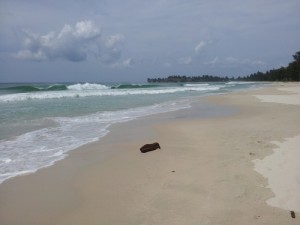
This is the perfect beach destination. You can do nothing but relax. Read, sleep, sunbathe, walk along the 2km beach, explore on your rented motorcyle, eat local food, read some more, sleep some more and swim in the warm South China Sea.
Getting there
The Tip of Borneo is about 3 hours drive from Kota Kinabalu (Sabah’s capital city). There are a few different ways to get there but after chatting to a few tourists along the way, each method is a bit of trial and error and doesn’t always work out exactly as described in the brochures.
By Car – hiring a car from Kota Kinabalu and driving up is possible. We met someone who did this (at RM90 per day) but ended up stranded that night as the car died and nobody was able to assist until the following morning. It is only a three hour drive, scenic, but with potholes and roadblocks along the way.
By Bus – there is a ‘big’ local bus once a day (sometimes) which can take anywhere between 3 to 6 hours. It costs about RM 30. You take a bus from near the ‘Shangri-La Motel Bus Stop’ (it is behind the city hall, it is NOT the express bus stop on the beach-side of the city hall).
By Taxi – a taxi from the airport (and back) would be anywhere between RM 250 to RM 350 depending on your negotiation skills. For four people wanting to only do a day trip, this might be worth the cost to have a personal driver.
By Shared Taxi – This is the option that we used and it went very smoothly both ways. From Kota Kinabalu, go to the same place as the bus stop (above) and find a shared taxi (5-7 people). It costs RM30 each and you have to wait for the taxi to fill up before it will leave. We waited no more than an hour for both trips to and from Tip of Borneo. Beware of unlicensed taxis.
In Kudat, you go to the centre of town, there is a waiting place there with shared taxis which take longer to fill up than in Kota Kinabalu (you need to get transport from Tip of Borneo in to Kudat town to catch this taxi – we paid RM20 each for our lodge to drop us there).
By Plane – this seemed like the quickest option for some travellers that we met. But you still need to take a taxi/hotel shuttle between the Tip and the airport in Kudat. Flights could be found cheaply and the small plane experience is apparently very scenic and gives impressive views of the mountain and the northern bays.
You can also apparently fly from other cities (Sandakan, Tawau etc) to Kudat, so this is definitely worth a look if you are coming from the south of Sabah and don’t want to take the inevitable route in and out of to Kota Kinabalu.
Check out some places to stay here and restaurants in the area here.
Tip: Make this a stop in your itinerary – it is worth it, if only for the stunning coastline and magnificent sunsets.
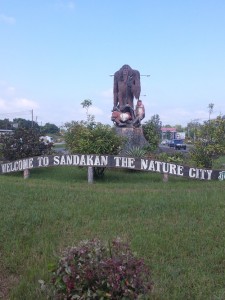
Sandakan is a small city on the east coast of Sabah, Malaysia Borneo. It is a port city and relies heavily on the palm oil trade, as well as other exports like cocoa, tobacco and sago.
Tourists use this city as a gateway to Sabah’s natural beauty with nearby eco-tourism destinations such as the Sepilok reserve, Turtle Islands, Danum Valley and the Kinabatangan River. It does not have much to see in the city itself but offers a couple of nice restaurants and a shopping mall at Harbour Square. There are also a few historical sites and a museum if you have some time to kill.
It is about 6 hours by bus to Semporna and 2.5 hours to Bilit (known for eco-tourism lodges along the Kinabatangan river).
After a friend travelled to Borneo a few months ago, she told us about these ‘jungle river tours’ that are available in Sabah.
The tours travel along the Kinabatangan River where the rainforest creatures still live in the wild. I must admit that this was the main thing that drew me to Sabah itself, as my passion for wildlife exceeds much else in my life. My hope was to find orangutans, proboscis monkeys, pygmy elephants, rhinoceros hornbills and a clouded leopard – and I’d say that having seen 4 of these 5 wasn’t a bad track record for only five nights in the jungle.
Kinabatangan means ‘china, long river or tree’ and again, it is uncertain where this name originated, but it sure is a very long and rather wide river. It twists and turns back on itself in several places, creating ox-bow lakes; and the river boasts an impressive total length of about 560 kilometres. The area is teeming with wildlife but there are also many parts in Upper-Kinabatangan that have been badly affected by encroaching palm oil plantations. There are conservation efforts to protect the remaining wildlife but clashes between man and nature are often unavoidable.
Lodges are based mainly in the Sukau town area, but Bilit village also has a few which are on the quieter end of things. We ended up enjoying the first tour so much, that we came back to Bilit Adventure Lodge for a second time, after a week in Semporna. During our tours (in mid-February 2014, still technically ‘monsoon season’ for this area) we managed to get thoroughly soaked at least twice on each tour but the rewards were so much greater than a few hours of driving rain. Read a few Kinabatangan River TripAdvisor reviews for more information.
Our wildlife sightings over the five days were: mouse deer (at our lodge!), proboscis monkey, silver leaf monkey, orangutan, long-tailed macaque, short-tailed macaque, crocodile, monitor lizzards, kettle fish, pygmy elephants, python, yellow ring snake, black squirrel, mudfish (no gills!), red velvet dragonflies, one dead black cobra (huge!) and leeches.
With a vast array of beautiful birds in this area, some of our special bird sightings (those we actually knew the names of anyway) were: stork-billed kingfisher, rhinoceros hornbill (so impressive!), oriental pied hornbill, wrinkled hornbill, black hornbill, bushy-crested hornbill, blue-eared kingfisher, red coucal, lily hens, black and red broadbill (stunning!), blue-throated bee eaters, lesser fish eagle, serpent eagle, ashy tailorbird, egrets, herons and so many other feathered friends!
Sadly, we didn’t see: Sumatran Rhinoceros (not seen by our guide in 16 years on the job), clouded leopard, slow loris, tarsiers, sunbear, mongoose and read leaf monkeys.
Overall, it was a fantastic trip and we really appreciated that this could be a once in a lifetime experience. We hope that one day our children may also be given the chance to see these amazing creatures in their natural habitat, provided environmental conservation efforts can keep them protected that long in to the future. It would be such a shame to lose yet another part of God’s wonderful creation to man’s destruction.
Read more about our adventures in the jungle here.
The Borneo jungle beckoned to us long before we finally reached it and the experience of finally being there was truly spectacular! The wildlife was incredible and the scenery like something out of a dream – it is almost too beautiful to describe!
Our jungle destination was the Bilit Adventure Lodge, which is nestled quietly alongside the great Kinabatangan River. We did a two night stay here and then, a week later, returned for another three nights in specifically in search of the elusive pygmy elephants who had managed to evade us on the first two nights.
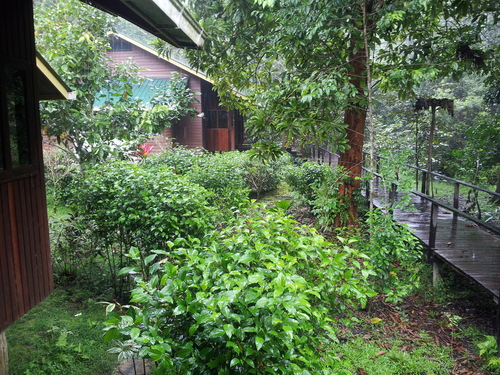
Bilit Adventure Lodge itself is a real slice of heaven in this already dream-like place, with dark wooden cabins and wooden boardwalks blending perfectly in to the surrounding jungle. Monkeys, tortoises, deer and hornbills were regular visitors within the lodge area and the sounds of the jungle gave us both a frog-lined lullaby in the evenings and a refreshing wake up call in the early mornings.
Cabin at Bili Adventure Lodge tucked into the rainforest.
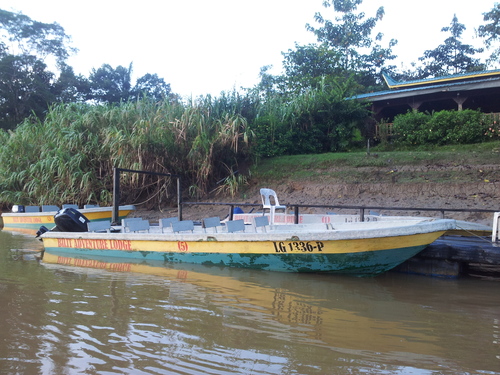
The river cruises are mornings (1 hour) and evenings (2 hours) as this is when the most animals are up and about alongside the river. Despite being a completely open motorboat (with place for only 8 people), regular rain did not deter us from venturing out in search of the fascinating wildlife of the Kinabatangan jungles.
TIP: We wore clothes that could get wet and that would dry easily. We left all valuables locked at the lodge and took only cameras (in waterproof bags). Caps also help to shield eyes from the rain. No shoes needed in the boat, so leave them at the lodge under the dry cover of the communal dining room.
The tour boat where we spent mornings and evenings searching the riverbanks for wildlife and birds.
LAUGH: While preparing for our trip, I came across this hilarious review on TripAdvisor by wiredfrog. Read this review if you want to have a good laugh; and also to get a sense of what the river cruises can be like if it’s raining heavily. Please note however, that this was a very over-dramatic rendition of what we actually experienced during our five days (which were still in the Nov-Mar monsoon season) and that the superb wildlife spotting is sure to make up for any discomfort experienced.
The meal times at the lodge were also a real highlight for us, with delicious cuisine inspired by Malay, Indonesian and Western methods. Tea times were even better, with little cakes, buns or sweet local delicacies that tickled our taste buds and filled the gap for our two hour cruise before dinner.
TIP: Take a pair of (quick dry) long pants and long shirts for evenings to avoid getting attached by mosquitoes. We didn’t use any repellents (brave or stupid?) but have not picked up any illnesses from the thousands of mosquitoes we donated blood too during our month long stay in Borneo (supremely grateful)!
We did the jungle trek one morning which took us out to one of the ox-bow lakes. We were relieved to have hired gumboots though as we had mud up to our ankles in so many places. Also, with hungry leeches all around (in trees, plants, mud and grass), we were also so glad to have had long sleeves and long pants (everything tucked in tightly to avoid leech bites) as many of the other tourists got nice fat leech surprises when they checked under their clothes! Lucky for us, the leeches ignored us completely.
The trek through the rainforest requires sturdy gumboots for the deep mud.
At the time (February 2014), the dormitory-style rooms were almost fully completed, but lucky for us, we got to stay in the fancy cabins (air conditioning, double beds, en-suite bathrooms, lounge overlooking the jungle, kettle and shower). It was far more than we were expecting and made for a rather wonderful few days enjoying the jungle in luxury. We stayed in the cabins that have names such as ‘Proboscis Monkey’ and ‘Western tarsier’ – the one with the best view was Cabin number 3 (the front-facing room) as this is where I watched a comical pair of Oriental Pied Hornbills who danced along the water tower every morning after tea.
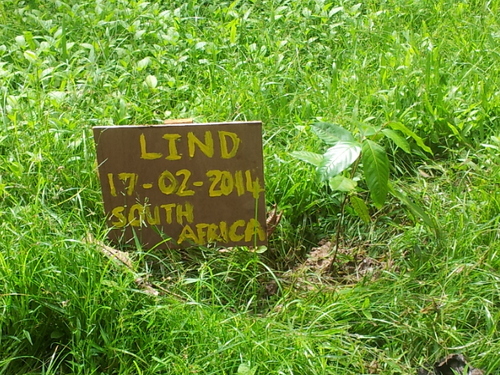
Bilit Adventure Lodge also offered us a chance to plant a tree in their property (at MYR 10) to help replenish the loss of vegetation that is caused each year from flooding. We proudly contributed a small little tree somewhere next to Cabin number 3 and hope to return one day to see if it survives long enough to do its part for the Kinabatangan jungle.







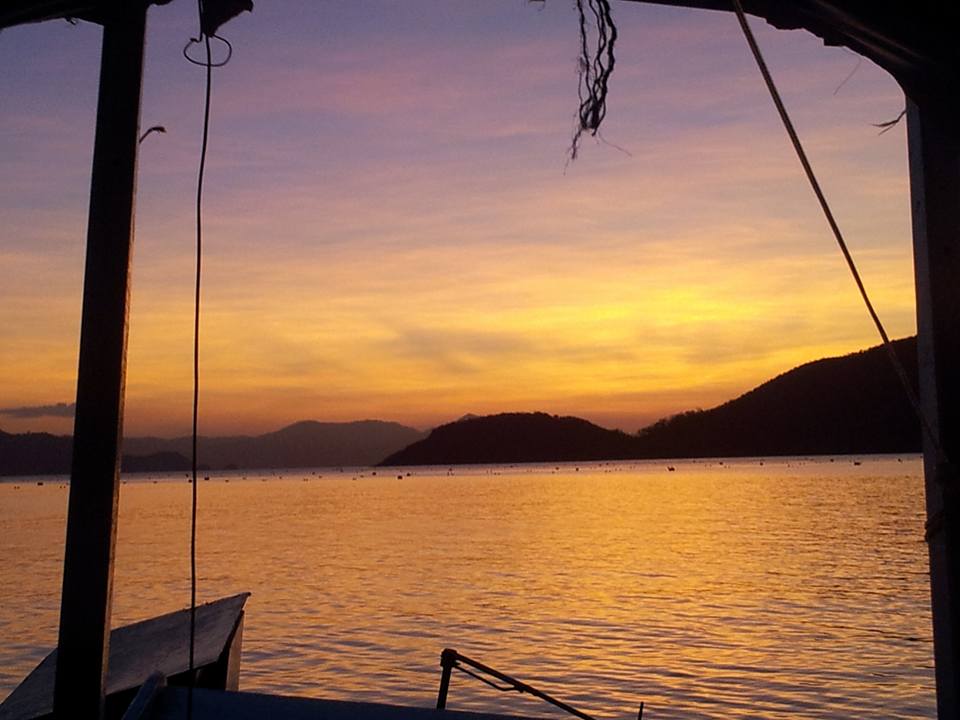
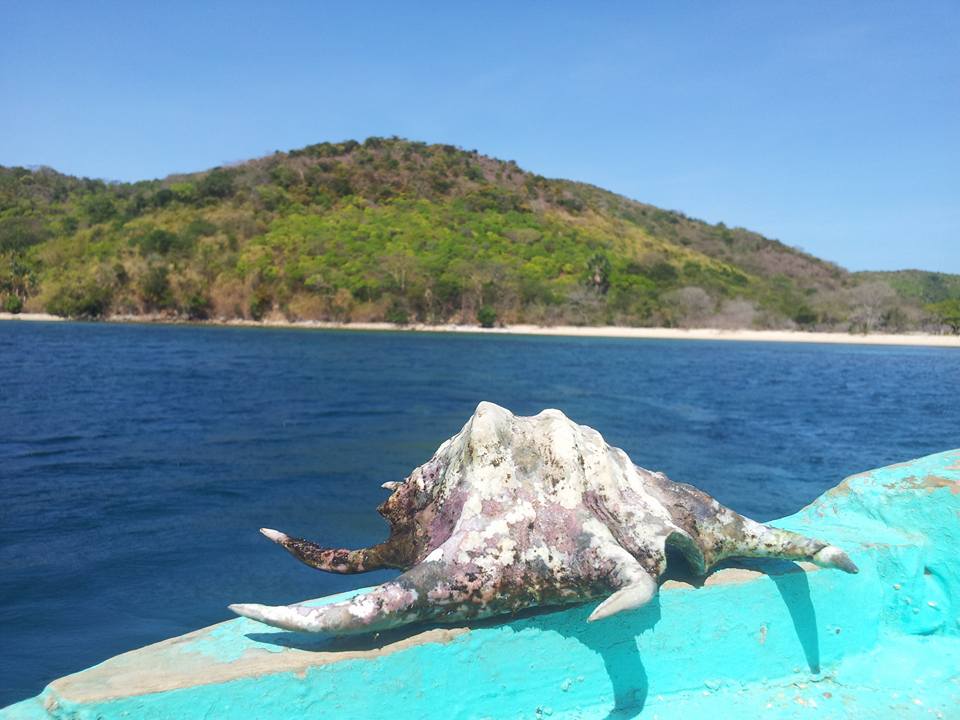
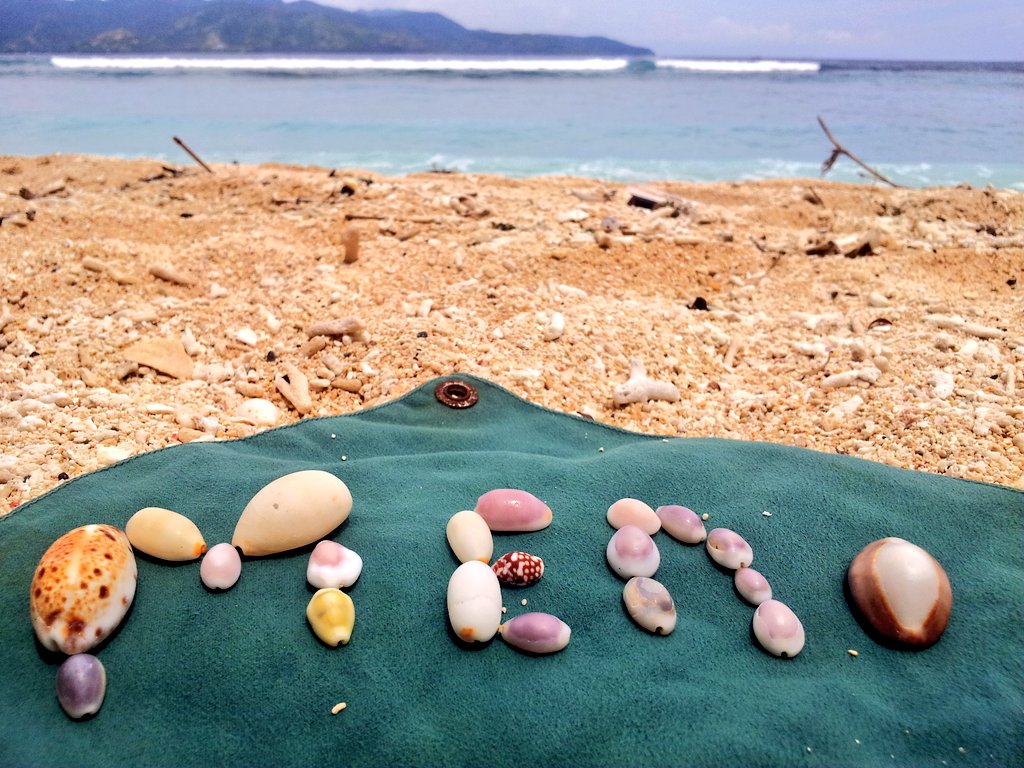

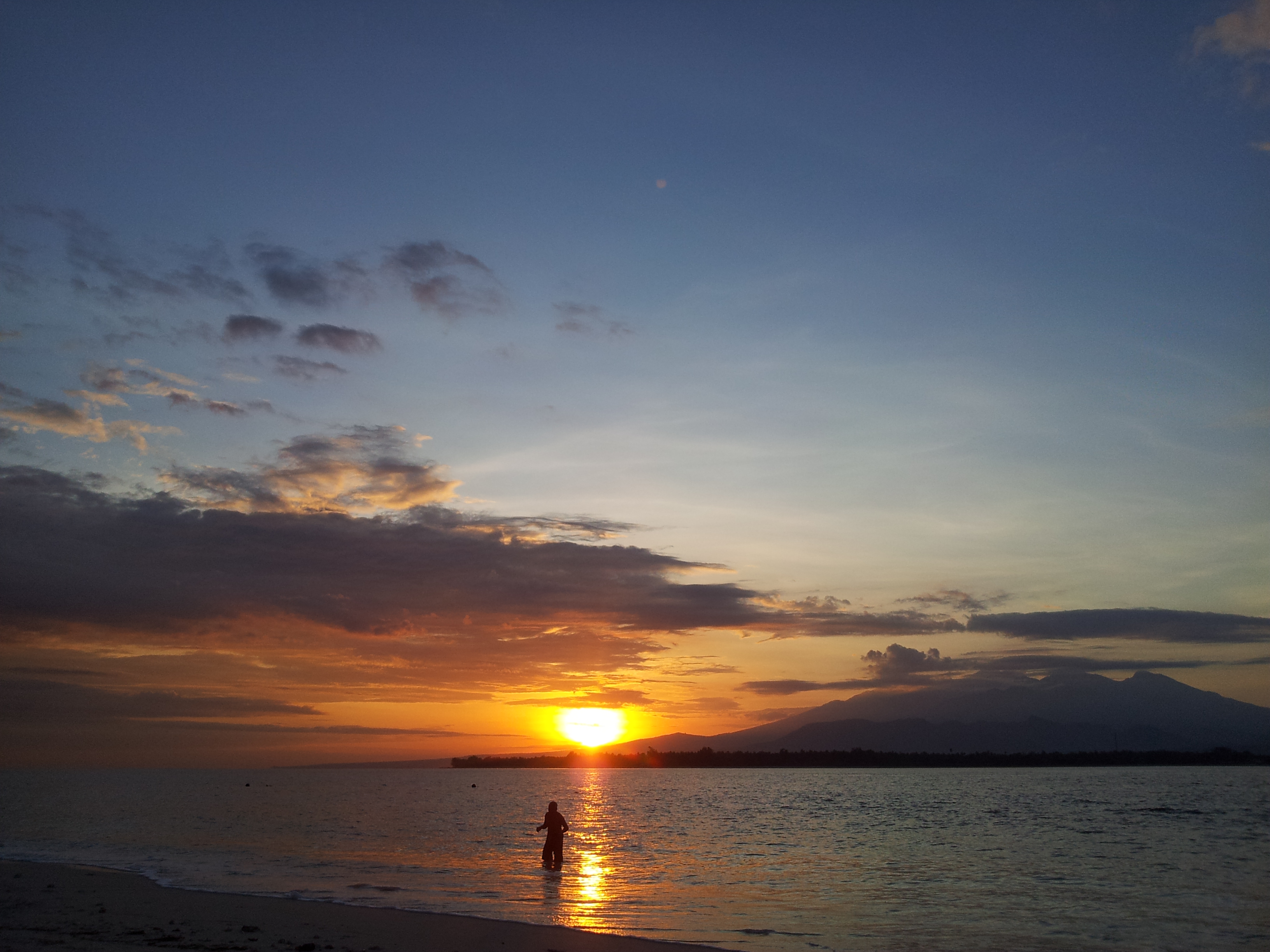
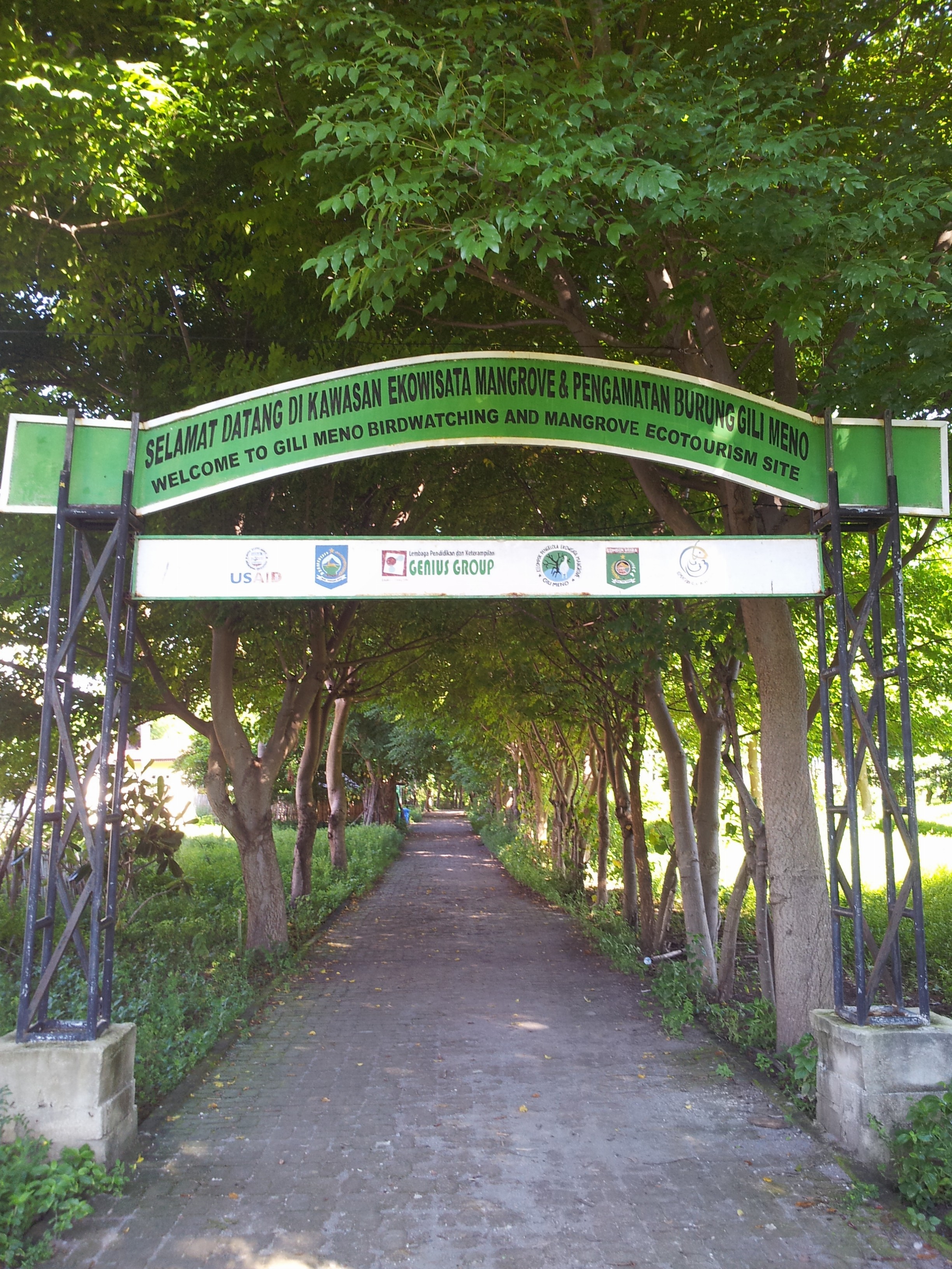 Focussed on preserving its natural assets, Gili Meno boasts a shallow lake (a mangrove conservation area teeming with birds, monitor lizards, Fiddler crabs and golden orb spiders), a turtle sanctuary, a tiny port and a handful of laid back locals and their horse carts. The few lodges, resorts, bungalows and homestays dotted around the island are far enough from each other to give some privacy, but close enough to take a quick walk to find meals. The beach is at most a 10-minute walk away, in any direction.
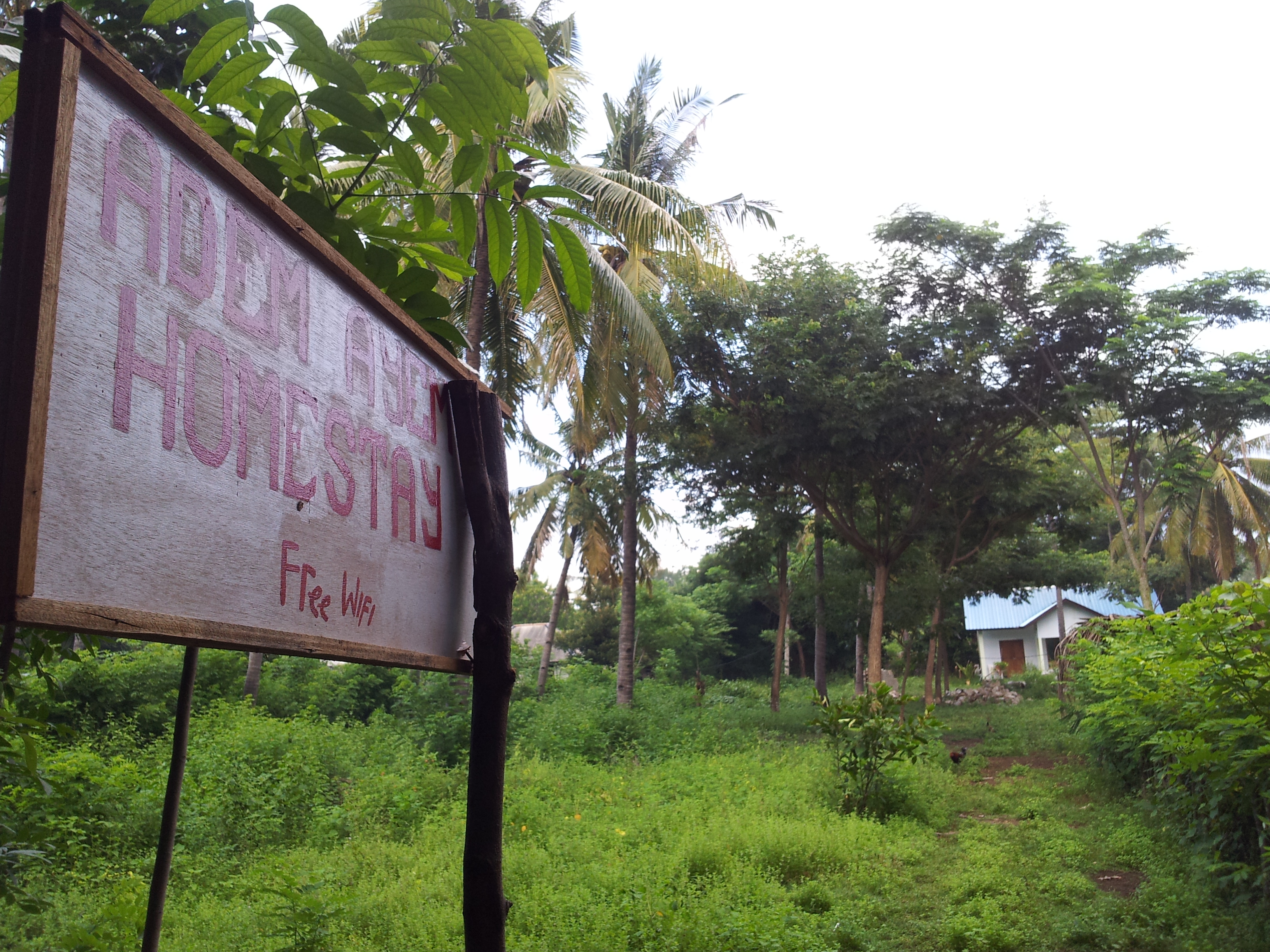 We had an awesome stay at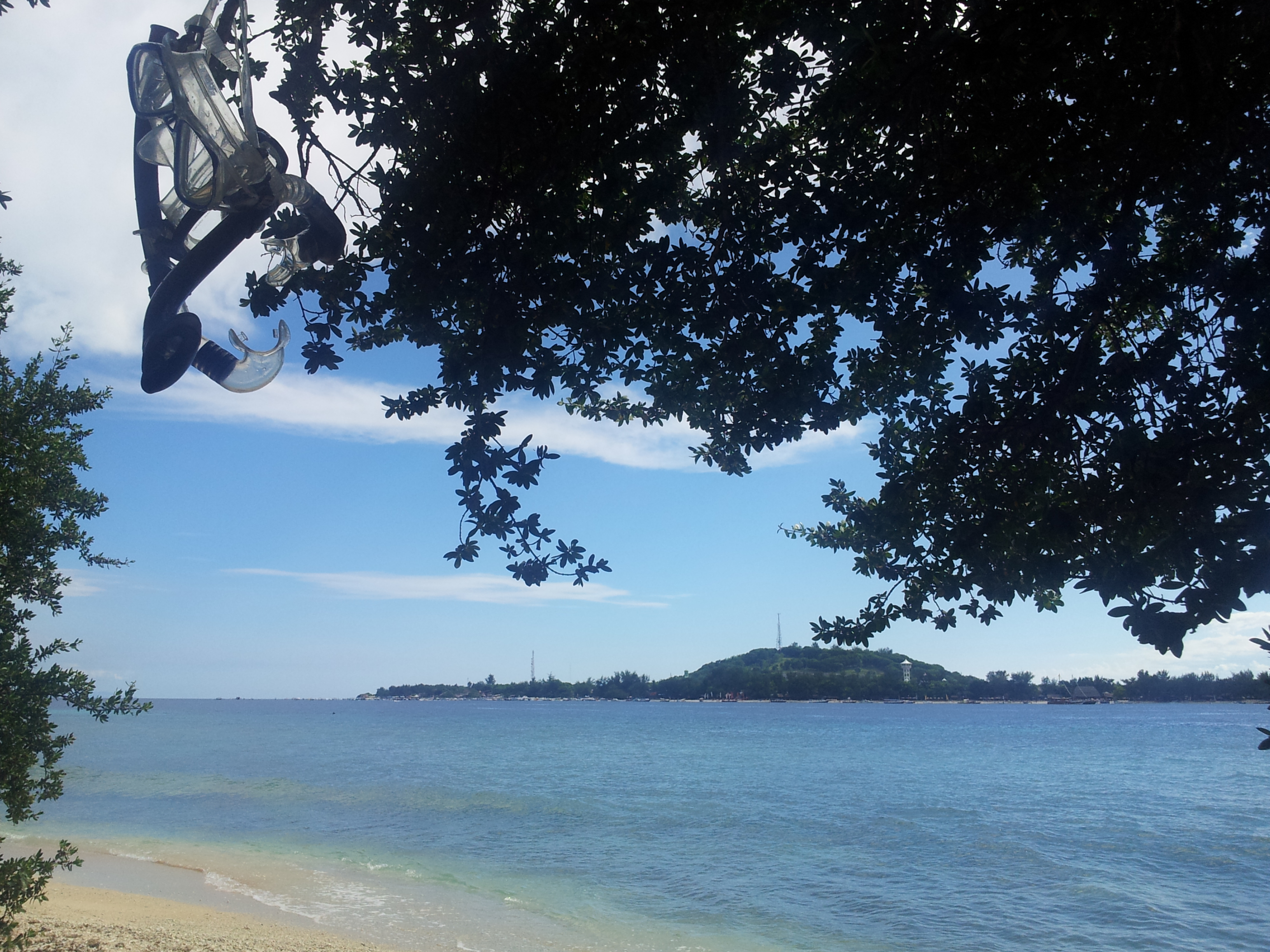




 By Shared Taxi – This is the option that we used and it went very smoothly both ways. From Kota Kinabalu, go to the same place as the bus stop (above) and find a shared taxi (5-7 people). It costs RM30 each and you have to wait for the taxi to fill up before it will leave. We waited no more than an hour for both trips to and from Tip of Borneo. Beware of unlicensed taxis.


 Sandakan is a small city on the east coast of Sabah, Malaysia Borneo. It is a port city and relies heavily on the palm oil trade, as well as other exports like cocoa, tobacco and sago.
 After a friend travelled to Borneo a few months ago, she told us about these ‘jungle river tours’ that are available in Sabah.