Tag Archives: forest

Oribi Mom: Doing Life One Tree at a Time

“Mist-blanketed rivers with crocodiles have tales to tell, I’m sure.” – Heather Lind.

October 16, 2024

More than a decade ago, we planted a tree in the rainforest. It was one of those last-minute decisions you make when you’re leaving a beautiful place and wonder how you can leave some sort of mark on it.

We’ve always been free souls who preferred to leave footprints and take only memories. I guess it was a sort of ‘ethical traveller’ decision. It’s the same reason we never rode an elephant or went on those boat tours to see the propeller-etched whale sharks they feed to keep nearby for tourists.

We don’t buy curios most of the time unless the mementoes on sale are directly helping a local person earn a living. In this case, planting the tree was the best of both worlds. We were supporting a local business and, at the same time, contributing to reforesting the badly depleted jungle.

That tree also contributes to the oxygen you and I are breathing at this very moment, 11 years down the line. Yes, we understand that this little side business of the place we stayed at was to make money.

Isn’t it okay to feed your family off the money tourists are willing to pay for a tree-planting exercise? You’re making a living and helping the jungle ecosystem. We even got a ‘plaque’ – a little wooden thing painted with ‘Linds’ on it. They stuck it in the thick mud next to our sapling. I guarantee that plaque is not there today. It was the kind you might recycle later for another tourist by painting over it. That’s okay. The tree, though? I often think about it.

I’ve planted many, many trees since then, particularly on our farm in Oribi Gorge. Hundreds of trees. But I still wonder what that tree looks like now. Is it towering over the little wooden huts with the rickety boardwalk? That boardwalk was really the only way to walk from your hut to the place they served food.

The ground was basically just thick mud up to the knee. Thousands of leeches were also just waiting for you to squelch over there so that they could feast.

I’d still go back to see that tree, but we’re older and wiser now, aren’t we? Imagine what else we would notice ten years on. Mist-blanketed rivers with crocodiles have tales to tell, I’m sure.

Oribi Mom: Well-watered Gardens Don’t Wither

“The boys are growing faster than the trees, but nothing is ever stagnant in this life.”

September 26, 2024

It’s been a bit of a dry season for us these last few months. While dry, almost hot weather is excellent for my outdoor exercise routine, it’s less desirable for my little macadamia trees, garden, and precious scarp forest.

The birds have been coming daily to ask for more water in the bird bath. The weavers, toppies, and drongos like to splash around in it, chasing any intruders away from their bath time. They cause quite a ruckus sometimes.

The bees have also been manic at the hottest part of the day. For a few weeks, I’ve had to close up the windows at noon to avoid a whole lot of desperate bees buzzing into the lounge or office.

A Not-So-Dry Adventure With Oribi Dad

The boys went down the trail with their cousins (and Dad) to see the waterfall last week. It’s still trickling, but you can now sit under the roots and in the cave behind the waterfall. You don’t even see those when the water levels are higher.

On the way, my seven-year-old had his first brush with a “wag ‘n bietjie” bush. The thorns caught him on the back, and he couldn’t escape until the adults carefully unhooked each barb, trying not to tear his jersey to shreds in the process. They’re nasty thorns when they take over these spaces.

Luckily, that huge storm we had a while back cleared a lot of debris and the annoying weeds from the streambed for us. The wind also relieved us of three smaller garden trees and some huge branches off the bigger ones. We didn’t lose macadamias, but some of that cane up the road is still lying on its side a few months later.

One waterfall jaunt at lunchtime involved skirting around hundreds of bees gathered at a rock pool. I wasn’t on that walk, but I got the lowdown from wide-eyed children who seemed to have grasped the potential danger of disturbing the drinking bees.

All of our children have been stung by bees, wasps, and hornets in their early years, and so far, it’s been okay. I was still glad to hear that they made a wide pass around the stinging honey producers, wisely heeding their father’s warning to leave the thirsty hive alone.

It’s Almost Time For Spring in Oribi Gorge Again

Once-a-week watering is all I could justify for my baby trees in this dry period. They seem to have come through the winter. Hopefully, spring shows up with lots of rain to take over.

The boys are growing faster than the trees, but nothing is ever stagnant in this life.

We only have to do what each day demands, whether that’s closing windows at lunchtime to save disoriented bees from getting trapped or learning how to identify and avoid thorny situations.

Published here.

Oribi Mom: Time Travel Trail Springs Surprises

“My life list is one bird richer, and that’s always exciting.”

PHOTO BY PIXABAY

August 15, 2024

I’m losing time. I’ve upped the exercise since the youngest has had another change in routine. Each morning is either a walk or a run. That’s the plan anyway, and it’s lovely when it works out.

For the walks, I’m also still trying to do this bird challenge, and my numbers are low, low, low. Four birds by Tuesday is risky when you have to magically find seven by Saturday night, and only the rarest ones are left. Granted, a huge Verreaux’s eagle flew over the house this week, so that’s one of the four and rare. Could a broadbill just pop out of the forest for me, too? Almost impossible.

Blazing a New Trail and Losing Hours

Last week, I went all the way down to the bottom of the trail below the house to find a new bird for the list. It’s very, very steep as you basically descend over 100 metres into the gorge. Then, keep going down where the sun rays don’t often reach. The longer you don’t turn around for, the more of a climb you have to manage back up. Some places are hands-and-knees steep. Other places require boulder hopping and root jumping. I’ve never managed to carry a baby down there.

In winter, it is dry and a bit less slippery over the rocks. Still, I feel like an elephant crunching over all the dry leaves. I often think I’ll chase off all the birds from a mile away with all that noise echoing off the cliff towering above me. Hopefully, that applies to the mambas, too.

I still see all sorts of birds, though. They aren’t accustomed to human people hunting them in this little slice of paradise. Many are just as curious about me as I am about them. This time, as I got near the end of the trail, it was still quite dark and very quiet. You can’t even hear the trucks or cars on the road far above. I found something amazing – a little orange ground thrush hopping toward me to see what I was doing. What a find.

What Else Is Down There? I Need More Time To Find Out

My life list is one bird richer, and that’s always exciting. Plus, I got to watch it for a long time because it didn’t care that I was in its little spot. I didn’t even know it was found in Oribi Gorge.

Needless to say, I’m not sure where the two hours went as I entered this otherworldly place. Breakfast was late, and so was work. I’ll have to set my watch next time to make sure I don’t lose a couple of days. There’s more to find, I’m sure.

Published here.

Oribi Mom: Seven Birds a Week Challenge 2024 – Still Twitching

“Seeing a fantastic golden-breasted bunting two weeks in a row on our farm would normally have been amazing, but I can only log it once!”

For about 20 weeks, I’ve been all self-important because my kind brother-in-law invited me into a very exclusive birding challenge. Me?

A committed non-twitcher who doesn’t really have time to devote to such whimsies right now? I said yes without hesitation because, well, I’m a bit competitive.

Enter the Birding Competition

It’s a WhatsApp group. It started with about 29 people from vastly different backgrounds – another mom, PhD students who live in the Kruger, a certain famous ex-weatherman, someone in Holland, stats enthusiasts, and so on.

All of us started together on January 1, united in one goal – find seven new birds every week that you haven’t seen yet this year. That’s one new bird every day. You can’t list the bird a second time in the year. Also, you have to have actually seen the bird in the week that you submit it.

For example, if you happen to see nine cool birds this week, you can only submit seven of them. To use the other two, you’d have to see them again the following week.

Easy, right?

Doesn’t Oribi Gorge have 250+ bird species listed? That’s at least three-quarters of the year I can stay in this challenge.

Wrong.

Stay Alive By Birding, Birding, Birding

The limit of being able to list only seven birds in a week and having no carry-overs makes this a lot harder to do.

Also, January is in South African summer, when there’s an abundance of birds on hand daily. By April or so, those birds have often migrated over to another country.

The group had submitted manually and tried to police themselves with not repeating birds. The integrity has been impressive.

My bird-loving brother-in-law has also committed time to do this admin every week, so he’s keeping things going in spreadsheets and automated bird lists.

Someone also added a stats site so that we can see cool figures, like the number of unique species logged by the group (750+ already).

I like birds. I like stats. I like travellers. I like competing. It’s fun.

But my time is almost up with not being able to travel out to birding sites. I’m too busy at home. Seeing a fantastic golden-breasted bunting two weeks in a row on our farm would normally have been amazing, but I can only log it once!

How long will I last in the 7 Birds a Week group? Stay tuned.

Still, what a way to spend these last five months. I’ve intentionally looked out of my busy life and noticed what’s out there under my nose – daily. It’s rather beautiful.

Published here.

Oribi Mom: Hearing the Roar of the Waterfall

Apparently there is some special limestone-evolved skink here that researchers are trying to pin down.

It’s quite a struggle leaving home in the dark. Winter school runs require some otherworldly resolve to crawl out from under the covers. You must will yourself to get the small children dressed, fed, and half-decent for the day.

It’s also ridiculous how much colder we are in Oribi Gorge and Paddock than in town. Oribi Dad often leaves home in the dark with a fleece top and beanie and returns an hour later with a T-shirt and sunglasses. Why bother?

This weather is confusing, too. One minute it’s so dry we’re irrigating the baby macadamia trees and the next there’s giant thunderstorms ripping through our echoing gorge. They strike Eskom poles to leave the whole place off the grid, and not in that idealistic sort of way.

The Waterfall Roars After a Good Storm in Oribi Gorge

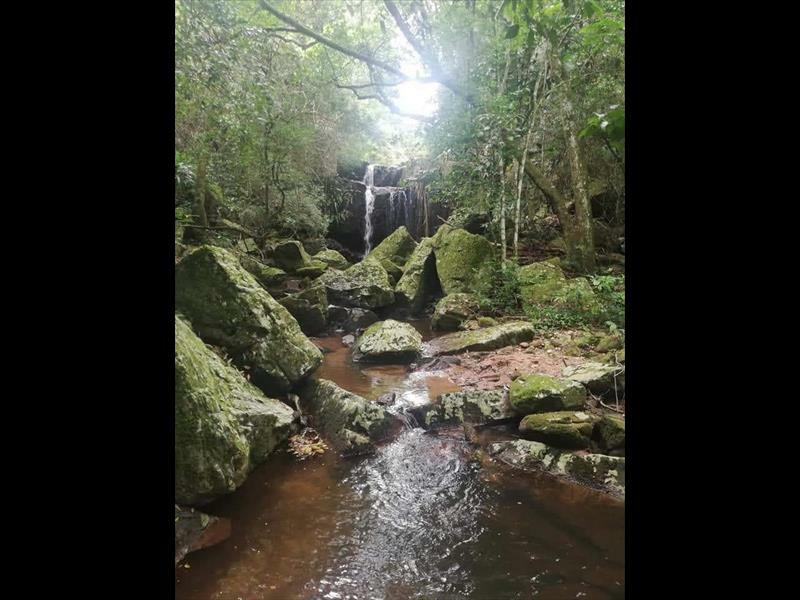
The waterfall below our house really pounds after that rain as the water drains from all the surrounding slopes and gathers in the streambed. It roars, much louder than the cane trucks. It’s louder than the UGU bus putting its accelerator flat on the floor to try and get up our winding gorge road without stalling. The waterfall is even louder than the tractors sometimes, and those whizz right past the house.

You can get to the bottom of the waterfall with some careful balancing and boulder-hopping off the rough trail. And once you do, it’s hard to describe the transformation. The cane, macadamias, and tea tree are far above you. The sounds stop, except for the birds. The bright sunlight doesn’t even make it down there into the moss-covered rocks and twisty skyscraper trees.

Down Into a Magical World Out of Sound and Time

I imagine that’s how Middle Earth’s elven forests must have been in the mind of its maker. It’s like you’ve stepped into a world of fantasy. But you still have to look out for the area’s rather impressive selection of dangerous creatures.

Even grumpy bushbuck aren’t the safest, though seeing them gracefully walking down the narrow bush trails is still spectacular. Apparently there is some special limestone-evolved skink here that researchers are trying to pin down. I’m yet to find it. But there’s still time.

Maybe the dark, cold winter mornings aren’t the most enjoyable part of family life on the farm. But the beauty and diversity of this place makes up for it in a big way. And the aloes, now those are always a great reason to look forward to June on the South Coast, aren’t they?

Published here.