Like the curious travellers we are, Travelinds had read all about the train travel in Vietnam and figured this would be a great way to see the country.
Vietnam is connected by train from Hanoi to Ho Chi Minh city and the total trip between these two big cities spans about 36 hours. There are different types of trains, cabin classes and also differing prices, depending on how you buy tickets.
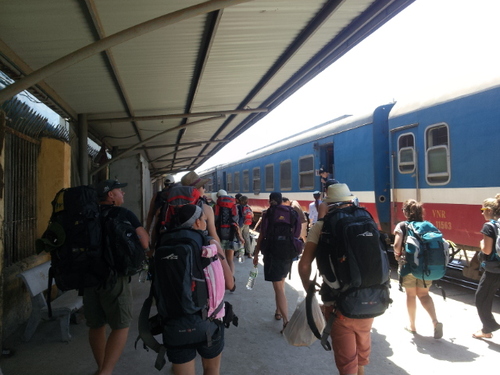
Our original plan was to do the backpacking thing and hop on-hop off whenever we wanted to stop (which sounded easy enough in theory, but in reality was quite time consuming and, due to the language barrier (and “tourist” tickets vs. “local” tickets), required slightly more advanced planning than just pitching up at the train station in time to catch a train).
We also didn’t have an ‘open’ ticket as we’d envisioned, but had to buy tickets for each specific trip (Hanoi to Hue, etc.).
The idea was to spend as many nights on the train as possible, to save time and money on hotels and not miss out on whole travel days (especially since trips were between eight and sixteen hours).
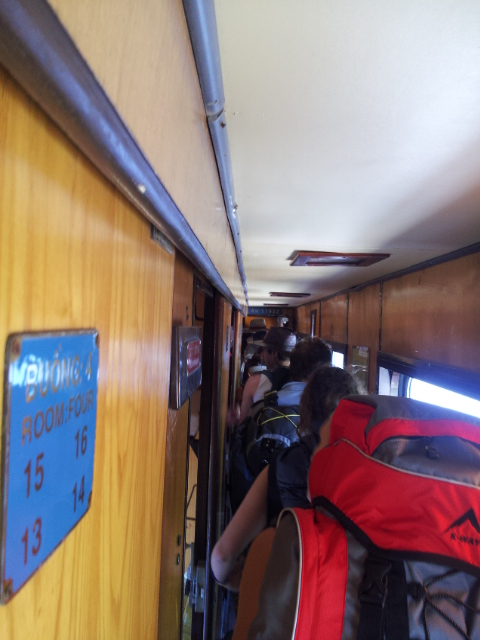
Sleeper cabin (4 bunks)
There seems to be a lot of mixed information about the trains and purchasing tickets and we didn’t have enough time to figure it all out.
We had tried to read up a lot about it before we arrived, but each trip turned out slightly differently from the last and we still don’t actually know if half the stuff we read was true or relevant!
Train travel through Vietnam was an amazing experience, so much fun and definitely worth the extra effort and hours.
Prices for train travel were reasonable, it was comfortable, we felt safe even in the soft seats section and we didn’t get ripped off by any sneaky con men along the way.
The Imperial Fortress is full of dragons, depicting power.
Hue, the epicenter of ancient Vietnam and previous capital city. Home to the Imperial Fortress, Royal residences, pagodas, tombs, the Perfume River and so much history of war and destruction.
Unfortunately we didn’t have enough time to go and see the ‘garden houses’ and I’m sure this would have been a great place to see Hue’s historical beauty preserved by patriotic, caring citizens.
Hue was definitely one of the most interesting places that we visited in Vietnam. The local cuisine is truly unique and delicious too; I would definitely consider the food as one of the main attractions in this city!
Bicycle Culture
Hue was well worth a trip, especially if you like historical and cultural aspects of travelling.
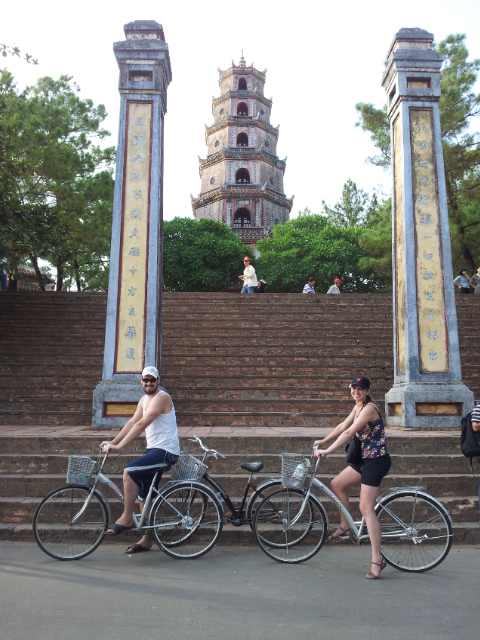
It is small enough to cycle around (we hired bicycles from our hotel for $2 per day) and there are so many little places to explore, including some local entrepreneurs at street stalls, quaint shops and interesting restaurants.
We stayed at The Canary Hotel($18, big clean rooms, air-con, nice view higher up, lovely breakfast on the 7th floor overlooking the city).
The staff were really helpful here with planning activities and the rest of our trip to Hoi An.
There is a bus that comes right past the Canary hotel for $5 pp to take you to Hoi An (we made a day trip out of it rather for $12 pp and went on a private van through Lang Co, Hai Van pass, Marble Mountain Danang, to Hoi An).
The night market was fascinating. These handpainted pictures were one of the things we bought (for about $1)!The night market was fascinating. These handpainted pictures were one of the things we bought (for about $1)!
TIP #1: Ask your hotel about the night market (between the bridges) as this was a highlight for us (it was a Friday night, local market not aimed at tourists, great buys and interesting things to see and do).
TIP #2: The traffic is still a little crazy in parts but you get in to the swing of things and people seemed generally patient with tourists on bicycles and motorbikes. The Thien Mu Pagoda was 3 km out along the Perfume River road and it turned out to be an awesome cycle from the Imperial City to the Pagoda and back to our hotel (about 10 kilometers total). Plus, Hue is relatively flat so cycling on creaking bicycles without gears is not too difficult.
TIP #3: When we visited the Imperial Fortress, we didn’t realise that we couldn’t cycle around inside the paid area (about 105,000 VND per person to enter the purple “forbidden” city), so be prepared for a lot of walking, in the hot sun! Take water, sunscreen and comfortable walking shoes here to make the most of the experience. The Purple city ticket also provides access to the museum just around the corner from the exit. There are places to park your bicycles close by, which the hotel can indicate on the map (only a small fee for a whole day’s parking).
With a week to spare, we decided to head up to Sa Pa for a few days and brave the dreaded ‘rainy season’ of the North, in hopes of a glimpse of that beautiful mountain, multi-coloured tiered rice paddies and the various and colourful mountain ethnic groups.
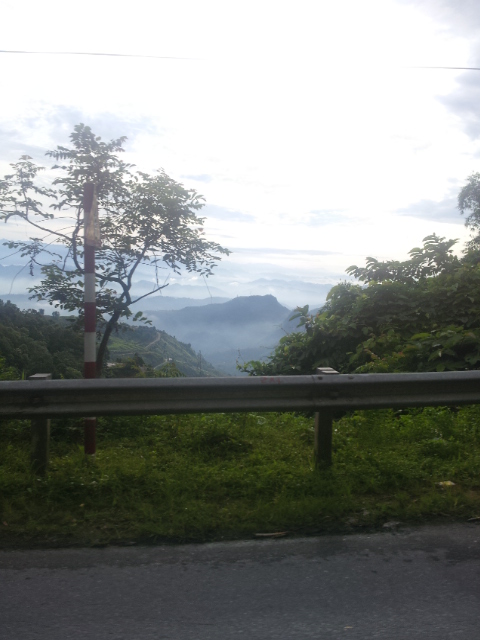
The train from Hanoi (overnight) arrived in Lao Cai at about 5a.m. (extremely close to the Chinese border). We then settled on catching a shared taxi (a 16-seater van) and made the one hour trip through the winding mountain pass up to Sa Pa. The two local children in the back, along with their mother, were throwing up in bags the whole way, which was a great incentive for us to keep our eyes on the beautiful mountains outside (and close our ears!). The driver didn’t seem too phased and we were later told that local people are well-known for their tendency to motion sickness (a myth perhaps, but hey, we experienced it first-hand).
Mong street seller in traditional clothing of the mountain people.
The town of Sa Pa was quite different from what we had expected, but it was a lively little place with so much to offer those who make the effort to wander off the beaten track.
There is a rapidly-developing tourism industry here, a result of local entrepreneurship since the country opened up to outsiders about 15 years ago.
There are trekking stores everywhere (clothing, backpacks, hiking boots etc), places to hire motorbikes, an abundance of western-style restaurants (like Italian, French, American and Vietnamese-Western fusion), bakeries, pharmacies, spas, a wide range of accommodation (high-end to backpackers to homestays), tour companies and tour agents, street vendors and small enterprises, local markets and of course, lots of tourists too.
Even in the rain, life in Sa Pa continues and tourists who go there for only one or two days seemed to brave the rain, trek and explore to make the most of the visit that everyone has to do by train or bus. There are no planes in the mountains.
We motorbiked down from rainy Sa Pa and into the exquisite Muong Hoa Valley below.
There are lots of things to see within short distances from the town, especially if you are into motorbikes, hiking and exploring. We thoroughly enjoyed the Muong Hoa Valley (straight down the road from our hotel) and had a couple of afternoons walking around the town itself too – shopping, monuments, museums, the lake, the street food and the many restaurants.
The natural beauty here is amazing and the ethnic groups that live in the surrounding mountains add the colour. The rain is no deterrent to enjoying this peaceful mountain paradise.
One place absolutely worth seeing is the Muong Hoa Valley – we did this on motorbikes as R couldn’t hike – it is SO beautiful! I recommend looking at the Sapa O’Chau tour company for trekking (and their restaurant for delicious trout and chips), as Peter was great. He is knowledgeable about the area, honest and compassionate; and any money spent here all goes to the cause to further education and sustainable income for the local community.
Sapa Essenceand Sapa Momentwere our two favourite restaurants, just down the road from Four Seasons Hotel and on the way down the Muong Hoa Valley Road.
Hotel recommendation
We stayed at the ’Four Seasons Hotel’ (formerly ‘White Lotus’) and enjoyed the relaxed atmosphere and comfortable rooms. Only $16 – $20 per night (slightly less if you book online) and the rooms were clean with a view of the mountain. Breakfast was not bad – choice of eggs, bacon, bread, salad, coffee, orange juice and a few other local choices.
TIP
The street sellers (Mong women) are very persistent and always around. Get your game face on and just tell them you’re not interested. Try not to talk to them if you are not planning to buy anything. The city has signs up saying ‘do not buy from street sellers’, as they want to encourage support of small businesses and the mong girls to stay in school.
Favourite souvenir
Besides the lovely North Face backpack I picked up for $12.00, one of the most intriguing things I took away from this trip was being educated about the fact that “Hmong” is not the correct term for the mountain tribes in this area. This is the Vietnamese term imposed on the mountain people and is almost derogatory. The people refer to themselves simply as “mong” (and there are a few different branches within this term like Tao, Dzao etc.) – fascinating! Also, “flower H’mong” is just a made up tourist label as this title is not acknowledged by the local community.
Next up…
From Sa Pa, we went east to Halong Bay and then on to Hue.

 Like the curious travellers we are, Travelinds had read all about the train travel in Vietnam and figured this would be a great way to see the country.