
13 August 2014
Hue, Vietnam

Hue, the epicenter of ancient Vietnam and previous capital city. Home to the Imperial Fortress, Royal residences, pagodas, tombs, the Perfume River and so much history of war and destruction.
Unfortunately we didn’t have enough time to go and see the ‘garden houses’ and I’m sure this would have been a great place to see Hue’s historical beauty preserved by patriotic, caring citizens.
Hue was definitely one of the most interesting places that we visited in Vietnam. The local cuisine is truly unique and delicious too; I would definitely consider the food as one of the main attractions in this city!
Bicycle Culture
Hue was well worth a trip, especially if you like historical and cultural aspects of travelling.
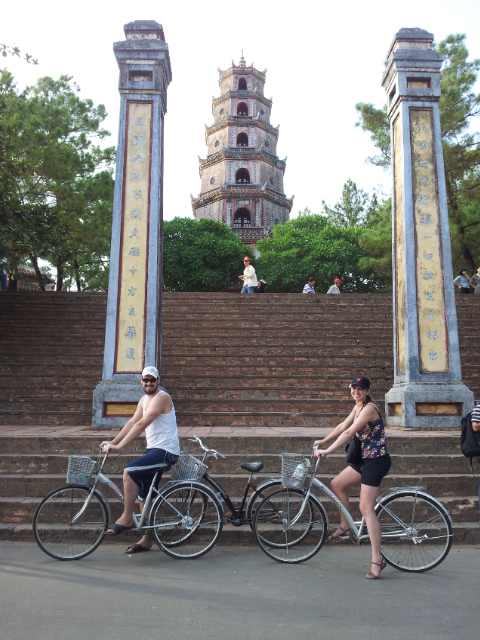
It is small enough to cycle around (we hired bicycles from our hotel for $2 per day) and there are so many little places to explore, including some local entrepreneurs at street stalls, quaint shops and interesting restaurants.
We stayed at The Canary Hotel ($18, big clean rooms, air-con, nice view higher up, lovely breakfast on the 7th floor overlooking the city).
The staff were really helpful here with planning activities and the rest of our trip to Hoi An.
There is a bus that comes right past the Canary hotel for $5 pp to take you to Hoi An (we made a day trip out of it rather for $12 pp and went on a private van through Lang Co, Hai Van pass, Marble Mountain Danang, to Hoi An).

TIP #1: Ask your hotel about the night market (between the bridges) as this was a highlight for us (it was a Friday night, local market not aimed at tourists, great buys and interesting things to see and do).
TIP #2: The traffic is still a little crazy in parts but you get in to the swing of things and people seemed generally patient with tourists on bicycles and motorbikes. The Thien Mu Pagoda was 3 km out along the Perfume River road and it turned out to be an awesome cycle from the Imperial City to the Pagoda and back to our hotel (about 10 kilometers total). Plus, Hue is relatively flat so cycling on creaking bicycles without gears is not too difficult.
TIP #3: When we visited the Imperial Fortress, we didn’t realise that we couldn’t cycle around inside the paid area (about 105,000 VND per person to enter the purple “forbidden” city), so be prepared for a lot of walking, in the hot sun! Take water, sunscreen and comfortable walking shoes here to make the most of the experience. The Purple city ticket also provides access to the museum just around the corner from the exit. There are places to park your bicycles close by, which the hotel can indicate on the map (only a small fee for a whole day’s parking).
Check out more information on Vietnamese Food, Vietnamese Trains and Hoi An.
