“This year, we can choose how we want to live, work and play.”
PHOTO BY PIXABAY
January 31, 2023
It seems like we all need a reminder this new year about the choices we have in life. For a while now, many of us have felt trapped by the after effects of pandemic regulations and all those cancelled events.
We still see those six-feet apart queue stickers on the floor at the shops. We still automatically glare at people who dare to sneeze in public. But we don’t have to be stuck with the way things are.
Why don’t we strive to make smarter choices? This year, we can choose how we want to live, work and play.
Choose To Live Differently Post-Pandemic
School is back in session and everything is open again. We can go back to church and parties. We can go back to the office fulltime if we’ve missed it or carve out new routines if we’re tired of the old ones.
We no longer have to live under the pressure of a masked world. No more pointing fingers at nostrils that can’t seem to stay hidden behind stretched fabric or reused disposable masks.
We might also want to rethink choices like where we buy or rent a home. For example, we can be smart by not buying a home near a little stream in Pietermaritzburg that has a relentless resident buff-spotted flufftail. If we can avoid this stupid decision, we can save ourselves decades of having to listen to that siren-like sound that goes all night, every night, forever. It’s even worse when it competes with frogs, dogs and car alarms.
These rare birds might be a drawcard for nature lovers. But occasionally visiting the stream is a far smarter decision than letting a little bird chip away at your sanity night after sleepless night.
Choose To Live Smarter Going Forward
We should also make smarter choices about our time this year. For instance, planting a granadilla vine that grows up every column on the porch might seem like a great natural decorating strategy. However, it turns out these vines are super messy and difficult to control.
You could spend hours hacking away, untangling, and eventually having to cut it all down without a single granadilla produced. A smarter choice would be to save time by letting it grow in a place it can go crazy without needing pruning or blocking out the sunshine (now I know!).
Whether it’s a vine or a social calendar, smart choices could save us a lot as we reorganize our priorities around busier schedules this year. Our smallest choices still count towards building our lives. The flufftail apparently enjoys droning booo-booo-booo into the darkness. We can enjoy ourselves, too.
In any case, we can choose to be better. Any step forward is progress, no matter the length of the stride.
“Friends lightheartedly commented in May last year that they hoped to meet my little one before he was walking – too late, he took his first steps last week.”
Our woolly-necked storks are residents or intra-African migrants.
April 8, 2021
The first of those lockdown babies has turned ONE! Did you remember?
A year after our lives were turned upside down by an invisible threat, we are still in isolation and it doesn’t feel normal yet. There are likely people in your circles who have changed jobs, lost livelihoods, recovered from surgeries, and upgraded their smartphones. In a whole year, there are also mothers who fell pregnant, watched their bellies expand, and now have an infant – without seeing anyone.
Can you imagine not one of your mommy friends admiring your bump over tea or meeting your child? That is now normal.
It’s Been a Year of Wondering When Things Will Be Normal Again
I haven’t been to a shop in over a year. Or in-person church.
Friends lightheartedly commented in May last year that they hoped to meet my little one before he was walking – too late, he took his first steps last week. My cute two-year-old is now a tall, rambunctious three-going-on-thirteen, rolling eyes and all. He’s outgrown several clothes sizes in a year and forgotten the names of some friends he played with every week before – a year is third of his whole lifespan!
My pregnant belly is now an 11-month toddler who wants to feed himself. He gets excited about the loud sounds of tractors and vacuum cleaners. He’s never met his extended family, including great-grandparents.
So Much Has Changed and Yet So Much Is Still the Same
Will we be looking back the same way another year from now? I don’t know.
Our garden has undergone another season of growth, as has our marriage. Even the swallows are getting ready to leave again after their six-monthly residence on the farm.
I know that you should check on your friends, even if it’s over WhatsApp. Everyone is not okay. South Africans are tough, but these have been dark days where social lifelines haven’t been forthcoming. We need friends and family, but we have also needed to obey the laws and minimise the spread of a virus.
We recently went through five days without electricity on the farm after a terrible lightning storm, but it was like a welcome reset in many ways. My fridge has never looked so clean as it emptied rapidly and couldn’t be refilled.
There’s some light for 2021, but we might have to enjoy a few candlelit dinners to see it. We don’t need complicated technology or filled calendars to be happy.
We do need connection, though. Relationships are the electricity of a fulfilled life.
What changes have you been through in a year of lockdown? Are there connections you need to restore? Don’t lose hope, you’ve already come through an entire year of life-altering abnormality. Keep the lights on and call somebody.
Life doesn’t stop. You can’t hug your friends for a while, but you can text, call, video call and tag them.
January 7, 2021
Some of us have got stuck, but the road to recovery beckons as the sun rises on 2021. Photo: Pixabay.
If you are still trying to get through your toilet paper stash before 2025, there is something else you might be ready to consider while you wait for the tide to go out.
Things Haven’t Changed
For some of us, the new year has been a huge dent in a grand wall of expectation. We sent out good wishes and then, BOOM, one million COVID reasons to hide back inside our burrows.
Do you know what hasn’t changed, Mzansi? Desperate situations. Our people are still poor, hurting, and disillusioned. NGOs are still working in suffering communities. Domestic violence has escalated with stress and financial uncertainty.
Sickness and childbirth is now accompanied by anxiety about whether a bed will be offered in overburdened medical establishments.
A second wave of Covid-19 is also a reminder of missing billions, floundering leadership, and much grief.
Things Have Changed
Do you know what has changed in this second wave of death, though? We are now survivors.
Post-coronavirus society knows that there is light on the other side of our blacked-out social calendars. We know that alongside the flashing red death toll is a merciful recovery figure, a shining testament of how many people have walked through the valley and emerged mostly intact.
If you want to “speak life,” it’s time to start moving toward better things. You can’t hug your friends for a while, but you can text, call, video call and tag them. You can’t take your grandparents chocolates or cake, but you can bombard them and their caregivers with videos of your children and emails to be read aloud to them (like the “old school” letters they loved).
Give money to the causes that move you to compassion, and click to share their posts far and wide. Open your heart and your wallet again – the needs are still there even if your mask has obscured your view for the last few months.
You can’t date freely or party into the night, but you can maintain friendships, encourage your neighbours when you see each other, and intentionally support local entrepreneurs.
You can’t eat out much, but you can buy vouchers to keep your favourite establishments afloat. You can support free meal programs and fill up the formula coffers of the many baby places of safety that are on the edge of collapse.
There’s More to Life
If you’re jobless now, you have time to clear out clutter and donate to those less fortunate than yourself (they exist, I promise you).
If you’re anxious, you can offer compassion and words of affirmation to those you love to help you focus on life, not the struggle.
Read books, read scripture, exercise, and use the time well.
South Africa, the second wave is an opportunity to start living again. It is a new world but we still have values and connections as old as time. Don’t waste your life.
“Life is precarious, and life is precious. Don’t presume you will have it tomorrow, and don’t waste it today.” – John Piper
What are pregnant mamas wondering about right now? Everything. They’re wondering about everything.
April 19, 2020
Covid-19 has thrown me a curveball in my second pregnancy. I’m due May 15, 2020, which might or might not be during a nationwide South African lockdown as coronavirus pummels the entire world.
In a time where there should have been the normal pregnant mom ups and downs between joy, hope, and normal baby-related questions, I’m no longer thinking about the pram, the car seat, the clothes, the family pictures, and whether an epidural is worth it.
In my first pregnancy, I was anxious, too. Was the next scan going to show abnormalities? Was that cramp normal? Did I choose the right hospital? Would I know when it was time, or would I end up having the baby in the car? How do you change a nappy on such a tiny human? Will modern cloth nappies save the world? (They will.)
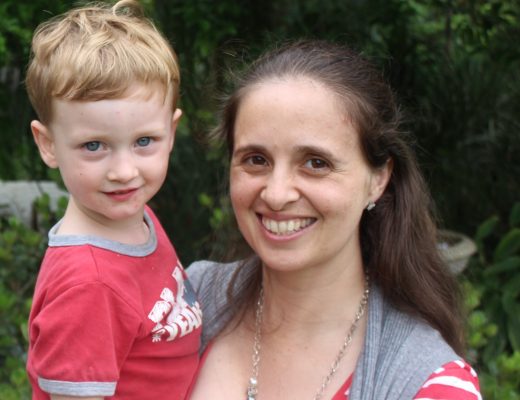
Pregnant Oribi mom with son Cooper. Her second child is due soon.
I had the same worries as any new mother. Would I be able to breastfeed? Would sleep deprivation turn me into a dragon or a basket case?
Disclaimer: If you ask my husband, he’ll never admit to the fact that the sleep deprivation did, in fact, turn me into a basket case for those first few weeks. It will pass, moms and dads. Two-and-a-half years in, I’m back to normal [side-eyes husband].
IT WENT WRONG
My pregnancy started well, much like the first, but something happened between the mid-March appointment and the mid-April appointment. It was a cataclysm that went from a problem in a country on the other side of the planet, to an invisible threat that made me think twice about visiting my own mother.
My thoughts shifted from ‘normal’ pregnant mom questions to survival mode.
Wouldn’t missing an appointment be better than risking exposure at the doctor’s offices? Would my husband, my rock, be allowed into the room with me while I was writhing in pain to bring a new life into the world? Would they whisk my baby away to be sterilised and sanitised and hidden from visitors who would only meet it at six months old?
Panic.
Homebirth pros and cons.
Possible lockdown scenarios as we chatted in mid-March.
What do we do with our toddler? Do we leave him with his grandparents, who are ‘high-risk’ when we don’t know whether a delivery man could (quite possibly) pass it to my husband who could pass it to my son who might be asymptomatic?
Plan B? I go to the hospital ALONE, give birth ALONE, handle complications or last-minute decisions without my partner, and share my joy over WhatsApp if I’m in a state to do so only many hours later (I’m not going to be messaging anyone when I’m breathing through contractions twenty seconds apart, now am I?)
Then lockdown happened. Then extended lockdown happened.
My April appointment at 36 weeks was a hurry-and-don’t-touch-the-door-handles experience. My mask was uncomfortably hot. My husband stayed in the parking lot, missing his first scan in two pregnancies. I tried not to look afraid, and to pretend that I didn’t wish I’d brought some sanitizer into the appointment with me, just in case. I still don’t know if I should’ve intentionally missed the appointment and stayed home until my labour pains brought me out of hiding sometime in the next month. Probably not.
ANSWERS FOR BEING PREGNANT IN COVID-19 LOCKDOWN
In the time of pandemics, the goalposts change slightly, but the health of mother and baby is still the priority. It might feel a little different, and we’re all doing it for the first time, even the doctors and nurses who are trying their best to keep you safe and uninfected.
Here’s what you need to know (from what I have been able to gather, and please understand it’s not an exact and definitive list) about the lockdown, and after lockdown, as you tackle this blessed journey with the courage your mother and grandmother have always told you about:
Most South African hospitals are not allowing ANY visitors, especially during the official lockdown period. Some are allowing partners to come into the birthing room, but not allowing them back in once they leave (ONE entry only).
Most hospitals have a strict entry policy for both your appointments and your birth. It includes screening (they ask you questions, take your temperature, insist on you wearing a mask, and escort you to where you are headed on the premises).
Your hospital MAY have Covid-19 patients. As South Africa faces the spread of the pandemic in the next few months, however slow, this is going to be a reality. These patients will be kept away from the maternity sections, and precautions will be taken, but you will have to face the coronavirus at some point.
DURING LOCKDOWN YOU PROBABLY WON’T BE ABLE TO (AND PROBABLY SHOULDN’T, ANYWAY):
Organise a baby shower
Take a professional pregnancy or newborn photo shoot with your family
Attend antenatal classes in person
Register your baby with Home Affairs
Find the baby immunisations easily (especially if you are trying to avoid medical facilities until the virus settles down)
Receive hospital visitors
LIFE AFTER COVID-19
The situation is likely to continue after lockdown, even if the regulations lift. Medical establishments are still going to take precautions (for our sake!) and require stricter rules. Ask questions, and don’t bite the hospital staff’s head off when they tell you something you weren’t expecting to hear. We’re in this together, South Africa.
After lockdown, you may be able to resume some regular activities, but you will still need to be careful about exposing yourself and your little one to the outside world while the virus is still circulating. Prepare for months of self-isolation at best if we are to learn from the countries who have gone through this before us.
Life after Covid-19 exists. You’re pregnant. You will carry and birth a child into a whole new world with a new appreciation for the sanctity and beauty of life. It’s a universe where dedicated South African school teachers are posting AMAZING BLOOPER VIDEOS, and people like Henry Cock are running 90km up and down their passage to help get 86 staff through the downturn.


 PHOTO BY PIXABAY
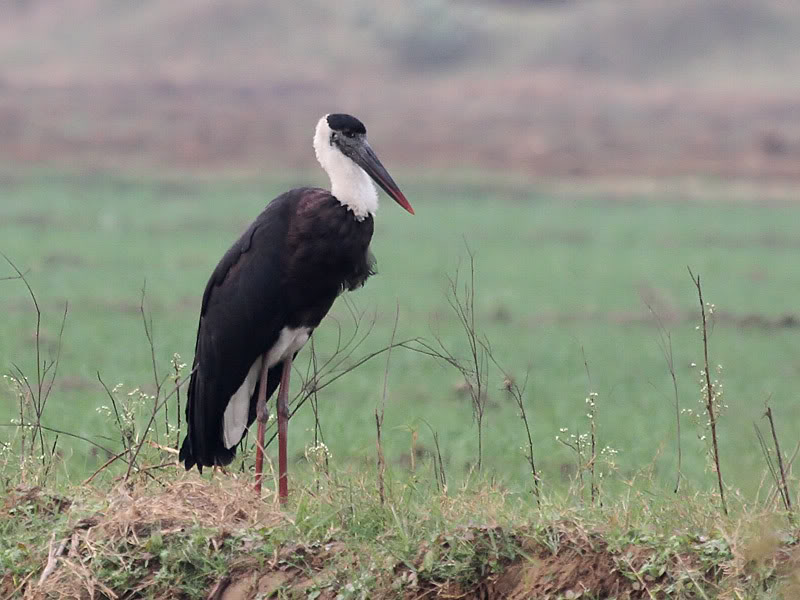 Our woolly-necked storks are residents or intra-African migrants.