Seoul Forest

6 December 2013

tumblr_mxc1f1OH1A1s64282o4_250

This weekend, we went to Seoul Forest (서울 숲 pronounced “soh-ool soop”) for a picnic with some Korean friends.  It is a large green area set along the northern side of the Han River (한강) and surprisingly, right in the center of the bustling metropolis of Seoul; although surrounded by trees and twittering birds, it certainly doesn’t feel like you are in the middle of this massive city.

History

tumblr_mxc1f1OH1A1s64282o2_400Seoul Forest was opened in 2005 by Korea’s controversial tenth president, Lee Myung-bak, while he was still the Mayor of Seoul.  The Seoul Forest consists of five “themed” parks (sculpture, ecological etc) and it covers over approximately 1.16 million square metres.  Lee Myung-bak also created the beautiful Cheonggyecheon stream (one of my favourite places in Seoul!) and he is also accredited with having introduced the rapid transit buses to the city’s transportation system.

Our Visit

It was truly amazing to find this little piece of heaven in the middle of the craziness that is Seoul and we thoroughly enjoyed exploring the park and forest during the peaceful afternoon.

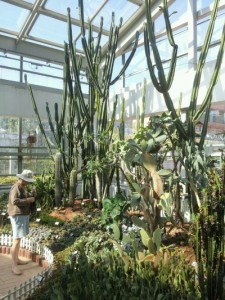
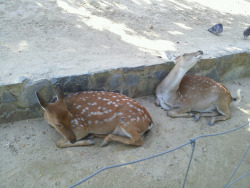
We managed to get to the sculpture park, a couple of open grassy patches, an educational greenhouse, a butterfly farm, a deer enclosure, waterfalls and quiet benches; as well as plenty of place to picnic, ride bikes, walk and enjoy the sunshine.  There is is also a bridge near the deer enclosure, which leads over the wide Han River to the other side.  The south side of the Han River is mainly sports parks, walking areas and bicycle tracks.tumblr_mxc1f1OH1A1s64282o6_400tumblr_mxc1f1OH1A1s64282o5_250
Armed with our silver picnic mat and gimbap (as the Koreans do), we found a shady spot near the grassy patch that was also hosting a children’s festival that day called “Treasure Island”; near the convenience store and coffee shop, which are also, obviously, available in the middle of the forest (because, it would be unacceptable to escape to a forest if there wasn’t a convenience store and a coffee shop available).  Only in Korea I tell you!

Getting there

As with anywhere is Seoul, you can get easily get to the park in several different ways.

Car: We drove here using the GPS and paid about 8,000won for (outside) parking for the afternoon.tumblr_mxc1f1OH1A1s64282o7_400
Bus: Front entrance (2014, 2412, 2413 or 2224, and get off at Seoul Forest), or Back entrance (141, 145, 148 or 410, and get off at the back gate of Seoul Forest).

Subway: Seoul Forest Station (Subway Bundang Line), Exit 3.  or
Ttukseom Station (Seoul Subway Line 2), Exit 8.tumblr_mxc1f1OH1A1s64282o3_250
Make the trip

It was certainly worth the trip and we hope to visit here again soon.  What a lovely retreat for Seoulites who need to escape the madness of the city for while!

Travelinds <3 South Africa

5 Dec 2013

Sawubona, Dumela, Molo, Hoegaanit, Howzit, Yo, Hello!
Since we are so passionate about South Africa, it felt appropriate to start a series of South African travel posts on this sad day, the final passing of our former president, Nelson Mandela (8 July 1918 – 5 December 2013).

South Africa is a land of beauty, energy, diversity, struggle, victory and determination – and where Travelinds calls home.  It boasts a wide array of cultures, 11 official languages, colourful traditions and an indescribable natural beauty.  Its recent history is filled with rage and confusion, its present is filled with tenacious endurance and the future of this ‘Rainbow Nation’ is yet to be determined.

Over the next few months, we’ll post a series of our favourite places to go in South Africa – there are so many! It’s the perfect destination for honeymooners, families, groups of friends, hikers, adrenaline junkies, curious travellers, destination weddings and nature enthusiasts.

There is so much to tell.

Our home, our South Africa.

First Snow

18 November 2013

Today was the “First Snow” or, 첫눈 in South Korea.  Pronounced similar to “choh noon” this magically captivating event is viewed with awe and admiration by the Korean people.  It is even believed by some of a more superstitious nature, that if you make a wish during the first snow, it will most certainly come true.

Although today’s snowfall was fleeting and the snowflakes only lasted a few moments on the ground before disappearing, it was a wonderful feeling to watch the snow falling slowly through the air and hearing the absolute delight in the voices of excited school children all around us.

I’m sure we won’t have to wait too long now until the real snow starts to transform the Korean landscape.

tumblr_mxc0dx5Uys1s64282o3_400tumblr_mxc0dx5Uys1s64282o4_400tumblr_mxc0dx5Uys1s64282o1_400

Hangeul Day Adventure

Hangeul Day – 09 October 2013

To celebrate the origins of the Korean language (Hangeul), Korea celebrates a national holiday on 09 October each year, known as “Hangeul” day. Since it was a day off from school, we ventured out with friends.

We drove into Dangjin for brunch and ended up at Lunar Rich (loo-nah-lee-chee), an Italian style restaurant opposite from the Art and Culture Centre. A delicious meal (we had the lunch set) with salad, pizza, pasta and coffee or cola.  A lovely ‘authentic’ Italian meal was a nice surprise from the usual ‘Kor-talian’ options that are usually available at these “Italian” restaurants.

We then headed off to the seaside village of Sapgyoho (only 20 minutes from Dangjin), to find the new circus being advertised.  The new building (which can be seen from the expressway) resembles a circus tent both on the outside and the inside.  It is not the ‘travelling’ circus concept we were used to from South Africa, but in fact, a troupe of Chinese acrobats that have apparently committed to performing at this venue for the foreseeable future.  It opened on 03 October 2013.

After the first act, we were both thinking this was more of an amateur show. However, by the end of the 90 minute performance we were absolutely stunned by the talent and professional, jaw-dropping routines of the young acrobats. Truly, the most amazing performance of acrobatic feats and fearless commitment to excellence I’ve ever seen.  Contortionists, swan dance acrobatics and so many other fascinating routines kept us rivetted throughout the show.

Head on over to the show (13.30, 16.30, 19.30 – every day) – it’s easy to get to Sapgyoho (by bus) from Dangjin.

Korean Formula 1 Grand Prix 2013

Sunday, 06 October 2013

F1 GP 2013Today marked the annual Korean Formula 1 Grand Prix.  The race began at 15.00pm with a colourful opening cermony kicking off at 2 p.m.  The opening parade, with participants dressed to the nines in traditional Korean ‘hanbok’ and ‘Samulnori’ clothing, showcased true Korean drama and legendary story-telling, through Korean dance.

The crowd was then treated to a daring display of fighter jet formations by the Korean Black Eagles flying squad.  Death-defying manouvers and colourful smoke creations (even a red heart with a blue arrow through it) kept everybody entertained.  F1 GP 2013 JetsThe sound of the jet flying over us at close proximity was enough to give everybody a huge fright and a taste of the noisy car engines to come (although the fighter jet engine felt about a hundred times louder than the cars!)
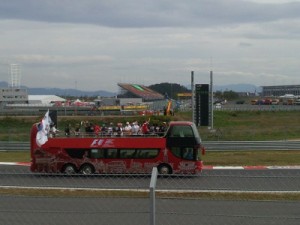
The weather was surprisingly good, if just a little windy, despite ominous predictions earlier in the week of a typhoon touching down on Sunday.  Our seats were in Grandstand G this time, with a good view of the cars coming out of the first straight and then a view of turns 7,8,9 and 10, which is luckily where some of the action happened during the Formula 1 race.F1 GP 2013 Drivers

We support Sebastian Vettel (Red Bull) and Kimi Raikkonen (Lotus) and this is the second year we have enjoyed great performances from both of these drivers at the Korean circuit.  Vettel came first (again), led every lap and also got the fastest lap of the race, much to the
disgust of some of the Italian Ferrari fans sitting nearby us; a
nd Raikkonen came in at second position by overtaking his teammate (Grosjean) late in the race.

The race was pretty exciting with blown out tyres, appreciative crowds drowned out by the deafening drone of the powerful Formula 1 car engines and even a dramatic fire, caused by a bump earlier in the race that must have ignited something.
Mark Webber was the unlucky driver whose car caught fire and he had to escape before flames engulfed it in a cloud of black smoke.
Incidentally, this happened right at the end of the straight where we could watch all the action live from our seats, with a little help from the big screen for the details.

A great outing as usual!

F1 GP 2013 Track

Gongju Teacher’s Outing

5 October 2013

Gongju PersimmonToday we went on a teacher’s outing to Gongju, with some of the Asan Board of Education public school teachers.  It really was an interesting look into some of the ‘rural’ traditions and the cultural legacy that still lives on in South Korea.
Hunting for Chestnuts

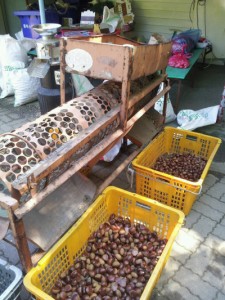
The first task was a thorough chestnut collection, which was actually a lot more fun than it sounded on the itinerary.  Chestnuts (밤 ‘bahm’) are traditionally eaten roasted, or peeled and frozen to be eaten raw.

Gongju Roasted Chestnuts

We were shown how to break open the spiky pod and extract the shiny brown chestnuts with tongs.  Armed only with tongs and an orange net bag, we were led up the steep pathways and sides of hills to tackle the chestnut plantations.


Aside from minor injuries from chestnut pod spikes, the other exciting event of the morning was finding a small brown snake on the grassy bank (Google later revealed it was a ‘rat snake’ of some sort), which a brave Australian soul rescued from certain death, by flinging it as far into the bush as possible, away from the Korean tour guide.

We headed back with orange bags overflowing with chestnuts and enjoyed some roasted and frozen, raw chestnuts as a reward for our efforts.

Traditional Korean lunch

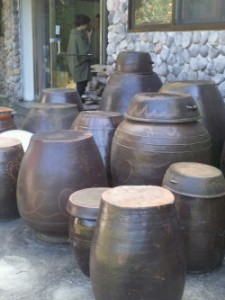
We then headed down the road to a traditional folk museum, restaurant and chestnut dyeing complex.  It has been run by the same family for the last 200 years, who still live, farm and dye with chestnuts (no pun intended), in the same farming area in Gongju.


Treated to a traditional Korean lunch, we experienced lotus steamed rice (covered in lotus leaf, with

Gongju Folk Museum
Gongju Folk Museum

herbs), an array of unique Banchan (side dishes) special to the Gongju region, makgeolli (rice wine) and mushroom water (like ice tea, but made from mushroom juices); all this served in the traditional low Korean tables, sitting on flat cushions on the wooden floor, with legs folded under us.

Since the restaurant and surrounds were all things chestnut, chestnuts appeared as an ingredient in the vast majority of the dishes served. Even the servers clothes and restaurant furnishings were dyed with chestnuts.

Traditional Folk Art Museum

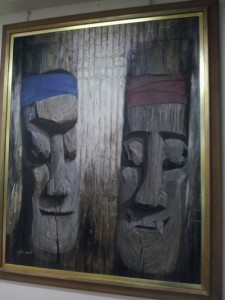
The ‘chestnut’ family has also collected artifacts from the neighbouring farmers over many years, as well as the collection of dramatic art pieces used by the current owner’s father, who was a well-loved traditional Korean puppeteer in his spare time.  It includes farm implements, cultural pieces, masks, paintings, shamanistic symbolism, farm life cooking tools and many other interesting things to see and experience.

Gongju Museum
Gongju Museum

My highlight was seeing an actual South Korean funeral carrier, a colourfully decorated box that traditionally holds the coffin and is carried to the burial mound by about 12 men.  These days, it is rare to see one in use as, our host joked that, Koreans are now taller than in the past and so don’t fit in the carrier very well. The carrier at the museum was retired only a couple of years ago.

The next week at school, I was surprised and very privileged to see one of these coffin carriers actually in use, as a funeral procession passed the school and headed down the road; singing, clapping and mourning the loss of a 75-year old lady that had lived in this community.

Chestnut Dye

The last activity of the day was a handkerchief dyeing lesson.  We were shown the crushed chestnut husks that are used to make the dye and different ways to tie-dye our handkerchiefs.  We dipped it in the hot dye (hands and arms covered in rubber gloves) and took turns to “massage” the dye into the handkerchiefs in the pot.  Then out into the cold solution that sets the colour. This process was repeated two or three times; ending with a cold water rinse and then handkerchiefs were hung out dry.Gongju Museum

Mine was sadly unremarkable, as it was lost in the dye pot for a while and lost all its strings, but a few of the other teachers managed to produce some seriously impressive dye patterns.

Take a trip

If you are headed to Gongju, you can find more information about the museum and the area at this link.  It’s a great day trip for those interested in learning a little more about traditional Korean life.

Finally! Korean Driver’s Licence acquired.

30 September 2013

After 18 months of procrastination, I finally put in the (small amount of) effort and voila! One times Korean driver’s licence valid for 10 years, placed in my hands by lunch time.  For all South Africans living in Korea who, like me, need a little bit of motivation to brave the Korean administrative processes alone, here’s how as of September 2013:

1. Documents to prepare:

  • 3 x passport photos (colour)
  • 1 x verification/certified letter for driver’s licence
  • Original Passport
  • Original Alien Registration Card
  • Original South African licence
  • 12,000KRW (eye test and licence fee)

2. Embassy visit:

  • The South African embassy is in Yongsan, Seoul; and in ten minutes, assisted me with a certified copy of my South African Driver’s licence, officially stamped and signed.
  • Also, the fully bilingual receptionist was extremely helpful in directing me to helplines and advising bus routes.

3. Seoul Global Center

  • This is a fantastic center for foreign visitors in general. I received professional service from everyone; including the helpline, staff and administrative assistants.
  • It’s very easy to find, on Line 1 (blue) in front of the Jonggak subway station, Exit 6.  If you’re taking a taxi, ask for “Jonggak yok” and look for Exit 6 as a reference point.  Go up to the 5th floor to the licence desk (first desk on the right).
  • Present documents, original licence and photos; sign forms and then proceed to the eye test via the subway. (The assistant gives you detailed directions, with a map).
  • Return with completed eye test (5,000KRW) and surrender South African licence.  Pay 6,000KRW and receive Korean licence.
  • NOTE: I was concerned that my address was not in Seoul or Gyeonggi-do, but this was not an issue.

Tips:

  • Try and reach the Seoul Global Center early because lunch is from 11.30a.m. to 13.00pm.  Having arrived in Seoul by 9.30am, I was lucky enough to visit the embassy, take a taxi to the center, fill out all the paperwork, take subway (2 stops) to and from eye test clinic and make it back by 11.27am to be issued my Korean licence.  Working it!
  • Passport photos can be taken at any photography studio. It cost me 7,000KRW for 4 and because I took my own photo on my USB, they gave me a discount.
  • If you are lucky enough to have someone who can help you out (e.g. your director, a trustworthy friend etc), the embassy also provides service to a proxy in possession of your licence, passport, ARC and a signed letter of permission from you to collect the copy on your behalf. You do have to visit the Seoul Global Center in person, however, to take the eye test.
  • I briskly walked (about 20 minutes) from Oksu station (orange line 3) to the South African embassy.  Be warned, the (1.5km) walk consists of steep wooden steps up to the very top of the hill and then downhill Dokseodang-ro to the embassy.  Great exercise but, do factor in the time and effort, or take a taxi.
  • NOTE: If you are not a South African Citizen, I advise phoning the Seoul Global Center for information to check details.  South Africans do not have to take any written test, but this may be different for other nationalities. 

Good to know:

  • You have up to 3 years to reclaim your South African licence from the Global Center before it is destroyed. You need your airticket, Korean licence and ARC.
  • The eye test clinic is about 200m from the Jongno5 subway exit 1. It’s a tiny door that leads up to the 2nd floor so keep your eyes open.  Be prepared for little to no English levels here.

Good luck! It’s well worth a day trip for out-of-towners!

www.crossed-flag-pins.com

===================================================

Location and contact details:

South African Embassy

  • Mon to Thurs, 8:00 to 16:45; Fri, 8:00 to 15:30; (Lunch: 12:45 ~ 13:30).
  • 104 Dokseodang-ro (Hannam-dong), Yongsan-gu, Seoul 140-884
  • http://www.southafrica-embassy.or.kr/eng/embassy/contact.php
  • Nearest subway stations are Oksu (Line 3 orange) and Hannam (Jungang Line).  It is about a 20 min walk (or 5 min taxi) from Hangangjin Station (Line 6 brown).

Seoul Global Center

  • 5th Floor of Seoul Global Center Building (“Driver’s licence” desk), Jong-ro 38-gil, Jongno-gu, Seoul (it’s directly outside Exit 6 of Jonggak (Line 1), just walk straight about 100m and you’ll see the logo and “Seoul Global Centre”)
  • http://english.seoul.go.kr/lh/support/scof1.php
  • For information call: +82-2-2075-4130~1 (Seoul Global Center 5th floor) or 1330 (Korea’s tourist information call center) or 1588-5644 (BBB Korea)

Caribbean Bay

25 September 2013

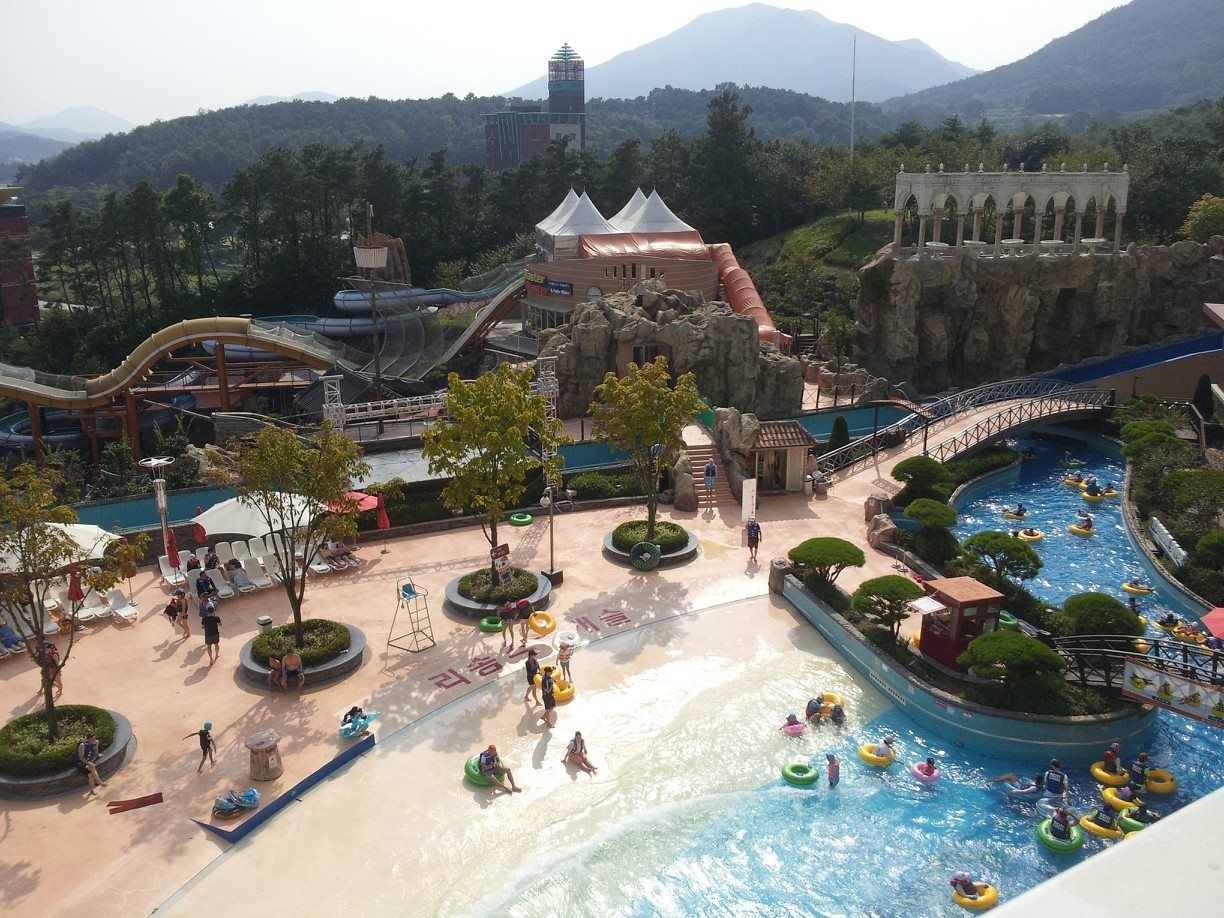
On Saturday we decided to head to Caribbean Bay, the waterpark side of the Everland resort we visited in July.  It was the Chuseok weekend and we expected it to be very busy, however, we were pleasantly surprised to find that we did not have to queue for hours or fight our way too much through crowds during the day.  It wasn’t busy by Korean standards anyway.

There are 5 sections of the park but 3 of the sections (with the big rides) are only open for one month of the year (in July, for the summer holidays).  The other two sections were less exciting but nevertheless, a lot of fun.  We were able to have a fun-filled day at a discounted rate, thanks to the Chuseok discount for foreigners that happened to coincide with our trip.

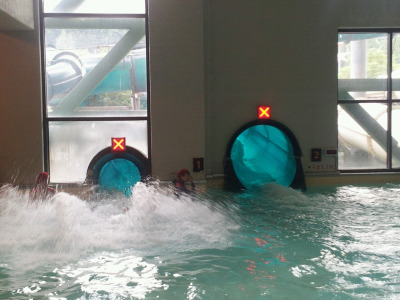
When we arrived, we went on the indoor tube and body slides with almost nobody waiting in the queues.  Later in the day, this section had filled up so much that we had to wait up to 45 minutes to take a ride!

The riverway (a lazy river where we you jump on a tube and float around the course) was really good.  Apparently, it’s the longest lazy river in the world.  We spent a lot of our day lazing on the long riverway and again and marvelling at how the Koreans stuck in their “ppali ppali” (hurry hurry) mentality, who would rather run and push their tubes, and anyone else in their way, to get around the course faster.  It’s called a “lazy” river for a reason people!

The riverway connects to most attractions in the park.  It’s great to jump on a tube (or run pushing your tube if you wish), ride for a little way and then jump off again at the next place.  You can go to almost every ride this way without walking anywhere.  Always a bonus.

The other attractions open were the wave pool, the bade pool and the rest and relaxation area with a few jacuzzis and hot pools.  The Miracle spa is another stop along the riverway and consists of three jacuzzis and a foot spa.  The foot spa was great.  Fill it up with hot water from the tap, soak for 10 minutes, pull the plug, fill up with cold water, soak and then repeat.  The contrasting temperatures help to promote blood flow and also, apparently, healthy organs.  It was very relaxing, even if not quite a miracle.

It was a great day enjoying the last of the summer sun!

If you have a chance, check out the Siam Cafe and Restaurant on your way home. It’s on the road towards the Maseong exit out of Everland, past the GS 25. They have great Thai food.

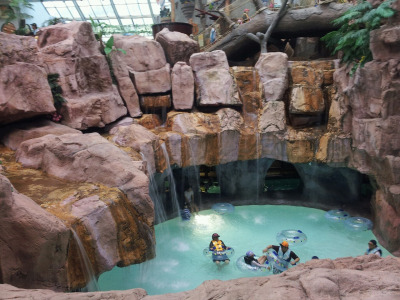
Caribbean Bay Indoor Pool
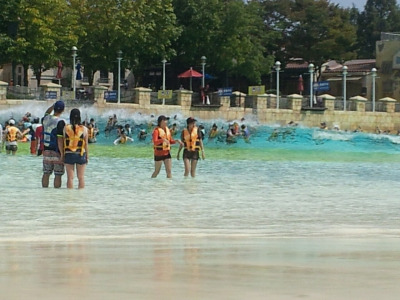
Caribbean Bay Wave Pool
Caribbean Bay slide
Caribbean Bay slide

Chuseok

25 September 2013

This year, Chuseok (추석) was celebrated on Thursday, 19 September 2013.  Chuseok is a public holiday for all South Koreans (and, thankfully, all English teachers, too).  It is celebrated on the 15th day of the 8th Lunar month. The widely-followed tradition is to go back to one’s hometown to spend time with family and to visit ancestral graves.  It is also referred to as “Korean thanksgiving” or “Autumn/Harvest Festival”.

Families come together to share some quality time, make traditional Korean food and honour the ancestors.  There are worship rituals, visits to the graves, weeding of the grave area and offerings of harvest to the ancestors.  Christians in South Korea, for the most part, still visit the graves and keep the area trimmed, but they do not worship the ancestors or engage in offering rituals.

The families eat traditional food and drink rice wine during this time.  The most famous traditional food is songpyeon (송편).  This is small rice cake with stuffing, which is steamed over pine needles (“song” 송 means pine).  The stuffing ranges from sesame seeds, black beans, mung (yellow sprout) beans, cinnamon, pine nuts, walnuts, chestnuts, jujubes (Chinese dates), and honey.  There are many folk tales around songpyeon and the significance revolves around the shape of the rice cake.  One old wives’ tale says that, for the women of the family, if they make a well-shaped rice cake then they will have a very beautiful daughter.

Since it is one of the two big holidays, the other being the Korean Lunar New Year, it is inevitable that travelling during this time is both busier and considerably more expensive.  Flights to Korea’s Jeju island and also out of the country, are sold out months in advance, at premium prices.  Roads are heavily congested and local resorts, pensions and inns are usually fully booked.

With the weather at this time of year being almost perfect, it’s no wonder that Chuseok is such a popular holiday.  “High sky”, only occasional rain, cooler but comfortable temperatures and beautiful landscapes transforming under autumn colours.  It’s perfect weather for hiking, camping, outdoor activity, picnics or spas.

Chuseok – Korean tradition at its best.

Resom Resort Spa Castle

24 September 2013

This Chuseok, we had an invitation to join some Korean friends at the Resom Resort Spa Castle in Deoksan.  We arrived on the first day of Chuseok and were surprised by the buzzing atmosphere of the resort as guests streamed in to enjoy the long weekend.

We stayed 2 nights in a small condominium.  Ironically, we slept in the Korean style room (Korean mattress on the floor) and the Koreans slept in the Western style room (with a double bed).  There are two beautiful parks on the grounds where you can picnic or walk.  There was also a buffet breakfast to enjoy and of course, the main attraction of the hotel, the spa.

Unaware of the facilities, we had assumed that going to a ‘spa’ meant that we would find a salon style spa with massage, facial therapy, mud baths, jacuzzis and skin treatments.  We could not have been more wrong! As it turns out, Korean ‘spas’ are actually more like waterparks!

At this one, there was an indoor public bath area (women and men seperate), an indoor pool area and an outdoor waterpark area with slides and pools.  You had to pay for a day pass to enter the ‘sauna’ (indoor public bath area) or, a full day pass for all the facilities.  It was also compulsory to hire life jackets if you wanted to use any of the slides (as most Koreans cannot swim) and you also had to wear a cap (swimming or baseball cap are both acceptable)!

Of course, we had to take advantage of staying at a waterpark and so we spent a full day enjoying all that it had to offer.

The indoor public bath area was like a normal jimjilbang (public bath house) that can be found anywhere in Korea.  It was however, a little fancier than the average jimjilbang found in the cities.  Women and men are completely seperated and there are towels and powder room amenities provided free of charge in this area.  Also, everybody is naked.  Completely naked, together, in full view of everyone else.  The towels are more like hand towels and barely cover one cheek let alone a body.  In this area there are saunas, pools of varying temperatures, showers, scrub rooms, hot rock decks and massage rooms.  The powder rooms have moisturisers, hair gel, hair dryers and other consumables, which can be used free of charge.  Secretly, I actually enjoy the jimjilbang, once I’ve forgotten about everyone staring (openly) at the foreigner who looks quite different from the skinny Koreans.

Once you leave the jimjilbang, you need to be fully clothed again to enter the indoor and outdoor swimming areas.  The indoor pools were a combination of jacuzzis, swimming pools, hot and cold paddle pools and also a huge “bade pool”.  The Bade pool is so relaxing!  You move around the pool at your leisure and visit different areas to enjoy different types of hydrotherapy.  For example, there were sections with a neck massage spray, foot spa bubbles, back and leg spray, jacuzzi style pool, individual bubble bays and even a “therapy walk way” for relaxing walking.  All inside one pool. Amazing!

The outside pool area included a torrent river (70cm deep, still required life jackets), tube rides, body slides, speed slide and also a few different pools and jacuzzis to relax.  There were attentive life guards at every station and they got very grumpy if you didn’t wear your life jacket, or a cap.  It seems that it’s ok for a lady to walk around naked in front of every lady in the jimjilbang but when she goes outside she must have clothes on over her swimming costume – t-shirt, shorts, pants suit, whatever.  And the men also have long t-shirts and big shorts on most of the time.  A few exceptions were jaw-dropping bikinis and banana hammocks but these were either fashionistas or tourists.

We had a superb time at this resort and a good few laughs at the strange differences from what we’re used to back home.  I hope to return here one day soon.

Patong Beach, Thailand

24 September 2013

For our last night in Thailand we decided to go and see the famous Patong beach area.  We stayed in Kata to avoid the crowds so, to get there, we took a 20 minute taxi, through Karon, up to Patong.

As expected, Patong was just crazy from the first moment.  As we entered the Patong area, our taxi had to screech to a halt to wait for two elephants to cross the road! Yes, you read it right, two live elephants carrying tourists back from their day trips!

As we drove down the road, a little further, we passed a Cabaret show (with ladyboys (very convincing transvestites) of course.  Then, as we rounded the corner to the beachfront, we were suddenly at a standstill in congested traffic which, continued all the way around the beach ring road.  We hopped out and headed into the crowds to see what we could find.

The first fantastic discovery was a bargain clothing wholesaler where everything was about a third of the price of any other store we saw in Phuket.  Had we known this at the time, we would have bought a whole lot more!  But we did manage to pick up a few things.

We headed over to the beach to see the last of the daylight disappear but not before we had watched a paragliding company giving rides (of 5-10 minutes) to a large handful of tourists.  Everytime the parachute returned to the beach, the two handlers managed to unclip the person, reset the harness, secure the next person and then push off for another run; all in only 10-20 seconds! Absolutely unbelievable! The one handler also tags along for the ride so that he can guide the parachute in the right direction.  He is not even strapped in.  He jumps up, swings himself up into the ropes and then hangs on during the ride.

Getting hungry, we ventured back onto the opposite side of the street to search for a restaurant.  Distracted by a few more clothing stalls and became more expert by the minute at palming off aggresive salesman.  We eventually hit the main party district in Patong.  Lights, noise, sex and booze everywhere.

Picture the madness. Salesman everywhere pushing their wares into your face.  Lights flashing and music blaring from the hundreds of bars on the strip.  Advertisements and flyers everywhere about ping-pong shows which are not really about ping-pong at all. Ladyboys enticing you into the bars, clubs, cabarets and other forms of entertainment that can be found in this place. “Make you a suit sir?”, “Like iguanas, here take photo – and give me 100baht”, “Come, bar good ladies”, “Happy hour here, best price, come come”…

An eye-opening experience to say the least. The exhausted travellers retreated back to the quiet hotel in Kata a couple of hours later. As a last farewell, we chose a taxi with our own flashing lights and disco music to take us back home.  Awesome!  I think this may just have been the highlight of my evening.  Wind blowing through my hair, lights flashing, music pumping and four of us bopping as we sang the few lyrics we knew of the dance music all the way back to Kata.

Patong, you are forever seared into my brain with your colourful lights and your craziness!

Onwards and upwards