Tag Archives: travelinds

Vietnam – Visa on Arrival

09 August 2014

Vietnam has been one of the top spots on our travel list, but we had not yet ventured into this beautiful country due to the required visa administration.  This time, however, we braved the “administration” and found that we had actually made a mountain out of a mole hill; the procedure was simple.

So, to encourage you other travellers not to resist the call of Vietnamese beef Pho and endless sandy beaches, here is the procedure for the VOA (Visa on Arrival) for 30 days single-entry to Vietnam via airport, as experienced at August 2014 (in Hanoi):

Before you leave (gave it two weeks just to be safe, took 48 hours):

  1. Apply for the Visa Letter through an online agent There are so many and it was daunting not knowing who was ‘reputable’, but from what we have read, it is safe to go with almost any online agent as they all do the same thing.
  2. Receive the letter (via email), print and retain for arrival in Vietnam.  We printed two copies each, in colour just to be safe, but found we didn’t need it in the end.  We also received the visa application forms via email and printed these out too (saved us a bit of time, but there were forms easily available at the desk on arrival too).

When you arrive in Vietnam (airport):

  1. Proceed to the ’Visa on Arrival’ desk (there should be a long line of foreigners waiting there to show you the way). Do not stand in the long line of foreigners. Proceed to the ‘front’ of the desk on the other side (which looks like you may be heading out of the airport).
  2. Hand in your passport, photos and completed form.
  3. Wait in the long line (or rather ‘crowd’) on the ‘back’ of the desk.
  4. Collection. When your passport has been processed (at random), your name will be called by an automated voice (and face and passport will probably appear on a tiny tv screen).  Pick up your passport at the desk and pay the $45 (USA) fee.  They did not have change, so be prepared (as we were) to give an exact amount to save yourself the trouble of changing money with other tourists.
  5. Proceed to the immigration desk and continue with the standard procedure.

NOTES:

  • There are other visas available (airport, land crossing) for single or multiple entry, 30 or 90 days etc  Check which one you need and ensure that you apply for the right one when you contact the agent as different rules apply.
  • Double check that the details given to the agent are the same as appear on the visa letter. We made a typo and picked it up quickly enough to ask the agent to change it.
  • The online agent we used was Vietnam Visa Service.  Service fee was $14 payable on application.  Our visa letter was sent to us within 48 hours.
  • Your name may appear with a whole lot of other names in the letter (the agents often process the visa requests in bulk). This is normal.
  • Using this process, you do not have to send your passport in to the agent or embassy.

**Please note: This post is written from the perspective of South African passport holders and may not apply to other nationalities.**
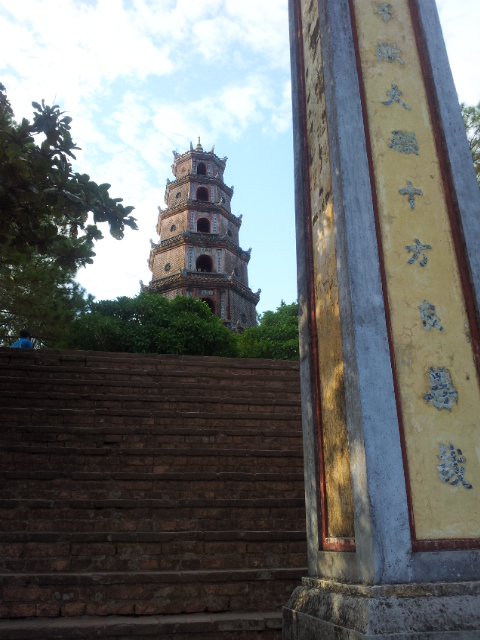
Our trip started in Hanoi and took us all the way down to Ho Chi Minh City – stopping at a couple of beautiful places on the way.

Jeju Ferry

South Korea, July 2014

Having a week off before summer camps, we decided to roadtrip down to Jeju Island using the car ferry.  We took an early morning drive down to the south coast city of Mokpo and headed to the ferry terminal. Since it was a last minute decision to make the trip, we had not been able to get hold of the reservations office (by phone) and so were just going to wing it and hope for the best.

Jeju Ferry
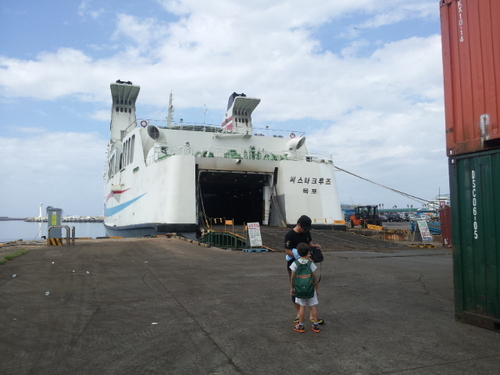
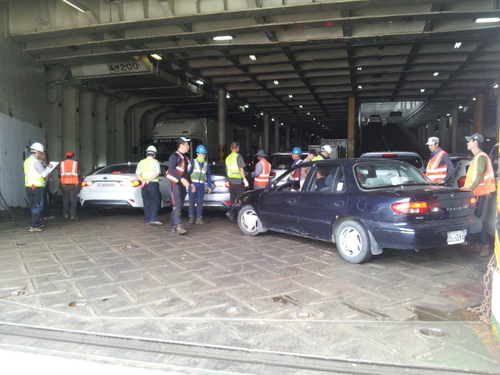
The ferry is huge and loading starts two hours before departure. There was even a truck of cattle on the trip back.

Consequently, when we arrived at the ferry dock at 8am (the ferry leaves at 9am), we were denied access and told to book a week in advance – First Problem. So, like the good waygooks (foreigners) we are, we made sad faces and asked way too many questions and begged and pleaded with the stern looking gate man… It worked! He allowed us to drive on the ferry (the  last car!) and we had about twenty minutes to park, walk off the ferry, pay at the car office, run across to the passenger terminal, pay for the passengers tickets and then run on to the ferry from the passenger entrance. Rather stressful! But we made it.

In all the rush in leaving our apartment at 3 a.m. I had forgotten to take my passport or Alien Registration Card with me (idiot!) – Second Problem – so I used my Korean driver’s licence as my identification and thankfully there were no issues both to and from Jeju.

The ferry left promptly at 9a.m. and arrived four and a half hours later in Jeju City. We drove off the ferry and straight to the ticket office to check if we would be able to get home a few a days later – third problem. The helpful assistant provided me with a number (with an English-speaking operator) which I phoned immediately to reserve our place on the ferry back to Mokpo. I was given a reference number (via text) and told to arrive at 3 p.m. to load the car. Finally, we were ready to go and explore Jeju Island!


Jeju Ferry
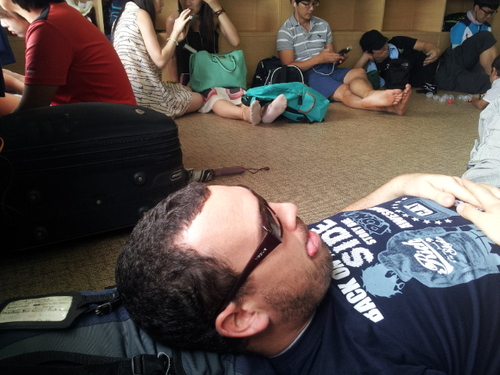
Economy class – about fifteen people, the floor and a tv.

For those of you who take this trip, you should know:

  1. We travelled on Sea World Express Ferry (Mokpo-Jeju) on SeaStar Cruise.
  2. The number to book the car ferry from Jeju to Mokpo is 064-7584234 (The other number (which I never did get through to) for Mokpo to Jeju is 1-577-3567).
  3. If you travel in economy class, take something to lie on/sit on and a good book.  It is just a room allocation with no seating – everybody in your room (about 15 – 20 people) sleeps on the floor Korean style and there is a TV. There was no cellphone signal for most of the way so internet surfing is not an option.
  4. On the ferry there were bathrooms, a cafeteria, a convenience store, a Paris Baguette, a place to sit and eat in the center court, decks to walk out around the boat, arcade-type video games, a noraebang (karaoke bar), a room full of massage chairs and a helpful information desk.
  5. We had to be at the pier 2 hours before leaving (Pier 6 at the Jeju Port). After loading the car, you walk back out on to the pier and go around to the passenger entrance to buy a ticket and board through the security gate.

Bon Voyage!

P.S. Yes, we did travel by ferry to Jeju Island, South Korea in the wake of the tragic April 2014 ferry disaster in South Korea. No, we didn’t have any safety issues and emergency procedures seemed to be firmly in place.

Moalboal Reef

30 July 2014

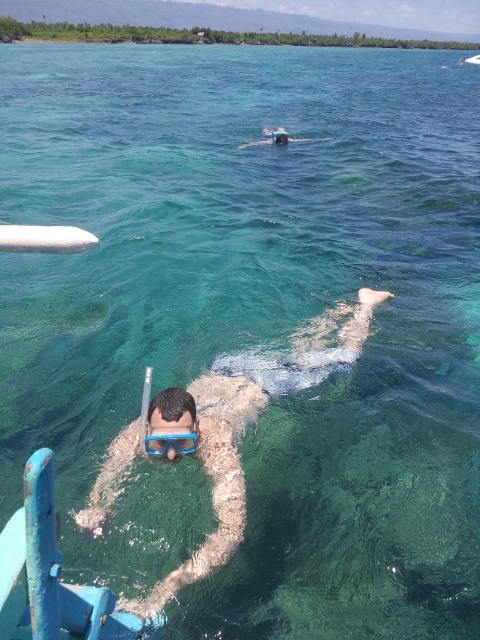
Moalboal is one of the best dive spots in Cebu and arguably in the Philippines itself.  H not being a diver, we did a snorkel tour instead and were amazed at the breathtaking underwater world we discovered here.

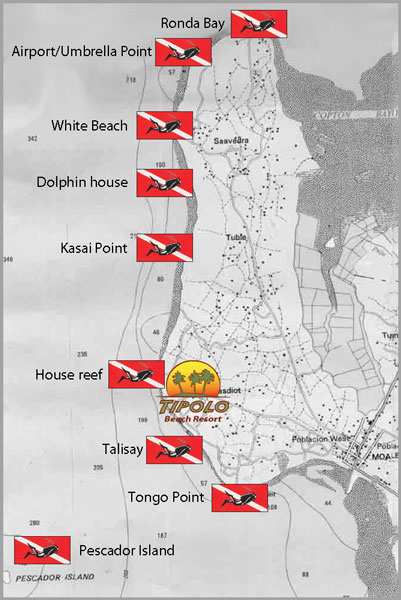
There are reefs that run from beyond White Beach all the way around the Moalboal ‘islet’.  We snorkelled as Pescador island, near Talisay and in the fish sanctuary beyond Kasai Point. We saw sea kraits (large ones!), psychedelic schools of purple, orange, blue, yellow and green fish, stone fish, puffer fish, sea needles and also a whole lot of Green Turtles in various sizes, including one that was large enough for our boatman to sleep on!

We did an early snorkel tour 8am – 1pm to try and avoid the sun, wind and rain. It was a fantastic underwater experience with so much vibrant colour and life.  The coral in the Talisay reef was stunning and we couldn’t believe how many interesting little sea creatures we saw.

Our boat skipper was very helpful and made sure that we were in an easy position to enjoy the snorkelling without having to fight strong currents.  We tried to discourage him from touching the turtles (it seems some tourists enjoy when the turtles are brought to them to touch and take photographs) and eventually he realised that we frowned on him disturbing the creatures and left us to enjoy them in their natural environment.

Overall, a fantastic snorkelling day!

Moalboal Reef
Moalboal Reef

Sea Turtle House, Moalboal

28 July 2014

Sea Turtle House
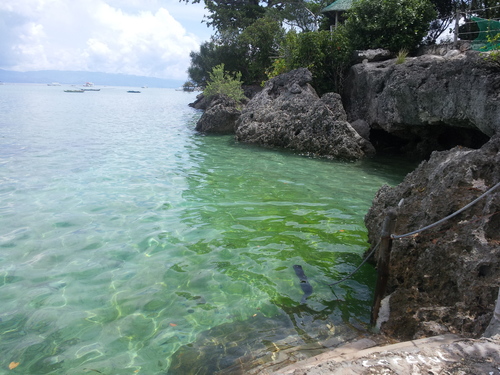
The ‘private swimming pool’ – step right out into the ocean.

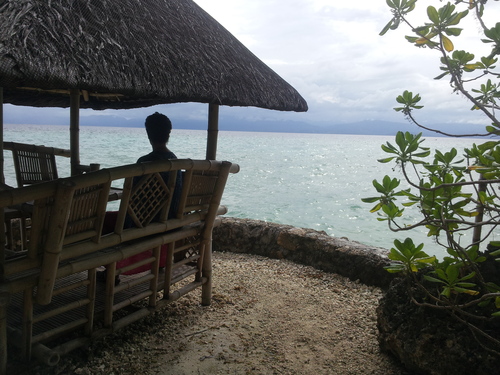
Sea Turtle House, or STH as it is affectionately known by its owners Stefan and Nenita, is a charming beach lodge right on the edge of White Beach, Moalboal. It is surrounded by tropical vegetation and gives panoramic views of the Tanon Strait between Negros and Cebu in central Philippines. The rustic atmosphere coupled with a fresh sea breeze makes for an ideal beach getaway and we had a wonderful week of complete relaxation.

Named for the Green Sea Turtles that frequent the coastline (we literally saw sea turtles popping up for air every day the water was flat enough), Sea Turtle House has to be our new favourite holiday destination; it’s reasonably priced, offers great home-cooked meals from Arlene, a beautiful location and a stunning reef to snorkel only 100m off shore. Check out more information at the Sea Turtle House Dive Adventure website.  It is also only a short walk from the long, white, sandy beach.

Sea Turtle House
Looking out over Moalboal reef.

What to expect: 

Hammocks, bamboo cabanas, sun loungers, air-conditioned rooms, tropical garden, stunning coral reef that runs from white beach all the way out past Panagsama towards the acclaimed Pescador Island, a great dive spot, home-cooked meals, scrumptious bacon breakfasts and lots of sunshine. Also, massages, snorkel tours and tuk-tuk trips in to Panagsama (for other restaurants) or Moalboal for groceries, are available on request.

Getting here:

Situated on the west coast of Cebu, it is less than a 3 hour taxi ride from the Mactan-Cebu International Airport.  We flew directly into Cebu (Cebu Pacific/Air Asia X are the best low cost airlines for this) and then jumped straight in to a (white) taxi in front of the ‘Departures’. It cost us 2,500 pesos (US$ 58) for a three hour taxi ride – well worth it for two to four passengers! STH can also arrange an airport transfer for you for around the same price.

Tips:

Sea Turtle House1.If you go in the rainy season (June to November), even though a little rain can be expected all year round, then it is much quieter but be prepared for some rainy days of reading a book on your bamboo porch. or under the cabana.  We even had a typhoon pass by us during our stay here (July 2014), but the following day we had glorious sunshine and got thoroughly sunburnt on our (absolutely awesome) snorkel tour.
2. There are some basic rooms and others with kitchenettes. We upgraded when we arrived and it was great being able to prepare little snacks, tea or light meals for ourselves using our groceries from Moalboal town and the fruit market.

3. We requested massages, manicures and pedicures in our rooms on some of the rainy days and were sent an angel, named DaDa, who appeared to relieve all the stress and anxiety from our weary bodies. She was amazing, truly! And her rates were more than reasonable too – for an hour long full-body massage and also a great mani-pedi. She is a mother of four and a beauty school student so I’m sure your small financial contributions will be greatly appreciated in her life, especially for what you get out of the deal (a fantastic massage and the gift of giving back).

Read more…
  • About Panagsama (the neighbouring tourist area with hotels, restaurants and dive centers) here.
  • STH reviews on TripAdvisor before you book on Agoda.com

Jeju-do Roadtrip – Part 3

27 July 2014

Jeju Island, South Korea

Geumneung Beach
Geumneung Beach

Our last full day we headed up towards the north western corner of the island, hoping to catch a bit of sun and find a place to settle down for the last evening on Jeju island.

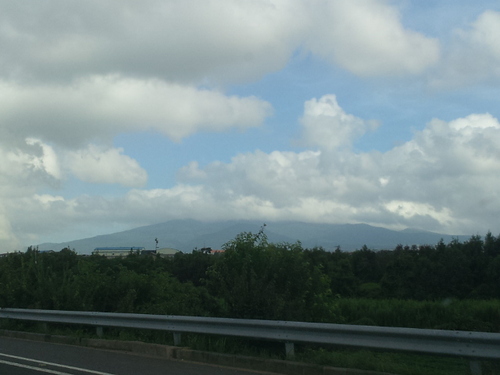
Circumnavigating Jeju, you can catch a glimpse of Hallasan (the prominent volcano mountain in the centre of the island) when the clouds aren’t covering it like a fluffy white beanie.


Geumneung Beach

Our first stop for the day was at Geumneung Beach, the quieter, neighbouring beach to Jeju’s most famous one – Hyeopjae Beach.

We found a spot of sand (between the ‘for hire’ umbrellas) and enjoyed the hike across the bay to get to the water deep enough for swimming.  As with most beaches in Korea, it wasn’t more than chest deep and you have to just pretend to be really swiming.

Windhill Hotel and Resort, Aewol.

After a couple of hours, we washed off and headed up towards Aewol where we had seen a hotel online that looked like a winner.


Windhill Hotel and Resort

Windhill Hotel&Resort turned out to be quite difficult to find (through winding little alleys and one car wide farm roads our GPS directed us, when it would have been so much easier to come in from the other side on the coastal road through Aewol) @_@

It was a nice little hotel though and we had a comfortable stay in a clean, airconditioned room.

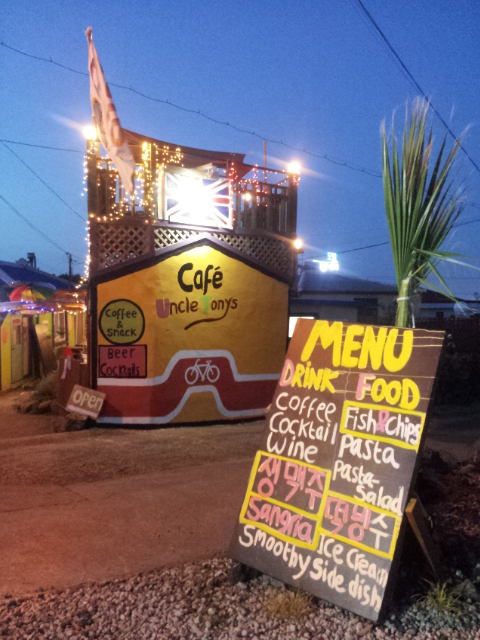
Cafe Uncle Tony’s

We found a small restaurant down the road, Uncle Tony’s Cafe, where we had the most delicious fish and chips we’ve found in Korea. Thank you, Britain.

Cafe Uncle Tony's, Aewol
Cafe Uncle Tony’s, Aewol

We enjoyed it so much we came back again the next day for brunch. And had fish and chips again! With vinegar! This place has a great vibe and mouth-wateringly good food.

Back to Jeju City

The last day we headed back in to Jeju City to get ready to board the ferry again.

With about an hour and a half extra, we decided to do at least one cultural activity and settled on an interesting visit to the Natural History and Folklore museum.

Heading back down to the dock was bittersweet, but Jeju is a truly beautiful place and it’s easy to see why it is held so dear in the hearts of the Korean people.


Memories

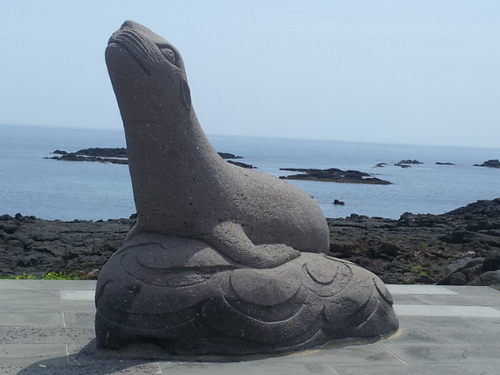
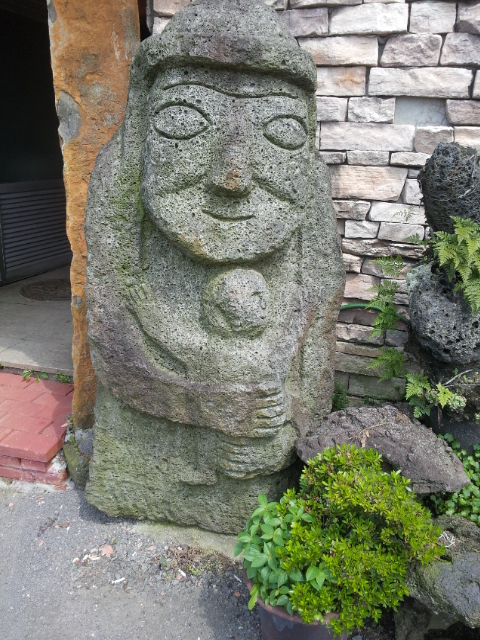
Favourite memories for the trip included hallabong, beaches, local hospitality and the mysterious volcanic rocks that line the turquoise bays. Goodbye, Jeju Grandfathers, and keep watch until next time.

Mount Hallasan hiding in the clouds

Jeju-do Roadtrip – Part 2

26 July 2014

Jeju Island, South Korea

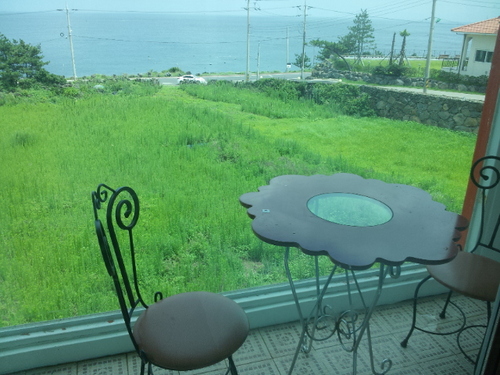
tumblr_inline_nclsgwf0tT1rg4d7lThe second night of our road trip, we stayed at a pension on the West Coast of the island – in Korea, ‘pension’ refers to a self-catering holiday flat or room, usually with a kitchenette.  We had almost driven right around the island from Woljeong-ri in the northeastern corner, past some stunning ocean views, to the southwestern corner of the island.
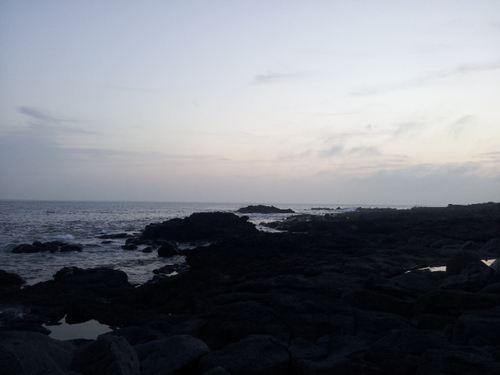
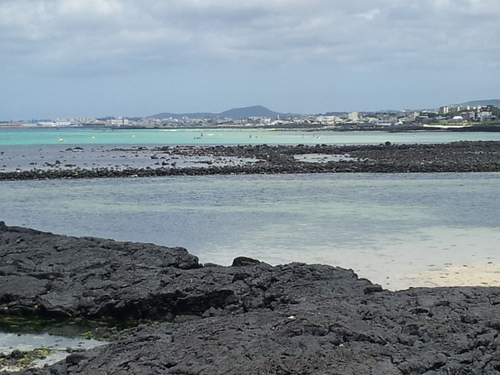
Travelinds found a pension called Madangdol Pension and booked in for a night. It looked out over the dark blue ocean crashing on to volcanic black rocks – amazing!

There was a Heuk Dweji (Black Pig) restaurant down the road from the pension and enjoyed a scrumptious Korean-style braai, seated on the floor of a restaurant whose only other customers were some rough looking fisherman and farmers from the area. If the owners were surprised to find two random waygooks in their establishment, they didn’t show it.

Jeju Island Black Pig
Jeju Black Pig Barbcue

At the pension, there were only three other guests (a mother and daughter who were on vacation with the daughter’s new boyfriend who was a university professor and the designated barbecue chef for the family).

Travelinds shared some South African biltong and cider with them, they shared some of their barbecue with us; and the evening ended with us teaching them how to play a couple of card games and chatting about life and travel dreams. What fun!

The morning came too soon and we were on our way once more. Heading back up north towards Jeju City.

Jeju

Jeju-do Roadtrip – Part 1

25 July 2014

Jeju Island, South Korea

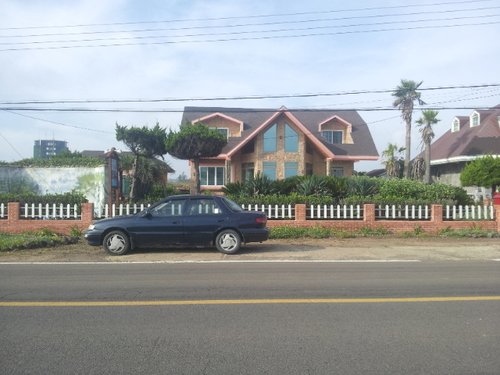
Art House
Art House

This summer, Travelinds did a roadtrip to Jeju Island – South Korea’s ‘Maldives’ and a popular honeymoon destination for Koreans. There were four days (Monday to Thursday) to explore and decided it would be more fun to go over on the car ferry with our dear old Kia Sephia.

We stayed three nights and chose the hotels as we went along. From Jeju City, we drove around the whole island going east first and driving along the 1132 Coastal Highway.

We stopped the first night at Woljeong-ri and stayed at “The Art House”, a charming bed and breakfast with pension rooms also available.

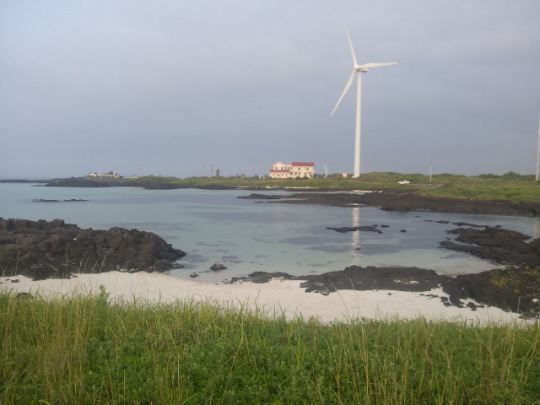
It was only a short drive from Woljeong Beach with its beautiful turquoise sea, sandy beach, giant energy windmills and only a handful of tourists. The Art House is on Agoda.com – see the reviews on TripAvisor here.

Woljeong
Evening swim at Woljeong Beach

At Art House, we met up with a couple from Spain who were touring Jeju without a car and more importantly without any knowledge of Korean. We offered to drop them off along the way to our next destination so that they could explore before heading back on the local 700 bus.

Woljeong-ri
The drive along Woljeong-ri (on Jeju’s north coast)
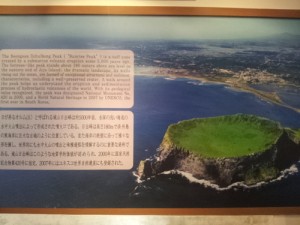
Seongsan Ilchulbong Peak

We dropped them off at the UNESCO Natural Heritage site called Sunrise Peak (Seongsan Ilchulbong Peak) to hike the volcanic peak with the hoards of tourists spilling from tour busses. With a sore ankle and suffocating heat (or was is crowds?) as an excuse, we declined the hike, took some sneaky pictures at the museum that made it look like we had touched the mountain and headed off down the coast in our air-conditioned car.

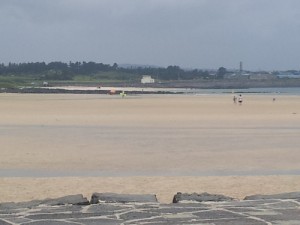
Pyoseon Haevich beach, low tide.

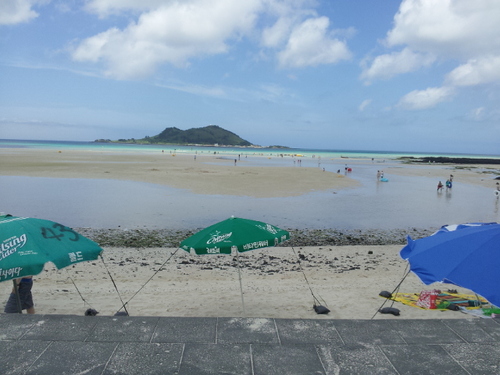
Next stop was the south-eastern corner of Jeju at Pyoseon Haevich Beach and Jeju Folk Village. The beach was lovely for swimming, but not so lovely for tanning as the whole bay is covered in water during high tide resulting in permanently wet beach sand, even at low tide. Most people hire those silver picnic mats and umbrellas (Korean style) and sit on these for a bit before retreating from the sun.

The only bikinis were H and a couple of other Russian tourists that were frolicking in the shallow bay – full body wet suits, long sleeve rash vests, big hats, fully clothed swimmers, tubes, umbrellas and loads of whitening suncream reminded us that we were still very much in Asia.

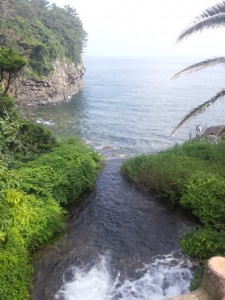
Jeongbang waterfall.

We looked in at the Jeju Folk Village but decided against going in as we had run out of time and it was time to drive on to our next hotel on the west of the island.  On the way, we managed to stop at the Jeongbang waterfall for a quick snack of Hallabong (a famous Jeju tangerine with protruding stem, sweet and delicious) and a mini photo session.

TIP: The GIANT Mosquitoes at Jeongbang are permanently hungry and really dig in when they find a weak spot; like feet, legs, arms or even faces.
Jeongbang waterfall.

“South Coast” KwaZulu-Natal – I <3 South Africa

Destination: “South Coast”,

KwaZulu-Natal, South Africa

Description:

The “South Coast” as it is fondly known by local Natalians is the southern coastline of KwaZulu-Natal, dotted with endless beaches, that stretches from just below Durban all the way down to Port Edward. Everyone you speak to may have a different opinion on which beach is the best to visit, but this probably depends heavily on where their annual family outings and summers were spent.  Wherever you choose to go, you are sure to find long sandy beaches and good waves for surfing (and from mid-December to early January, a boat-load of visitors that escape the cities and head east for a beach holiday around Christmas every year).

Tourist Must-sees:

  • Pennington, Scottborough, Hibberdeen, Uvongo, Margate, Ramsgate, St Michael’s and Leisure Bay are some of the more popular beaches among local holiday-makers.  These are generally very busy in the summer months and you will usually find life-guards, vendors and tourists here between October and April.
  • Some lesser known beaches that are just as beautiful, but less busy, are: Winkelspruit, Pumula, Southport, Southbroom and Munster.
  • Lake Eland – a game reserve, restaurant and wedding venue – is also a wonderful day out for the whole family, especially on those occasional rainy days during the summer months. Go on a safari, take in the stunning views of Oribi Gorge, take a zip line tour, brave a walk out over the impressive gorge drop and eat a great meal, South African style. This is an especially sentimental place for me personally, as quite a few of the family’s and our friend’s weddings have happened here!
Photo credit: www.margate.co.za > close up Hibberdene to Port Edward

My favourite beach:

One of my favourite beaches is Southport, mostly for sentimental reasons, but also because of the lovely swimming bay and the wide sandy beach for tanning and beach games.  It also has a small shady park in front of the only restaurant where you can picnic or braai (this is the South African word for “barbecue”).  There is also a very nice restaurant a short walk up the road from the beach, called Castaways, that has a great menu.

Hungry?

MacBananas (a farm stall) has some of the best pancakes, shakes and lunches in the area. It is a definite favourite with the South Coast locals.

If you don’t mind waiting in queues during the December holidays, the Waffle House in Ramsgate also has a wide selection of savoury and sweet waffles – think along the lines of “Banoffee”, “Chili Con Carne” or “Fresh Strawberry.

Fish on the River (Port Shepstone) is also a hidden gem when it comes to seafood, especially fish and chips. Sit on the deck and look out over the river or enjoy the nautical decor in the breezy interior.

Fun facts:

“Vaalies” are what the locals call the hoards of holiday-makers that come from the Northern provinces (Gauteng, Freestate etc), which stems from the old provincial name of “Transvaal” and has stuck over the years. (Aside: You may not want to use this term when talking to an actual “Vaalie”, unless you’re a good sprinter or know kung-fu.)

P.S. It is always good to remember that safety comes first, so: swim where the lifeguards have designated, watch out for riptides, keep an eye on your belongings and wear sun cream at all times!  A little caution goes a long way to ensure the happiest of beach days.

Check out more posts about South Africa here >> *I <3 South Africa*

Tsitsikamma, Storms River Mouth – I <3 South Africa

Destination: Tsitsikamma

Eastern Cape, South Africa

Description

Tsitsikamma National Park is one of the most beautiful holiday destinations in South Africa and it is situated on the world-famous Garden Route.  TsitsikammaIts rolling green hills, sheer cliffs, wild oceans, fascinating wildlife and rugged beauty are simply breath-taking; Mother Nature at her finest.Tsitsikamma


Tourist Must-sees

In the National Park itself, there are camping facilities, chalets, hiking trails, picnic spots, a bird-watchers paradise, plenty of wildlife and the rugged sandy beaches that belong to the earth, not to tourists.Tsitsikamma view

There are also amazing sight-seeing opportunities in the nearby areas of Storms River Mouth and the village, Nature’s Valley, Plettenberg Bay and The Crags.

The Big Tree, The Otter Trail, Robberg Nature Reserve and Birds of Eden are some of my favourite spots in this area.


Attractions range from the highest bungee-jump in the world at Bloukrans to the five-day beach hike on the Otter Trail, this place offers adventure-seekers a multitude of thrilling endeavours.


There are also a number of acclaimed restaurants nearby.

I especially recommend De Oude Martha in Storms River Village (a short drive from the Tsitsikamma Reserve). There are also other interesting places like Canopy Tours, Monkeyland and the Elephant Sanctuary to make for a great day out with the whole family.


Tsitsikamma is also a perfect setting in which to relax and enjoy the sunsets, or do some serious whale-watching and stroll along the green pathways alongside the dark blue coastline.

My favourite place

My favourite place here is at the Tsitsikamma National Park at the Storms River Mouth Rest Camp. There are cute wooden cabins here, perfect for a romantic getaway, where in fact we enjoyed a very romantic spring break in October 2011.

Otter TrailMemory Bank:

We walked a little way along the Otter Trail to reach the famous waterfall pool, seeing antelope, cormorants, whales, dolphins, seagulls, baboons and kingfishers along the way. Then followed a lunchtime picnic followed by a cool swim in the tannin-coloured waters below the waterfall before heading back along the trail. A little way before the camp, we found a secret rock pool below the path where we enjoyed a dip in the refreshing waters; dodging the bunch of sea urchins on one end of the pool.  Such an amazing day!

Fun facts:

  • Whale-watching Season: June to November
  • Climate:                                 Temperate Coastal Climate – The wettest months are May and October, and the driest are June and July.

Helpful Resources:

Booking website: Tsitsikamma National Park (SANPARKS)

Recommended Tour Agent: Imvelaphi Safaris (her name is Jeannette and she is a vibrant, knowledgeable and professional entrepreneur who will provide you with an awesome tour package).

Check out more posts about South Africa here >> *I <3 South Africa*


Spring

Edenland

“Those who contemplate the beauty of the earth find reserves of strength that will endure as long as life lasts. There is something infinitely healing in the repeated refrains of nature – the assurance that dawn comes after night, and spring after winter.”                                                                                                                                                                                                                                                                                                    Rachel Carson, Silent Spring