

“Mist-blanketed rivers with crocodiles have tales to tell, I’m sure.” – Heather Lind.
 The mist in Oribi Gorge, just like in the rainforest. PHOTO BY: HEATHER LIND
More than a decade ago, we planted a tree in the rainforest. It was one of those last-minute decisions you make when you’re leaving a beautiful place and wonder how you can leave some sort of mark on it.
We’ve always been free souls who preferred to leave footprints and take only memories. I guess it was a sort of ‘ethical traveller’ decision. It’s the same reason we never rode an elephant or went on those boat tours to see the propeller-etched whale sharks they feed to keep nearby for tourists.
We don’t buy curios most of the time unless the mementoes on sale are directly helping a local person earn a living. In this case, planting the tree was the best of both worlds. We were supporting a local business and, at the same time, contributing to reforesting the badly depleted jungle.
That tree also contributes to the oxygen you and I are breathing at this very moment, 11 years down the line. Yes, we understand that this little side business of the place we stayed at was to make money.
Isn’t it okay to feed your family off the money tourists are willing to pay for a tree-planting exercise? You’re making a living and helping the jungle ecosystem. We even got a ‘plaque’ – a little wooden thing painted with ‘Linds’ on it. They stuck it in the thick mud next to our sapling. I guarantee that plaque is not there today. It was the kind you might recycle later for another tourist by painting over it. That’s okay. The tree, though? I often think about it.
I’ve planted many, many trees since then, particularly on our farm in Oribi Gorge. Hundreds of trees. But I still wonder what that tree looks like now. Is it towering over the little wooden huts with the rickety boardwalk? That boardwalk was really the only way to walk from your hut to the place they served food.
The ground was basically just thick mud up to the knee. Thousands of leeches were also just waiting for you to squelch over there so that they could feast.
I’d still go back to see that tree, but we’re older and wiser now, aren’t we? Imagine what else we would notice ten years on. Mist-blanketed rivers with crocodiles have tales to tell, I’m sure.

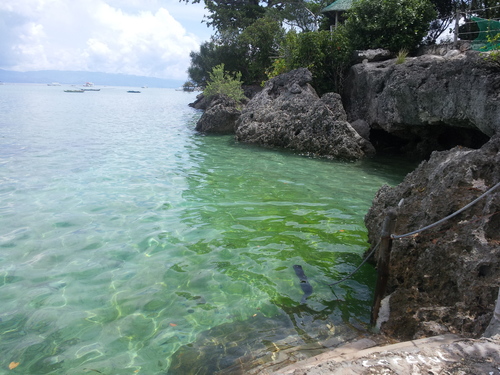
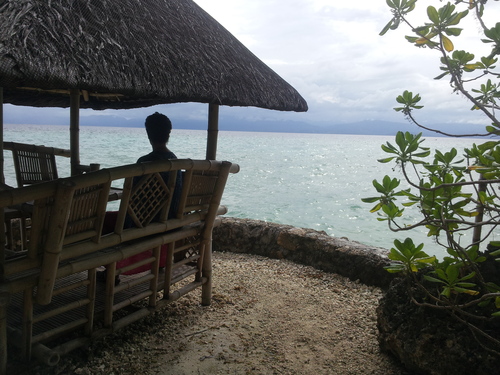
 1.If you go in the rainy season (June to November), even though a little rain can be expected all year round, then it is much quieter but be prepared for some rainy days of reading a book on your bamboo porch. or under the cabana. We even had a typhoon pass by us during our stay here (July 2014), but the following day we had glorious sunshine and got thoroughly sunburnt on our (absolutely awesome) snorkel tour.

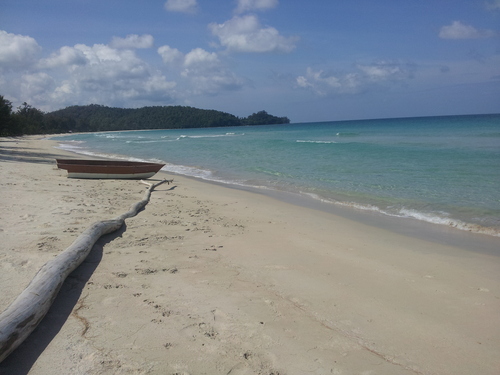

 The lodge we booked was called Nova Beach Resort (Nova Beach Club) and it is situated on Tawala beach. As H was sick with flu for a few days, it was the perfect place to relax, swim, read and sleep. There are hammocks overlooking the ocean, a deserted sandy beach, plenty of comfortable couch space with a view and air-conditioned rooms for muggy nights. We slept, ate and relaxed here (and recovered from flu) and by the end of the week were feeling more than ready to take on our forthcoming five week travelling vacation.
 If you want a night out or a change of scenery, you can get to Alona beach by tuk-tuk, motorbike, the shuttle van or even walking (if you’re fit and don’t mind sweating A LOT). These charged anywhere between 40 pesos and 300 pesos depending on your bargaining skills. When we changed hotels at the end of the week, we took our bags (we usually only travel with hand luggage) and each hopped on to the back of a motorbike – it was cheaper, and faster than taking the trike.