Tag Archives: safari

Oribi Mom: Mammal Watching Dreams That Could Come True

“When we came home to South Africa, it was like a warm hug, filled with hadeda and trumpeter hornbill cries, screeching francolins and twittering prinias.”

Did you know that mammal watching is now a thing in the world? Not the safari kind we’re so privileged to have as part of growing up in South Africa, but the cousin of bird watching with lists and databases and counts and tours.

I love birds, but I’m not technically a twitcher that’s accumulating species on my life list. I haven’t seen even 1,000 of the 11,000 bird species that we have on the globe. Maybe one day.

But, this mammal watching thing is another exciting discovery for me. There are around 6,000 mammal species on earth. Lots of them are hundreds of different rodents and bats, but many of the big ones are more well-known.

South African Birds and Game Reserves Are Truly Something  Special

I’ve always loved our trips to game reserves. It’s the one thing I sorely missed when we lived in South Korea for a few years.

Aside from the magpies that supposedly eat children’s teeth (apparently, the Tooth Mouse doesn’t know where Korea is), there wasn’t much going on in the way of wildlife in South Korea. Very few birds. One dead snake. A lot fewer insects than I’m used to seeing at home, too. It felt a little sterile at times, and not in a good way.

When we came home to South Africa, it was like a warm hug, filled with hadeda and trumpeter hornbill cries, screeching francolins, twittering prinias, and the boo-boo-boop of the beautiful bou bous that like to wake up my babies in the late afternoon.

I missed our butterflies and our funny-looking grasshoppers. I missed the duikers that graze on the pavements in the cities, and the knobly warthogs that zip around with their tails up through the farms. There’s so much life here.

All We Need To Do Is Start Looking Around

Investigating the mammal watching thing has also made it even more exciting to realise how many animals are right here. South Africa has a ubiquitous striped weasel. It’s everywhere but nobody sees them much because they’re shy. Just imagine what we could find in our slice of the gorge here with some heat sensors and very large camera zooms!

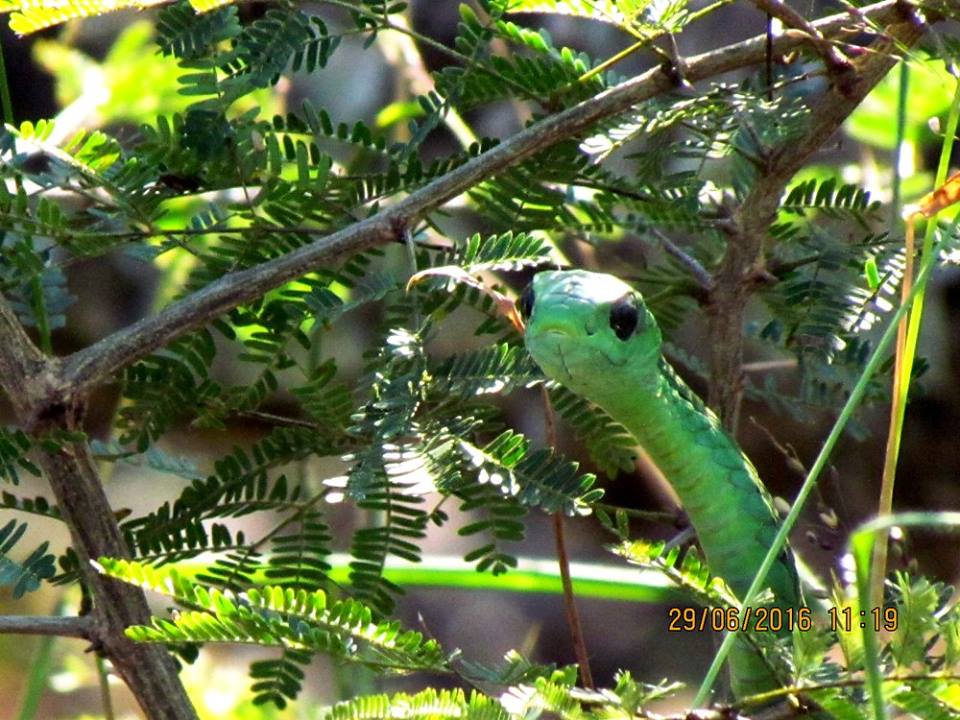
Aside from more large and venomous creatures than we might care to admit, there may just be hundreds of mammals all around us, hiding in plain sight. I’ll try to open my eyes a little more while I’m running or out with the dogs at the waterfall. I’ll listen for the rustling and look up when the puff backs chirp their alarm calls. That’s how they told us about a boomslang the other day.

I could see 6 000 species of mammals and 11 000 species of birds in my lifetime. How amazing! All I need is free time, a boatload of money for travel and equipment, and a bit of luck. But maybe I’ll start with a subscription to National Geographic or something. And some more walks down into the gorge forests below my house.

Published here.

Masaai Mara: An African Dream

August 2016

Waking dream!

Stirring from a night of solid sleep to the sounds of a thousand different birds, I focused lazily on the rays of orange sunshine streaming through the tent and wondering on which alien planet I had landed.  I remembered the crazy rush to book a last minute flight with an hour to get to the far-off King Shaka airport, paying our entrance fees online on the way to the airport, the flight from cold South Africa to rainy Ethiopia to sleeping Kenya in the dead of night, the two hours of sleep before the alarm jolted us from our beds and the mad rush to pack nine of us into two cars, heading out of Nairobi at a prompt 6.30 a.m. sunrise.

With delight I recalled that we had made it through the six-hour journey, the Great Rift Valley opening up below us with its geothermal steam vents and slow trucks between Uganda and Mombasa, the wheat fields and pockets of livestock mixed with random antelope as we climbed out of the valley of volcanic rocks and trundled on through the dusty bushveld – its acacia trees and euphorbias astoundingly huge and beautiful – and the shocking corrugations on the pothole-infested dirt roads that claimed our entire exhaust fixture on the way home (it survived its trip back to Nairobi tied to the roof racks, but normal conversation pitch during the journey was next to impossible and we roared on home lost in thought and memory of the captivating experience).

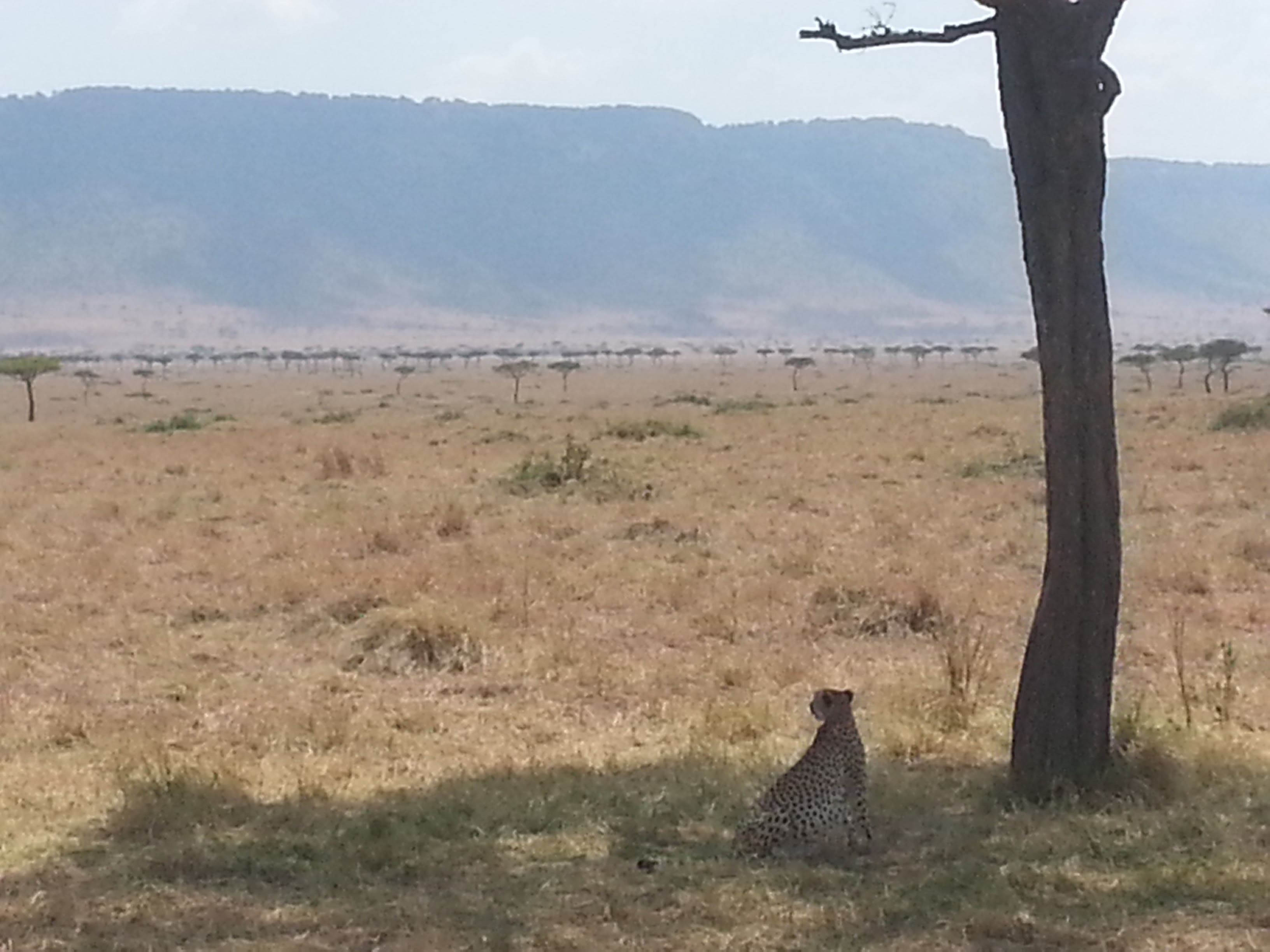
I was finally here, somewhere I had dreamed of since childhood, unbelievably happy in an unfenced campsite along the Mara River, in a little tent, in the world-famous Mara Triangle, part of the Masaai Mara National Reserve – and hundreds of thousands of animals were here with us, too.
20160821_09251420160821_114220

The Great Migration

The herds arrived in the Mara Triangle the day before we did and it really is something you need to see with your own eyes to believe it. Beautiful and fascinating!

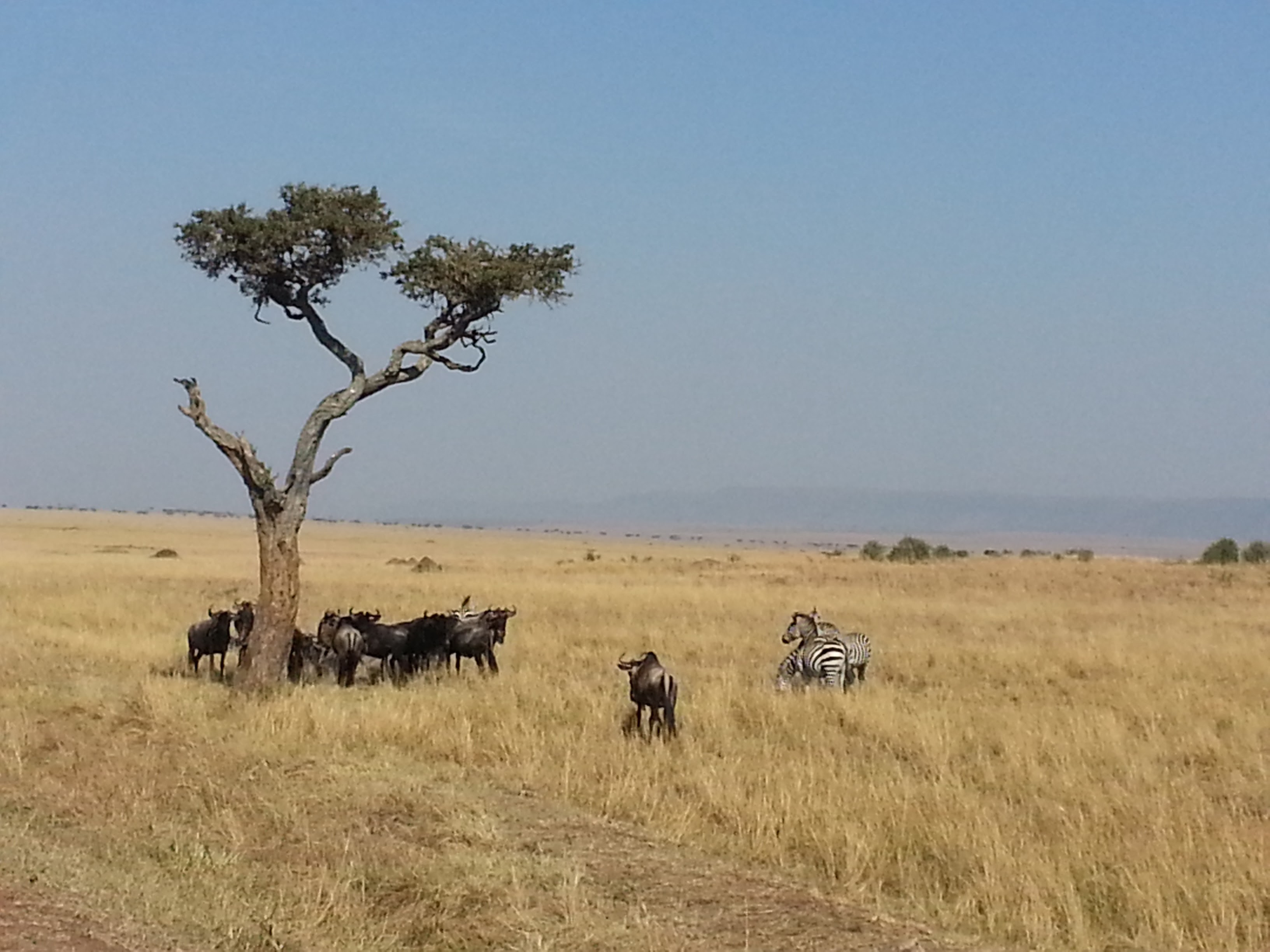
“Follow-the-leader” took on a new meaning as we watched the blue wildebeest lines stretching all along the base of the majestic Oloololo Escarpment, winding their way towards the Mara River to see if the oat grass really is greener (redder?) on the other side.  Apparently following the rain, the wildebeest spend their whole lives moving, an epic circular journey that starts down in the Serengeti of Tanzania and ends on the vast plains of the Masaai Mara in Kenya, where it starts all over again.

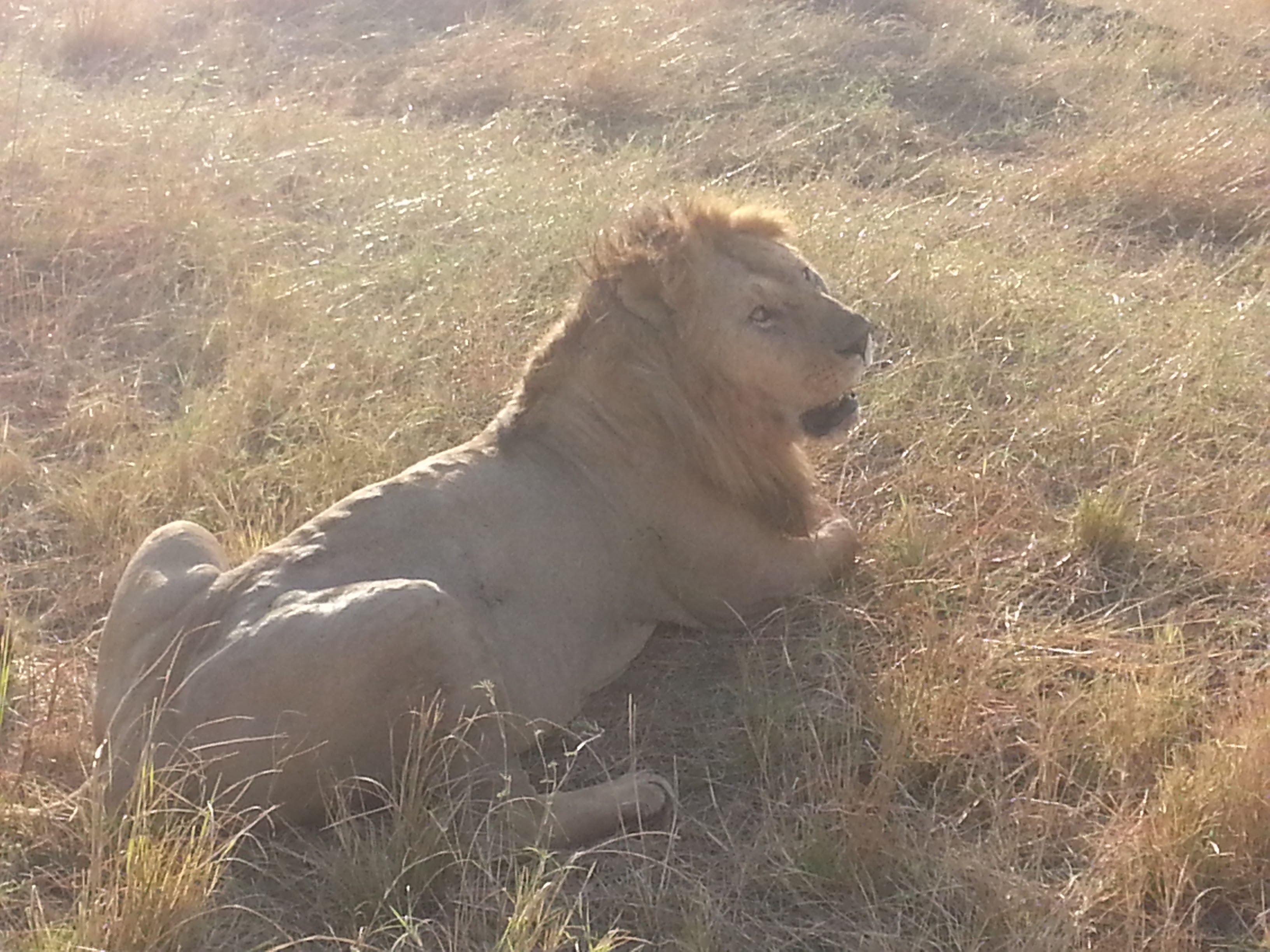
The wildebeest are joined by zebra and tommies (Thompson’s Gazelle) and solemnly face the predators at every step of the journey – an inevitable game of roulette as each night brings certain death, and each dawn a sense of victory at having beaten the odds.  Carcasses litter the savanna with evidence of the nocturnal carnage and the rotund lions we saw were too stuffed to bother with anything, eating only the choicest rumps and leaving the rest of it for the scavenger feast.  Even the scavengers turn up their noses at the drowned carcasses that fill the rapids of the Mara River after the senseless ‘crossings’, already filled to capacity from the pickings of abundant meat left from the kills.
20160822_074726

The animals converge on the river to drink, egging each other on to be the first to brave the threat of crunching jaws of the enormous Nile crocodiles.  Twice we watched as a wildebeest fell in, swam wildly to the nearest bank and was assisted by the curious hippos with a nudge towards the relative safety of dry land.20160821_123203

Wild and Free

The zebras with their exquisite black and white (a much cleaner contrast than the brown-smudged South African zebras) gather together to graze, some rolling in the dust, some playing catch; and even a naughty zebra male that suffered a thumping hoof kick (a ‘snotklap’ for you South African readers) from an irate female who had had enough (followed by whoops and giggles from the inhabitants of our vehicle as we cheered her on).

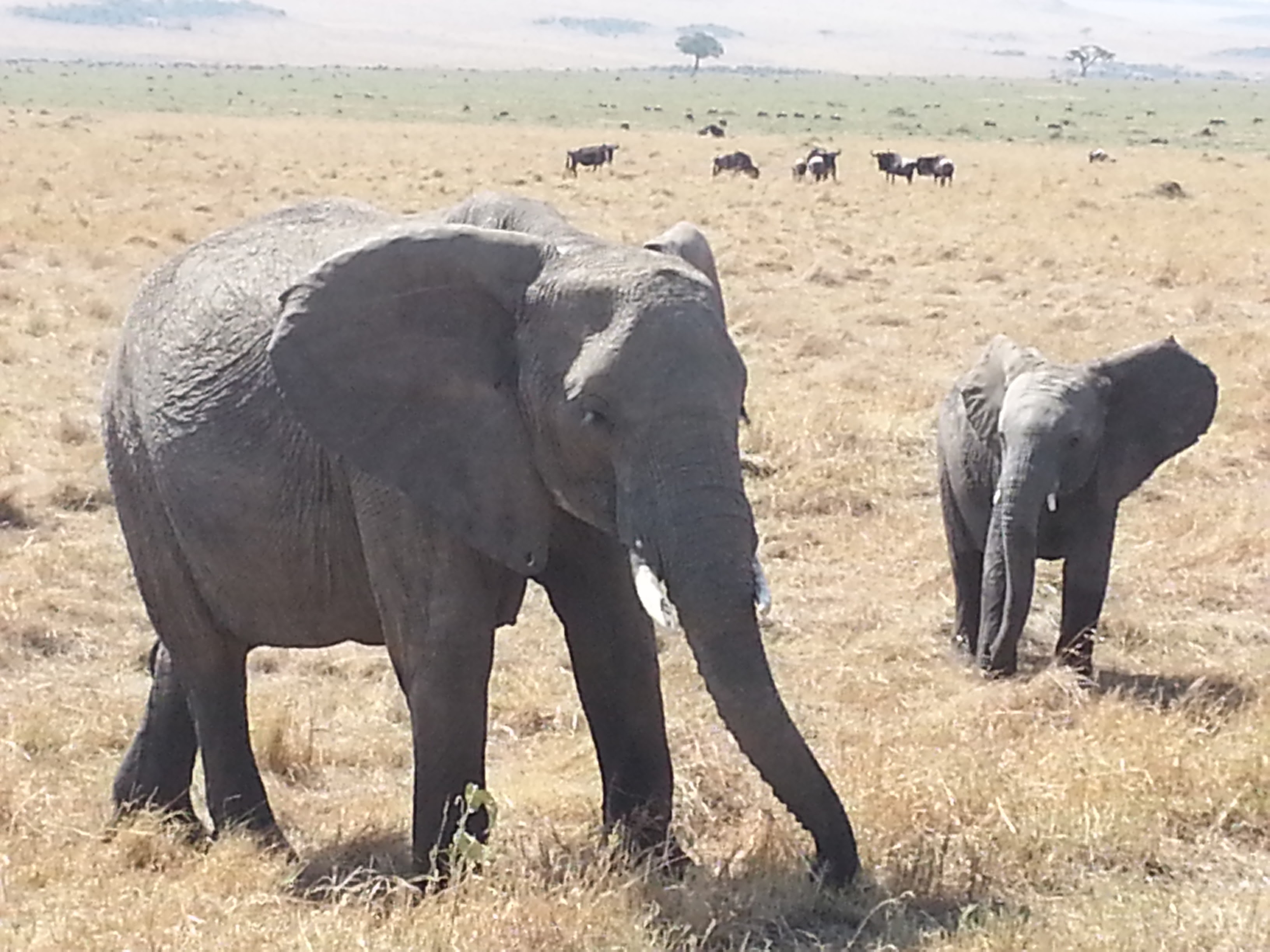
We camped at the private campsite, Dirisha, alongside the Mara River. Leopard, hippo, buffalo and elephant came into our campsite each night (the tent walls seemed thinner then) and the birdlife was amazing, too (including a rare Bar-tailed Trogan right outside our tent).  It was a proper bush experience with no ‘facilities’ to speak of, emphasising the fact that we were in the real African bush, humbled by our defenselessness and respectful of the ruthless ferocity in the daily life of wild creatures.20160821_174448
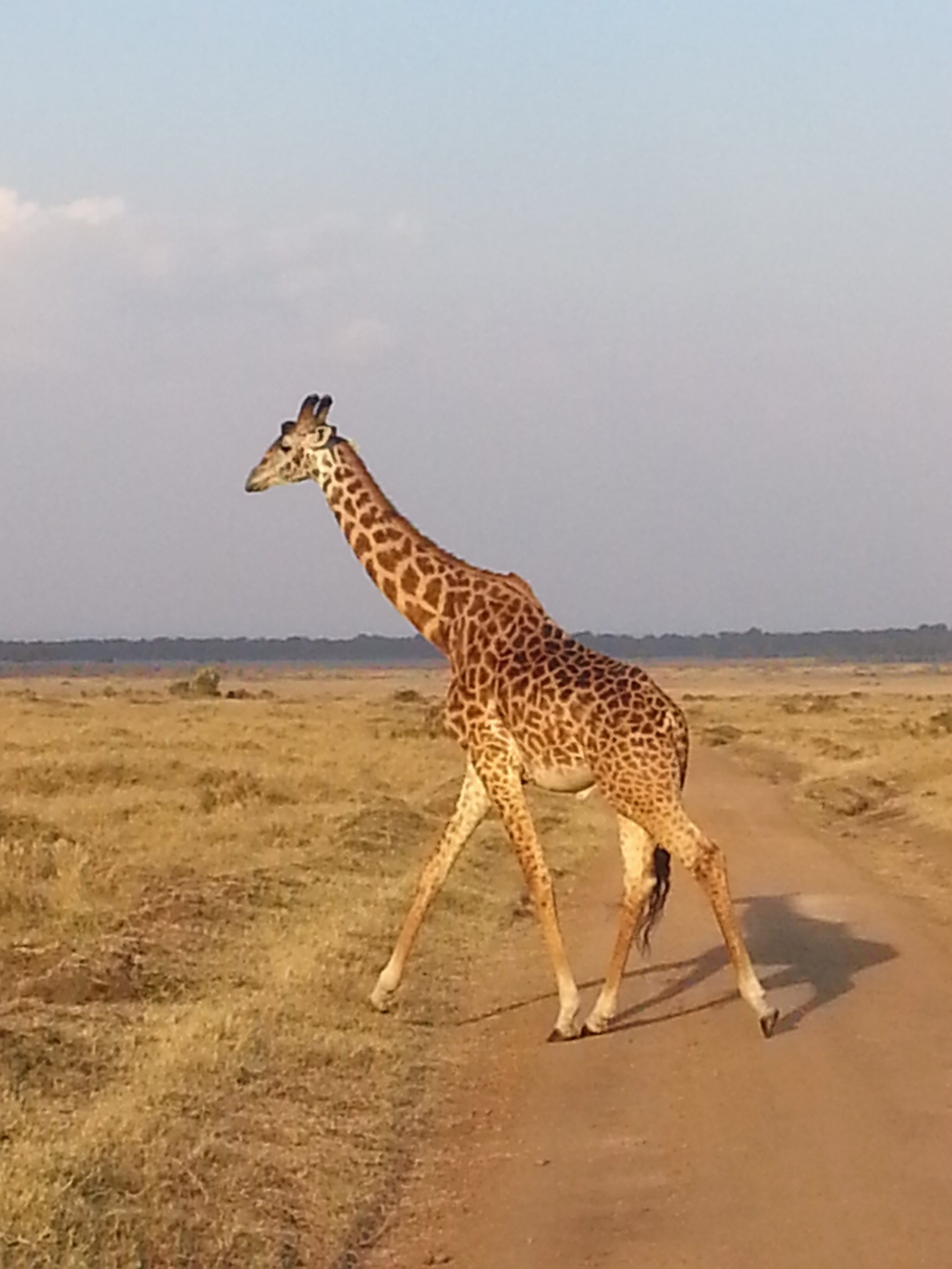
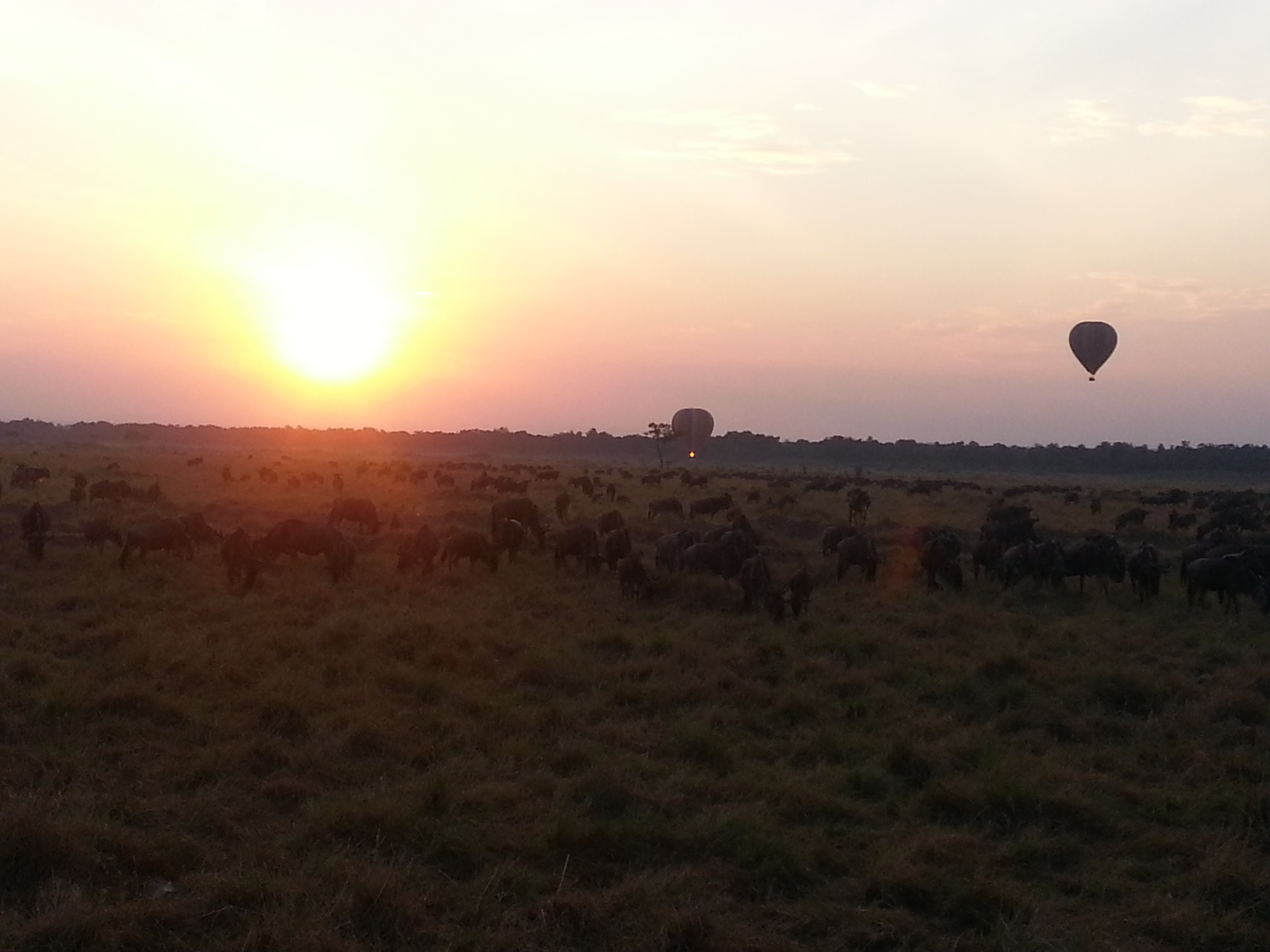
The week’s sightings also included herds as far as the eye could see (estimated between 750,000 and a million wildebeest alone), fat cats and scavengers feasting on carcasses lying everywhere, river crossings galore and even three black rhino fending off a pack of brazen hyenas.  One hyena also tried to catch a comical Ground Hornbill, who casually walked away knowing its fearsome beak was enough to deter its attacker.

Little Governor’s

Most evenings we headed to Little Governor’s for sun-downers and water refills (campers cannot afford to be shy about essential needs like drinking water, even if the lodge was as posh as could be). Looking out over a small water catchment, the luxury tents are set in the cool of the forest and can see all the surrounding beauty from their beds. More than once, we were delayed in returning to our campsite by the 7 p.m. curfew because of the elephants that roam about the lodge within hand reach of the restaurant patrons, who are swiftly ushered away to the other side by the staff and have to wait patiently until the giants have moved off.20160822_17442620160821_102002

Once in a lifetime

At the tip of the Mara Triangle map, Little Governor’s is one of many lodges that does hot air balloon rides across the Mara – a spectacular sight as the multicoloured behemoths transport mesmerised passengers silently across the plains, often just  a few metres above the herds on the ground below.  A future bucket list item for sure!20160822_065327
Honestly, this was one of the best weeks of our lives.  To be able to have seen this phenomenon firsthand was an awesome privilege and an unforgettable experience – even for Travelinds who have grown up in the beautiful wild places of South Africa, travelled in tiny boats through the jungles of Borneo and swam with ocean giants.

20160821_184628Masaai Mara – just wow!


Hlatikulu Bush Lodge, iMfolozi-Hluhluwe

JULY 2016

Photo Credits:  Wendy Buchanan (thanks, mom!)

A while ago, Travelinds told you about one of our favourite game reserves in Kwazulu-Natal – iMfolozi-Hluhluwe National Park.  The few days spent at Nselweni Bush Lodge was a great family holiday and we couldn’t wait to go back again!  This time we tried a new hideout – the Hlatikulu Bush Lodge!

13769451_10157119262840291_8995990913587496907_n

Hlatikulu Bush Lodge

This was a good surprise as we had only booked Hlatikulu in a rush to secure accomodation in an already full reserve.  However, as soon as we arrived, after navigating the jolting 4×4 route to get to the lodge, we realised that we had made yet another magnificent discovery!
The bush at your door
The camp is beautifully maintained by Siyabonga and New Year, both of whom have been there for ages and visibly love what they do. Right on the riverbend, with no fence, the animals and birds come and go as they please.  All around the camp are tweets and chirps, grunts and growls, spoor and feathers and evidence of life.
The deal

The camp can accomodate eight people at most, in four lovely huts (each for two people), all of which boast views of either the river or the bush.  The booking includes… (wait for it!)… TWO bush walks with Siyabonga and his gun (2-3hours, one morning, one afternoon) for every night that you stay.  New Year will cook any food that you can bring (and he will insist on setting up AND cleaning up everything in the communal lounge and diningroom himself, too). These two wonderful humans keep the huts immaculately clean and look after you while you simply relax and enjoy the wildlife.

13697057_10157119315235291_4857569789511689644_nNature up close

The resident bushpig, Georgina, can get a little persistent in the evening, but please, do not feed her even if she follows you down the boardwalk or begs.  There are also hippos, crocodiles, lions, elephants, buck and other creatures that roam in and out of the camp at their leisure – look around when you are outside and do remember that you are living in the real African wild now!

We fell asleep each night to lions roaring, hippos grunting, hyenas laughing and melodious nightjars. Early mornings wake up to birds singing and nyalas crunching grass right outside our windows.
A different perspective

The bush walks were also well worth the effort and if you do what Siyabonga tells you, you’ll be in good hands. He’s an experienced game ranger and takes his job, and your safety, seriously.  The animals are wild and unpredictable, especially where humans provoke and disrespect the natural order of things.  It is our responsibility to preserve and care for nature and a bush walk is a great way to remind yourself of your roots.13699980_10157123764390291_2516487894411405346_n

Hlatikulu, we’ll be back!

Read more reviews here.13690805_10157119327665291_1327660552813445550_n

Rhino Card

Use your rhino card to receive discounts on day fees, accomodation and more.  It was worth it for us to buy the card (for a couple) just to cover our day fees during the week here.  Ezemvelo KZN wildlife is also a great cause to support!


iMfolozi-Hluhluwe Game Reserve

30 January 2015


One of our favourite pastimes – and one of the things we miss the most about South Africa – is game viewing.  Not in a zoo, of course, but in a reserve.  The natural habitat of the animals is somewhere you are not guaranteed to see anything at all; but it’s all about the search!  Nothing compares with driving around all day scanning the bushveld, trees, slopes and ravines for animals and then catching a glimpse of the flicking white tail-end of a leopard, or the majestic mane of a ferocious (or lazy) male lion in the shade of a bush.  Reversing away from an approaching elephant or speeding to get away from a protective rhino mother is all the adrenaline you need!

So, this week was spent basking in God’s awesome creation at iMfolozi-Hluhluwe Game Reserve. What a fantastic place to see interesting, dangerous, funny, wild, crazy, big, tiny, rare and fascinating African wildlife in their natural habitat. Four hours from home,  this game reserve is a perfect getaway for long weekends.

Accomodation

We stayed at Nselweni Bush Camp which is down the road from Mpila, where we were supposed to be staying. Thanks to a misunderstanding and a booking problem, the management kindly allowed us to move over to Nselweni – a beautiful bush camp right on the bend of the river. We woke up with the birds and fell asleep with the night sounds of lions, frogs, hyenas and cicadas. It was perfect for a romantic getaway in a private “half tent/half cabin”that looks on to the bush. Conveniently, it was at a central iMfolozi location, about 20 minutes to Mpila.

Nselweni has fully equipped units with a braai place (that’s barbecue for non-Saffers), a gas oven, a fridge, kitchen utensils, an outside table and a semi-covered verandah. The shower window can open right up and the bathroom and bedroom both look out into the bush. We enjoyed the nyala that graze outside your hut during the day and its a colorful bird paradise.

We stayed here three nights in Unit 2 & 3 – both are lovely, private and quiet, especially Unit 2. Units 4 & 5 have half views of the river but only the Conference Centre deck gives a panoramic view of the river; and this is open to anyone who wants to use it. We saw buffalo, kingfishers, crocodile, trumpeter hornbills, impala, vultures and many others right from the deck.

Wildlife

At any wildlife reserve, you need to respect nature and remember that wild animals don’t follow the rules or take heed of the ‘boundaries’ us humans expect.  Watch out for the opportunistic hyenas at night who steal meat right off the braai or pinch anything left out on your verandah while you sleep. It’s best to take a torch and maybe a stick if you’re walking around the camp at night.

Our highlight sightings were a pack of wild dog, lion, puffback, bathing yellow-billed kite, a huge elephant breeding herd with little babies, so many white rhino and a metre-long vine snake on the road.

Night drive

On the last night, we treated ourselves to a night game drive (which leaves from Mpila camp) and we were so impressed with Bheki, our guide, who found us lion (up close and roaring), genet, chameleon, vine snake, crocodile, buffalo, rhino, nightjar, bushbuck.

Ezemvelo Wildlife

Thanks to Ezemvelo KZN wildlife, it was a wonderful stay.  They are doing a great job protecting Kwa-Zulu Natal’s wildlife, especially the precious rhinos!  We never did see that elusive Black Rhino on this trip, but the Whites were magnificent.