Tag Archives: bird

Oribi Mom: An Ancient Artist’s Palette in an Unlikely Place

There is beauty all around.

There’s a tree I love on the highway between Harrismith and Ladysmith. I have seen it since I was a little girl, travelling home. I lived in Northern Natal for a little while and played sports sometimes in Harrismith. Even after that, we’ve made trips up to Joburg to see family, embark on planes, or visit game reserves.

Every time we come back from the highveld to the lowveld, there’s a spark. I see that big flat mountain in Harrismith and feel a tingle. Then, I see the ‘Racing Car’ mountain, which my children insist on calling ‘Hippo Mountain’, where I look for bald ibises. The little spark of joy grows because I know the descent is coming.

You have to go super slow down Van Reenen’s. Driving at 60km/h feels like trudging through clay after a few hours at 120km/h. The police assure us it’s not meant as a lesson in patience; they want us to arrive alive. Before you get to Smelly-Truck-Brake Pass, though, there’s this beautiful tree. It’s huge compared to everything else in that location, so it stands out. It’s also right next to the road.

Look Closer at the Tree As You Come To This Ancient Place

I have no idea how this tree is still standing. For 30-plus years, I’ve taped it as absolutely ancient. It hasn’t changed. The tree of my childhood memories looks just the same. It’s a gum tree, but let’s skip over the part about it being invasive and water-guzzling. It’s dazzling. It stands straight up, towering above you as you come up the hill. You can see it from quite a long way off, and as you get closer, it touches the sky.

You can’t help but notice the phenomenal composition its stripped bark reveals layer upon layer. It’s like a bored artist has taken their palette and tried to get every colour there is onto one tree trunk – pinks, greens, yellow, blues, greys, oranges, and all the fancy colour names in between that I don’t know. ‘Rainbow’ would not even come close to it.

The ibises, cranes, and ducks get to enjoy it every day. I just catch a glimpse of it when I’m coming home. Is that why it’s so captivating? I hope to ask my grandchildren one day. Will they be coming home to beautiful KZN, too? To me, home is colours on a tree and the promise of the ocean.

What’s it to you?

Published here.

Oribi Mom: Flushing Fan-Tailed Grassbirds in the Proteas and Penny Gums

There’s something special about bird watching.

PHOTO BY PIXABAYFebruary 15, 2025

I’m back in the bird challenge for 2025. I bombed out in the early 30s – in August, maybe – of 2024’s 52-week challenge. That felt like good going for being at home for all except two of those weeks.

I learned a lot about birds right under my nose here, including rarities. Two of these amazing finds were the wintering spotted ground thrush and orange ground thrush, which both just happened to appear in my little slice of forest.

If I hadn’t walked down into the dark gorge below the house in winter, I wouldn’t have found them at all. Now that I know they’re there, that’s two more birds I can potentially list this year when the time comes.

Mostly, it’s just exciting to know that I’m preserving some habitat they can shelter in for the next few decades (let’s hope!).

A Little Trail Running Turned Out To Be a Big Birding Win

While exploring, I also found a wonderful fan-tailed grassbird. It was in the middle of some penny gums when I took a little detour on my usual route.

It’s quite hard to describe that moment. The penny gums are beautiful and smell so good. The king proteas nearby were in full flower on one lonely tree.

In front of this, in the penny gums, the bright yellow Cape longclaws were trying to hide in the longish tufts of grass.

I was sneaking up on them to see how close I could get to those skittish birds that are all along the road in Oribi Gorge. As I came around the bend, I flushed the fan-tailed grassbird instead.

It took me a little while to click.

The gorgeous little bird was in its full spring plumage. Bright and clean, it perched on top of a young penny gum tree and looked quite indignant about my disturbance.

Behind it, there was the view of the brown farm slopes dropping down to the Mzimkhulu.

At that point, everything else was just sprouting tiny, almost transparent leaves. I knew they would grow and darken into full green foliage in a few weeks, but right then, the freshness – new life – was palpable. The ocean further beyond that shone in the sun.

Was I in some lost world? As I heard the nearby quarry machines whirring up, the grassbird flew off. I guess not. But it was still so beautiful.

Published here.

Oribi Mom: Slow Jogs By the Mzimkulu

“They say these birds sit in one spot for hours or even days to hunt before moving on to another prime location.”

January 15, 2024

Have there been two, or maybe four, sunny days up in Oribi Gorge and Paddock since October? I’m not sure. I’ve done quite a number of runs in the rain now, which is often a squelchy, slippery experience to start the day. The distinct advantage of getting outside in this type of weather is the creatures and birds you see up close, of course.

Yesterday, I ran against a side wind with a cap to keep the drizzle out of my eyes. The mighty Mzimkulu was still all wrapped up in its fluffy cloud duvet.

First, I chased some hadedas out of the wet grass. I definitely think I got more of a fright at the four of them suddenly bursting out of the wet grass and shouting at me while they flapped furiously. When it’s rainy like this, the jog also involves continuously jumping over slugs on the road. There was even a black, tarry ‘present’ to jump over that looked like a baboon had dumped it there.

Jogging Up Close to Nature Just Sitting in the Rain

As I came up to the one section, I spotted a small silver bird on the wire. It was bigger than a dove but not nearly as big as the pair of buzzards that sit there every day. I got closer, expecting it to fly away. It didn’t. It seemed to be stretching after waking up from a nap. Maybe it wasn’t an early bird like me.

I got right under it, and saw it was a beautiful black-shouldered kite. We get them here, but not as much as I used to see when we travelled to Harrismith or Underberg. It looked so clean and fresh, probably thanks to all this rain. I considered trying to snap a photo with my very inadequate cellphone, but that would’ve scared it away I think. So, I just kept moving. It didn’t budge.

Birds and Animals Are Normal To See in Oribi Gorge If You Know Where To Look

On the way back, it was still in its spot, looking out over the field in search of breakfast. It looked more awake but didn’t fly away. They say these birds sit in one spot for hours or even days to hunt before moving on to another prime location.

I wonder what the resident jackal buzzard thinks of this feisty little competitor for dormouse, cane rat, and four-striped fieldmouse? It’s only here for some of the year, so maybe they don’t mind. I would ask the hadedas, guineafowls, and Natal spurfowls if they weren’t so loudly protesting my presence.

Published here.

Oribi Mom: Mammal Watching Dreams That Could Come True

“When we came home to South Africa, it was like a warm hug, filled with hadeda and trumpeter hornbill cries, screeching francolins and twittering prinias.”

Did you know that mammal watching is now a thing in the world? Not the safari kind we’re so privileged to have as part of growing up in South Africa, but the cousin of bird watching with lists and databases and counts and tours.

I love birds, but I’m not technically a twitcher that’s accumulating species on my life list. I haven’t seen even 1,000 of the 11,000 bird species that we have on the globe. Maybe one day.

But, this mammal watching thing is another exciting discovery for me. There are around 6,000 mammal species on earth. Lots of them are hundreds of different rodents and bats, but many of the big ones are more well-known.

South African Birds and Game Reserves Are Truly Something  Special

I’ve always loved our trips to game reserves. It’s the one thing I sorely missed when we lived in South Korea for a few years.

Aside from the magpies that supposedly eat children’s teeth (apparently, the Tooth Mouse doesn’t know where Korea is), there wasn’t much going on in the way of wildlife in South Korea. Very few birds. One dead snake. A lot fewer insects than I’m used to seeing at home, too. It felt a little sterile at times, and not in a good way.

When we came home to South Africa, it was like a warm hug, filled with hadeda and trumpeter hornbill cries, screeching francolins, twittering prinias, and the boo-boo-boop of the beautiful bou bous that like to wake up my babies in the late afternoon.

I missed our butterflies and our funny-looking grasshoppers. I missed the duikers that graze on the pavements in the cities, and the knobly warthogs that zip around with their tails up through the farms. There’s so much life here.

All We Need To Do Is Start Looking Around

Investigating the mammal watching thing has also made it even more exciting to realise how many animals are right here. South Africa has a ubiquitous striped weasel. It’s everywhere but nobody sees them much because they’re shy. Just imagine what we could find in our slice of the gorge here with some heat sensors and very large camera zooms!

Aside from more large and venomous creatures than we might care to admit, there may just be hundreds of mammals all around us, hiding in plain sight. I’ll try to open my eyes a little more while I’m running or out with the dogs at the waterfall. I’ll listen for the rustling and look up when the puff backs chirp their alarm calls. That’s how they told us about a boomslang the other day.

I could see 6 000 species of mammals and 11 000 species of birds in my lifetime. How amazing! All I need is free time, a boatload of money for travel and equipment, and a bit of luck. But maybe I’ll start with a subscription to National Geographic or something. And some more walks down into the gorge forests below my house.

Published here.

Oribi Mom: Making a Racket Again

“There was apparently a sighting in Harding a few years back, but it was still incredibly rare to see it here. It was also my first time seeing one.”

May 30, 2023 

There have been two phenomenal birding sightings in our area this last month. One was on a telephone line, and one was in a puddle.

I’ve been off social media for a while trying to eke out time for my many commitments as a mommy to three little people. Scrolling steals too much of that, which means I haven’t seen the South Coast Birder’s group in a while. I miss it.

Not One But Two Amazing Bird Sightings in Oribi Gorge

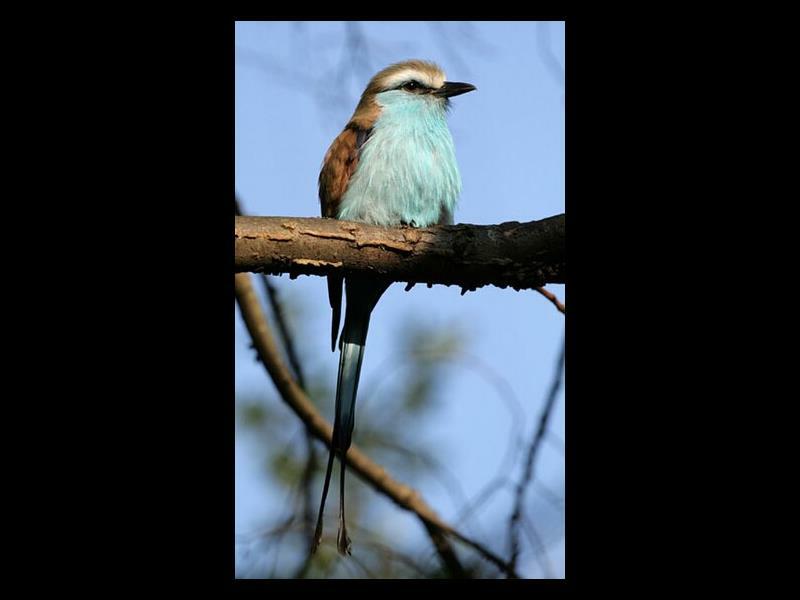
Anyway, the first sighting was by yours truly. A casual drive-by and a glance up at a telephone wire revealed a turquoise shimmer on a biggish little bird, undoubtedly a roller.

We get quite a few European rollers here over the summer. I love to admire these rather impressive and beautiful birds whenever they pop up. Maybe because I always used to love seeing the lilac-breasted rollers in the July holiday visits to the Kruger Park as a child. They would be shining in stunning purple and blue on top of a brown bush, a striking contrast that’s not easy to miss.

So, seeing rollers in my backyard as an adult has been rather special. But at the last minute, I saw this one jump and turn around. As it faced the other direction, I saw long tail streamers behind it, with little rounded bits on the end. I gasped a little. It was truly spectacular, but I wasn’t aware of why. I didn’t know that European rollers had long tails like that! Wow.

It turns out they don’t.

The Bird Wasn’t What I Thought It Was, But Close

I drove home, chatting to the kids, looking for reedbuck, jackal buzzards, water mongoose, and tractors like we do every day. We spied vultures above Leopard Rock. We saw a jiga duza (a Bell loader) that always gets my boys very excited.

So, when I got home and remembered to look at my birding app, I was shocked to find that what I had seen was not, in fact, a European roller at all. I wouldn’t have known that it wasn’t one of those gorgeous blue birds so common on our telephone wires in the summertime if I hadn’t driven past at the exact moment it jumped up and showed me its spindly tail.

It was a Racket-tailed Roller! And it was hundreds of kilometres south of where the map distribution indicated it should be. I couldn’t believe it.

I even messaged a birding fundi to check that I wasn’t going mad. I wasn’t. There was apparently a sighting in Harding a few years back, but it was still incredibly rare to see it here. It was also my first time seeing one ever.

Maybe, I should be travelling with my camera in the backseat instead of chattering farm boys shouting with delight at the tractors, TLBs, and cane-loading machinery we pass.

Oh, and the other sighting was by one of the farmers down the road who saw another wayward bird, the African Crake. Birder’s eat your heart out in Oribi Gorge, hey!

Published here.