Category Archives: South Korea

Travel and life in South Korea.

The Nutcracker

26 December 2015

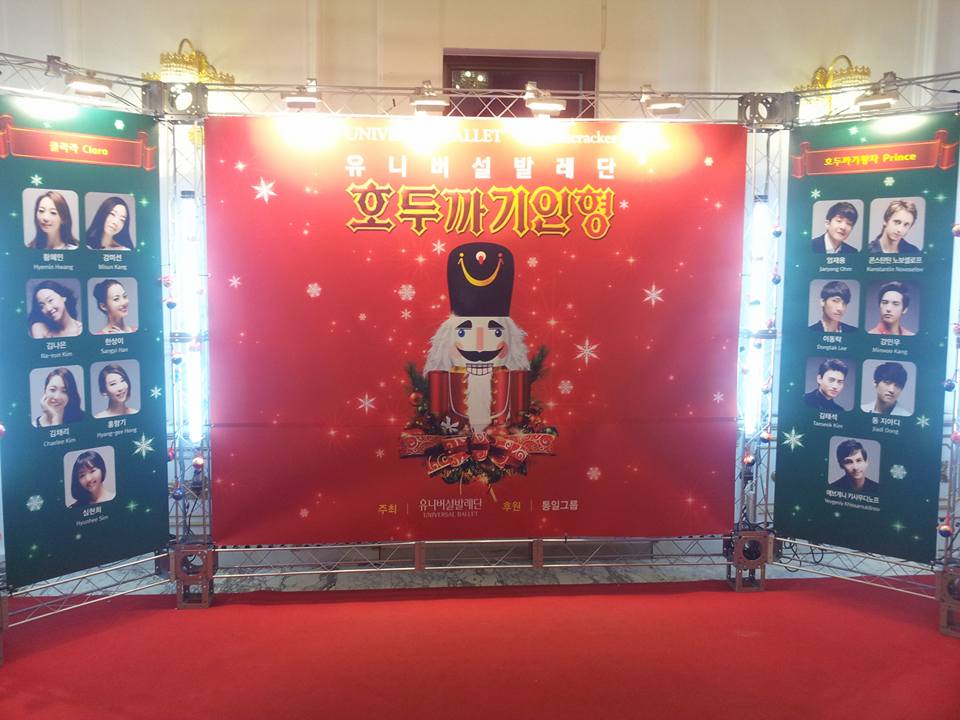
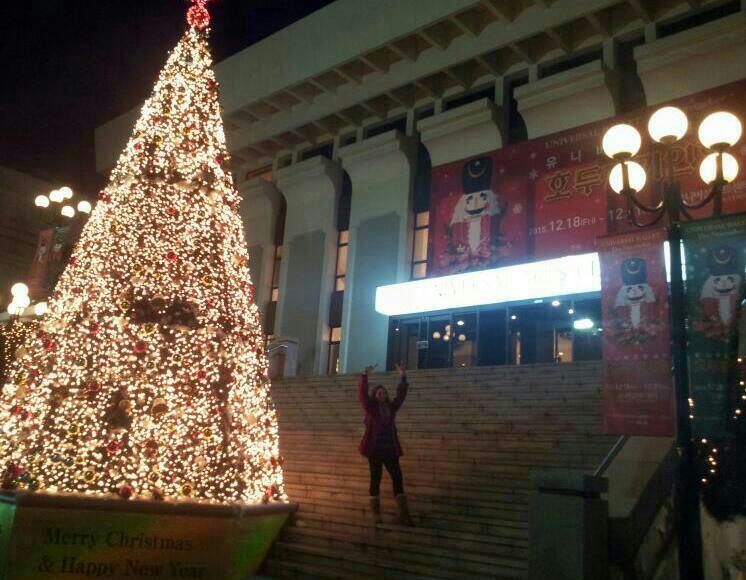
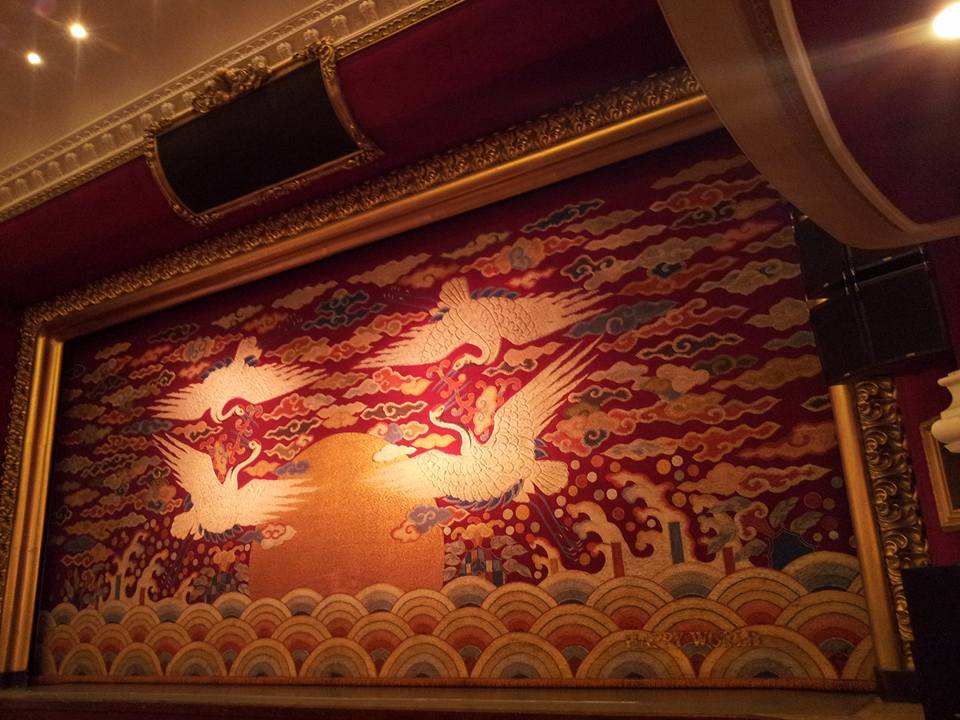
Travelinds enjoyed a festive evening out at the ballet on Boxing Day.  The Nutcracker Suite is an old favourite and the Universal Arts Centre in Seoul did not disappoint.  There are shows here all year round so book your tickets next time you’re coming to Seoul.

12376563_10154125303401992_4992607233019955976_n 1919111_10154125303431992_2436939148213621967_n

Bukhansan National Park

04 October 2015

Chuseok weekend is usually a great time of the year for outdoor activities and we headed off the Bukhansan National Park to hike. Cooler weather, clear skies, changing colours and a slight breeze made the hike all that much sweeter.

The mountain borders Seoul to the north and was used as a natural defence in ancient Korean dynasties. It is a large mountain area (visible from almost anywhere in Seoul if you look north) with a few main peaks, multiple entrances and varied levels of hiking difficulty.  It was amazing to go straight from the bustling city to the shady paths of the silent mountain.  Once we were on the mountain, in the stillness and sounds of nature, we completely forgot about the city behind us until the magnificent view points reminded us how close we really were.

As amateurs just hiking for the views, we didn’t really look at the difficulty levels, times or correct entrances and just headed to one on this directions list from Visit Korea. (Our choice was Bukhansan National Park – Gireum Station (Line 4), Exit 3. Take Bus 110B or 143, and get off at the last bus stop).

With these instructions, we took the subway to Gireum Station, then the 10-minute bus and ended up at the Bukhansan Jeongneung Information Centre (start of Recommended course #4 on the Dulle-gil trail). This is where we started hiking.  Being on the unfit side, we decided to head to Daeseongmun gate (on the board it was described as a medium-to-advanced hike, 3.4km, 2 hours 45 minutes).  From there we would see how we were feeling before deciding the next leg of the hike.  As it turns out, Daeseongmun gate was quite enough challenge for one day (we did it in less than 2 hours) and, since we had already found some beautiful views on the way up, we headed from there across to Daennammun gate and then down towards Bukhansan Gugi Ticket Office.

A rather beautiful adventure and a memorable day.

Yeonginsan, South Korea

01 October 2015

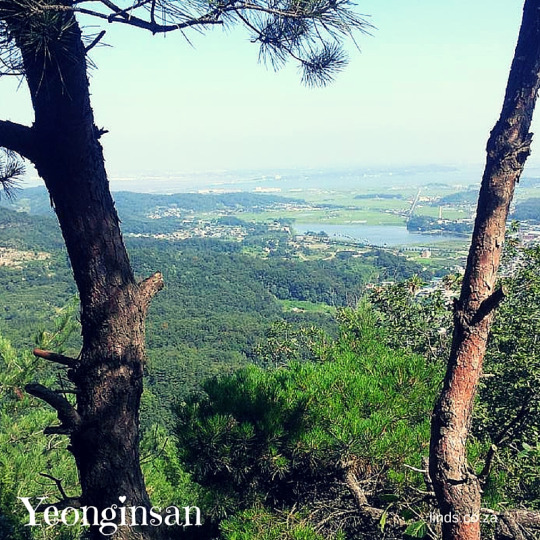
Yeonginsan Natural Forest ( 영인산자연휴양림) is about twenty minutes from Asan.  It is a reserve for hiking, picnics, camping and outdoor activities, popular for school outings, families with young children and hikers.  It is stunning in spring and autumn and has lush green scenery in the summer.  We’d imagine winter would be very pretty in the snow, but hiking in the cold and snow is not our idea of fun!

A ten minute drive from our apartment in Dunpo, it’s an easy morning out if we feel like some exercise with a view.  It is a course that lends itself well to all levels of hikers.  It is possible to walk to all the major points from the central area and back to the middle again, or from point-to-point in a circuit if you’re a more serious hiker and require more of a challenge.

  • Cost:

    • 1,000 KRW pp for Asan or Cheonan residents
    • 2,000 KRW for others
  • Parking:

    There are parking lots below the mountain, at the entrance to the reserve (where the swimming pool and chalets are) and further up near the education centre and cable car.

    • [We usually park (for free) at the bottom entrance to the hiking trail and walk up the 2 km to the central picnic area, passing the ticket booth on the way.]
  • Bus:

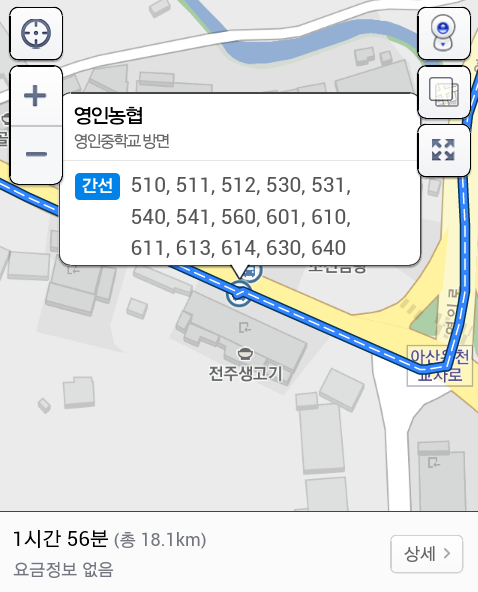
    There are two bus stops in Yeongin-myeon, the Middle School stop (영인중학교 1979(아산)) is closest to the hiking trails, but the Nonghyup stop (영인농협 637(아산)) is just a few minutes further.

    • From both bus stops both, if you carry on walking up the main road towards the mountain, you will come to the beginning of the trail on your right. (It’s opposite the dirt parking lot)
Yeonginsan
The bus stop in Yeonginsasn.
Next up:
The following weekend, Travelinds ventured out to Bukhansan National Park in Seoul – a more challenging hike than Yeonginsan.

Jeju Ferry

South Korea, July 2014

Having a week off before summer camps, we decided to roadtrip down to Jeju Island using the car ferry.  We took an early morning drive down to the south coast city of Mokpo and headed to the ferry terminal. Since it was a last minute decision to make the trip, we had not been able to get hold of the reservations office (by phone) and so were just going to wing it and hope for the best.

Jeju Ferry
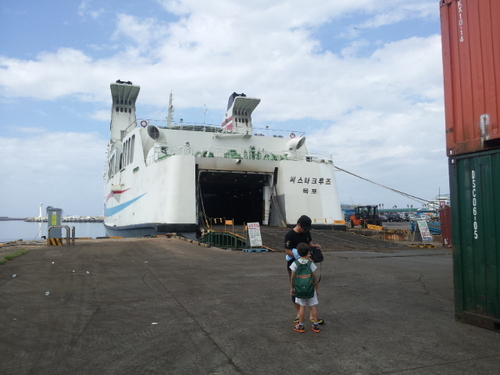
The ferry is huge and loading starts two hours before departure. There was even a truck of cattle on the trip back.

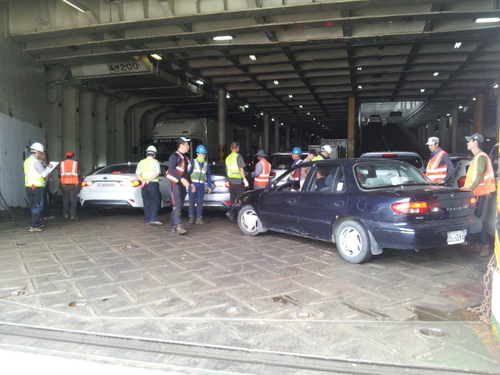
Consequently, when we arrived at the ferry dock at 8am (the ferry leaves at 9am), we were denied access and told to book a week in advance – First Problem. So, like the good waygooks (foreigners) we are, we made sad faces and asked way too many questions and begged and pleaded with the stern looking gate man… It worked! He allowed us to drive on the ferry (the  last car!) and we had about twenty minutes to park, walk off the ferry, pay at the car office, run across to the passenger terminal, pay for the passengers tickets and then run on to the ferry from the passenger entrance. Rather stressful! But we made it.

In all the rush in leaving our apartment at 3 a.m. I had forgotten to take my passport or Alien Registration Card with me (idiot!) – Second Problem – so I used my Korean driver’s licence as my identification and thankfully there were no issues both to and from Jeju.

The ferry left promptly at 9a.m. and arrived four and a half hours later in Jeju City. We drove off the ferry and straight to the ticket office to check if we would be able to get home a few a days later – third problem. The helpful assistant provided me with a number (with an English-speaking operator) which I phoned immediately to reserve our place on the ferry back to Mokpo. I was given a reference number (via text) and told to arrive at 3 p.m. to load the car. Finally, we were ready to go and explore Jeju Island!


Jeju Ferry
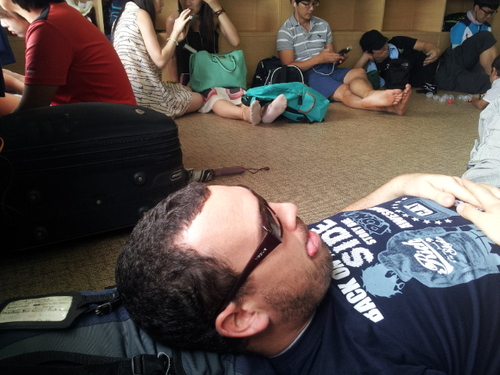
Economy class – about fifteen people, the floor and a tv.

For those of you who take this trip, you should know:

  1. We travelled on Sea World Express Ferry (Mokpo-Jeju) on SeaStar Cruise.
  2. The number to book the car ferry from Jeju to Mokpo is 064-7584234 (The other number (which I never did get through to) for Mokpo to Jeju is 1-577-3567).
  3. If you travel in economy class, take something to lie on/sit on and a good book.  It is just a room allocation with no seating – everybody in your room (about 15 – 20 people) sleeps on the floor Korean style and there is a TV. There was no cellphone signal for most of the way so internet surfing is not an option.
  4. On the ferry there were bathrooms, a cafeteria, a convenience store, a Paris Baguette, a place to sit and eat in the center court, decks to walk out around the boat, arcade-type video games, a noraebang (karaoke bar), a room full of massage chairs and a helpful information desk.
  5. We had to be at the pier 2 hours before leaving (Pier 6 at the Jeju Port). After loading the car, you walk back out on to the pier and go around to the passenger entrance to buy a ticket and board through the security gate.

Bon Voyage!

P.S. Yes, we did travel by ferry to Jeju Island, South Korea in the wake of the tragic April 2014 ferry disaster in South Korea. No, we didn’t have any safety issues and emergency procedures seemed to be firmly in place.

Jeju-do Roadtrip – Part 3

27 July 2014

Jeju Island, South Korea

Geumneung Beach
Geumneung Beach

Our last full day we headed up towards the north western corner of the island, hoping to catch a bit of sun and find a place to settle down for the last evening on Jeju island.

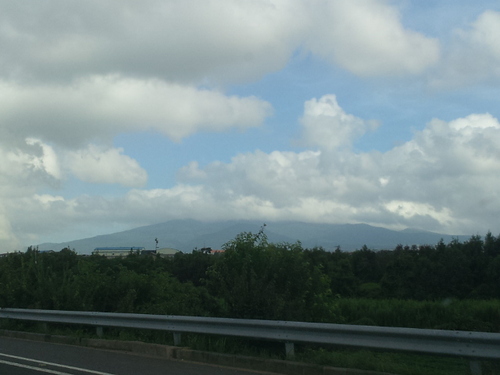
Circumnavigating Jeju, you can catch a glimpse of Hallasan (the prominent volcano mountain in the centre of the island) when the clouds aren’t covering it like a fluffy white beanie.


Geumneung Beach

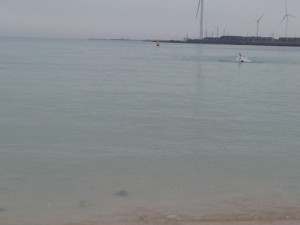
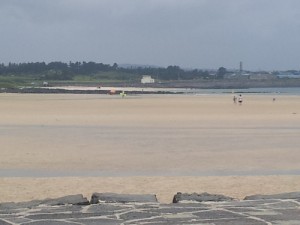
Our first stop for the day was at Geumneung Beach, the quieter, neighbouring beach to Jeju’s most famous one – Hyeopjae Beach.

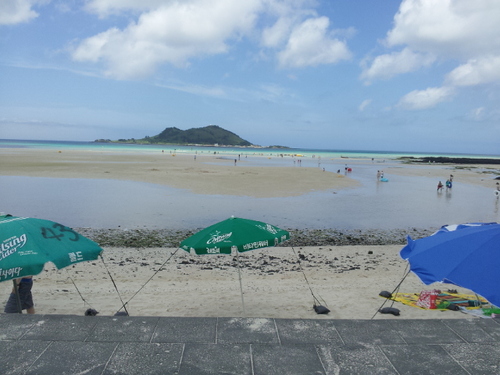
We found a spot of sand (between the ‘for hire’ umbrellas) and enjoyed the hike across the bay to get to the water deep enough for swimming.  As with most beaches in Korea, it wasn’t more than chest deep and you have to just pretend to be really swiming.

Windhill Hotel and Resort, Aewol.

After a couple of hours, we washed off and headed up towards Aewol where we had seen a hotel online that looked like a winner.


Windhill Hotel and Resort

Windhill Hotel&Resort turned out to be quite difficult to find (through winding little alleys and one car wide farm roads our GPS directed us, when it would have been so much easier to come in from the other side on the coastal road through Aewol) @_@

It was a nice little hotel though and we had a comfortable stay in a clean, airconditioned room.

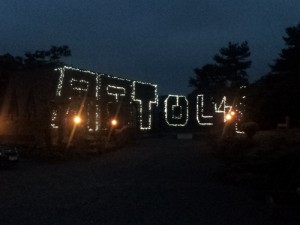
Cafe Uncle Tony’s

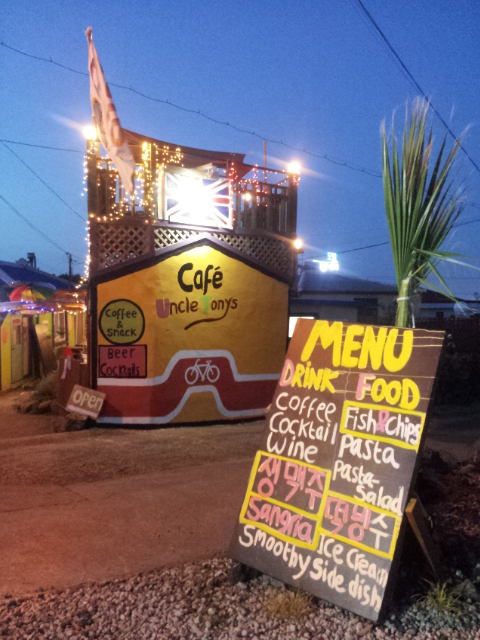
We found a small restaurant down the road, Uncle Tony’s Cafe, where we had the most delicious fish and chips we’ve found in Korea. Thank you, Britain.

Cafe Uncle Tony's, Aewol
Cafe Uncle Tony’s, Aewol

We enjoyed it so much we came back again the next day for brunch. And had fish and chips again! With vinegar! This place has a great vibe and mouth-wateringly good food.

Back to Jeju City

The last day we headed back in to Jeju City to get ready to board the ferry again.

With about an hour and a half extra, we decided to do at least one cultural activity and settled on an interesting visit to the Natural History and Folklore museum.

Heading back down to the dock was bittersweet, but Jeju is a truly beautiful place and it’s easy to see why it is held so dear in the hearts of the Korean people.


Memories

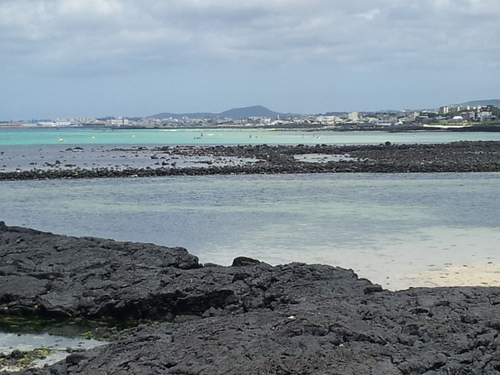
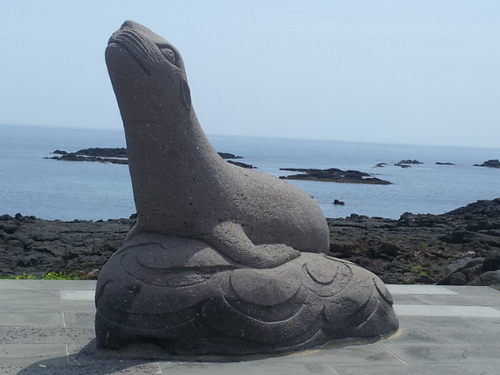
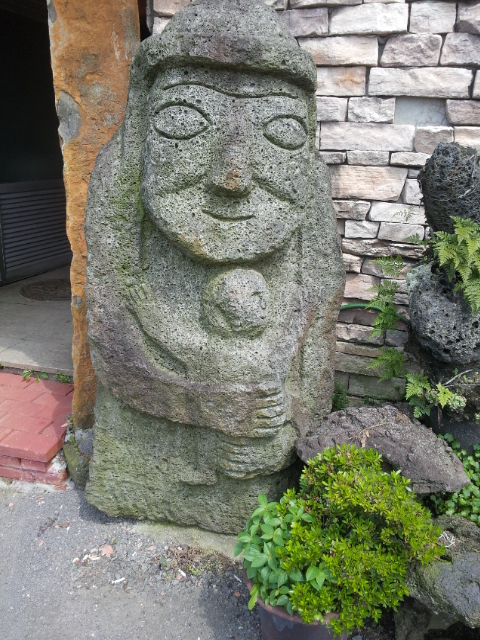
Favourite memories for the trip included hallabong, beaches, local hospitality and the mysterious volcanic rocks that line the turquoise bays. Goodbye, Jeju Grandfathers, and keep watch until next time.

Mount Hallasan hiding in the clouds

Jeju-do Roadtrip – Part 2

26 July 2014

Jeju Island, South Korea

tumblr_inline_nclsgwf0tT1rg4d7lThe second night of our road trip, we stayed at a pension on the West Coast of the island – in Korea, ‘pension’ refers to a self-catering holiday flat or room, usually with a kitchenette.  We had almost driven right around the island from Woljeong-ri in the northeastern corner, past some stunning ocean views, to the southwestern corner of the island.

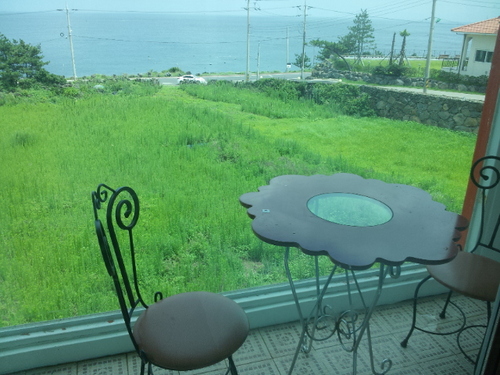
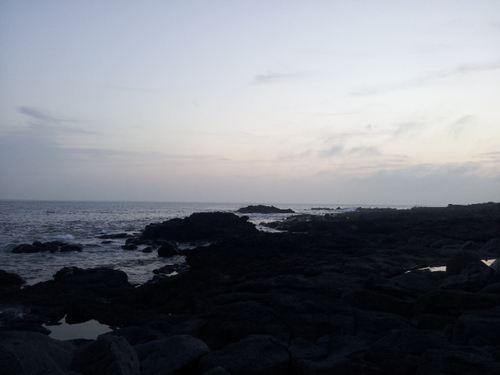
Travelinds found a pension called Madangdol Pension and booked in for a night. It looked out over the dark blue ocean crashing on to volcanic black rocks – amazing!

There was a Heuk Dweji (Black Pig) restaurant down the road from the pension and enjoyed a scrumptious Korean-style braai, seated on the floor of a restaurant whose only other customers were some rough looking fisherman and farmers from the area. If the owners were surprised to find two random waygooks in their establishment, they didn’t show it.

Jeju Island Black Pig
Jeju Black Pig Barbcue

At the pension, there were only three other guests (a mother and daughter who were on vacation with the daughter’s new boyfriend who was a university professor and the designated barbecue chef for the family).

Travelinds shared some South African biltong and cider with them, they shared some of their barbecue with us; and the evening ended with us teaching them how to play a couple of card games and chatting about life and travel dreams. What fun!

The morning came too soon and we were on our way once more. Heading back up north towards Jeju City.

Jeju

Jeju-do Roadtrip – Part 1

25 July 2014

Jeju Island, South Korea

Art House
Art House

This summer, Travelinds did a roadtrip to Jeju Island – South Korea’s ‘Maldives’ and a popular honeymoon destination for Koreans. There were four days (Monday to Thursday) to explore and decided it would be more fun to go over on the car ferry with our dear old Kia Sephia.

We stayed three nights and chose the hotels as we went along. From Jeju City, we drove around the whole island going east first and driving along the 1132 Coastal Highway.

We stopped the first night at Woljeong-ri and stayed at “The Art House”, a charming bed and breakfast with pension rooms also available.

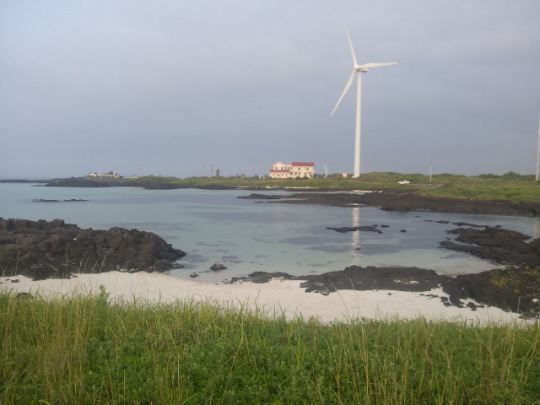
It was only a short drive from Woljeong Beach with its beautiful turquoise sea, sandy beach, giant energy windmills and only a handful of tourists. The Art House is on Agoda.com – see the reviews on TripAvisor here.

Woljeong
Evening swim at Woljeong Beach

At Art House, we met up with a couple from Spain who were touring Jeju without a car and more importantly without any knowledge of Korean. We offered to drop them off along the way to our next destination so that they could explore before heading back on the local 700 bus.

Woljeong-ri
The drive along Woljeong-ri (on Jeju’s north coast)
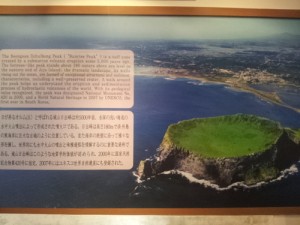
Seongsan Ilchulbong Peak

We dropped them off at the UNESCO Natural Heritage site called Sunrise Peak (Seongsan Ilchulbong Peak) to hike the volcanic peak with the hoards of tourists spilling from tour busses. With a sore ankle and suffocating heat (or was is crowds?) as an excuse, we declined the hike, took some sneaky pictures at the museum that made it look like we had touched the mountain and headed off down the coast in our air-conditioned car.

Pyoseon Haevich beach, low tide.

Next stop was the south-eastern corner of Jeju at Pyoseon Haevich Beach and Jeju Folk Village. The beach was lovely for swimming, but not so lovely for tanning as the whole bay is covered in water during high tide resulting in permanently wet beach sand, even at low tide. Most people hire those silver picnic mats and umbrellas (Korean style) and sit on these for a bit before retreating from the sun.

The only bikinis were H and a couple of other Russian tourists that were frolicking in the shallow bay – full body wet suits, long sleeve rash vests, big hats, fully clothed swimmers, tubes, umbrellas and loads of whitening suncream reminded us that we were still very much in Asia.

Jeongbang waterfall.

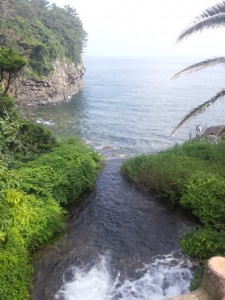
We looked in at the Jeju Folk Village but decided against going in as we had run out of time and it was time to drive on to our next hotel on the west of the island.  On the way, we managed to stop at the Jeongbang waterfall for a quick snack of Hallabong (a famous Jeju tangerine with protruding stem, sweet and delicious) and a mini photo session.

TIP: The GIANT Mosquitoes at Jeongbang are permanently hungry and really dig in when they find a weak spot; like feet, legs, arms or even faces.
Jeongbang waterfall.

Culture Shock South Korea

10 June 2014

As an English teacher in South Korea, my South African brain has had to deal with major culture shock the last two years; some things more mind-blowing than others:

1. Confused borrowed etiquette. Coffee is generally served in tea cups and tea served in coffee mugs.

2. All meals must be eaten in exactly 15 minutes or less. And no talking. Also, cut your food with scissors.

3. Slurping noodles is considered rude by “traditional etiquette standards”, but is widely practiced and grating “shlurp” sounds should always be expected. Same goes for chewing with your mouth open.

4. A popped “personal space bubble” – especially on public transport where you are surrounded by countless other bodies, touching arms or shoulders is really no biggie. Oh, and don’t expect an apology if someone bumps into you.

5. Konglish e.g. SF (sci-fi movie), eye-shopping (window shopping), arbeit (part time job), apart (apartment), heart-a-beat-a (nerves/fear), fry (fried egg), fat size (clothing sizes for larger-than-Korean people)… and the list goes on.

6. Feet. DO NOT expose your toes to your students or colleagues, EVER! Wear socks, even those semi-transparent nylon socks. Unless you don’t mind the looks and whispers.

7. Elevators. DO NOT speak while inside an elevator. Just don’t. Stare only at the wall, the mirror, the floor or the ceiling.  No eye-contact is allowed.

8. Driving. Drive faster than the speed limit at all times, but break hard before every speed camera (the GPS already knows the location of all the speed cameras).  Also, hoot while the traffic light is still red to make sure the cars in front of you are ready to screech out of the starting position when the light turns green. Or just ignore red lights altogether and just drive around the pole to avoid the cameras.

9. Ajummas (old women). If you are an old woman, you may walk wherever you please, including in the middle of the road. You may also push anyone out of the way, skip queues, bump violently into any people who don’t move out of your way and always stare openly at foreigners (with your mouth wide open for better effect).

And these are only the tip of the iceberg… I haven’t even mentioned the Darth-Vader-style sun visors, the very mini skirts, the perms (from toddlers to pop stars), the rice fascination, the obsession with all things “pamous” (famous) and the skin-whitening suncream.  Come for a visit, I’m sure you’ll soon discover a whole lot more South Korean charm.

Love-Hate Small Town Korea

02 June 2014

This is why I both love and hate living in a small town in South Korea:

  1. I have more chance of being hit by flying clay from a passing tractor than being hit by a car.
  2. Summer brings with it a green blanket of natural goodness, as well as the lingering smell of manure and mud.
  3. Our apartment is so small, I can clean it quite effectively by extending the broom outwards and spinning around once or twice in only three different spots.
  4. As a foreigner, I am subjected to at least three good, long, blatant, shameless, piercing stares from “friendly” locals every day.  Can you say celebrity!
  5. Birds, snakes, wild strawberries, pheasants, centipedes and ducks make my walks to and from school all the more exciting. Likewise for unplanned, unavoidable bum-sliding on the icy roads and pavements during Winter.
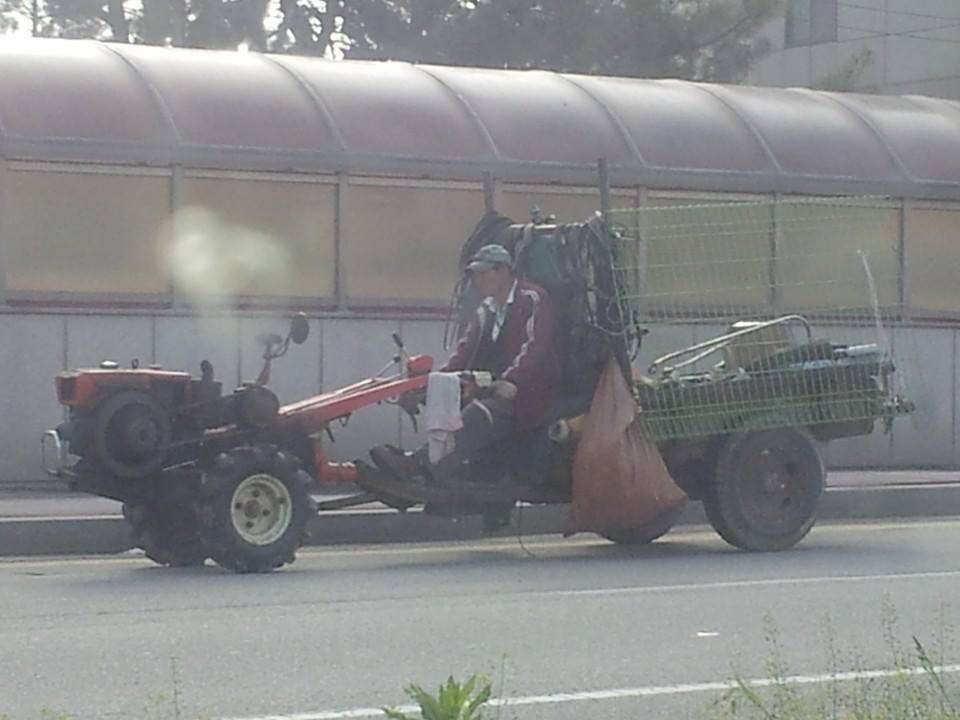
  6. 4-wheelers (quad bikes), electronic wheelchairs and baby tractors with trailers are all quite acceptable forms of transport on even the busiest roads in town.
  7. Walking from one end of town to the other never takes more than twenty minutes and there are sure to be at least 100 students greeting us along the way, as between us, we teach at the only elementary, middle and high school in the town.
  8. The ancient old lady collecting trash provides endless entertainment for passing pedestrians (and endless frustration for hurried motorists) as she pushes her cardboard collection trailor around town, in the middle of the road, oblivious to the traffic jams and horns blaring all around her.
  9. No matter which secret alleyway I choose to take (for exploration purposes), all ways eventually lead to the main street in town.
  10. The mandu (Korean dumpling) shop owner greets me with a friendly smile and courteous bow every single day.  Even when I don’t buy mandu from her for a couple of weeks.

Aaaaah, Korean life.

P.S. Did I mention that I have only been asked if I’m “Russian” (code for ‘lady of the night’) four times in three months. No, no I’m not Russian. Not available, sorry. This is awkward. I’m leaving now…

Guardians of Gyeongbok Palace

24 December 2013

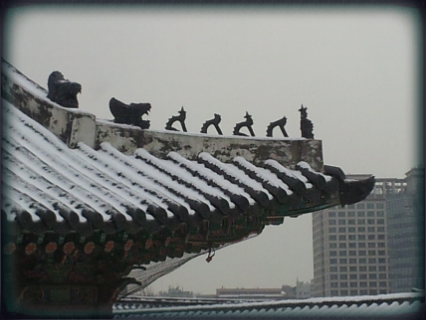
On visiting the Gyeongbok Palace (Gyeongbokgung) in Seoul, I happened to notice some mysterious figurines on the corners of the roof, especially for the larger buildings.  Intrigued, I investigated a little further and found that these are traditional Korean figures called Japsang (잡상).

The figures depict the grandeur of the building (more Japsang means the building is of higher importance), as well as the shamanistic beliefs that these figurines work to ward off evil spirits. This notion was apparently derived from the characters of a traditional Chinese story called “Journey To The West”, which follows the adventures of Monk Xanzang, a Bhuddist monk who went to India in search of sacred writings.

There are about ten guardians, which are placed in a specific order on the sloping roof and always arranged in odd numbers.

Some of the most important characters are:

  • Monk Xanzang, the main character
  • Sonojeong, The Monkey King
  • Jeopalgye, the Pig Monster
  • Saojeong, the Half-Water Demon
  • Iguryong, Double-mouthed Dragon.
  • Mahwasang, Horse
  • Cheonsangap, Pangolin

Another example of just how much the Korean culture has been influenced by the Chinese nation, even though most are loathe to admit it.

National Folk Museum of Korea

14 December 2013

The National Folk Museum of Korea houses quite a few interesting exhibits about life and culture in South Korea.  The museum is next to the Gyeongbok Palace in central Seoul and admission is free (remember, it is closed on Tuesdays).

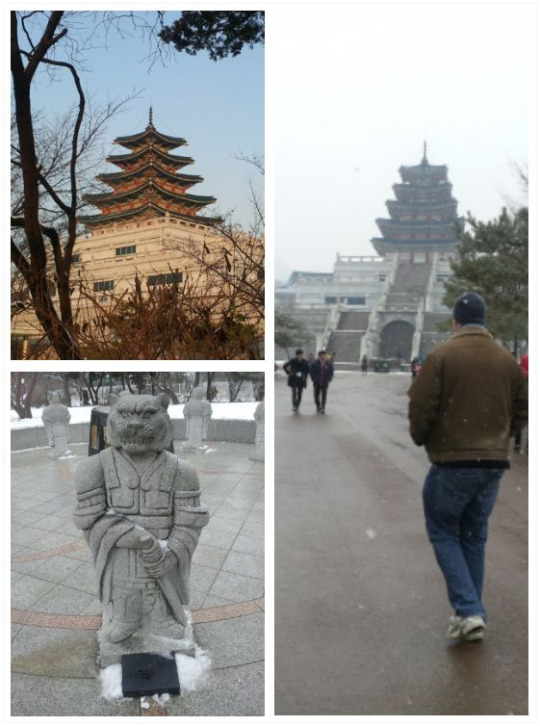
It is quite an eye-catching building with the traditional Korean architecture towering above the pretty park (which, when we went, was also covered in a thick layer of white snow).

We chose to do a guided English tour (at 14.30) with a Korean guide and to watch a (free) traditional music performance that was being hosted at the museum auditorium.  It is definitely worth a visit, especially with its convenient proximity to the Gyeongbok palace and Insadong for touristy sightseers.

Our guide at the museum was wonderful and we thoroughly enjoyed her quirky take on the Korean life and culture!  Her English name was Hillary and she chatted away to us about the museum where she has been a volunteer English guide since she was a university student. She loves the gig so much that she still continues her volunteering every Saturday, because she now works during the week.   Her hope is that this guide work will help her to improve her English even more and also allow her to meet foreigners (waegooks) from all countries of the world.

Outside the museum are the twelve Chinese Zodiac animals with birth years engraved so you can find your own.  Not that we are superstitious at all, but it was fun to see the details.  I’m a Tiger (ferocious and stubborn) and he’s a Rat (highly intelligent and sneaky) – sounds about right!

Be sure to check out the little street of restaurants across the road from the museum, we found such a cute one in a little alleyway.  The lunch cafe is situated inside an old Korean house converted into a little eating spot called ‘Rice’ (밥).